Monster Math Measurement Activities for Kids: Problem Solving with Yarn, Straws, Paper Clips and Number Cards
Need a hands-on math activity that feels more like a scavenger hunt than a worksheet? This Monster Math measurement activity gives kids ten playful ways to practice problem solving, number recognition, comparison, ordering, and early measurement skills using simple supplies you probably already have at home.
This is the kind of math I love most: the sneaky kind. Kids are counting chairs, comparing hair length, measuring with paper clips, testing container capacity, and hunting for numbers without realizing they are building real math vocabulary and reasoning skills.
Translation? It is math with a monster-sized dose of “Wait, can we do one more?” energy.
More Kids Crafts & Activities to Keep Little Hands Busy
Love easy activities that combine creativity, learning, and a little “look what I made!” magic? Explore more screen-free fun in my Kids Crafts & Activities hub, where you’ll find printable activities, simple crafts, educational games, sensory play, STEM projects, classroom ideas, and kid-friendly projects for rainy days, homeschool lessons, and weekend boredom busters.
Pair this Monster Math activity with DIY Tangrams for Kids for shape-building fun, try Elephant Measurements for more nonstandard measurement practice, or keep the STEM table going with DIY Bouncy Balls.
What Is Monster Math?
Monster Math is a hands-on math box you can build over time with simple household supplies, printable cards, small manipulatives, and open-ended activities. Think of it as a little math toolkit kids can pull out for counting, sorting, comparing, measuring, building, and problem solving.
This activity is part of the Monster Math series and continues the problem-solving practice from Monster Math Tangram Problem Solving. It also introduces early measurement concepts using nonstandard units before kids move into rulers, yardsticks, and standard measurement tools.
Why Kids Should Measure with Yarn, Straws and Paper Clips First
Before kids fully understand inches, feet, centimeters, rulers, and yardsticks, they need lots of real-world experiences comparing objects directly. That means asking questions like:
- Which one is longer?
- Which one is shorter?
- Which container holds more?
- How many paper clips long is the book?
- Can we put these in order from smallest to tallest?
Using nonstandard measurement units like yarn, paper clips, straws, pencils, blocks, and hands helps kids understand what measurement actually means before the ruler shows up and tries to look official.
It also builds problem-solving skills because kids have to think through the process: line up the objects, compare the lengths, count carefully, record results, and explain what they noticed.
Monster Math Materials
You do not need anything fancy for this activity. A few basic supplies turn into a full math box of measuring fun.
- Yarn or string
- Number cards
- Paper clips
- Straws or craft sticks
- Newspaper, magazine, or grocery ad
- Blank calendar page or paper marked like a calendar
- Glue stick
- Scissors
- Small paper bag
- Ruler or yardstick
- 3 or 4 small containers in different sizes
- Paper and crayons for recording answers
Before You Start: Set Up a Monster Math Box
Keep the supplies in a shoebox, pencil box, plastic bin, or zipper pouch. Label it “Monster Math” and add new activities as your child grows. This makes it easy to grab for homeschool lessons, classroom centers, rainy days, quiet time, or screen-free practice after school.
You can also add pattern blocks, tangram pieces, counting beans, dice, craft sticks, buttons, and printable number cards to build a more complete hands-on math kit.
Monster Math Problem-Solving Activities
Start with these quick number and problem-solving activities before moving into the measurement section. They warm up counting, number recognition, number words, and spatial thinking.
1. Newspaper Number Hunt
Give your child an old newspaper, magazine, grocery ad, or coupon flyer. Have them search for numbers, cut them out, and glue them to a blank calendar page or a sheet of paper marked like a calendar.
Numbers may vary in size, color, and style, which makes this a great way to show that the same number can look different depending on the font. Two-digit numbers can also be created by combining two separate numbers.
Learning boost: Ask your child to find today’s date, their birthday number, the number 10, or all numbers greater than 20.
2. Count Chairs, Tables and Legs
Walk through your house and count the number of chairs. Then count the number of table legs and chair legs.
For younger kids, count together out loud. For older kids, turn it into a multiplication moment by asking, “If each chair has four legs, how many legs do four chairs have?”
Learning boost: Compare rooms. Which room has the most chair legs? Which room has the fewest?
3. Practice Number Words with Number Cards
Use number cards to practice matching numerals to number words. For example, match 7 with seven, or 12 with twelve.
You can also spread the cards on the table and ask your child to put them in order from smallest to largest.
Learning boost: Call out a number word and have your child slap, point to, or pick up the matching number card.
4. Build Animals with Tangram Pieces
Using your tangram pieces, challenge your child to create as many animals as possible.
Try a cat, bird, fish, dog, rabbit, turtle, or silly made-up monster. This supports geometry, visual-spatial reasoning, creativity, and problem solving.
Learning boost: After your child creates an animal, ask them to trace it and name the shapes they used.
Monster Math Measurement Activities
The development of measurement concepts takes practice. Kids need to compare lengths, weights, capacity, and height using real objects before those ideas feel natural. These activities use direct comparison and nonstandard measurement to help kids build that foundation.
5. Longest Hair, Shortest Hair
Gather your family together and compare hair length. Who has the longest hair? Who has the shortest? Do not forget pets if they are willing to participate in the math lesson without filing a formal complaint.
Have your child line everyone up from shortest hair to longest hair or draw a picture showing the order.
Learning boost: Ask, “How do you know?” Encourage your child to explain whether they compared by looking, touching, or measuring.
6. Length Treasure Hunt with Yarn
Cut 10 different lengths of yarn or string, ranging from about 2 inches to 20 inches. Hand your child one piece at a time and ask them to search around the house for an item that is about the same length.
After they find a match, have them draw each item on paper in order from smallest to longest.
Examples to try:
- A crayon
- A spoon
- A toy car
- A pencil
- A book
- A remote control
- A toothbrush
Learning boost: Use words like longer, shorter, equal, almost, estimate, compare, and order.
7. Draw Straws: Shortest or Longest Wins
Cut straws or craft sticks into different lengths and place them in a paper bag. Add two cards to the bag: one that says shortest and one that says longest.
Each player draws a straw. Then draw one card. If the card says shortest, the player with the shortest straw wins the point. If the card says longest, the player with the longest straw wins.
Return the straws and card to the bag and play several rounds.
Learning boost: Ask your child to compare before deciding. “How can you tell which straw is longer?”
8. Measure the House with Paper Clips
Hook five paper clips together to create a simple measuring chain. Walk around the house and look for items that are exactly, almost, or more than five paper clips long.
Have your child record each item on paper.
Try measuring:
- A pencil
- A fork
- A small book
- A toy
- A shoe
- A hairbrush
Learning boost: Talk about why the paper clips need to stay connected and lined up end to end.
9. Which Container Holds the Most?
Gather 3 or 4 small containers in different sizes. Ask your child to predict which one holds the least and which one holds the most.
Then use water, dry rice, beans, or pom-poms to test the containers and put them in order from smallest capacity to greatest capacity.
Learning boost: Ask your child to make a prediction first, then compare the prediction to the result.
Safety note: Use water only in a sink, bathtub, sensory bin, or outdoor area where spills are not a big deal. Because spills are not a question of if. They are a question of when.
10. Measure Your Family from Smallest to Tallest
Use a ruler, yardstick, or measuring tape to measure each member of your family. Record everyone’s height, then have your child draw a family picture in order from smallest to tallest.
This is a great activity for comparing, ordering, and connecting measurement to real life.
Learning boost: Ask, “Who is taller than you?” and “Who is shorter than you?” For older kids, compare the differences between heights.
Printable Number Cards
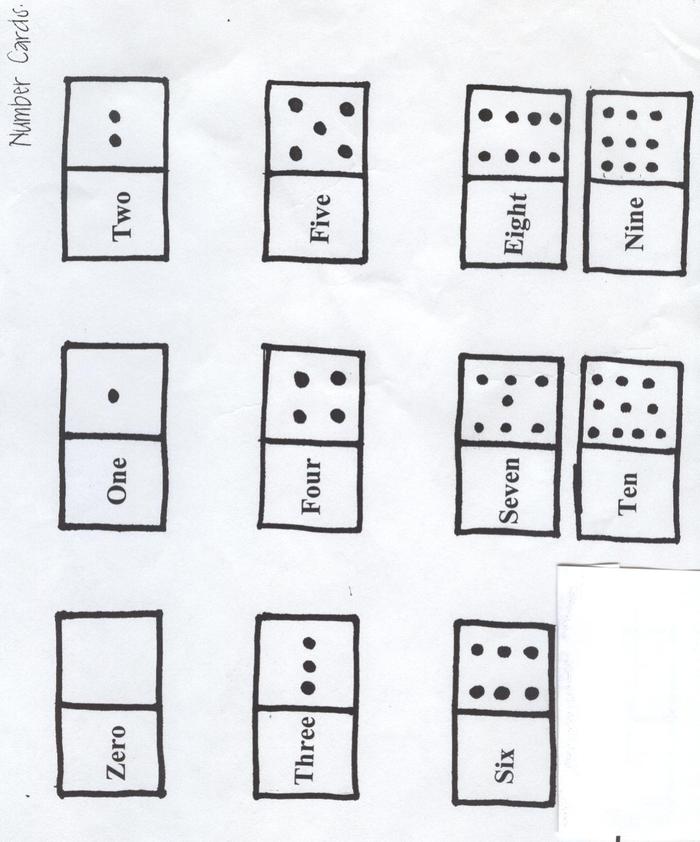
Use these number cards for counting practice, number word recognition, ordering, matching, and quick math games.

Ways to Use the Number Cards
- Number match: Match the numeral to the number word.
- Number order: Put the cards in order from smallest to largest.
- Mystery number: Choose one card and give clues until your child guesses it.
- Measure and match: Measure an item, then find the number card that matches the result.
- Greater or less: Draw two cards and compare which number is greater.
Teacher, Homeschool and Classroom Tips
This Monster Math activity works well for preschool, kindergarten, first grade, homeschool math lessons, classroom centers, small groups, and family learning time.
For Preschoolers
- Focus on comparing: longer, shorter, taller, smaller, more, less.
- Use large objects and simple measuring tools like yarn or blocks.
- Keep recording simple with pictures instead of written answers.
For Kindergarten and First Grade
- Add number cards and simple written labels.
- Measure with paper clips, straws, craft sticks, and yarn.
- Practice putting objects in order from shortest to longest.
For Older Kids
- Compare nonstandard measurement to inches or centimeters.
- Ask kids to estimate before measuring.
- Have them create their own measurement challenge cards.
More Hands-On Math Activities for Kids
Want to keep building your math box? Try these next:
- Monster Math Tangram Problem Solving for more shape and logic practice.
- Monster Math Pattern Blocks and Activities for shapes, sorting, and visual reasoning.
- DIY Tangrams for Kids for printable geometry fun.
- Elephant Measurements for another nonstandard measurement activity.
- Inchworm Measurements for a printable measuring activity with a storybook-friendly feel.
- Moon Sand for sensory play that pairs well with scoops, measuring cups, and counting tools.
Frequently Asked Questions About Monster Math Measurement Activities
What age is this Monster Math activity best for?
This activity is best for preschool through early elementary students. Younger children can compare objects and count with help, while older children can estimate, measure, record results, and explain their thinking.
What is nonstandard measurement?
Nonstandard measurement means measuring with objects instead of standard tools like rulers or measuring tapes. Examples include measuring with paper clips, yarn, craft sticks, straws, blocks, hands, or pencils.
Why should kids use nonstandard measurement before rulers?
Nonstandard measurement helps kids understand what measuring means. They learn to compare, line objects up, count units, and notice length before using inches, feet, centimeters, or rulers.
Can I use this activity in a classroom math center?
Yes. Place yarn pieces, paper clip chains, straws, number cards, recording sheets, and a few classroom objects in a bin. Students can rotate through the activities independently or in pairs.
How do I make this activity less messy?
Use a tray or table mat for the yarn, straws, paper clips, and number cards. For the container capacity activity, use pom-poms, counting bears, beans, or dry rice instead of water if you want less cleanup.
Can this be used for homeschool math?
Absolutely. This is a simple, low-prep homeschool math activity that covers counting, number recognition, comparison, measurement, ordering, estimating, and problem solving with everyday household objects.
Final Thoughts: Big Math Learning from Little Supplies
Monster Math proves that kids do not need fancy curriculum pieces to build strong math thinking. A few paper clips, some yarn, a handful of straws, and printable number cards can become a full afternoon of measuring, comparing, counting, predicting, and problem solving.
Even better, these activities connect math to real life. Kids measure family members, compare containers, count furniture, hunt for numbers, and build with tangrams. That kind of hands-on learning sticks because it feels playful, useful, and just a little bit monster-sized.
Save this Monster Math measurement activity for your next rainy day, classroom center, homeschool math lesson, or screen-free afternoon when your little learners need something fun to do with their hands and brains.
This craft was originally published September 2, 2009, and updated May 18, 2026, with improved instructions, updates, and new photos.