Elephant Measurements Activity for Kids: Learning to Measure with Printable Fun
Looking for a simple way to make early math feel less like a worksheet and more like an adventure? This Elephant Measurements activity is a playful, hands-on way to introduce kids to measuring, comparing lengths, counting units, and recording results using a printable elephant measuring tape.
Instead of inches, feet, or centimeters, kids measure everyday objects in “elephants.” A pencil might be three elephants long. A book might be five elephants long. The kitchen table? Well, that may require several elephant measuring strips taped together because apparently elephants enjoy a good stretch.
This activity is easy to prep, screen-free, budget-friendly, and perfect for preschool, kindergarten, early elementary math, homeschool lessons, classroom centers, or rainy-day learning at the kitchen table.


More Kids Crafts & Activities to Keep Little Hands Busy
Love easy activities that combine creativity, learning, and a little “look what I made!” magic? Explore more screen-free fun in my Kids Crafts & Activities hub, where you’ll find printable activities, simple crafts, educational games, and kid-friendly projects for rainy days, classroom centers, homeschool lessons, and weekend boredom busters.
Pair this elephant measurement activity with Inchworm Measurements for another non-standard measurement lesson, try DIY Tangrams for Kids for hands-on geometry practice, or save 2-Ingredient Moon Sand for a sensory play day that keeps little hands busy.
What Is an Elephant Measurements Activity?
An elephant measurements activity uses a printable elephant measuring strip instead of a ruler. Each elephant becomes one unit of measurement. Kids line up the strip beside an object, count how many elephants long it is, and record the answer in their measurement booklet.
This is called non-standard measurement, which simply means kids measure using units other than inches, centimeters, or feet. Blocks, paper clips, toy cars, craft sticks, and yes, tiny printable elephants can all become measuring tools.
It is a wonderful first step before introducing standard measurement because children learn the concept of length before they have to worry about numbers on a ruler.
Why Kids Love Measuring with Elephants
My children have all loved this activity because it feels more like a game than a math lesson. They get to move around, choose objects, make predictions, count elephants, and record their discoveries.
And honestly, everything is more fun when the question is, “How many elephants long is it?”
- It feels playful: Kids are measuring with elephants instead of a traditional ruler.
- It builds confidence: Children can count and compare without worrying about ruler marks.
- It encourages movement: Kids can measure items around the room instead of sitting still the whole time.
- It supports imagination: Once they finish the booklet, they can create their own measurement challenges.
- It requires very little prep: Print, cut, tape if needed, and start measuring.
What Kids Learn from This Measurement Activity
This simple elephant measurement activity sneaks in several early math skills while kids are busy having fun.
- Length: Children explore how long objects are.
- Counting: Kids count each elephant unit carefully.
- Comparing: They decide which objects are longer, shorter, or about the same length.
- Estimating: Before measuring, kids can guess how many elephants long an item might be.
- Recording data: The booklet gives kids a place to write or draw their results.
- Problem solving: Large objects may require multiple measuring strips taped together.
- Math vocabulary: Words like longer, shorter, measure, length, estimate, compare, and unit become part of the conversation.
Supplies You’ll Need
This activity is wonderfully simple. You only need a few basic supplies to get started.
- Printable Elephant Measuring Tape
- Elephant Measurement Booklet
- Printer paper or cardstock
- Scissors
- Tape, optional for making a longer measuring strip
- Pencil, crayon, or marker
- Everyday household or classroom objects to measure
Tip: Print several elephant measuring strips and tape them together end-to-end. The longer the elephant measuring tape, the more things kids can measure without stopping to reposition it.
How to Set Up the Elephant Measuring Tape
Start by printing the elephant measuring tape. You can use regular printer paper, but cardstock will make it sturdier if you plan to reuse the activity.
If your child is only measuring small objects, one strip may be enough. If you want them to measure larger objects like a table, chair, rug, couch cushion, or bookshelf, print several copies and tape them together in a long line.
Make sure the elephants line up evenly so each elephant stays the same size. This helps kids understand that measurement works best when the units are consistent.
How to Use the Elephant Measurement Booklet
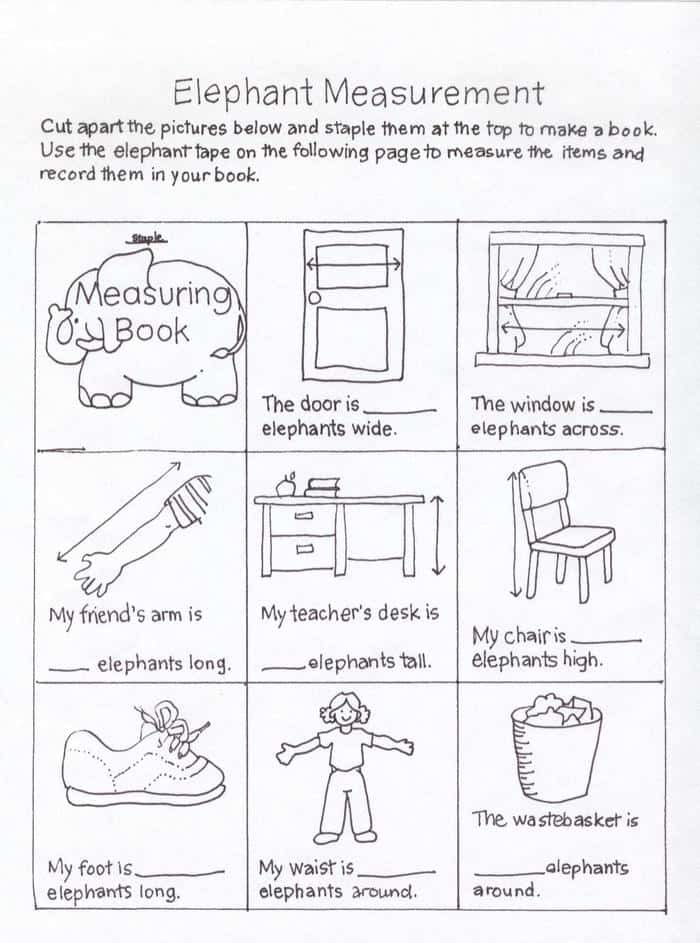
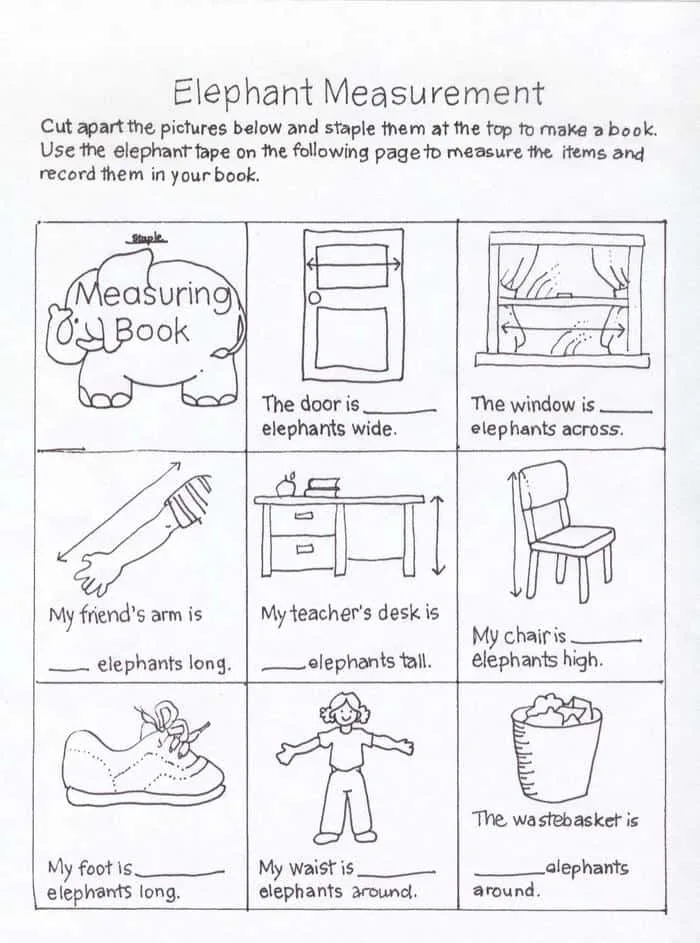
The Elephant Measurement Booklet gives children a simple place to record their answers. Have your child measure the items listed in the booklet and write how many elephants long each item is.
Younger children can draw tally marks, circle numbers, or tell you the answer while you write it down. Older children can write full sentences such as, “The crayon is two elephants long.”
How to Do the Elephant Measurements Activity
- Print the elephant measuring tape. Use regular paper or cardstock.
- Print the Elephant Measurement Booklet. This gives kids a ready-made recording sheet.
- Cut out the measuring tape. Keep the elephants in a straight line.
- Tape strips together if needed. Make a longer elephant ruler for bigger objects.
- Choose an object to measure. Start with something simple, like a pencil, book, toy, or shoe.
- Line up the measuring tape. Place the first elephant at one end of the object.
- Count the elephants. Count how many elephant units fit along the object.
- Record the answer. Write the number in the measurement booklet.
- Compare objects. Ask which item was longer, shorter, or about the same.
- Keep exploring. Let kids add their own pages and measure things around the room.
Easy Objects for Kids to Measure
Once kids understand how the elephant measuring tape works, invite them to hunt for objects to measure. This keeps the activity active and makes math feel connected to real life.
- Crayon
- Pencil
- Book
- Shoe
- Toy car
- Stuffed animal
- Lunchbox
- Chair seat
- Table edge
- Pillow
- Doorway
- Window sill
For extra fun, ask questions like:
- Which object was the longest?
- Which object was the shortest?
- Can you find something exactly four elephants long?
- Can you find something longer than your shoe?
- Can you find two things that are the same number of elephants long?
Teaching Tip: Add Estimation Before Measuring
Before your child measures each object, ask them to make a guess.
For example: “How many elephants long do you think this book will be?”
Then measure together and compare the guess to the actual answer. This helps kids build number sense and understand that estimating is not about being perfect. It is about making a thoughtful prediction and then checking it.
Make It a Bigger Math Lesson
You can easily stretch this elephant measurement activity into a bigger math lesson without making it feel complicated.
Compare Two Objects
Measure two items and ask which one is longer. Then ask, “How many more elephants long is it?”
Sort by Length
Have your child measure several objects and sort them into short, medium, and long groups.
Create a Measurement Hunt
Challenge your child to find something that is one elephant long, two elephants long, three elephants long, and so on.
Graph the Results
Use the booklet answers to make a simple bar graph. Each object gets a bar showing how many elephants long it is.
Make a Prediction Page
Before measuring, have kids write or draw their estimate. After measuring, they can compare their estimate with the real result.
Classroom and Homeschool Ideas
This elephant measurement activity works beautifully for preschool, kindergarten, first grade, math centers, homeschool lessons, and small-group work.
- Math center: Place the elephant measuring tape, booklet, pencils, and a basket of objects together.
- Partner activity: One child measures while the other records.
- Morning work: Let students measure one item and write one sentence about it.
- Homeschool math: Use it as an introduction to measurement before rulers.
- Rainy-day learning: Send kids around the room on a measurement scavenger hunt.
- Animal theme week: Pair it with elephant books, animal facts, or zoo-themed activities.
Books to Pair with an Elephant Measurement Activity
Turn this into a full learning moment by pairing the activity with an elephant-themed picture book or a math story. After reading, let kids measure items from the story, draw their own elephant measuring page, or compare animal sizes.
You can also talk about real elephants and how enormous they are compared to the tiny printable elephants on the measuring tape. That little contrast makes the activity even more memorable.
More Screen-Free Learning Activities for Kids
If your child loves hands-on math and creative learning, keep the fun going with more easy activities from Mommy’s Memorandum:
- Inchworm Measurements — Another non-standard measurement activity that helps kids practice length, counting, and comparison.
- DIY Tangrams for Kids — A printable puzzle craft that builds geometry skills, spatial reasoning, and problem solving.
- How to Make Moon Sand with 2 Ingredients — A simple sensory play activity kids can squish, mold, shape, and explore.
- How to Make DIY Bouncy Balls That Really Bounce — A hands-on STEM activity using Borax, glue, and a little bounce-worthy science.
- How to Make Paper Wolverine Claws — A one-sheet paper craft for superhero pretend play, parties, and rainy-day folding fun.
- Kids Crafts & Activities — Browse more crafts, printables, activities, and screen-free ideas for kids.
Frequently Asked Questions About Elephant Measurements
What is non-standard measurement?
Non-standard measurement means measuring with objects instead of a ruler. Kids might measure with blocks, paper clips, toy cars, craft sticks, or printable elephants. It helps children understand length and units before learning inches or centimeters.
What age is this elephant measurement activity best for?
This activity is best for preschool, kindergarten, and early elementary learners. Younger children can count elephants with help, while older children can estimate, compare, record answers, and write measurement sentences.
Why teach kids to measure with non-standard units first?
Non-standard measurement helps kids understand what measuring actually means. Before they need to read a ruler, they learn that measurement is about using equal units to find out how long something is.
Can I use this in a classroom math center?
Yes. Print several elephant measuring tapes and booklets, place them in a math center with simple classroom objects, and let children measure independently or with a partner.
How can I make the elephant measuring tape longer?
Print multiple copies of the elephant measuring tape and tape them together end-to-end. Try to keep the elephants evenly lined up so the units stay consistent.
What should kids measure first?
Start with small, simple objects such as crayons, pencils, books, toy cars, shoes, and blocks. Once kids understand the process, let them measure larger items around the room.
Final Thoughts: Big Math Fun with Little Elephants
This Elephant Measurements activity proves that early math does not have to be complicated, expensive, or boring. With a printable elephant measuring tape and a simple booklet, kids can explore length, counting, estimating, comparing, and recording data in a way that feels playful and memorable.
Whether you are planning a preschool math lesson, filling a classroom center, building a homeschool unit, or just looking for a screen-free activity that sneaks in learning, this printable measurement activity is a fun one to keep in your back pocket.
Print the elephants, tape a few together, and let the measuring parade begin.
This craft was originally published September 2, 2009, and updated May 18, 2026, with improved instructions, updates, and new photos.