Monster Math! Tangram Problem Solving Activity for Kids
Need a screen-free math activity that feels more like play than practice? This Monster Math tangram problem solving activity turns simple supplies into a hands-on math box kids can use for shapes, counting, patterns, odd and even numbers, visual reasoning, and creative problem solving.
And because we are calling it Monster Math, the whole thing feels a little less worksheet and a lot more “math has entered its craft-table era.”
Monster Math is a kit you create, customize, and keep adding to as your child develops new math skills. We keep ours in a shoebox, but a pencil box, photo case, or small storage bin works beautifully, too.
This activity starts with tangrams, then adds toothpicks, beans, a calculator, paper, and pattern play for 10 easy math challenges you can use at home, in homeschool lessons, classroom centers, early finisher bins, or rainy-day activity time.
More Kids Crafts & Activities to Keep Little Hands Busy
Love easy activities that combine creativity, learning, and a little “look what I made!” magic? Explore more screen-free fun in my Kids Crafts & Activities hub, where you’ll find printable activities, simple crafts, educational games, and kid-friendly projects for rainy days, classroom centers, homeschool lessons, and weekend boredom busters.
Pair this Monster Math activity with DIY Tangrams for Kids so children can make their own puzzle pieces first. Then keep the learning going with Monster Math Pattern Blocks and Activities, Monster Math Problem Solving and Measurement, or ABC Games for Pre-K and Kindergarten for another hands-on learning day.
What Is Monster Math?
Monster Math is a make-your-own math activity kit filled with simple objects kids can count, sort, build with, measure, compare, and rearrange. The goal is not to make math feel fancy. The goal is to make math feel touchable.
Instead of handing kids a worksheet and hoping for the best, Monster Math gives them pieces to move, patterns to build, numbers to test, and problems to solve with their hands.
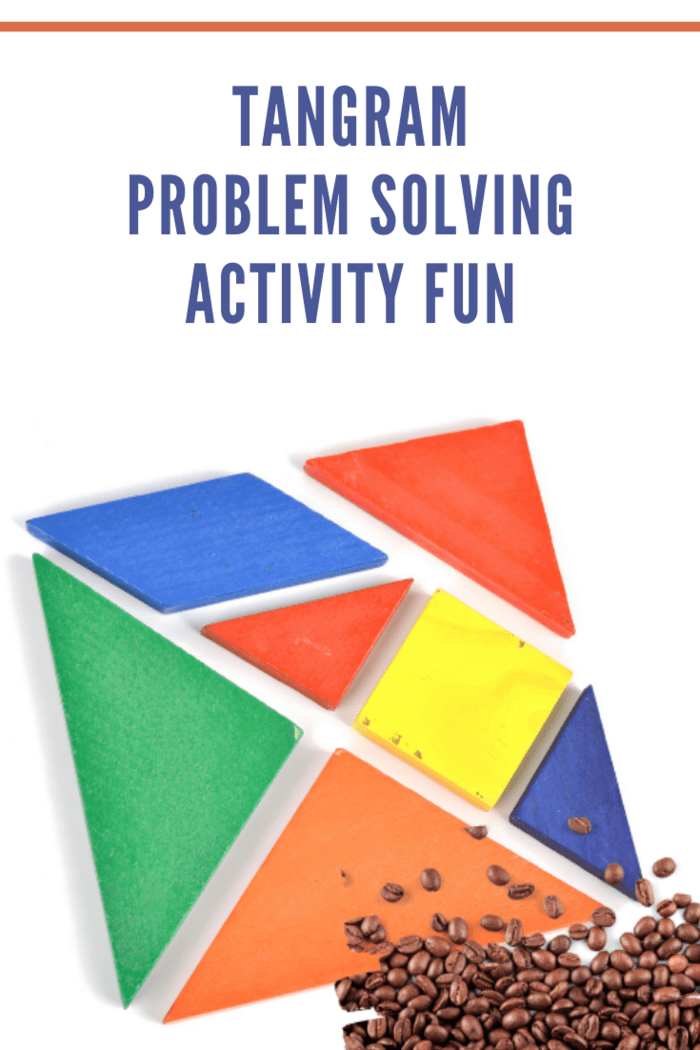
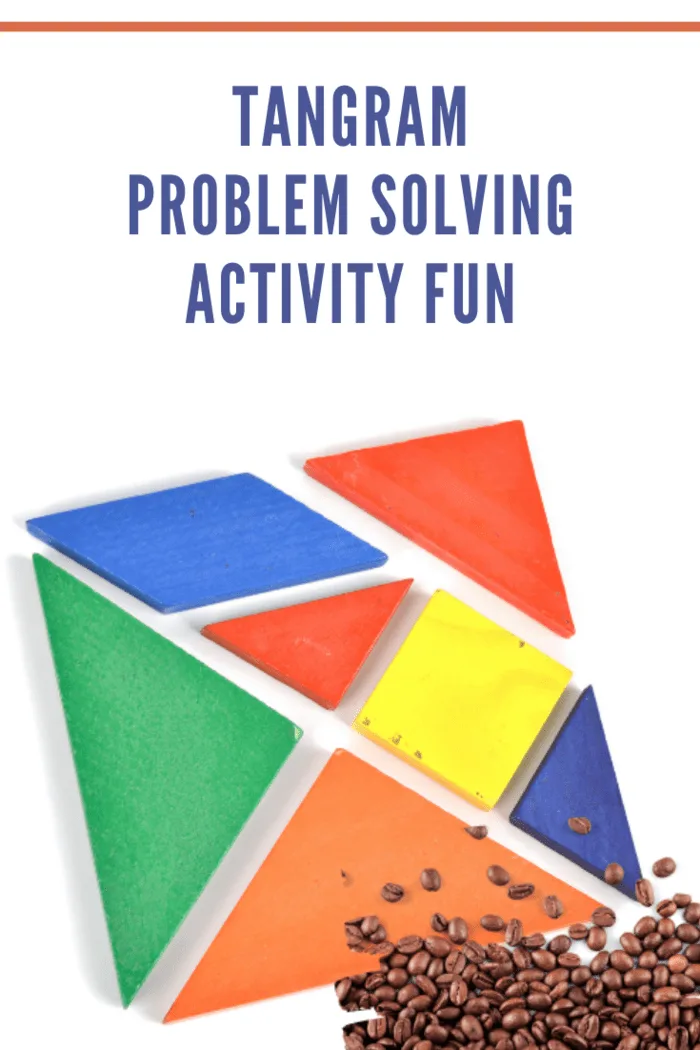
That kind of hands-on practice is especially helpful with tangrams. Tangrams are made from seven geometric pieces that can be rearranged into squares, triangles, rectangles, animals, letters, objects, and creative designs. They are often used to explore spatial reasoning, geometry, area, symmetry, fractions, similarity, and problem solving.
Translation? Tangrams are tiny puzzle pieces with big math energy.
Why Tangrams Are Great for Math Practice
Tangrams may look like a quiet little paper puzzle, but they can help kids build several important math and thinking skills at once. When children flip, rotate, slide, and test the pieces, they are practicing the same kind of visual thinking they need for geometry, patterns, and problem solving.
This Monster Math tangram activity can help kids practice:
- Spatial reasoning: turning and moving shapes to see how they fit together
- Geometry: identifying triangles, squares, rectangles, angles, corners, and sides
- Problem solving: trying one idea, adjusting it, and trying again
- Pattern recognition: building repeating color patterns and shape patterns
- Counting: counting days, pieces, beans, toothpicks, and groups
- Odd and even numbers: pairing objects by twos to see whether one is left over
- Fine motor skills: placing small pieces, tracing designs, and lining up objects
- Math vocabulary: using words like rotate, flip, edge, corner, smaller, larger, odd, even, triangle, and rectangle
Supplies You’ll Need
You only need a few simple supplies to build your Monster Math box. Start small, then add more items as your child is ready for new challenges.
- Tangram pieces
- Toothpicks
- Calculator
- Dry beans
- Paper
- Crayons, colored pencils, or markers
- Optional: small shoebox, pencil box, envelope, or zip-top bag for storage
How to Set Up Your Monster Math Box
- Make or print your tangrams. Start with this DIY tangram activity so kids can create their own seven-piece puzzle set.
- Add simple counting tools. Beans, buttons, pom-poms, cereal pieces, or paper clips all work.
- Add building tools. Toothpicks are great for making lines, numbers, shapes, and patterns.
- Add a calculator. Kids can match calculator numbers with toothpicks and explore number shapes.
- Store everything together. Keep the materials in a shoebox or small bin so the activity is easy to grab when you need a quick math moment.
Monster Math Tangram Problem Solving Activities
These 10 Monster Math activities are flexible. You can do one at a time, set them up as a math center, or work through them over several days. Younger kids may need help reading the prompts, while older kids can work more independently and record their answers in a math journal.
1. Count Down to the Next Holiday
Look at a calendar and count how many days are left until the next holiday, birthday, school break, or special event.
Ask: Can you count the days by ones? Can you count them by twos? What happens if you count by fives?
Math skills: counting, skip counting, calendar awareness, number sequencing
2. Rebuild the Tangram Square
Use all seven tangram pieces to make the original square.
Then mess it up.
Now try to build it again.
Ask: Which piece did you place first? Did starting with a different piece make the puzzle easier or harder?
Math skills: spatial reasoning, geometry, persistence, trial and error
3. Make Triangles with Different Numbers of Pieces
Use your tangram pieces to make a triangle with just two pieces.
Now see if you can make a triangle with three pieces, four pieces, or five pieces.
Ask: Is there more than one solution? Can you draw or trace each triangle you make?
Math skills: shape composition, geometry, problem solving, visual comparison
4. Build Rectangles with Tangrams
Try making a rectangle using two tangram pieces. Then try again using three, four, five, six, or all seven pieces.
Ask: Which rectangles were easiest to build? Which ones made you think the hardest?
Math skills: rectangles, sides, corners, area, shape building
5. Create Tangram Objects
Use all seven tangram pieces to make different objects, animals, letters, or silly monster shapes.
Try making:
- A bird
- A cat
- A house
- A boat
- A rocket
- A monster
- The first letter of your name
- A mystery shape for someone else to guess
Trace your favorite tangram creation onto paper and color it.
Math skills: creative problem solving, spatial reasoning, shape recognition, design thinking
6. Make a Pattern Paper Chain
Cut strips of paper and make a paper chain using a repeating color pattern.
Try patterns like:
- Red, blue, red, blue
- Green, green, yellow, green, green, yellow
- Pink, orange, purple, pink, orange, purple
Ask: What color comes next? Can you make a longer pattern? Can someone else figure out your pattern rule?
Math skills: patterns, prediction, sequencing, color sorting
7. Copy a Toothpick Pattern
Draw a simple pattern on paper using lines, shapes, or zigzags.
Now use toothpicks to copy that pattern on the table.
Ask: Did you need more toothpicks than you expected? How many toothpicks did your pattern use?
Math skills: visual matching, counting, fine motor skills, pattern copying
8. Build Calculator Numbers with Toothpicks
Press a number on the calculator. Look carefully at the shape of the number on the screen.
Now use toothpicks to build that number on the table.
Try numbers like:
- 1
- 4
- 7
- 10
- 12
- 20
Ask: Which number used the fewest toothpicks? Which number used the most?
Math skills: number recognition, visual discrimination, counting, comparing quantities
9. Play Number Guess
One child secretly chooses a number between 1 and 20 and writes it down.
Another player guesses the number.
After each guess, the first child gives one clue:
- Higher
- Lower
- You got it!
Ask: Can you guess the number in five tries or fewer?
Math skills: number order, comparing numbers, logical thinking, problem solving
10. Count Beans and Find Odd or Even
Grab a small handful of beans and count them.
Now match the beans into pairs of two.
If every bean has a partner, the number is even. If one bean is left without a partner, the number is odd.
Ask: Is your number odd or even? What happens if you add one more bean?
Math skills: counting, grouping, odd and even numbers, one-to-one correspondence
Make It Easier for Younger Kids
If your child is preschool or kindergarten age, keep the activity playful and short. You do not need to finish all 10 activities in one sitting.
- Use fewer tangram pieces at first.
- Let kids match pieces directly on top of a printed pattern.
- Focus on naming colors and shapes.
- Count objects out loud together.
- Use simple words like turn, flip, slide, corner, side, bigger, and smaller.
- Celebrate effort, not perfect answers.
Make It More Challenging for Older Kids
Older kids can turn Monster Math into a deeper problem-solving activity by recording their thinking, comparing strategies, and creating their own challenges.
- Ask kids to draw every solution they find.
- Have them create tangram challenge cards for someone else to solve.
- Time how long it takes to rebuild the square, then try to beat the time.
- Use math vocabulary such as rotate, reflect, symmetry, angle, congruent, and area.
- Ask kids to explain their strategy after each challenge.
- Have them create a graph of odd and even bean handfuls after 10 rounds.
Teacher, Homeschool, and Classroom Tips
This Monster Math tangram activity works well as a classroom math center, homeschool lesson, small-group activity, rainy-day project, or early finisher bin.
- For math centers: Place the supplies in a labeled bin with printed activity cards.
- For homeschool: Do one challenge per day and keep a Monster Math journal.
- For small groups: Let children compare solutions and explain how they solved each puzzle.
- For quiet time: Keep the tangrams and pattern prompts in a pencil pouch.
- For family math night: Turn the activities into stations and let everyone rotate through them.
Storage Ideas for Your Monster Math Kit
We keep our Monster Math supplies in a shoebox because it is easy, inexpensive, and wonderfully no-fuss. But you can also use:
- A pencil box
- A plastic photo case
- A small craft organizer
- A zip-top bag
- A file folder with pockets
- A small basket for math center storage
Label the container Monster Math and add new activities as your child grows. Today it may be tangrams and beans. Later it might include dice, dominoes, measuring tape, pattern blocks, number cards, paper clips, craft sticks, or play money.
More Hands-On Learning Activities for Kids
If this Monster Math activity was a hit, keep the learning fun going with more hands-on ideas from Mommy’s Memorandum:
- Monster Math Tangram Problem Solving Activity for Kids — A hands-on math box activity with tangrams, toothpicks, beans, a calculator, patterns, odd and even numbers, counting challenges, and creative problem solving.
- Monster Math Pattern Blocks and Activities — A geometry-rich activity that helps kids explore shapes, patterns, colors, counting, sorting, spatial reasoning, and math vocabulary.
- Monster Math Measurement Activities for Kids — A hands-on measurement activity using simple supplies like yarn, straws, paper clips, and number cards to practice comparison and problem solving.
- DIY Tangrams for Kids — Make the seven-piece tangram puzzle set used in Monster Math and keep it ready for math centers, quiet bins, and rainy-day learning.
- ABC Games for Pre-K and Kindergarten — Add early literacy practice to your hands-on learning routine with alphabet matching, letter recognition, sound association, and picture card games.
Frequently Asked Questions About Monster Math Tangrams
What age is this Monster Math activity best for?
This activity works well for preschool through early elementary children. Younger kids can focus on counting, matching, and naming shapes, while older kids can explore geometry, patterns, odd and even numbers, and multi-step problem solving.
Do I need store-bought tangrams?
No. You can make your own tangrams with cardstock and scissors using this DIY tangram tutorial. Homemade tangrams are budget-friendly and easy to replace if a piece disappears into the mysterious land of missing craft supplies.
What do tangrams teach kids?
Tangrams help kids practice geometry, spatial reasoning, shape recognition, symmetry, problem solving, and creative thinking. Children learn by rotating, flipping, sliding, comparing, and rearranging the pieces to make new shapes.
Can this activity be used in a classroom?
Yes. Monster Math works beautifully for classroom centers, early finisher activities, small groups, homeschool math lessons, and quiet problem-solving bins. Store the supplies in individual bags or boxes so each child or group has a complete set.
How do you teach odd and even numbers with beans?
Have your child count a small handful of beans, then pair them by twos. If every bean has a partner, the number is even. If one bean is left over, the number is odd.
How long does this activity take?
You can do one challenge in 5 to 10 minutes or use all 10 activities for a longer math center. The best part is that you can return to the same Monster Math box again and again with new questions and challenges.
Final Thoughts: Big Math Fun in One Little Box
Monster Math proves that kids do not need a stack of worksheets to practice important math skills. A few tangram pieces, toothpicks, beans, and a calculator can turn an ordinary afternoon into a hands-on problem-solving adventure.
Kids get to build, count, guess, compare, trace, test, and try again. That is the sweet spot where learning sticks because it feels like play.
Save this Monster Math tangram problem solving activity for your next rainy day, homeschool math lesson, classroom center, or screen-free boredom buster. Your little math monsters just might surprise you with how much they can solve.
This craft was originally published September 2, 2009, and updated May 18, 2026, with improved instructions, updates, and new photos.