
Homemade whipped cream is light, fluffy, creamy, and dangerously easy to eat straight from the bowl.
Unfortunately, regular whipped cream also has the structural integrity of a toddler who skipped nap time.
Give it long enough in the refrigerator, spread it on a cake too far in advance, or let it sit somewhere warm, and those beautiful billowy peaks can soften, weep, and eventually collapse.
That is where stabilized whipped cream saves dessert.
Learning how to stabilize whipped cream gives you homemade whipped cream that holds its shape longer while keeping the fresh, creamy flavor that makes homemade so much better than the tub.
My go-to method for cakes, cupcakes, piping, and desserts that need clean definition is unflavored gelatin. But gelatin isn’t your only option.
Below I’ll show you six ways to stabilize whipped cream, including gelatin, Instant ClearJel, instant pudding mix, cream cheese, mascarpone, and powdered sugar, along with which method works best for different desserts.
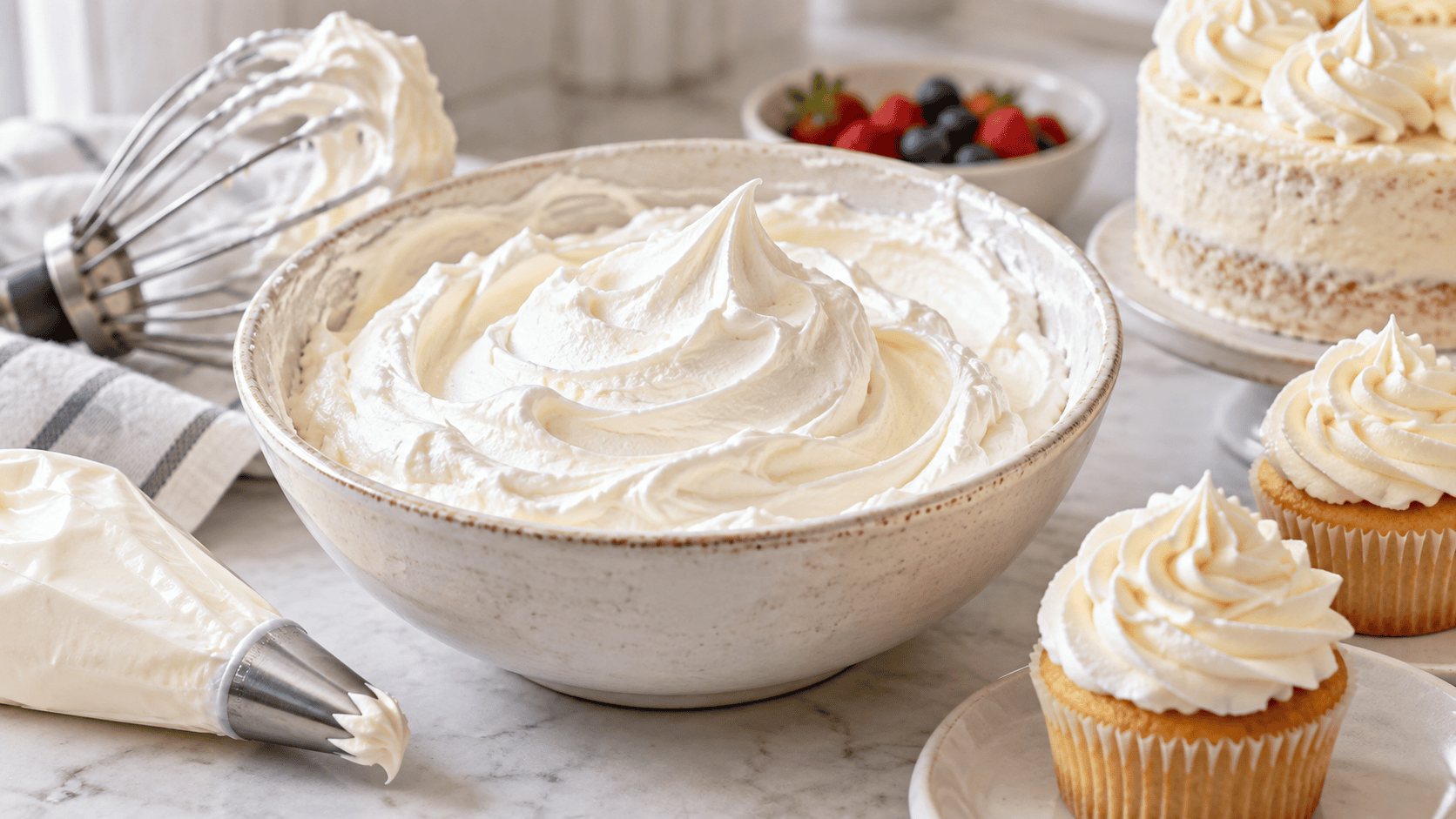
Learn how to stabilize whipped cream so it stays light, fluffy, and sturdy enough for cakes, cupcakes, piping, and make-ahead desserts.
What Is Stabilized Whipped Cream?
Stabilized whipped cream is regular homemade whipped cream with an ingredient added to help its whipped structure last longer.
When heavy cream is whipped, air becomes trapped within a network of fat. Given enough time or warmth, that delicate structure begins to break down.
A stabilizer gives the whipped cream extra support so it is less likely to deflate, separate, or weep.
That makes stabilized whipped cream especially useful when you want to:
- frost a layer cake
- pipe cupcakes
- make decorative rosettes or borders
- fill a cake or pastry
- prepare dessert ahead of time
- transport a refrigerated dessert
- top pies, cheesecakes, trifles, or fruit desserts
If you’re simply adding a spoonful of whipped cream to pie and eating it immediately, you probably don’t need to stabilize it at all. My regular homemade whipped cream is perfect for that.
What Is the Best Way to Stabilize Whipped Cream?
There isn’t one stabilizer that is automatically best for every dessert.
For cakes, cupcakes, decorative piping, and a traditional whipped-cream flavor, I prefer the gelatin method in the recipe below.
Gelatin adds structure without adding much sweetness or a noticeable flavor, and it creates whipped cream sturdy enough for beautifully defined piping.
Other methods have their own advantages.
- Gelatin: my choice for clean piping, cakes, cupcakes, and longer-lasting structure.
- Instant ClearJel: excellent when long refrigerated holding is your priority.
- Instant pudding mix: one of the easiest shortcuts.
- Cream cheese: rich, sturdy, and slightly tangy.
- Mascarpone: creamy and sophisticated with excellent body.
- Powdered sugar: a quick boost when you only need modest short-term stability.
If you’re standing in the kitchen holding a carton of cream and wondering which road to take, don’t worry. There’s a complete comparison farther down.
Ingredients for Gelatin-Stabilized Whipped Cream
You only need five ingredients for my primary stabilized whipped cream recipe:
- 2 cups cold heavy whipping cream
- 1/4 cup powdered sugar
- 1 teaspoon pure vanilla extract
- 1 teaspoon unflavored gelatin
- 4 teaspoons cold water
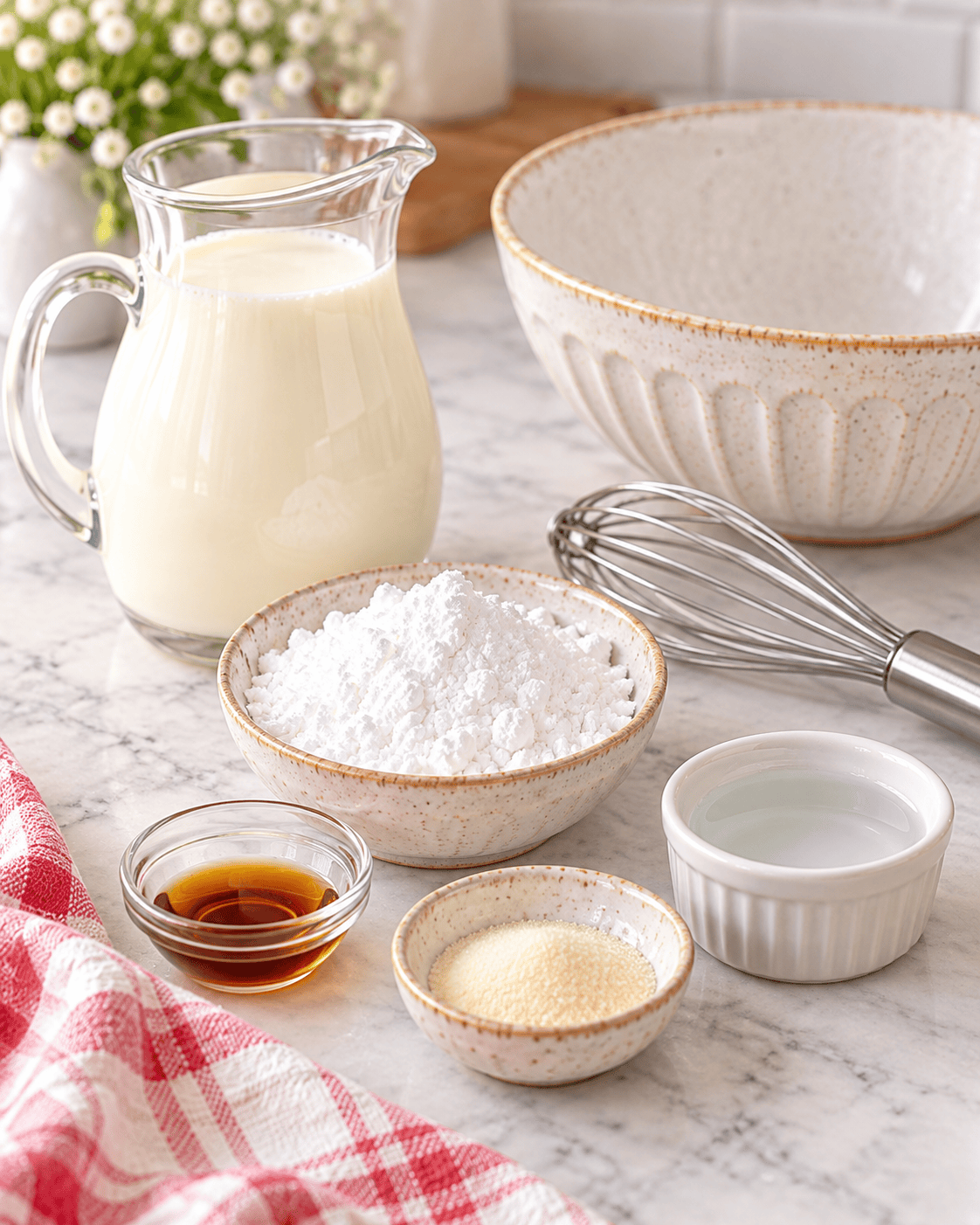
You only need heavy whipping cream, powdered sugar, vanilla, unflavored gelatin, and cold water to make stabilized whipped cream.
Heavy Whipping Cream
Heavy cream is the foundation of the recipe, so this is not the place for half-and-half or milk.
Keep the cream refrigerated until you’re ready to whip it. Cold cream traps air much more effectively than warm cream.
Powdered Sugar
I use powdered sugar because it dissolves quickly into cold cream and gives the finished whipped cream a smooth texture.
We’ve kept the sweetness moderate at 1/4 cup for 2 cups of heavy cream. The whipped cream should taste creamy and lightly sweet rather than like buttercream wearing a disguise.
Vanilla
For a classic flavor, use pure vanilla extract.
If you’d like a richer vanilla flavor with those gorgeous little vanilla-bean flecks, Nielsen-Massey Madagascar Bourbon Vanilla Bean Paste is a delicious upgrade.
Unflavored Gelatin
Unflavored gelatin gives the whipped cream extra structure without turning it into a heavy frosting.
It must be bloomed in cold water and completely dissolved before it is added to the cream.
That little step is the difference between silky whipped cream and tiny gelatin pebbles nobody invited to dessert.
How to Stabilize Whipped Cream with Gelatin
Step 1: Start Cold
Keep your heavy cream refrigerated until the moment you need it.
For extra insurance—especially in a warm kitchen—chill your mixing bowl and whisk or beaters for about 10 minutes first.
A good set of mixing bowls makes it easy to keep one chilling while you prepare the remaining ingredients.
Step 2: Bloom the Gelatin
Place 4 teaspoons cold water in a small microwave-safe bowl.
Sprinkle 1 teaspoon unflavored gelatin evenly over the surface.
Do not dump the gelatin into one big pile.
Let it stand for about 5 minutes. The gelatin will absorb the liquid and become thick and gel-like.
This is called blooming gelatin, and you don’t want to skip it.
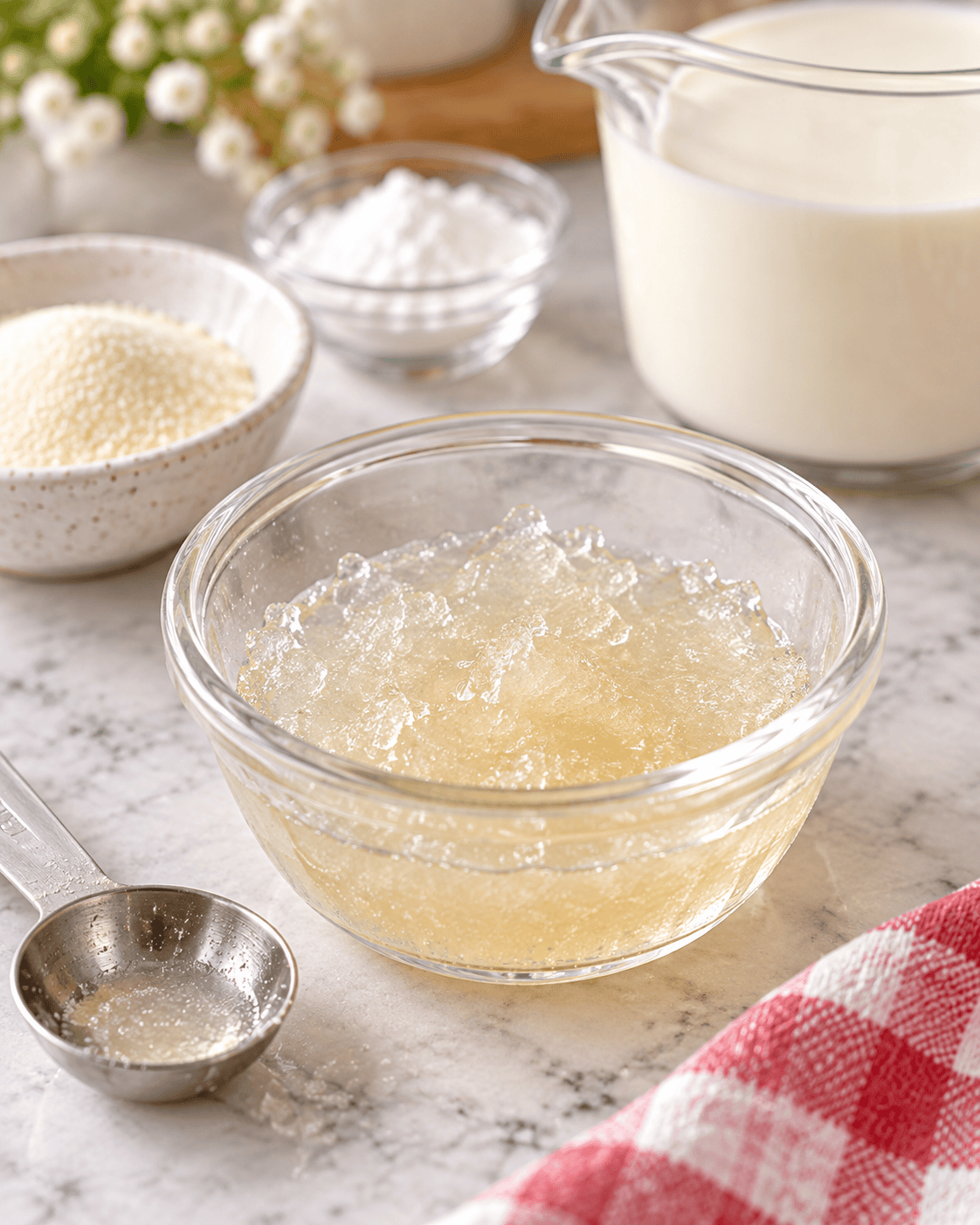
Let the gelatin bloom in cold water for about five minutes before gently melting it for the whipped cream.
Step 3: Melt the Gelatin
Warm the bloomed gelatin very gently until it becomes completely smooth and liquid.
If using a microwave, start with only a few seconds. Stir and check it before adding more time.
You want it fluid—not boiling hot.
Set it aside briefly while you begin whipping the cream. The gelatin should still be liquid when you add it.
Step 4: Begin Whipping the Cream
Pour the 2 cups cold heavy whipping cream into your chilled bowl.
A stand mixer fitted with the whisk attachment makes this particularly easy, but a hand mixer works beautifully too.
Begin beating the cream on medium speed.
Once it becomes foamy and starts to thicken, add the 1/4 cup powdered sugar and 1 teaspoon vanilla.
Step 5: Stop at Soft Peaks
Continue whipping only until the cream reaches soft peaks.
When you lift the whisk, the cream should form a peak that curls or gently folds over at the tip.
This is the sweet spot for adding the gelatin.
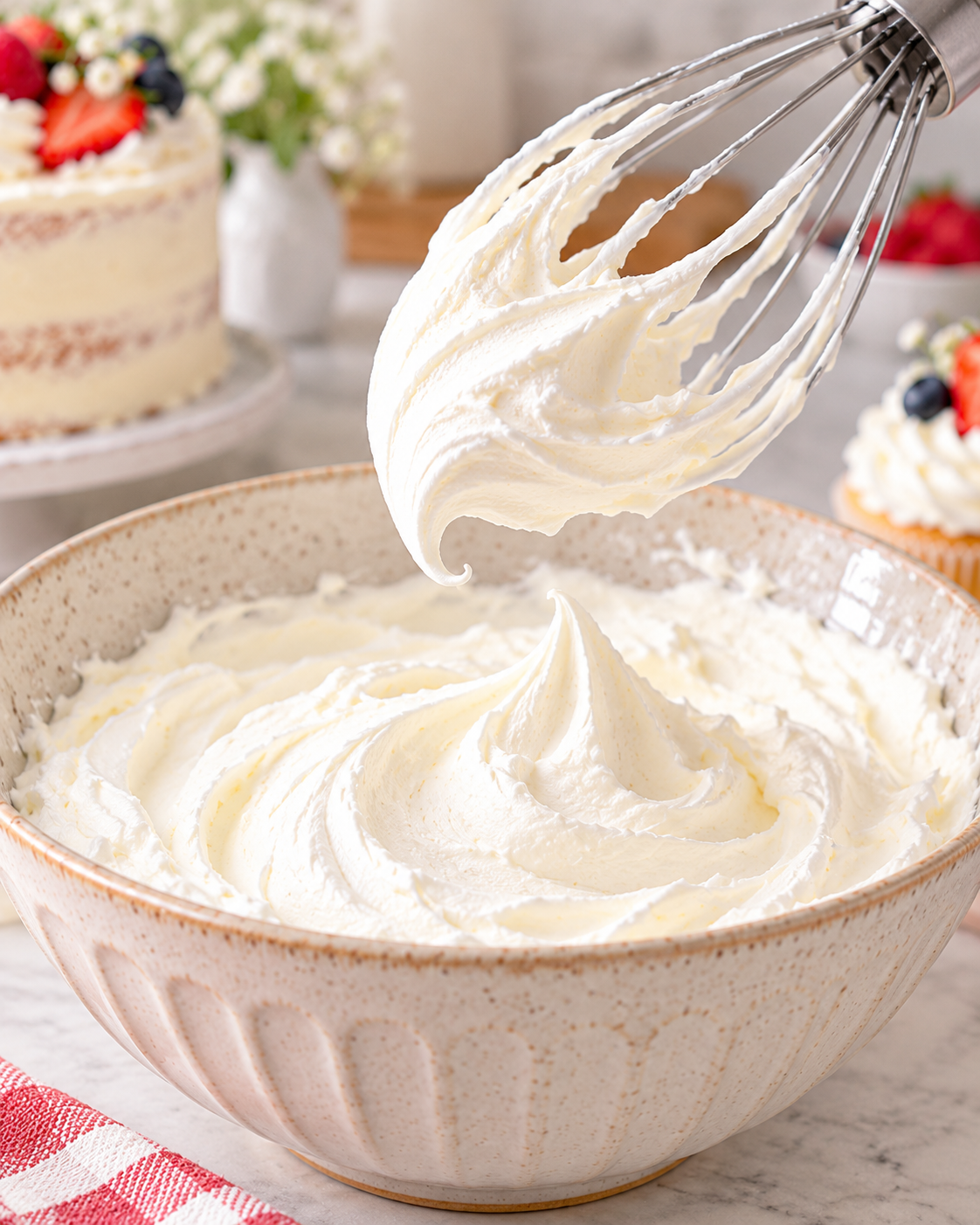
Whip the cream until soft peaks form, then slowly drizzle in the dissolved gelatin.
Step 6: Slowly Add the Gelatin
Turn the mixer to low.
Slowly drizzle the liquid gelatin into the whipped cream while the mixer is running.
Try to drizzle it into the cream rather than directly onto the whisk or beaters.
Once incorporated, increase the mixer to medium and continue whipping.
Step 7: Whip to Firm Peaks
Watch closely.
Once gelatin is added, the cream can move from perfectly whipped to overwhipped surprisingly quickly.
Stop when the peaks stand upright and hold their shape but the whipped cream still looks silky and smooth.
When in doubt, stop the electric mixer slightly early and finish the last few strokes with a whisk by hand.
Step 8: Use It
For piping and decorating, use your stabilized whipped cream soon after it is made.
A piping bag and decorating tip set works for borders, swirls, cupcakes, and simple cake decorations.
For dramatic rosettes and bakery-style swirls, I especially like a large closed-star tip such as the Ateco 849 piping tip.
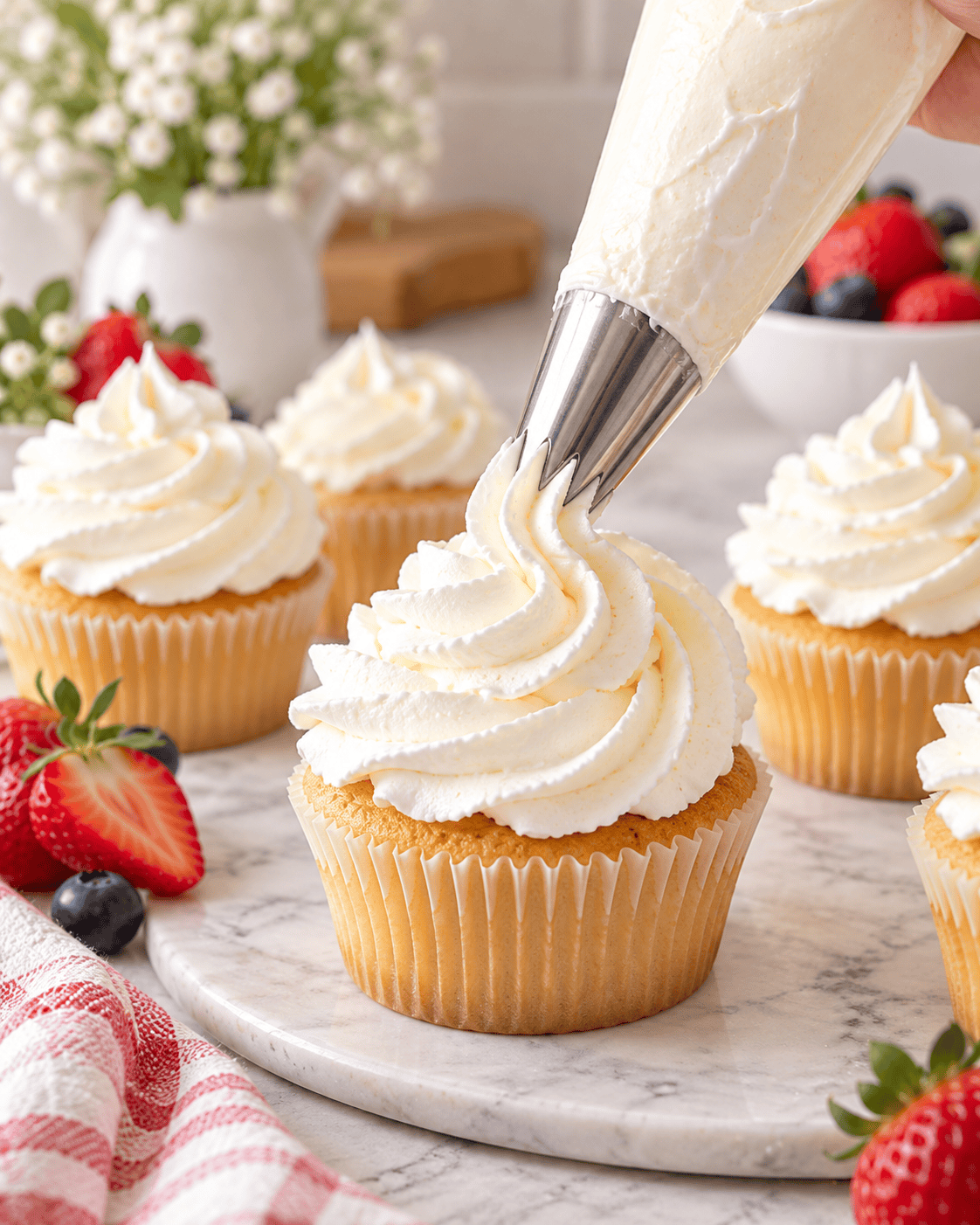
Gelatin-stabilized whipped cream pipes into defined swirls that hold their shape beautifully on cupcakes and cakes.
Soft Peaks vs. Stiff Peaks: What’s the Difference?
These baking terms sound fancy until you’ve seen them once.
Soft Peaks
Lift the whisk out of the cream.
A peak will form, but the tip will curl or fall over.
Add your gelatin at this stage.
Firm or Stiff Peaks
Lift the whisk again.
The peak stands upright and keeps its shape.
Stop whipping.
If the cream starts looking grainy, chunky, or curdled, you’ve gone too far.
6 Ways to Stabilize Whipped Cream
You don’t have to use gelatin every time. The right stabilizer depends on how you’re using the whipped cream, what ingredients you have, and whether you mind changing the flavor slightly.
1. Gelatin-Stabilized Whipped Cream
Best for: cakes, cupcakes, decorative piping, cake filling, make-ahead desserts, and clean definition.
For 2 cups heavy cream, use:
- 1 teaspoon unflavored gelatin
- 4 teaspoons cold water
Bloom and melt the gelatin, then drizzle it into the whipped cream when it reaches soft peaks.
Flavor: closest to traditional homemade whipped cream.
Stability: excellent.
2. Instant ClearJel
Instant ClearJel is a modified food starch that can stabilize whipped cream without requiring you to bloom or melt anything first.
It’s especially useful when refrigerated holding time is a priority.
The important word here is Instant. Regular ClearJel behaves differently and shouldn’t simply be substituted cup-for-cup.
Because formulations and intended use can vary, follow the amount recommended for the specific Instant ClearJel product or recipe you’re using.
Best for: make-ahead whipped cream and desserts requiring longer refrigerated holding.
Flavor: neutral when used correctly.
Stability: excellent.
3. Instant Pudding Mix
This is the “I don’t want to mess with gelatin today” method.
For every 1 cup heavy whipping cream, start with approximately 1 tablespoon instant pudding mix.
Vanilla or white chocolate pudding works particularly well when you want to preserve the pale color of the whipped cream.
Because pudding mix contains sugar and flavoring, taste before adding your normal amount of powdered sugar.
Best for: trifles, cupcakes, fillings, fruit desserts, and quick make-ahead toppings.
Flavor: sweeter with a mild pudding flavor.
Stability: very good.
4. Cream Cheese
Cream cheese gives whipped cream plenty of body and creates a richer, slightly tangy topping.
For 2 cups heavy whipping cream, start with about 2 to 3 tablespoons softened cream cheese.
Beat the cream cheese until completely smooth first, then gradually incorporate the cold heavy cream before whipping.
Best for: layer cakes, cupcakes, carrot cake, cheesecakes, pumpkin desserts, berries, and desserts where a little tang works in your favor.
Flavor: creamy and slightly tangy.
Stability: excellent.
5. Mascarpone
Mascarpone provides structure much like cream cheese but has a softer, milder dairy flavor.
It’s especially lovely in berry desserts, tiramisu-inspired desserts, layer cakes, and pastries.
Start with chilled mascarpone and heavy cream and avoid aggressive overmixing, which can make mascarpone mixtures grainy.
Best for: elegant layer cakes, fruit desserts, pastries, and tiramisu-inspired recipes.
Flavor: rich, milky, and mild.
Stability: very good.
6. Powdered Sugar
If your dessert only needs a little extra help, powdered sugar may be enough.
Most powdered sugar contains cornstarch, which gives ordinary whipped cream a modest stability boost.
Simply use powdered sugar instead of granulated sugar when sweetening your whipped cream.
Best for: same-day pie, shortcakes, fruit, hot cocoa, waffles, and simple dessert toppings.
Flavor: classic sweetened whipped cream.
Stability: light.
I would not rely on powdered sugar alone for intricate piping or a cake that needs to remain beautifully decorated for an extended period.
Which Whipped Cream Stabilizer Should You Use?
| Method | Best For | Flavor Change | Stability |
|---|---|---|---|
| Gelatin | Cakes, cupcakes, piping | Very little | Excellent |
| Instant ClearJel | Long refrigerated holding | Very little | Excellent |
| Instant pudding mix | Easy shortcut, fillings, trifles | Noticeable sweetness/flavor | Very good |
| Cream cheese | Cakes, cupcakes, rich desserts | Rich and tangy | Excellent |
| Mascarpone | Fruit cakes, pastries, elegant desserts | Mild and creamy | Very good |
| Powdered sugar | Same-day toppings | Sweetens cream | Light |
What About Cornstarch?
You will sometimes see cornstarch recommended as a whipped cream stabilizer.
It can provide additional structure, but too much can leave the whipped cream tasting chalky or feeling slightly gritty.
Since powdered sugar already provides a small amount of starch and there are several smoother options available, straight cornstarch isn’t my first choice.
Tips for Perfect Stabilized Whipped Cream
Keep Everything Cold
Cold cream whips more reliably than warm cream.
If your kitchen is warm, chill the bowl and whisk or beaters before starting.
Use Heavy Cream
Use heavy cream or heavy whipping cream rather than milk or half-and-half.
You need sufficient milk fat to create a strong whipped structure.
Bloom the Gelatin First
Don’t sprinkle dry gelatin directly into whipped cream.
Bloom it in cold water first, then gently melt it until completely smooth.
Do Not Boil the Gelatin
You only need enough heat to dissolve it.
If you’ve turned your tiny bowl of gelatin into a bubbling cauldron, you’ve gone farther than necessary.
Don’t Let the Gelatin Set Again
Your dissolved gelatin should remain fluid until it is drizzled into the cream.
If it solidifies, warm it very gently again.
Add Gelatin at Soft Peaks
This gives the gelatin enough time to distribute throughout the cream before it reaches its final texture.
Watch the Last 30 Seconds
This is not the time to answer a text, feed the dog, or wander off to find your coffee.
Once gelatin is added, watch the texture closely.
Finish by Hand if Necessary
If you aren’t sure whether the cream needs another 20 seconds in the mixer, stop.
A few strokes with a hand whisk give you far more control.
Troubleshooting Stabilized Whipped Cream
Why Is My Whipped Cream Grainy?
You may have overwhipped it.
If the cream is only slightly grainy, add a tablespoon or two of cold heavy cream and gently whisk by hand until the texture smooths.
Why Are There Gelatin Lumps in My Whipped Cream?
The gelatin may have begun setting before it was fully incorporated, or it may not have been completely dissolved.
Make sure the bloomed gelatin is smooth, fluid, and only gently warm before you drizzle it into soft whipped cream.
Why Won’t My Cream Whip?
Check the temperature first.
Warm cream is much harder to whip successfully.
Also make sure you’re using heavy cream or heavy whipping cream rather than a lower-fat substitute.
Why Is My Stabilized Whipped Cream Runny?
If it hasn’t yet reached firm peaks, it may simply need a little more whipping.
Continue briefly while watching the texture carefully.
If properly whipped cream later becomes loose, check whether it has been stored too warm.
Can I Fix Overwhipped Cream?
Sometimes.
If the cream has only begun to look grainy, gently whisk in a small amount of fresh cold heavy cream.
If the fat has clearly separated from the liquid, you’ve crossed into butter-making territory.
On the bright side: homemade butter.
Can You Frost a Cake with Stabilized Whipped Cream?
Absolutely.
That’s one of the best reasons to stabilize it.
Gelatin-stabilized whipped cream makes a lighter alternative to traditional buttercream and can be used:
- between cake layers
- around the outside of a cake
- for borders
- for rosettes
- for swirls
- on cupcakes
- as a decorative finish on pies and cheesecakes
Make sure the cake itself has completely cooled before frosting it.
A warm cake and whipped cream are not friends.
How Long Does Stabilized Whipped Cream Last?
For the gelatin recipe here, I recommend making it as close as practical to when you plan to decorate, then refrigerating the finished dessert.
For best quality, use the finished whipped cream within about 24 to 48 hours.
Some stabilized whipped creams can retain their structure longer, depending on the stabilizer and how they’re being used, but freshness and food safety still matter.
Stabilizing whipped cream does not make dairy shelf-stable.
Can I Make Stabilized Whipped Cream Ahead of Time?
Yes, but there’s an important distinction.
If you’re using gelatin and plan to pipe or frost with it, I prefer to make the whipped cream, decorate the dessert, and then refrigerate the finished dessert.
Once gelatin sets, whipped cream isn’t as forgiving about being stirred, rewhipped, and reworked later.
If your priority is keeping a bowl of whipped cream refrigerated before serving, an alternative such as Instant ClearJel may be better suited to that job.
Does Stabilized Whipped Cream Need to Be Refrigerated?
Yes.
Stabilization helps whipped cream hold its shape. It does not turn heavy cream into a shelf-stable food.
Keep stabilized whipped cream and desserts frosted or filled with it refrigerated.
Can I Color Stabilized Whipped Cream?
Yes.
Gel food coloring works especially well because you can create strong color without adding much additional liquid.
Start with a tiny amount. You can always add more.
Can I Flavor Stabilized Whipped Cream?
Absolutely—and this is where things get fun.
Try:
- almond extract
- maple extract
- lemon zest
- orange zest
- espresso powder
- cocoa powder
- cinnamon
- pumpkin pie spice
- peppermint extract
- vanilla bean paste
Start conservatively with extracts. You can always add another drop, but fishing peppermint extract back out of whipped cream remains beyond my skill set.
Can You Freeze Stabilized Whipped Cream?
You can freeze individual whipped-cream dollops for convenient toppings.
Pipe or spoon them onto a parchment-lined baking sheet and freeze until firm, then transfer them to a freezer-safe container.
They’re handy for hot chocolate, coffee, pie, and other individual desserts.
For frosting a cake, though, I prefer freshly made stabilized whipped cream for the smoothest texture and cleanest appearance.
Ways to Use Stabilized Whipped Cream
This is one of those basic recipes that quietly makes dozens of other recipes better.
Try stabilized whipped cream on:
- layer cakes
- cupcakes
- cheesecake
- cream pies
- pumpkin pie
- banana cream pie
- strawberry shortcake
- pavlova
- trifles
- fresh berries
- pancakes and waffles
- hot chocolate
- ice cream sundaes
It would be especially good spooned over my Cinnamon Apple Crisp or these cozy Vanilla Cinnamon Baked Apples.
And if you really want to make dessert behave irresponsibly, add a drizzle of Homemade Caramel Sauce.
Frequently Asked Questions
Does gelatin-stabilized whipped cream taste like gelatin?
No. When the small amount used in this recipe is properly incorporated, the whipped cream should still taste like vanilla whipped cream.
Can I stabilize whipped cream without gelatin?
Yes. Instant ClearJel, instant pudding mix, cream cheese, mascarpone, and powdered sugar can all provide varying degrees of additional stability.
Can I use granulated sugar instead of powdered sugar?
You can make whipped cream with granulated sugar, but powdered sugar dissolves very easily into cold cream and provides a smoother result for this recipe.
Can I double this stabilized whipped cream recipe?
Yes.
Double all of the ingredients, including the gelatin and water, and use a bowl large enough to accommodate the cream as it increases in volume.
Can I halve the recipe?
Yes.
For 1 cup heavy whipping cream, use approximately 1/2 teaspoon gelatin and 2 teaspoons cold water, along with half the remaining ingredients.
Can I make stabilized whipped cream with a hand mixer?
Absolutely.
A hand mixer works very well. Watch carefully as the cream approaches firm peaks.
Can I make stabilized whipped cream without a mixer?
Yes, although your arm may have opinions about the decision.
A large whisk and a cold bowl will work. Whisk consistently until soft peaks form, incorporate the stabilizer as directed, and continue until firm peaks form.
Is stabilized whipped cream the same as Cool Whip?
No.
This is still homemade whipped cream made primarily from heavy cream. A stabilizer simply helps the whipped structure last longer.
Is stabilized whipped cream sweeter than buttercream?
Usually the opposite.
This recipe uses only 1/4 cup powdered sugar for 2 cups of heavy cream, making it a much lighter option when traditional buttercream feels too rich or sweet.
Helpful Equipment
- Stand mixer — makes it easy to monitor the change from soft peaks to firm peaks.
- Hand mixer — an excellent choice for smaller batches.
- Mixing bowls — chill the bowl before whipping for extra insurance in a warm kitchen.
- Piping bags and decorating tips — useful for cakes, cupcakes, borders, and rosettes.
- Ateco 849 large closed-star piping tip — creates big bakery-style swirls and rosettes.
Save this guide to learn six easy ways to stabilize whipped cream for fluffy, pipeable results that hold their shape.
Stabilized Whipped Cream Recipe
This easy stabilized whipped cream uses unflavored gelatin for extra structure while keeping the light texture and fresh vanilla flavor of homemade whipped cream.
Use it for cakes, cupcakes, pies, piping, trifles, cheesecakes, fruit desserts, and other desserts that need whipped cream with a little more staying power.
How to Stabilize Whipped Cream
Learn how to stabilize whipped cream with unflavored gelatin for a light, fluffy topping that holds its shape beautifully. This easy stabilized whipped cream is perfect for cakes, cupcakes, pies, piping, trifles, cheesecakes, and make-ahead desserts.
Ingredients
- 2 cups cold heavy whipping cream
- 1/4 cup powdered sugar
- 1 teaspoon pure vanilla extract
- 1 teaspoon unflavored gelatin
- 4 teaspoons cold water
Instructions
1. Chill the bowl and beaters. Keep the heavy whipping cream refrigerated until you are ready to use it. For best results, chill your mixing bowl and whisk or beaters for about 10 minutes before beginning.
2. Bloom the gelatin. Add the cold water to a small microwave-safe bowl. Sprinkle the unflavored gelatin evenly over the water and let it stand for about 5 minutes, until the gelatin absorbs the liquid and becomes thick.
3. Melt the gelatin. Microwave the bloomed gelatin for just a few seconds, until completely melted and smooth. Stir if needed. Do not boil. Set it aside briefly while you begin whipping the cream. The gelatin should remain liquid but should not be piping hot.
4. Begin whipping the cream. Pour the cold heavy whipping cream into the chilled mixing bowl. Beat on medium speed until the cream becomes foamy and starts to thicken.
5. Add the sugar and vanilla. Add the powdered sugar and vanilla extract. Continue beating until the cream reaches soft peaks. When the whisk is lifted, the peak should form but gently curl over at the tip.
6. Add the gelatin. Reduce the mixer to low speed. Slowly drizzle the dissolved gelatin into the whipped cream, aiming for the cream rather than directly onto the beaters or whisk.
7. Whip to firm peaks. Increase the mixer to medium speed and continue whipping just until firm peaks form. The cream should stand upright and hold its shape while remaining smooth and silky.
8. Use promptly. Use the stabilized whipped cream for frosting, filling, piping, or topping your dessert. Refrigerate the finished dessert until ready to serve.
Notes
Helpful Equipment
Tips for Perfect Stabilized Whipped Cream
What Are Soft Peaks?
Soft peaks form when you lift the whisk and the whipped cream creates a peak that gently curls or falls over at the tip. This is the ideal stage for adding the dissolved gelatin.
What Are Firm Peaks?
Firm peaks stand upright when you lift the whisk and hold their shape. Stop whipping once you reach this stage so the cream stays smooth instead of becoming grainy.
Troubleshooting
Why is my stabilized whipped cream grainy?
It was most likely whipped a little too long. If it is only slightly grainy, gently whisk in 1 to 2 tablespoons of cold heavy cream by hand until the texture becomes smooth again.
Why are there gelatin lumps in my whipped cream?
The gelatin may have begun setting before it was added, or it may not have completely dissolved. It should be smooth and fluid when it is drizzled into the cream at the soft-peak stage.
Why won't my cream whip?
Make sure the heavy cream is very cold and that you are using heavy cream or heavy whipping cream rather than a lower-fat dairy product.
Why is my whipped cream runny?
If it has not reached firm peaks yet, continue whipping briefly while watching it closely. If previously whipped cream becomes loose later, it may have become too warm.
Can I fix overwhipped cream?
If it has only begun to look grainy, gently whisk in a small amount of fresh cold cream. If the fat and liquid have completely separated, the cream has begun turning into butter.
How Long Does Stabilized Whipped Cream Last?
For the best flavor, texture, and appearance, use this gelatin-stabilized whipped cream within about 24 to 48 hours. Keep it refrigerated at all times.
Can I Make It Ahead?
Yes. For cakes and piped desserts, the best approach is to make the whipped cream, decorate the dessert, and refrigerate the finished dessert. Once gelatin has set, the whipped cream is less forgiving about being stirred or rewhipped later.
Can I Frost a Cake with Stabilized Whipped Cream?
Yes. Stabilized whipped cream is a light alternative to buttercream and works beautifully between cake layers, around the outside of cakes, on cupcakes, and for piped borders, rosettes, and swirls. Make sure the cake is completely cool before frosting.
Other Ways to Stabilize Whipped Cream
Can I Flavor Stabilized Whipped Cream?
Yes. Try vanilla bean paste, almond extract, maple extract, cocoa powder, espresso powder, lemon or orange zest, cinnamon, pumpkin pie spice, or peppermint extract. For a rich vanilla option, try Nielsen-Massey Madagascar Bourbon Vanilla Bean Paste.
Can I Color Stabilized Whipped Cream?
Yes. Gel food coloring works especially well because it adds strong color without introducing much extra liquid.
Storage
Store stabilized whipped cream or desserts made with it covered in the refrigerator. Stabilizing whipped cream helps it hold its shape, but it does not make dairy shelf-stable.
Freezing
For individual toppings, pipe or spoon dollops of whipped cream onto a parchment-lined baking sheet and freeze until firm. Transfer the frozen dollops to a freezer-safe container and use them for hot chocolate, coffee, pie, or other desserts. For cakes and decorative piping, freshly made refrigerated whipped cream gives the best texture.
More Recipes You'll Love
Nutrition Information:
Yield:
32Serving Size:
2 tablespoonsAmount Per Serving: Calories: 62Total Fat: 6gSaturated Fat: 4gUnsaturated Fat: 2gCholesterol: 18mgSodium: 5mgCarbohydrates: 2gFiber: 0gSugar: 2gProtein: 1g
The Nutritional Information may not be accurate. This website provides approximate nutrition information for convenience and as a courtesy only. Nutrition data is gathered primarily from the USDA Food Composition Database, whenever available, or otherwise other online calculators.
More Fluffy Dessert Favorites
If you’re collecting dependable homemade toppings, don’t stop here.
My Easy Marshmallow Frosting is another light, fluffy option when you want something sweeter than whipped cream but less traditional than buttercream.
And if gelatin recipes have you feeling ambitious, these Homemade Marshmallows turn the same little packet of gelatin into soft, pillowy clouds of vanilla goodness.
Next Recipe to Try: Easy Marshmallow Frosting
If you love light, fluffy toppings, make my Easy Marshmallow Frosting next. It’s fluffy, pipeable, ready in minutes, and perfect for cupcakes, cakes, and chocolate desserts.
Final Thoughts
Knowing how to stabilize whipped cream is one of those small kitchen tricks that suddenly becomes useful everywhere.
For clean piping and a classic whipped-cream flavor, the gelatin method is my go-to. If you need a different flavor, easier shortcut, or longer refrigerated holding, Instant ClearJel, pudding mix, cream cheese, mascarpone, or powdered sugar may be a better match.
The important part isn’t choosing one universal winner.
It’s choosing the stabilizer that fits what you’re making.
Because homemade whipped cream deserves a better ending than slowly sliding down the side of your cake into a sad little puddle.