This homemade marshmallows recipe makes soft, fluffy vanilla marshmallows with that wonderfully pillowy texture you simply do not get from a grocery-store bag. They are springy enough to cut cleanly, soft enough to melt into hot cocoa, and gloriously gooey when toasted for s’mores.
You only need gelatin, sugar, light corn syrup, vanilla, salt, water, and confectioners’ sugar. The ingredient list is simple; the secret is knowing what to watch for. I’ll show you when the sugar syrup is ready, what properly whipped marshmallow mixture should look like, and how to keep the finished pieces from becoming one giant sticky marshmallow.
Make big squares for roasting, smaller cubes for cocoa, or package a batch for homemade gifts.
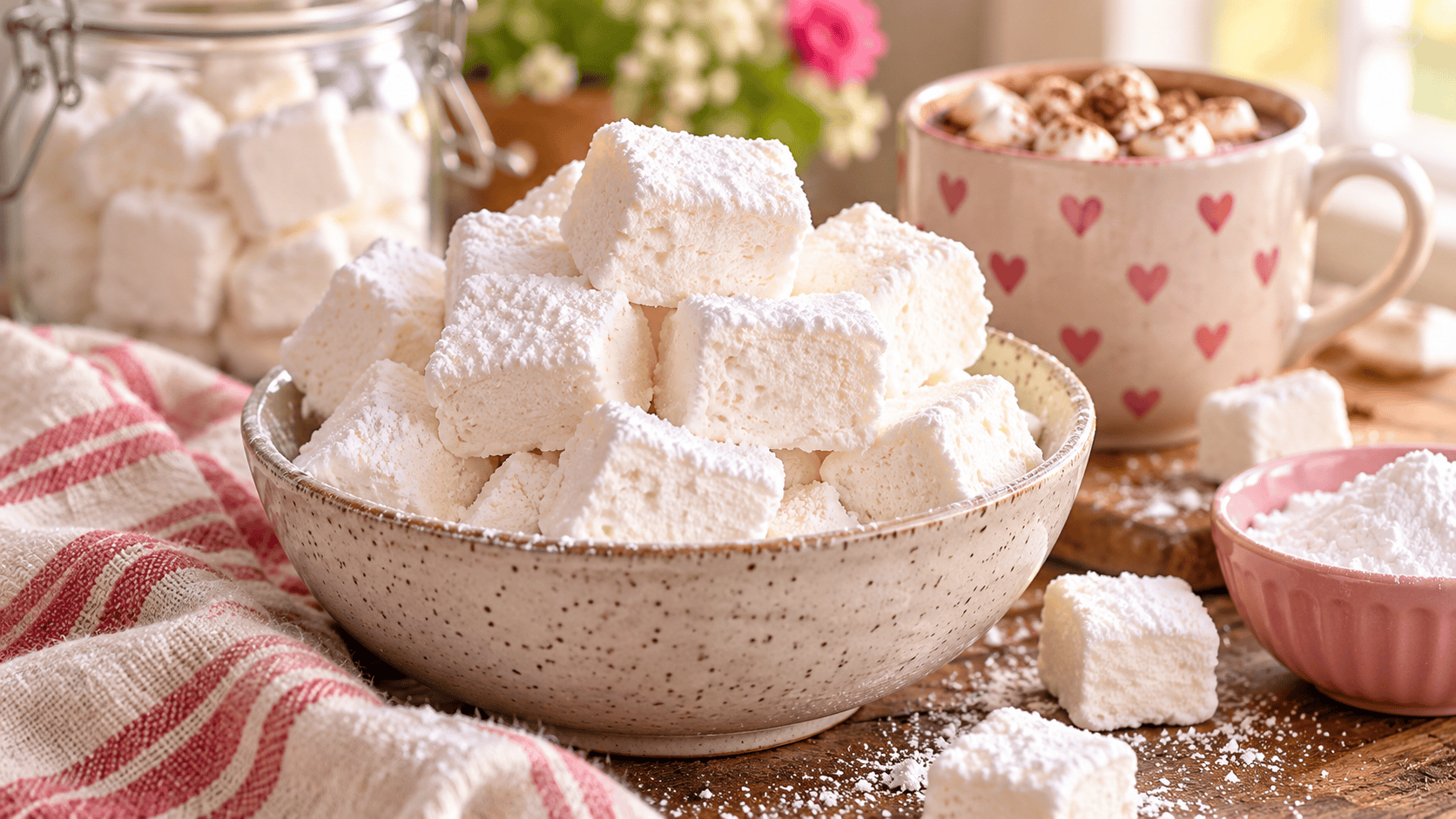
Soft and Fluffy Homemade Marshmallows
If you’ve never made marshmallows from scratch, the process feels a little bit like kitchen magic. Clear sugar syrup and bloomed gelatin turn into a bowl full of thick, glossy white fluff after several minutes in the mixer.
The most important number in this recipe is 240°F. Cooking the sugar syrup to the proper temperature gives the finished marshmallows enough structure to set while keeping them soft and springy rather than wet or dense.
Don’t let the candy thermometer intimidate you. Once you know the three big cues—240°F syrup, thick glossy marshmallow mixture, and a full room-temperature set—the recipe is surprisingly manageable.
Why You’ll Love This Homemade Marshmallow Recipe
- Actually fluffy: These are soft, springy, and pillowy rather than rubbery.
- Classic vanilla flavor: Sweet, nostalgic, and perfect with chocolate.
- Only seven basic ingredients: No specialty candy-making ingredients required.
- Perfect for s’mores: Homemade marshmallows melt quickly and become wonderfully gooey when toasted.
- Hot-cocoa worthy: Cut them large or make homemade mini marshmallows for mugs.
- Great for gifting: A jar or treat bag filled with homemade marshmallows makes an easy edible gift.
- Easy to customize: Change the flavor, size, or shape once you’ve mastered the vanilla version.
How to Make Homemade Marshmallows Video
Watch the video before your first batch if you can. The texture cues are especially helpful: you’ll see what the syrup looks like at the candy-making stage, how dramatically the mixture expands while whipping, and how thick it should be before it goes into the pan.
Readers Also Make
If marshmallow is your love language, these are natural next recipes:
Homemade Marshmallow Ingredients
Every ingredient has a job here, which is one reason I don’t recommend casually changing the formula on your first batch.
- Unflavored gelatin: Gives the marshmallows their structure, bounce, and soft chew.
- Cold water: Hydrates, or blooms, the gelatin before the hot syrup is added.
- Granulated sugar: Forms the base of the cooked candy syrup.
- Light corn syrup: Helps discourage sugar crystallization and contributes to a smooth texture.
- Kosher salt: Keeps all that sweetness from tasting flat.
- Vanilla extract: Gives these their classic vanilla-marshmallow flavor.
- Confectioners’ sugar: Keeps the pan, cutting surface, and finished marshmallows from sticking.
For this recipe you’ll use: 3 packages unflavored gelatin, 1/2 cup cold water, 1 1/2 cups granulated sugar, 1 cup light corn syrup, 1/4 teaspoon kosher salt, 1 teaspoon vanilla extract, plus confectioners’ sugar for coating.
Tools You’ll Need
You don’t need professional candy-making equipment, but a few tools make homemade marshmallows much easier.
- A stand mixer with a whisk attachment
- A heavy-bottom saucepan
- An instant-read thermometer
- A 9×12-inch non-metal baking dish
- A silicone or sturdy rubber spatula
- A cutting board
- A sharp knife or pizza cutter
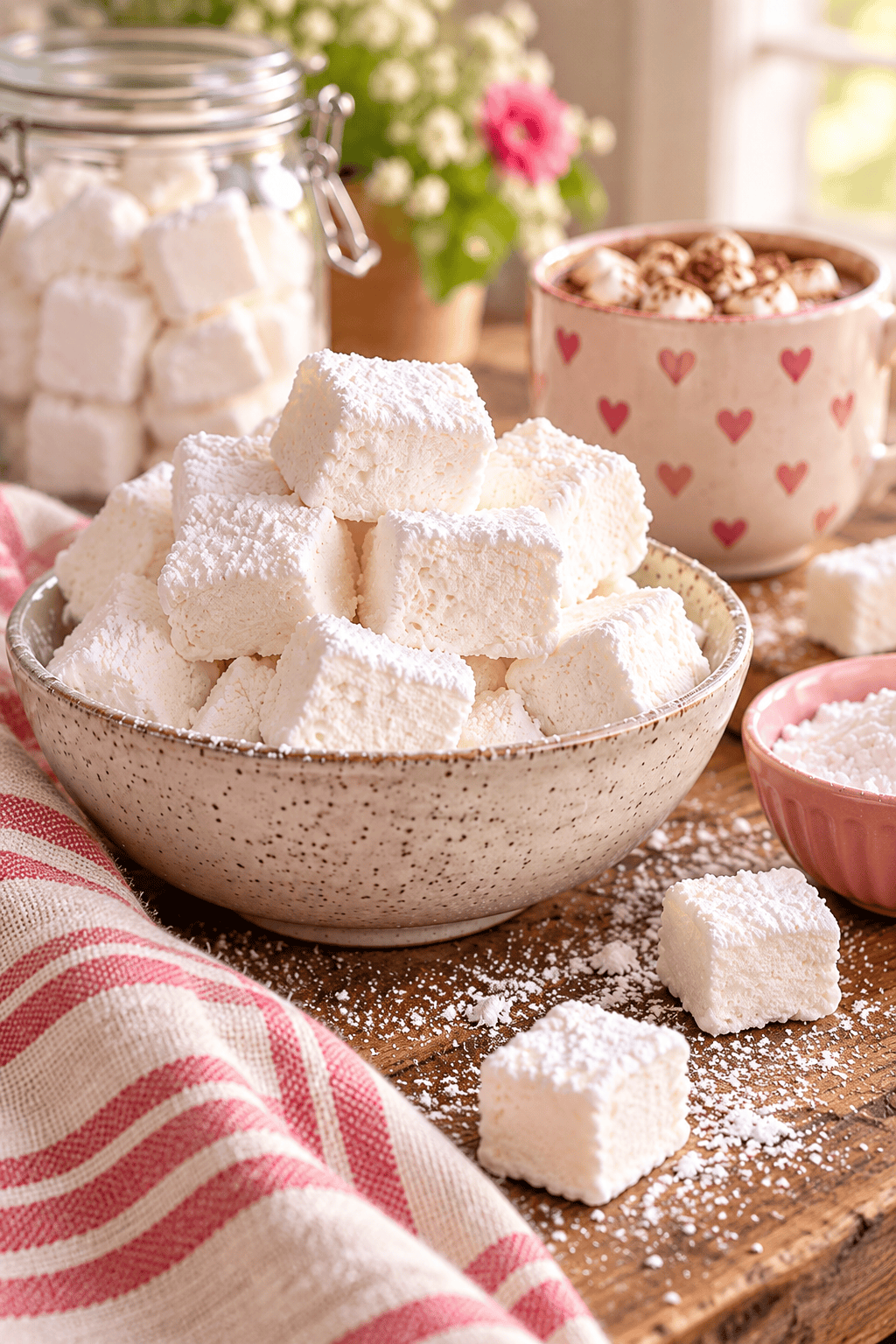
Soft homemade marshmallows dusted with powdered sugar are perfect for hot cocoa, gifting, and cozy homemade treats.
How to Make Marshmallows From Scratch
1. Bloom the Gelatin
Place the gelatin and cold water in the bowl of your stand mixer fitted with the whisk attachment. Let the gelatin sit while you make the sugar syrup.
Blooming gives the gelatin time to absorb the water so it can dissolve evenly when the hot syrup arrives. Don’t skip this quiet little step—it is doing important work while you are at the stove.
2. Cook the Sugar Syrup to 240°F
Combine the granulated sugar, light corn syrup, and salt in a heavy-bottom saucepan. Cook over medium heat, stirring only until the sugar has dissolved.
Once the mixture is dissolved and cooking, avoid unnecessary stirring. Agitating a concentrated sugar syrup can encourage sugar crystals to form along the sides of the pan.
Continue cooking until the syrup reaches 240°F. Check the temperature carefully rather than judging it by bubbles or appearance.
Don’t Have a Candy Thermometer?
A thermometer is the easiest and most reliable method, especially for a first batch. In a pinch, you can use the traditional cold-water test. Drop a very small amount of syrup into cold water. At the correct stage, it should gather into a cohesive ball that holds its shape but can still be pressed between your fingers.
Because boiling sugar syrup can cause serious burns, let the test portion cool before touching it.
3. Carefully Add the Hot Syrup
Turn the mixer to low. Slowly stream the hot syrup into the bloomed gelatin, pouring toward the inside wall of the mixer bowl rather than directly onto the moving whisk. That helps reduce splashing.
Once all of the syrup has been added, gradually increase the mixer to high speed.
4. Whip Until Thick, White, and Glossy
Beat for about 12 to 15 minutes, or until the mixture is snowy white, glossy, very thick, and dramatically larger in volume.
Don’t stop simply because it turned white. Properly whipped marshmallow mixture should leave obvious trails from the whisk and look more like an extremely thick marshmallow cream than frosting.
Add the vanilla near the end and mix just until incorporated.
5. Prepare the Pan
Coat a 9×12-inch non-metal baking dish with nonstick cooking spray and generously dust the bottom and sides with confectioners’ sugar.
Have the pan completely ready before the marshmallow mixture finishes whipping. Once the mixture begins cooling, it gets thicker and considerably more stubborn.
6. Spread and Set
Immediately scrape the marshmallow mixture into the prepared pan and spread it as evenly as possible. Dust the entire top with confectioners’ sugar.
Leave the marshmallows at room temperature for at least 8 hours or overnight.
Do not refrigerate the slab to speed things along. Refrigerator moisture can make marshmallows sticky.
7. Cut and Coat
Dust a cutting board with confectioners’ sugar and turn out the set marshmallow slab.
Use a confectioners’ sugar-dusted sharp knife or pizza cutter to cut the slab into squares. If the cutter starts sticking, wipe it clean and dust it again.
Toss every freshly cut side in confectioners’ sugar. Those exposed edges are where marshmallows most want to become best friends with one another.
How to Make Mini Marshmallows
Cut the slab into narrow strips first, then cut the strips crosswise into tiny cubes. Toss them thoroughly in confectioners’ sugar so every cut surface is coated.
They’re perfect for cocoa bars, snack mixes, dessert toppings, and little jars of homemade marshmallows.
Expert Tips for Your First Batch
- Use the thermometer. For this recipe, 240°F is a much better guide than appearance.
- Bloom the gelatin completely. Dry patches of gelatin make it harder to dissolve evenly.
- Don’t keep stirring boiling syrup. Once the sugar has dissolved, unnecessary agitation can encourage crystallization.
- Pour away from the whisk. Stream the hot syrup down the inside of the mixer bowl to reduce splashing.
- Whip for the texture, not just the clock. You want thick, glossy marshmallow mixture with obvious whisk trails.
- Have the pan ready. Once whipping stops, move quickly.
- Dust generously. Confectioners’ sugar is much cheaper than arguing with a marshmallow stuck permanently to your cutting board.
- Let them cure. Overnight is ideal if your schedule allows it.
Homemade Marshmallow Troubleshooting
Why are my homemade marshmallows sticky?
A little tackiness on freshly cut edges is normal. If the pieces are very sticky, they may need more time to set. Toss the cut sides in more confectioners’ sugar.
If your kitchen is humid, mixing a little cornstarch with the confectioners’ sugar can help keep the exterior drier.
Does humidity affect marshmallows?
Yes. Marshmallows readily pick up moisture from the air, which can make them tackier in humid weather. Let the slab set completely, coat the cut surfaces thoroughly, and move the finished marshmallows into an airtight container once they are ready.
I would not change the syrup temperature or ingredient amounts in this tested recipe simply because the weather is humid. Start with the recipe as written and use the coating and airtight storage to manage stickiness.
Why are my marshmallows dense?
The syrup may not have reached 240°F, or the marshmallow mixture may not have been whipped enough. It should become dramatically larger, white, thick, and glossy before it goes into the pan.
Why didn’t my marshmallows set?
Check the three usual suspects: gelatin that did not bloom fully, syrup that did not reach 240°F, or a slab that was cut before it had enough setting time.
Why did my sugar syrup crystallize?
Crystals can form when concentrated sugar syrup is agitated or when undissolved sugar remains around the sides of the pan. Stir only until the sugar dissolves, then let the syrup cook without continually stirring it.
Why is the marshmallow mixture impossible to spread?
It cools and sets quickly. Prepare the pan before whipping is finished, and transfer the mixture while it is still warm and workable.
Flavor and Shape Variations
- Peppermint marshmallows: Substitute peppermint extract for the vanilla and add a red swirl for winter cocoa.
- Vanilla bean: Use vanilla bean paste for a richer vanilla flavor.
- Strawberry: Add finely crushed freeze-dried strawberries to the coating mixture.
- Mini marshmallows: Cut the slab into narrow strips and then tiny cubes.
- Seasonal shapes: Use well-dusted cookie cutters for hearts, stars, trees, or snowflakes.
One caution: Flavor variations can change texture if they add a significant amount of liquid or dry ingredients. Once you’ve mastered the vanilla version, experiment conservatively rather than adding large quantities to the base.
Ways to Use Homemade Marshmallows
Eating one straight from the cutting board is a perfectly respectable serving suggestion, but these are especially good anywhere heat gets involved.
- Float them in hot cocoa or coffee.
- Toast them for campfire or indoor s’mores.
- Add them to a dessert board with chocolate, graham crackers, cookies, and berries.
- Cut them small for cocoa toppings.
- Top brownies, cupcakes, or ice cream.
- Package them in clear jars, tins, or treat bags for homemade gifts.
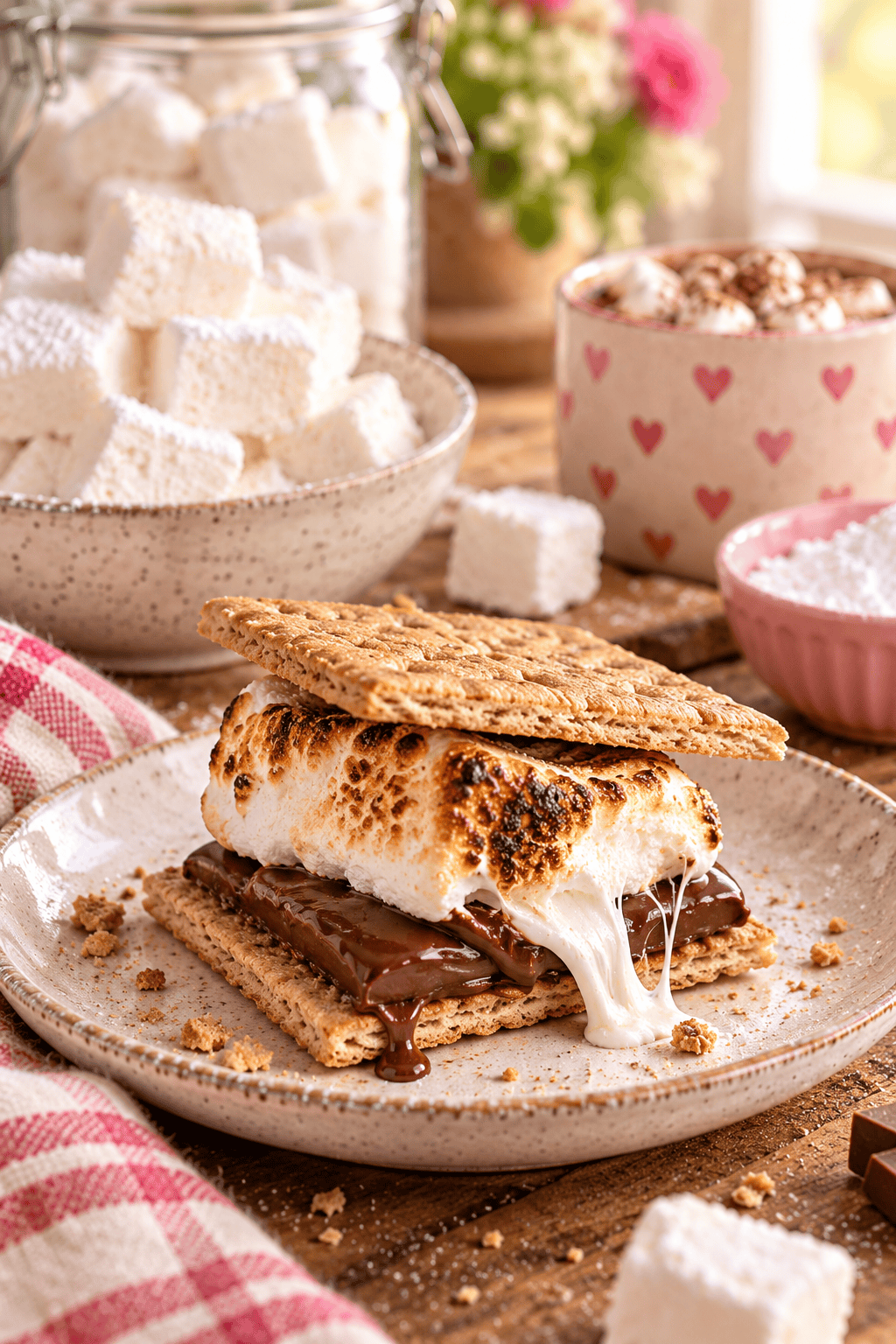
Homemade Marshmallows for S’mores
Homemade marshmallows soften much faster than the firm commercial kind, which is exactly why the s’mores are so gloriously messy. Toast them a little farther from the flame and rotate slowly so the outside browns before the center completely melts.
Want another way to play with s’mores? Try my Solar Oven S’mores.
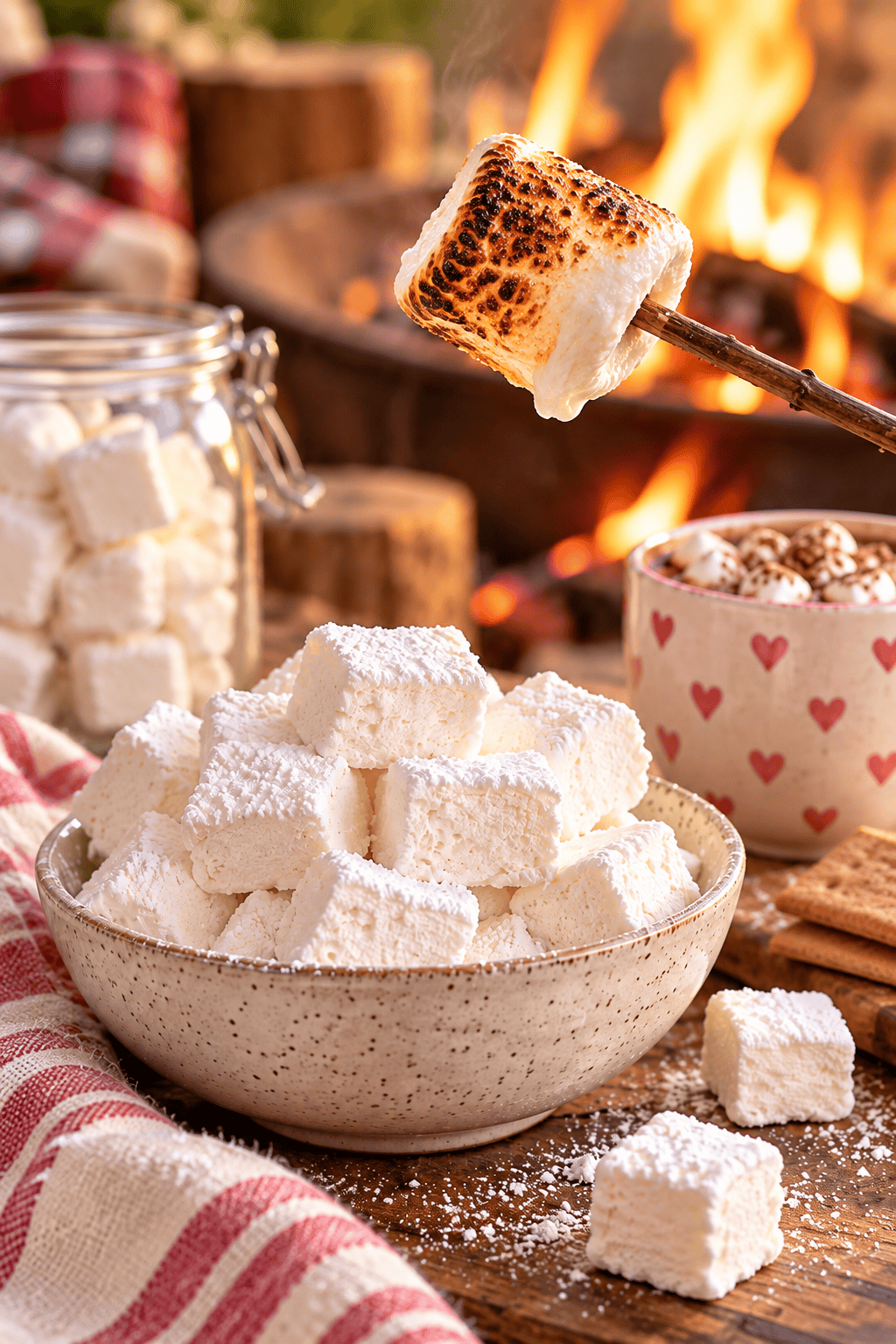
Can You Toast Homemade Marshmallows?
Absolutely. They toast beautifully. Just remember that homemade marshmallows soften quickly, so keep them slightly farther from the fire than packaged marshmallows and turn them gradually.
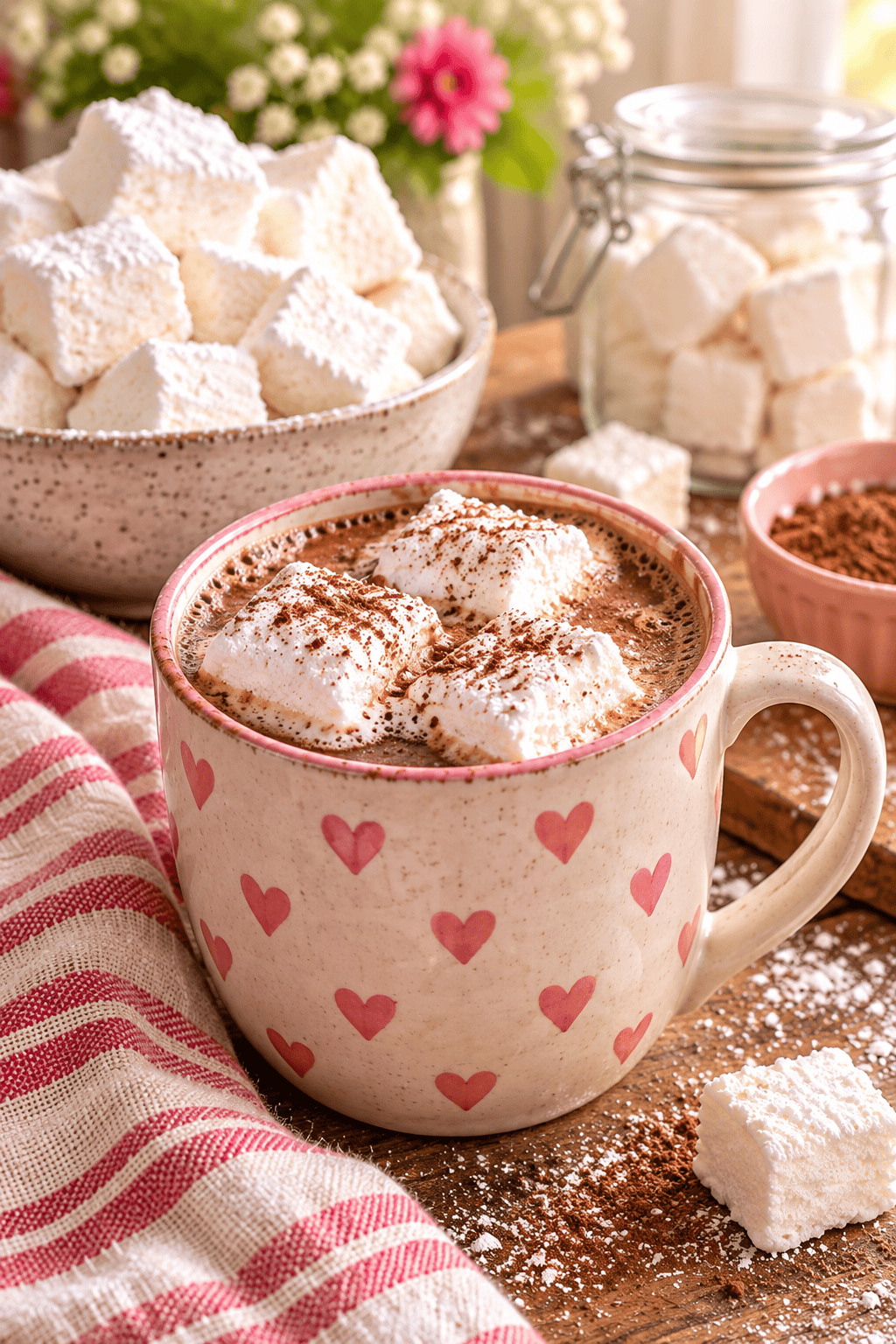
Soft homemade marshmallows melt beautifully into hot cocoa for an extra cozy cup.
Homemade Marshmallows for Hot Cocoa
This may be my favorite excuse for keeping a jar on the counter. Drop one or two squares into hot cocoa and the edges begin melting almost immediately, leaving a creamy vanilla layer floating across the top.
For an all-out marshmallow moment, add a spoonful of Marshmallow Whipped Cream, too.
How to Store Homemade Marshmallows
Store fully set and coated marshmallows in an airtight container at room temperature for up to 3 weeks. Keep them somewhere cool and dry.
If you’re stacking several layers, add a light dusting of confectioners’ sugar between them if needed.
Do not refrigerate homemade marshmallows. The moisture in the refrigerator can make their surfaces sticky.
Can You Freeze Homemade Marshmallows?
Yes. Freeze them in an airtight freezer-safe container for up to 3 months.
Thaw them at room temperature. If they feel slightly tacky afterward, toss them with a little additional confectioners’ sugar.
Make-Ahead and Homemade Gift Tips
This recipe is naturally make-ahead friendly because the marshmallow slab needs at least 8 hours to set. Make it the day before, let it cure overnight, and cut it the next day.
For gifts, wait until the pieces are fully set and coated before packaging them in jars, tins, or cellophane treat bags. A jar of homemade marshmallows paired with cocoa mix, chocolate, or graham crackers is one of those gifts that looks far more complicated than it actually was.
Homemade Marshmallows FAQs
What are homemade marshmallows made of?
This recipe uses unflavored gelatin, cold water, granulated sugar, light corn syrup, kosher salt, vanilla extract, and confectioners’ sugar.
Do I really need a thermometer?
I strongly recommend one, particularly for your first batch. Getting the syrup to 240°F removes a major source of guesswork and gives you much more predictable results.
Why is corn syrup used in homemade marshmallows?
Light corn syrup helps discourage the cooked sugar from crystallizing and contributes to the smooth texture of the marshmallow mixture. This particular recipe has been developed with corn syrup, so I recommend making it as written before experimenting with substitutions.
How long do homemade marshmallows need to set?
Give them at least 8 hours at room temperature; overnight is even easier.
Can I make homemade mini marshmallows?
Yes. Cut the finished slab into thin strips and then into small cubes, coating every exposed surface with confectioners’ sugar.
Can homemade marshmallows be toasted?
Yes. They brown beautifully and become very soft and gooey. Roast them slowly and slightly farther from the heat than packaged marshmallows.
How long do homemade marshmallows last?
Store them in an airtight container at room temperature for up to 3 weeks.
Can homemade marshmallows be frozen?
Yes. Freeze them airtight for up to 3 months and thaw at room temperature.
More Marshmallow Recipes to Try
- Angel Food Cake with Marshmallow Topping
- Marshmallow Whipped Cream
- Layered Candy Corn Cupcakes with Marshmallow Fluff Frosting
- The Easiest Marshmallow Frosting Ever
- Toasted Marshmallow Milkshake
Final Thoughts
Homemade marshmallows are one of those recipes that feel a little intimidating until you’ve made them once. Then you realize the whole thing comes down to a few very specific checkpoints: bloom the gelatin, cook the syrup to 240°F, whip until dramatically thick and glossy, and give the slab plenty of time to set.
The reward is a pan full of vanilla marshmallows that are softer, fresher, and far more pillowy than the bagged version.
Float them in cocoa, toast them for s’mores, tuck them into homemade gifts—or eat one while standing at the kitchen counter before anyone else knows they’re finished. Quality control is important.
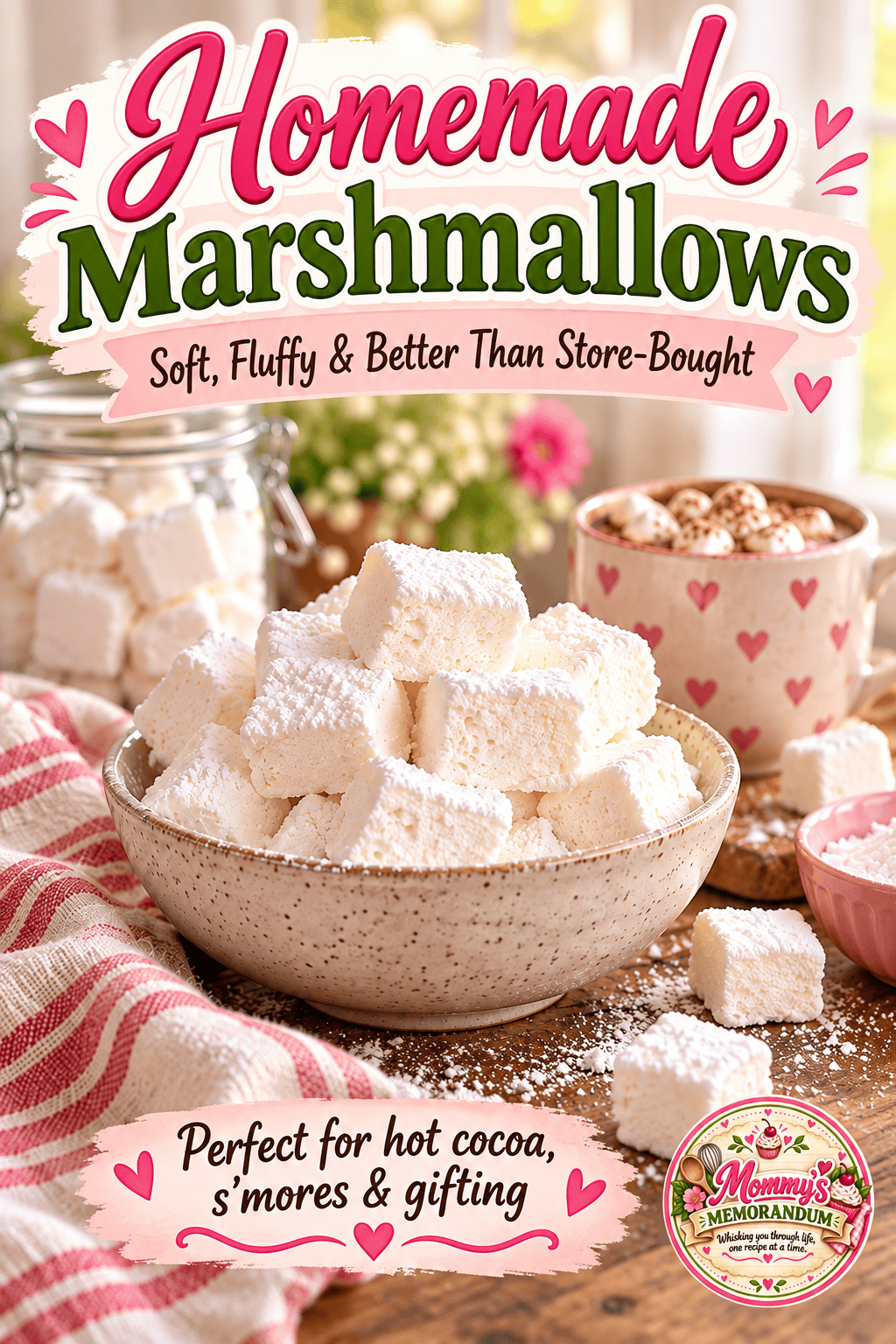
Soft & Fluffy Homemade Marshmallows
Make soft, fluffy homemade vanilla marshmallows from scratch with gelatin, sugar, corn syrup, and vanilla. This beginner-friendly marshmallow recipe includes the crucial 240°F sugar-syrup temperature, whipping cues, cutting tips, and storage instructions for pillowy marshmallows perfect for hot cocoa, s’mores, and homemade gifts.
Ingredients
- 3 packages unflavored gelatin
- 1/2 cup cold water
- 1 1/2 cups granulated sugar
- 1 cup light corn syrup
- 1/4 teaspoon kosher salt
- 1 teaspoon vanilla extract
- Confectioners’ sugar, for dusting
Instructions
11. Add the unflavored gelatin and cold water to the bowl of a stand mixer fitted with the whisk attachment. Let the gelatin bloom while you prepare the sugar syrup.
2. Combine the granulated sugar, light corn syrup, and kosher salt in a heavy-bottom saucepan. Cook over medium heat, stirring only until the sugar dissolves.
3. Continue cooking without unnecessary stirring until the sugar syrup reaches 240°F.
4. Turn the mixer to low speed. Carefully and slowly pour the hot syrup down the inside wall of the mixer bowl into the bloomed gelatin, avoiding the moving whisk.
5. Once all of the syrup has been added, gradually increase the mixer to high speed.
6. Whip for about 12 to 15 minutes, or until the mixture is thick, glossy, snowy white, and dramatically increased in volume. The whisk should leave visible trails through the mixture.
7. Add the vanilla extract near the end of whipping and mix just until incorporated.
8. Coat a 9x12-inch non-metal baking dish with nonstick cooking spray, then generously dust the bottom and sides with confectioners’ sugar.
9. Immediately transfer the marshmallow mixture to the prepared pan and spread it into an even layer. Dust the top generously with additional confectioners’ sugar.
10. Let the marshmallows set uncovered at room temperature for at least 8 hours or overnight.
11. Dust a cutting board with confectioners’ sugar and turn the marshmallow slab out of the pan.
12. Cut into approximately 24 squares using a sharp knife or pizza cutter dusted with confectioners’ sugar.
13. Toss each marshmallow in additional confectioners’ sugar so all freshly cut sides are lightly coated.
14. Store the finished marshmallows in an airtight container at room temperature for up to 3 weeks.
Notes
Equipment
- stand mixer with whisk attachment
- medium heavy-bottom saucepan
- instant-read thermometer
- 9x12-inch non-metal baking dish
- silicone spatula
- cutting board
- pizza cutter or sharp knife
Recipe Notes
Watch the temperature: Cook the sugar syrup to 240°F. Temperature is more reliable than cooking time or appearance and is one of the most important keys to soft marshmallows that set properly.
Avoid crystallization: Stir the sugar mixture only until the sugar dissolves. Once the syrup is cooking, avoid unnecessary stirring.
Pour carefully: Slowly stream the hot syrup down the inside wall of the mixer bowl rather than directly onto the moving whisk to reduce splashing.
Know when to stop whipping: The marshmallow mixture should be snowy white, very thick, glossy, dramatically increased in volume, and leave visible trails from the whisk.
Prepare the pan early: Have the pan greased and dusted before the marshmallow mixture finishes whipping. The mixture becomes increasingly sticky and difficult to spread as it cools.
Let them set: Allow at least 8 hours at room temperature, preferably overnight. Do not refrigerate the marshmallow slab to speed up setting.
For easier cutting: Dust your knife, pizza cutter, cutting board, and freshly cut marshmallow edges generously with confectioners’ sugar. Wipe and re-dust the cutter if it begins sticking.
Humid kitchen? Mix a little cornstarch with the confectioners’ sugar used for coating to help keep the surfaces dry.
Mini marshmallows: Cut the slab into narrow strips first, then cut those strips into tiny cubes and coat every cut surface.
Storage: Keep homemade marshmallows in an airtight container at room temperature for up to 3 weeks. Do not refrigerate. They can also be frozen in an airtight freezer-safe container for up to 3 months.
Nutrition Information:
Yield:
24Serving Size:
1 marshmallowAmount Per Serving: Calories: 93Total Fat: 0gUnsaturated Fat: 0gSodium: 31mgCarbohydrates: 23gFiber: 0gSugar: 24gProtein: 0g
The Nutritional Information may not be accurate. This website provides approximate nutrition information for convenience and as a courtesy only. Nutrition data is gathered primarily from the USDA Food Composition Database, whenever available, or otherwise other online calculators.