ABC Games for Pre-K and Kindergarten: Letter Recognition, Letter Sounds and Matching Fun
Looking for simple ABC games for Pre-K and Kindergarten that do more than keep little hands busy? This hands-on alphabet activity helps children practice uppercase letters, lowercase letters, beginning sounds, picture matching, handwriting, memory skills and early reading confidence without turning learning into a worksheet battle.
These alphabet cards and picture cards are wonderfully low-prep, easy to reuse, and flexible enough for preschool, kindergarten, homeschool, classroom centers, quiet time, small groups, or a rainy afternoon at the kitchen table. In other words, they are tiny cards with big “I know that letter!” energy.
The best part? You can use the same ABC card set in several different ways, which means one simple activity can become letter review, a matching game, a sound association game, handwriting practice, vocabulary building, and a memory-style game. That is a lot of learning tucked into one little stack of cards.
More Kids Crafts & Activities to Keep Little Hands Busy
Love simple activities that turn basic supplies into big kid fun? Explore more screen-free ideas in my Kids Crafts & Activities hub, where you’ll find sensory play, printable activities, paper crafts, STEM projects, party ideas, classroom activities, and rainy-day boredom busters.
After playing these ABC games, keep the hands-on learning going with DIY Tangrams for Kids, try Monster Math Measurement Activities, or add movement and measuring practice with Inchworm Measurements.
Why You’ll Love These ABC Games
Early literacy does not have to feel complicated. These ABC games are simple enough for young learners, but they still support several important pre-reading skills.
- Builds letter recognition: Children practice identifying uppercase and lowercase letters.
- Supports beginning sounds: Picture cards help children connect letters with familiar words and sounds.
- Encourages handwriting practice: Kids can use the alphabet cards as a visual guide while writing letters.
- Works for multiple skill levels: Use the same cards for simple letter naming or more advanced sound matching.
- Great for repetition: Children can play again and again without the activity feeling exactly the same.
- Easy to use anywhere: Try it at home, in a classroom center, during quiet time, or as a quick homeschool warm-up.
What Skills Do ABC Games Teach?
These preschool and kindergarten alphabet games help children strengthen early reading readiness skills in a playful, hands-on way. Instead of only seeing letters on a page, children touch the cards, say the letter names, match pictures, listen for sounds, and practice writing.
That combination matters because young learners often need to see, hear, say and do something before it truly clicks. A card game gives them more than one way to connect with the alphabet.
Skills practiced with this activity include:
- Uppercase letter recognition
- Lowercase letter recognition
- Letter name recall
- Beginning sound awareness
- Picture-word association
- Vocabulary development
- Fine motor skills
- Visual discrimination
- Memory and concentration
- Pre-writing and handwriting practice
Supplies You’ll Need
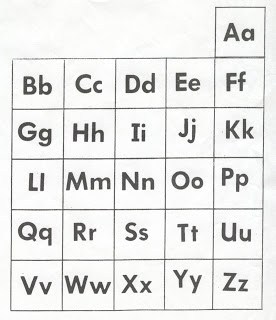
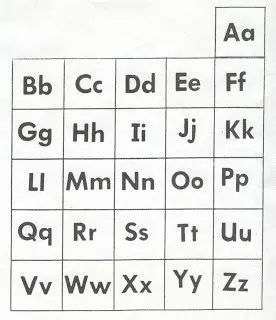
You do not need a fancy setup for this ABC activity. The original activity uses alphabet cards and picture cards, but you can also adapt it with handmade cards, flashcards, printed cards, or simple index cards.
- Alphabet cards with uppercase and lowercase letters
- Picture cards that match beginning letter sounds
- Crayons, pencils or washable markers
- Index cards or cardstock, if making your own cards
- Scissors, if cutting apart printed cards
- A small basket, zipper bag or envelope for storage
Parent tip: If you are making your own set, use cardstock or laminate the cards so they hold up to repeated play. Preschool and Kindergarten hands are enthusiastic. Cardstock is your friend.
How to Use the Alphabet Cards
Start with the alphabet cards first. Hold up one card at a time and ask your child to name the letter. You can begin with uppercase letters, lowercase letters, or both together depending on your child’s skill level.
Once your child recognizes the letter, say the sound together. For example, hold up the letter B and say, “B says /b/ like ball.” Keep it playful and quick. This is not a spelling bee. It is alphabet confidence in snack-size pieces.
Try these simple prompts:
- What letter is this?
- Is this uppercase or lowercase?
- Can you say the sound this letter makes?
- Can you think of a word that starts with this letter?
- Can you trace this letter in the air?
- Can you write this letter on paper?
Handwriting Practice with ABC Cards
The alphabet cards can also be used as a handwriting guide. Place one card in front of your child and have them practice writing the letter on paper, a dry erase board, or even with their finger in a tray of salt, sand or flour.
For younger children, start with large movements. Have them trace the letter in the air, make it with play dough, or draw it with a finger before moving to pencil and paper. Those bigger movements help build muscle memory before tiny pencil lines enter the chat.
Easy handwriting practice ideas:
- Trace the letter with a finger.
- Write the letter in the air.
- Copy the letter on paper.
- Build the letter with pipe cleaners or yarn.
- Write the letter with a dry erase marker.
- Use crayons for colorful letter practice.
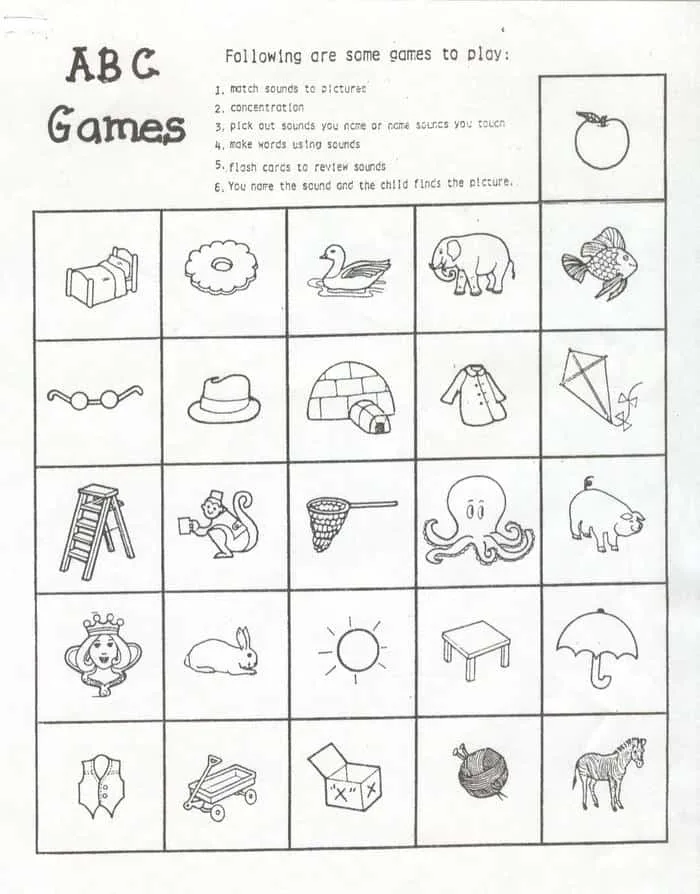
How to Use the Picture Cards
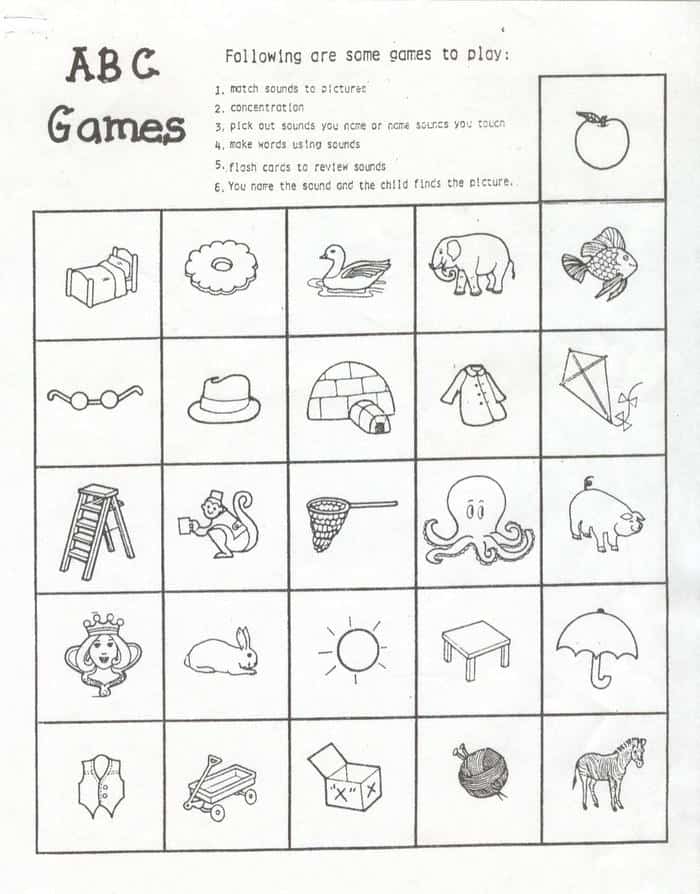
The second set of cards includes pictures that can be matched with the alphabet cards. These picture cards help children connect letters with beginning sounds. For example, a picture of an apple would match the letter A, while a picture of a ball would match the letter B.
This is where the activity becomes especially useful for pre-reading skills. Children are not just memorizing letter shapes. They are listening for sounds, naming objects, comparing beginning sounds, and making meaningful connections.
ABC Game 1: Letter and Picture Match
This is the easiest way to use the cards and a great place to start with preschoolers.
How to play:
- Place a few alphabet cards face up on the table.
- Choose matching picture cards for those letters.
- Ask your child to name each picture.
- Say the first sound slowly together.
- Have your child place the picture card beside the matching letter.
For beginners, start with only three or four letters at a time. Once your child is more confident, add more cards.
ABC Game 2: Concentration Letter Match
Concentration is a classic memory game, and it works beautifully with alphabet and picture cards.
How to play:
- Choose several alphabet cards and their matching picture cards.
- Place all cards face down in rows.
- Take turns flipping over two cards at a time.
- If the picture matches the beginning letter sound, keep the pair.
- If it does not match, turn both cards back over.
- Continue until all matches have been found.
This version adds memory practice, turn-taking, patience and sound association. Sneaky little learning win.
ABC Game 3: Match the Letter Sound to the Picture
This game focuses on phonemic awareness, which is the ability to hear and work with sounds in words.
How to play:
- Place one picture card in front of your child.
- Ask your child to name the picture.
- Repeat the word slowly and emphasize the beginning sound.
- Show two or three alphabet cards.
- Ask, “Which letter makes the sound you hear at the beginning?”
For example, if the picture is a cat, say, “Cat. C-c-cat. What letter makes that /c/ sound?”
ABC Game 4: Uppercase and Lowercase Letter Match
If your alphabet cards include uppercase and lowercase letters, use them to practice matching letter pairs.
How to play:
- Place uppercase letters in one row.
- Place lowercase letters in another row.
- Ask your child to match each uppercase letter with its lowercase partner.
- Say the letter name and sound after each match.
This is a helpful Kindergarten readiness activity because children often learn uppercase letters first, but early books and classroom materials include both uppercase and lowercase letters.
ABC Game 5: Alphabet Hunt
Turn the cards into a movement game by sending your child on a simple alphabet hunt around the room.
How to play:
- Choose one alphabet card.
- Say the letter and its sound.
- Ask your child to find something in the room that starts with that sound.
- Bring the object back or point to it.
- Match the object with the letter card.
Try A for apple, B for book, C for cup, D for doll, or P for pillow. Keep the objects familiar so the focus stays on the beginning sound.
ABC Game 6: Write the Room
This is a great option for Kindergarten children who are ready for more writing practice.
How to play:
- Place alphabet cards around the room.
- Give your child a clipboard or sheet of paper.
- Have them walk around and find each card.
- When they find a card, they write the letter on their paper.
- For an extra challenge, ask them to draw or write a word that begins with that letter.
This game adds movement, which can be especially helpful for children who do not love sitting still for traditional handwriting practice.
ABC Game 7: What’s Missing?
This quick game builds visual memory and letter recall.
How to play:
- Place three to five alphabet cards face up.
- Have your child name each letter.
- Ask your child to close their eyes.
- Remove one card.
- Ask, “Which letter is missing?”
Make it easier by using fewer cards. Make it harder by adding more letters or using lowercase letters.
ABC Game 8: Sort by Sound
Sorting is a simple way to build early literacy and thinking skills at the same time.
How to play:
- Choose two or three alphabet cards.
- Set out several picture cards.
- Ask your child to sort each picture under the letter that matches its beginning sound.
- Say each word aloud together.
This game is especially helpful when children are ready to compare sounds. For example, you might sort pictures that begin with B, M and S.
Ways to Make ABC Games Easier
Every child learns at a different pace, and that is exactly how it should be. If your child is just beginning, keep the activity short and simple.
- Use only three letters at a time.
- Start with letters in your child’s name.
- Use uppercase letters first if those are more familiar.
- Choose picture cards with very obvious beginning sounds.
- Say the sound together before asking your child to answer.
- Celebrate effort, not perfection.
Ways to Make ABC Games More Challenging
Once your child knows many letters and sounds, add a little more challenge.
- Use more cards at once.
- Mix uppercase and lowercase letters.
- Ask your child to write a word for each letter.
- Have your child say another word with the same beginning sound.
- Play timed rounds for extra excitement.
- Ask your child to put letters in alphabetical order.
- Sort picture cards by beginning sound, ending sound, or number of syllables.
Tips for Teaching Letter Recognition Without Tears
Alphabet learning works best when it feels playful and positive. If your child gets frustrated, pause and come back later. Five happy minutes with ABC cards will do more good than twenty grumpy minutes of forced practice.
- Keep sessions short: Preschoolers do not need long lessons. A few minutes at a time is enough.
- Use names first: Children often connect quickly with the letters in their own names.
- Say sounds clearly: Use short sounds instead of adding extra vowel sounds. Try /b/ instead of “buh.”
- Repeat often: Repetition builds confidence.
- Follow your child’s lead: If they love animals, use animal picture cards. If they love snacks, use food words.
- Make it hands-on: Let kids touch, move, sort, flip, match and write.
How to Store Your ABC Cards
A simple storage system makes this activity easier to pull out again and again.
- Keep alphabet cards and picture cards in separate zipper bags.
- Store each set in a small photo box or pencil pouch.
- Use a rubber band for quick grab-and-go storage.
- Place the cards in a classroom center basket.
- Laminate the cards or use page protectors if they will get heavy use.
Label the bag or box “ABC Games” so you can find it when you need a quick learning activity that does not involve glitter, batteries or a mysterious missing game piece.
More Ways to Use ABC Cards
Once you have a set of alphabet cards, the possibilities really are endless. Try rotating the activities so your child gets fresh practice without needing a brand-new printable every time.
- Use the cards as flashcards for quick letter review.
- Hide the cards around the room for an alphabet scavenger hunt.
- Put letters in alphabetical order.
- Match letters to magnetic letters.
- Build letters with play dough.
- Trace letters with a finger before writing them.
- Use picture cards for vocabulary practice.
- Clap the syllables in each picture word.
- Sort pictures by beginning sound.
- Use cards during circle time or morning work.
What Age Are ABC Games Best For?
These ABC games work well for many preschool and early elementary learners, but they are especially useful for Pre-K and Kindergarten children.
- Ages 3 to 4: Focus on naming letters, matching familiar pictures, and recognizing letters in the child’s name.
- Ages 4 to 5: Add beginning sound matching, uppercase and lowercase practice, and simple handwriting.
- Ages 5 to 6: Use the cards for phonics review, writing practice, alphabetical order, and word-building extensions.
Remember, age ranges are only a guide. Some children will be ready earlier, and some will need more time. Keep it light, playful and encouraging.
Classroom and Homeschool Ideas
These ABC games are easy to adapt for classrooms, homeschool groups, preschool centers, small groups, and one-on-one practice.
Use them for:
- Morning tubs
- Literacy centers
- Small-group phonics practice
- Homeschool alphabet lessons
- Quiet bins
- Early finisher activities
- Letter of the week lessons
- Pre-K and Kindergarten review
- Speech and language practice
For group use, make several sets of cards and store each set in its own bag. You can also color-code sets with a small sticker on the back so mixed-up cards are easier to sort later.
ABC Games FAQs
What are good ABC games for Pre-K?
Good ABC games for Pre-K include letter matching, picture matching, alphabet hunts, uppercase and lowercase matching, and simple memory games. The best activities are short, hands-on and playful.
How do I teach letter recognition?
Start with a few letters at a time, especially letters in your child’s name. Show the letter, say its name, say its sound, and connect it to a familiar picture or object. Repeat often through games, songs, books and hands-on play.
Should children learn uppercase or lowercase letters first?
Many children recognize uppercase letters first because they are visually simpler and often appear in names, signs and toys. However, lowercase letters are important because they appear more often in books. Practicing both together can be helpful.
How can I make letter sounds easier for my child?
Use familiar words and pictures. Say the word slowly, emphasize the beginning sound, and ask your child to listen for that first sound. Keep practice playful and avoid making every sound question feel like a test.
Can these ABC games be used for Kindergarten?
Yes. Kindergarten children can use these cards for letter review, beginning sound practice, handwriting, alphabetical order, sorting games, memory games and early phonics activities.
How long should an ABC activity take?
For preschoolers, five to ten minutes is often enough. Kindergarten children may stay engaged longer, especially if the activity includes movement, matching, writing or a game format.
More Kids Crafts and Learning Activities
Want more hands-on ideas that help kids learn while they play? These activities pair beautifully with ABC games for a full screen-free learning afternoon:
- Kids Crafts & Activities — The full hub for paper crafts, sensory play, printable activities, STEM projects, classroom ideas and creative family fun.
- Free Printables for Kids — Printable activity sheets, coloring pages, classroom printables, movie night activities and screen-free fun.
- DIY Tangrams for Kids — A printable puzzle craft that builds geometry, spatial reasoning and problem-solving skills.
- Monster Math Measurement Activities — A hands-on math activity using yarn, straws, paper clips and number cards.
- Elephant Measurements Activity — A printable measuring activity for early math practice.
- Inchworm Measurements — A non-standard measurement activity that makes early math visual and fun.
- How to Make Moon Sand with 2 Ingredients — A soft, moldable sensory activity for little hands.
- How to Make DIY Bouncy Balls That Really Bounce — A hands-on STEM activity kids can mix, test and bounce.
- How to Make Paper Wolverine Claws — A one-sheet paper craft for pretend play, costumes and rainy-day fun.
Final Thoughts: Small Cards, Big Alphabet Wins
ABC games for Pre-K and Kindergarten do not need to be complicated to be effective. With a simple set of alphabet cards and picture cards, children can practice letter recognition, letter sounds, handwriting, memory, vocabulary and early phonics in a way that feels like play.
Use the cards for a quick review, turn them into a matching game, play concentration, practice writing letters, or build a full literacy center around them. The more ways children interact with letters, the more confident they become.
And when they proudly shout the right letter sound across the table? That is the kind of tiny learning moment worth saving.
This craft was originally published September 2, 2009, and updated May 18, 2026, with improved instructions, updates, and new photos.