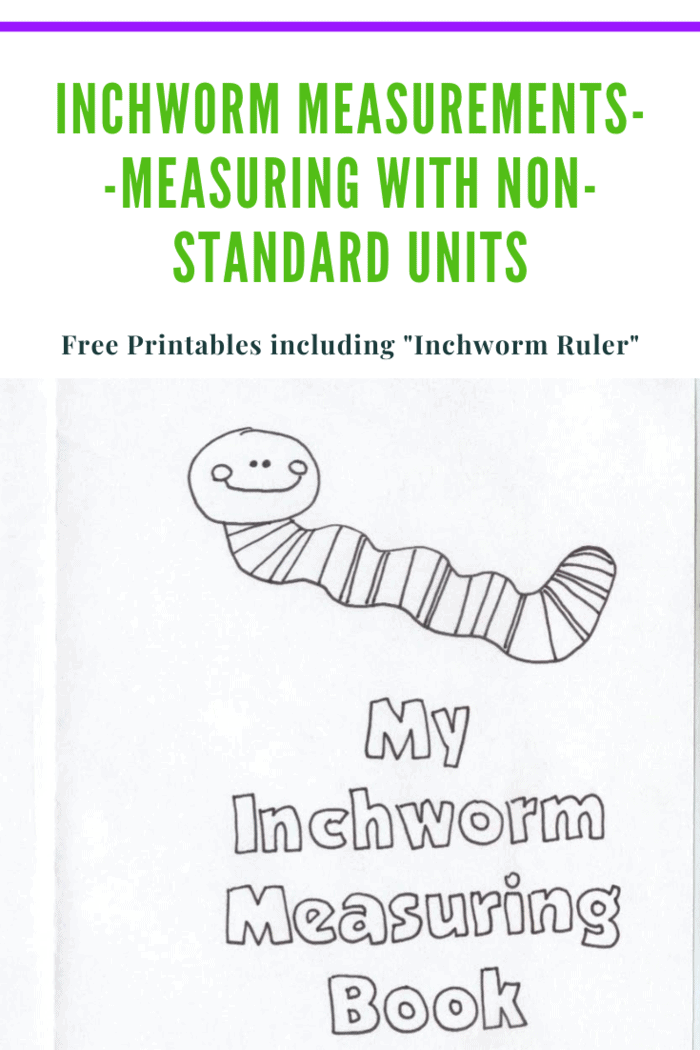
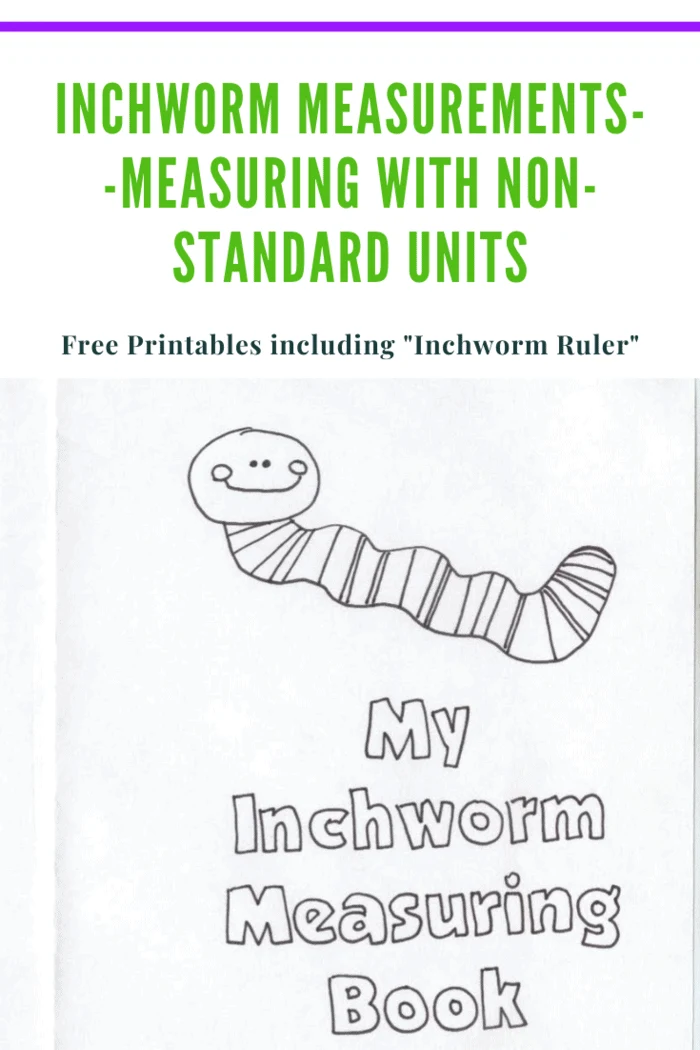
Need a playful way to teach measurement without handing your child a worksheet and hoping for the best? This Inchworm Measurements activity turns early math into a hands-on learning adventure using a printable inchworm ruler, a measurement booklet, and a little “how long is that?” curiosity.
This simple activity helps kids practice measuring with non-standard units, estimating length, comparing objects, counting units, and recording results. It is perfect for preschool, kindergarten, homeschool math, classroom centers, storytime extensions, rainy days, and those moments when you want learning to feel more like play than a lesson.
And yes, the inchworm is doing the math heavy lifting here. Tiny worm, big lesson.
More Kids Crafts & Activities to Keep Little Hands Busy
Love easy activities that mix creativity, learning, and screen-free fun? Explore more ideas in my Kids Crafts & Activities hub, where you’ll find printable activities, simple crafts, sensory play, STEM projects, paper crafts, party ideas, and rainy-day boredom busters.
After this inchworm measurement activity, keep the learning going with Elephant Measurements for another non-standard unit activity, try DIY Tangrams for Kids for hands-on geometry practice, or make your own printable coloring calendar for another creative learning project.
What Is Inchworm Measurement?
Inchworm measurement is a playful way for kids to practice measuring length using a printable inchworm ruler instead of starting with a standard ruler. Children line up the inchworm units along an object, count how many inchworms long it is, and record their results.
This type of activity is called non-standard measurement because children are measuring with a repeated object or unit, such as inchworms, blocks, paper clips, cubes, hands, feet, or craft sticks, instead of inches, centimeters, or feet.
Before kids fully understand standard tools like rulers, non-standard units help them see what measurement actually means: choosing a unit, lining it up carefully, repeating it without gaps or overlaps, counting the units, and comparing the length of one object to another.
Why Kids Should Practice Measuring with Non-Standard Units
Measuring with non-standard units builds early math confidence because it lets kids touch, move, compare, count, and problem-solve instead of simply memorizing numbers on a ruler.
This inchworm ruler activity helps children practice:
- Understanding length: Kids learn that length tells how long, tall, or wide something is.
- Estimating: Children make a thoughtful guess before measuring.
- Counting units: They count how many inchworms fit along an object.
- Comparing objects: They decide which item is longer, shorter, or about the same.
- Using measurement vocabulary: Words like longer, shorter, estimate, actual, length, unit, and compare become part of the conversation.
- Recording results: The booklet gives kids practice drawing, labeling, and writing numbers.
- Connecting math to real life: Measuring a crayon, book, toy, table, or snack makes math feel useful.
Translation? It is sneaky math. My favorite kind.
Book Pairings for an Inchworm Measurement Lesson
Before starting the activity, you can add a storytime connection. Books about measurement help children understand that measuring is not just something we do in math class. It shows up in stories, building, comparing, problem-solving, and everyday life.
Your child may enjoy reading one or more of these measurement-themed books before beginning:
- Inch by Inch by Leo Lionni; ISBN 0688132839
- How Big Is a Foot? by Rolf Myller; ISBN 0440404959
- Twelve Snails to One Lizard: A Tale of Mischief and Measurement by Susan Hightower; ISBN-10: 0689804520 or ISBN-13: 9780439154307
- Counting on Frank by Rod Clement; ISBN-10: 039570393X or ISBN-13: 9780395703939
- Measuring Penny by Loreen Leedy; ISBN-10: 0805065725 or ISBN-13: 9780805065725
Storytime Questions for Inch by Inch
If you read Inch by Inch before the activity, use a few simple questions to help your child connect the story to the measurement work they are about to do.
- Why was the inchworm able to measure different birds?
- How did the inchworm measure each bird?
- What did the inchworm do each time he measured?
- What do you think the inchworm will do when the nightingale asks him to measure her song?
- Can you measure a song?
- What are some things we can measure?
- What would be hard to measure?
Then explain: “Today we are going to measure like the inchworm. We will use our inchworm ruler to find out how many inchworms long different things are.”
Supplies You’ll Need
- Printable Inchworm Measurement Ruler
- Printable Inchworm Measurement Booklet
- Printer paper or cardstock
- Scissors
- Tape, if you want to connect several inchworm rulers together
- Crayons, pencils, or markers
- Small objects to measure, such as crayons, toy cars, books, blocks, shoes, spoons, or craft supplies
- Optional: gummy worms or Twizzlers for snack-based estimation practice
- Optional: laminator or page protectors for reusable classroom or homeschool use
Printable Inchworm Measurement Ruler
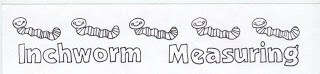
The Inchworm Measurement Ruler is the star of this activity. Print the ruler, cut out the inchworms, and let your child use it to measure objects around the room.
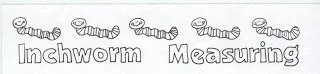
Download the Inchworm Ruler
Print the inchworm ruler on regular paper for a quick activity or cardstock for a sturdier math center. If you want a longer measuring tool, print several copies, cut them out, and tape them together end to end.
Printable Inchworm Measurement Booklet
The Inchworm Measurement Booklet gives kids a place to record what they measured. Children can use the inchworm ruler to measure each item, write how many inchworms long it is, and draw a picture of the object.
This turns the activity into a complete early math lesson because kids are not just measuring. They are estimating, checking, recording, drawing, comparing, and explaining their thinking.
Download the Inchworm Measurement Booklet
How to Do the Inchworm Measurement Activity
- Print the inchworm ruler. Use cardstock if you want it to last longer.
- Cut out the ruler. Younger children may need help cutting along the edges.
- Make it longer if needed. Tape several inchworm strips together for measuring bigger items.
- Choose an object. Start with something small, such as a crayon, spoon, toy car, or book.
- Estimate first. Ask, “How many inchworms long do you think this is?”
- Measure carefully. Line up the inchworm ruler with one end of the object. Remind kids not to leave gaps.
- Count the inchworms. Count each inchworm unit from one end of the object to the other.
- Record the result. Write or draw the answer in the booklet.
- Compare two objects. Ask which object is longer, shorter, or about the same length.
- Measure more things. Let kids choose items from around the room to keep the activity child-led and playful.
Good Objects to Measure with an Inchworm Ruler
Start with small, familiar objects so children can focus on the measuring process instead of wrestling with something too big or oddly shaped.
- Crayon
- Pencil
- Marker
- Glue stick
- Spoon
- Toy car
- Small book
- Stuffed animal
- Building block tower
- Shoe
- Paperclip chain
- Snack bag
- Leaf
- Rock
- Craft stick
Once your child understands how to line up the ruler, you can move on to larger objects like a chair, table, backpack, pillow, or doorway. Tape extra inchworm rulers together if needed.
Teacher and Homeschool Tips
For Preschool
Keep the focus on vocabulary and comparison. Ask questions like:
- Which item is longer?
- Which item is shorter?
- Can you find something about the same length?
- How many inchworms long is your crayon?
For Kindergarten
Add estimation and recording. Have children guess first, measure second, and compare their estimate to the actual measurement.
- Was your estimate close?
- Was the actual number bigger or smaller?
- How did you decide what to guess?
For Early Elementary
Extend the lesson by comparing non-standard and standard measurement. After measuring with the inchworm ruler, use a regular ruler to measure the same object in inches.
- How many inchworms long is it?
- How many inches long is it?
- Are the numbers the same or different?
- Why do standard rulers help everyone measure the same way?
Make It Reusable
If you are using this activity for a classroom, homeschool co-op, math center, or repeated practice, make the printable pieces more durable.
- Print the inchworm ruler on cardstock.
- Laminate the ruler before cutting it out.
- Place booklet pages in clear page protectors.
- Let kids write with dry-erase markers.
- Store the ruler and booklet in a labeled folder or zip-top bag.
- Create a measurement basket with small objects kids can measure independently.
Gummy Worm Measurement Extension
You can also add gummy worms for a fun and edible measurement extension. This is a great way to practice estimating, measuring, comparing, and noticing how length can change when an object is stretched.
Safety note: Use age-appropriate snacks and supervise children while eating. Skip this option for children with food allergies or for classrooms where food activities are not allowed.
Gummy Worm Measurement Questions
- How long do you estimate your gummy worm is?
- The length of my gummy worm is about _____ inches.
- Use a ruler to measure your gummy worm.
- The actual length of my gummy worm is _____ inches.
- Now gently stretch your gummy worm. How long do you estimate it is now?
- The length of my stretched gummy worm is about _____ inches.
- Use a ruler to measure the stretched gummy worm.
- The actual length of my stretched gummy worm is _____ inches.
- Was your estimate close to the actual length?
- What changed after you stretched the gummy worm?
Twizzler Measurement Extension
If you want another snack-based measurement activity, try measuring a Twizzler before, during, and after a few bites. This adds a playful “math before snack time” twist while helping kids understand that length can decrease as an object changes.
Try These Twizzler Measurement Prompts
- How many inchworms long is the whole Twizzler?
- How many inches long is it with a standard ruler?
- Take one bite. How long is it now?
- Take two more bites. What changed?
- How many inchworms shorter is it than when you started?
- Can you predict how many bites it will take before it is gone?
This is a simple way to turn snack time into estimation, subtraction, comparison, and measurement practice.
Optional Inchworm Measurement Center Workbook
For an additional classroom-style extension, here is an adorable inchworm measurement center workbook created by Blair Peterson of Murray, Utah.
Common Measuring Mistakes to Watch For
Non-standard measurement is wonderfully hands-on, but kids may need gentle help learning how to measure accurately.
- Starting in the middle: Remind children to line the ruler up with one end of the object.
- Leaving gaps: The inchworm units should touch or follow the printed ruler without spaces.
- Overlapping units: Each unit should be counted once.
- Measuring at an angle: Keep the ruler straight along the object.
- Counting too fast: Encourage kids to touch or point to each unit as they count.
- Forgetting to estimate: Estimating first builds number sense and makes the final measurement more meaningful.
Easy Ways to Extend the Learning
Once your child has measured the items in the booklet, keep the inchworm fun going with a few simple challenges.
- Go on an inchworm hunt: Find five things that are shorter than the inchworm ruler.
- Compare two toys: Measure both and decide which is longer.
- Measure around the room: Try a chair leg, table edge, book, pillow, or backpack.
- Make a prediction jar: Place small objects in a basket and guess which is longest before measuring.
- Create a class graph: Record everyone’s object measurements and compare the results.
- Draw your own inchworms: Let kids design a new non-standard ruler using bugs, frogs, dinosaurs, cupcakes, or another theme.
- Try another unit: Measure the same object with blocks, paper clips, craft sticks, and inchworms. Compare the numbers.
More Hands-On Learning Activities for Kids
If your child loves this inchworm measurement activity, keep building those screen-free learning moments with more printable, sensory, and STEM-friendly projects.
- Elephant Measurements — Another non-standard measurement activity with an “enormous” twist.
- DIY Tangrams for Kids — A printable puzzle craft that builds geometry skills, spatial reasoning, and problem-solving.
- How to Make Moon Sand with 2 Ingredients — A soft, moldable sensory activity for kids who love to scoop, squish, and build.
- How to Make DIY Bouncy Balls That Really Bounce — A hands-on STEM activity where kids mix, test, and bounce their own homemade bouncy balls.
- How to Make Your Own Printable Coloring Calendar — A creative printable activity that helps kids practice planning, coloring, and organization.
- How to Make Paper Wolverine Claws — An easy origami craft for kids who love pretend play and superhero fun.
Inchworm Measurement FAQs
What is non-standard measurement?
Non-standard measurement means measuring with objects or units that are not official measuring tools. Kids might measure with inchworms, blocks, paper clips, craft sticks, hands, feet, or cubes before moving on to standard units like inches and centimeters.
What age is this inchworm measurement activity best for?
This activity works well for preschool, kindergarten, and early elementary children. Younger kids can focus on comparing long and short objects, while older kids can estimate, measure, record, and compare results.
Why use an inchworm ruler instead of a regular ruler?
An inchworm ruler makes measurement visual and playful. It helps kids understand that measuring means repeating equal units across the length of an object. Once children understand that idea, a standard ruler makes more sense.
Can I use this activity in a classroom math center?
Yes. Print and laminate the inchworm ruler, place the booklet pages in page protectors, and add a basket of small objects for students to measure. This works well as a preschool, kindergarten, homeschool, or early elementary math center.
What should kids measure first?
Start with small, straight objects such as crayons, pencils, glue sticks, toy cars, books, craft sticks, and blocks. These are easier for children to line up with the inchworm ruler.
How can I make this activity harder?
Ask children to estimate before measuring, compare two objects, measure the same item with different units, or measure with both the inchworm ruler and a standard ruler. Older kids can also record results in a chart or graph.
Final Thoughts: Small Worm, Big Math Moment
This Inchworm Measurements activity is simple, printable, and packed with early math goodness. Kids get to estimate, measure, count, compare, draw, record, and explain their thinking while using a cheerful little inchworm ruler that makes the whole lesson feel like play.
Whether you are planning a preschool math lesson, setting up a kindergarten measurement center, homeschooling, or looking for a rainy-day learning activity, this printable inchworm ruler gives kids a concrete way to understand length before moving into standard measurement.
Pin this activity now so the next time you need a quick, screen-free math idea, you can let the inchworms crawl right into the lesson plan.
This craft was originally published September 2, 2009, and updated May 18, 2026, with improved instructions, updates, and new photos.