
DIY Balayage at Home: Step-by-Step Guide
DIY balayage at home is a hand-painted hair-lightening technique that places soft highlights through the mid-lengths and ends to create natural-looking, sun-kissed dimension without a harsh root line.
This step-by-step guide explains how to balayage hair at home, how to section and paint the hair, how the DIY balayage ponytail technique works, and how to tone and care for the finished color.
Jump to DIY Balayage Instructions
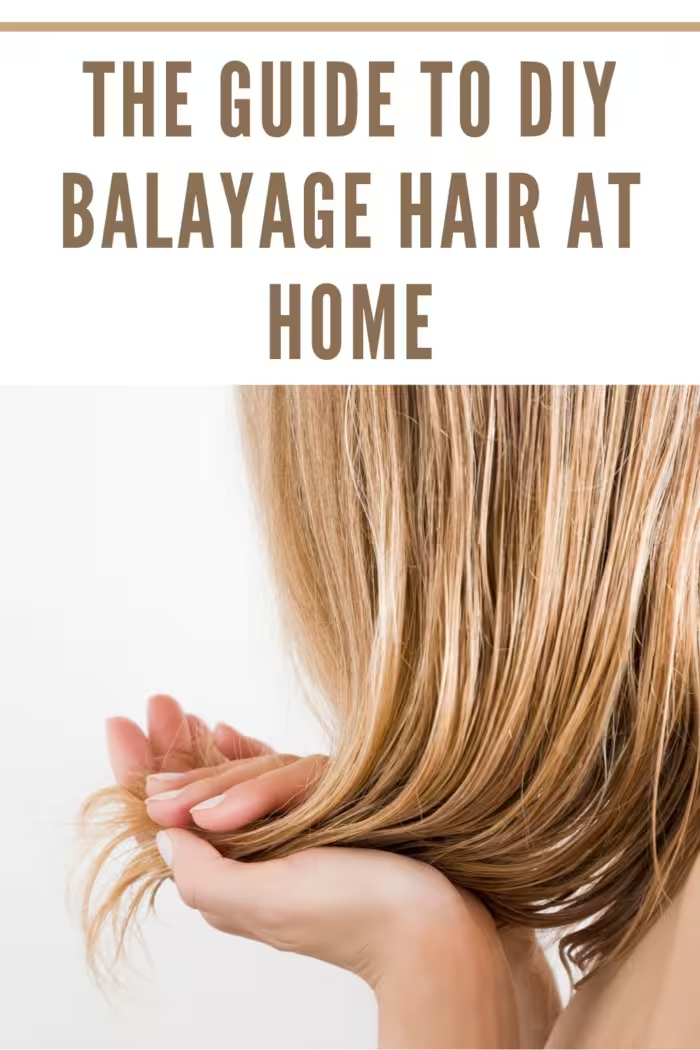
DIY Balayage at Home
Balayage is a freehand highlighting method in which hair color or lightener is swept onto selected sections instead of being applied evenly from the roots to the ends. The finished look usually has softer roots, brighter ends, and a gradual transition through the middle of the hair.
It can be a helpful at-home option for someone who wants subtle brightness rather than an all-over color change. It is especially popular because the softer root area generally creates a less obvious grow-out than traditional highlights.
The most important part of a successful balayage DIY project is restraint. Work in small sections, use featherlight strokes, and aim for a few shades of brightness rather than trying to make a dramatic color change in one afternoon.
Safety note: Hair lightener and permanent color can cause irritation, breakage, burns, or unexpected color results when used incorrectly. Follow the directions included with your chosen product, complete the recommended allergy alert test and strand test, and stop immediately if you experience burning, swelling, severe discomfort, or unusual hair breakage. Consider a professional colorist if your hair is damaged, relaxed, permed, heavily highlighted, previously colored with dark dye, or undergoing a major color correction.
Why You’ll Love This DIY Balayage Method
- It creates soft, dimensional highlights instead of solid all-over color.
- The darker root area gives the color a more natural-looking grow-out.
- You can customize the brightness around your face, ends, and outer layers.
- The tutorial includes both traditional hand-painted balayage and a ponytail technique.
- It explains patch testing, strand testing, toning, maintenance, and common problems.
- It is designed for a subtle refresh rather than an extreme one-session transformation.
What You’ll Need for DIY Balayage at Home
- Hair lightener or hair color suitable for your current color and desired result
- Developer, if required by the product
- Nonmetal mixing bowl
- Tinting brush
- Balayage board, paddle, or a sturdy piece of cardboard
- Disposable gloves
- Sectioning clips
- Rat-tail comb or regular comb
- Small elastic hair ties if using the ponytail balayage technique
- Barrier cream or petroleum jelly for the skin around the hairline
- Handheld mirror and wall mirror
- Foil or plastic wrap, if permitted by the product instructions
- Toner, if needed after lightening
- Color-safe shampoo and conditioner
- Purple or blue toning shampoo appropriate for your finished color
- Deep conditioner or suitable conditioning treatment
- Old shirt and towels
- Timer
Before You Balayage Hair at Home
A successful home balayage begins before any product touches your hair. Read the entire product label, gather every tool, protect your clothing and work surface, and complete both an allergy alert test and a hidden strand test.
Complete the Product’s Allergy Alert Test
Follow the allergy testing instructions included with your chosen color or lightener. Many products instruct users to test approximately 48 hours before application, but you should follow the exact timing and method printed on your product.
Do not continue with the full application if the test area develops redness, swelling, itching, blistering, burning, or another reaction.
Do a Hidden Strand Test
Apply the prepared product to a small, concealed section of hair. Use the test to see how quickly your hair changes, what underlying tone appears, and how the strand feels after rinsing and conditioning.
This small test can reveal whether your hair is likely to turn gold, yellow, orange, uneven, excessively dry, or fragile before you apply the product to larger sections.
Assess Your Starting Hair Color and Condition
Healthy, unprocessed hair often behaves more predictably than hair with layers of previous permanent color. Dark artificial dye can be particularly difficult to lift evenly, and applying more bleach is not always the safest or most effective correction.
Skip the home process and consult a professional if your hair is breaking, gummy when wet, severely dry, recently chemically treated, or already lightened in the areas you plan to paint.
How to Do a Balayage at Home Step by Step
Work slowly and resist the urge to cover every strand. Balayage looks dimensional because some of the natural base color remains between the brighter pieces.
Step 1: Begin with Dry, Detangled Hair
Start with dry hair prepared according to the directions on your chosen product. Brush or comb gently until the hair is free of tangles.
Put on an old shirt, place towels over nearby surfaces, and apply a thin layer of barrier cream around the hairline without coating the hair itself.
Step 2: Divide the Hair into Four Sections
Create a center part from the forehead to the nape. Then divide the hair from ear to ear, creating two front sections and two back sections.
Clip each section separately. Working within an organized sectioning pattern makes it easier to control placement and avoid accidentally painting the same hair twice.
Step 3: Select Small Pieces of Hair
Release one section and take a small slice of hair approximately one inch wide. For a diffused transition, lightly tease near the point where you want the brightness to begin or weave out a few finer strands with the tail of a comb.
Keep some natural hair between each painted section. Coloring every piece can turn a dimensional balayage into a less controlled all-over lightening job.
Step 4: Paint the Lightener onto the Hair
Prepare the product exactly as instructed and put on your gloves. Support the section with a balayage board or gloved hand, then begin painting the outer surface and ends.
Use more saturation toward the ends and lighter, feathered strokes as you move upward. Hold the brush vertically or at a slight angle near the transition area rather than painting a heavy horizontal line across the hair.
The exact starting point can vary from section to section. Slightly staggered placement often looks more natural than beginning every highlight at the same height.
Step 5: Continue Around the Head
Repeat the process in small sections, checking your work in two mirrors as you move toward the back. Place a few brighter pieces around the face if you want a softly illuminated hairline, but avoid applying the product directly to the scalp unless the product is specifically intended for that use.
Keep the front sections balanced without trying to make them perfectly identical. Natural-looking balayage usually benefits from slight variation.
Step 6: Separate the Painted Sections
If the instructions permit it, use foil or plastic wrap to prevent painted strands from touching uncolored hair. Do not add heat or tightly cover the entire head unless the manufacturer specifically instructs you to do so.
Step 7: Process According to the Product Directions
Start a timer and follow the maximum processing time printed on the package. Your strand test should give you a general idea of how your hair responds, but continue checking the painted sections as directed.
Rinse earlier if your desired result is reached before the maximum time. Never leave a lightener on longer simply because the hair has not become as pale as you hoped.
Step 8: Rinse Thoroughly
Rinse the hair with cool or lukewarm water according to the product instructions. Continue rinsing until all product is removed, then shampoo if directed.
Step 9: Tone the Balayage If Necessary
Lightened hair may reveal warm underlying pigment. A compatible toner can soften unwanted yellow, gold, or orange tones, but the correct choice depends on the level and condition of the hair.
Purple products are generally associated with yellow tones, while blue products are commonly used for orange tones. Follow the toner instructions closely and complete another allergy or strand test when the product requires it.
Step 10: Condition and Style Gently
Use the conditioner or after-color treatment included with the product. Avoid aggressive brushing and excessive heat immediately after lightening.
Once the hair is dry, soft waves or curls can make the placement easier to see because the lighter pieces catch the light as the hair moves.
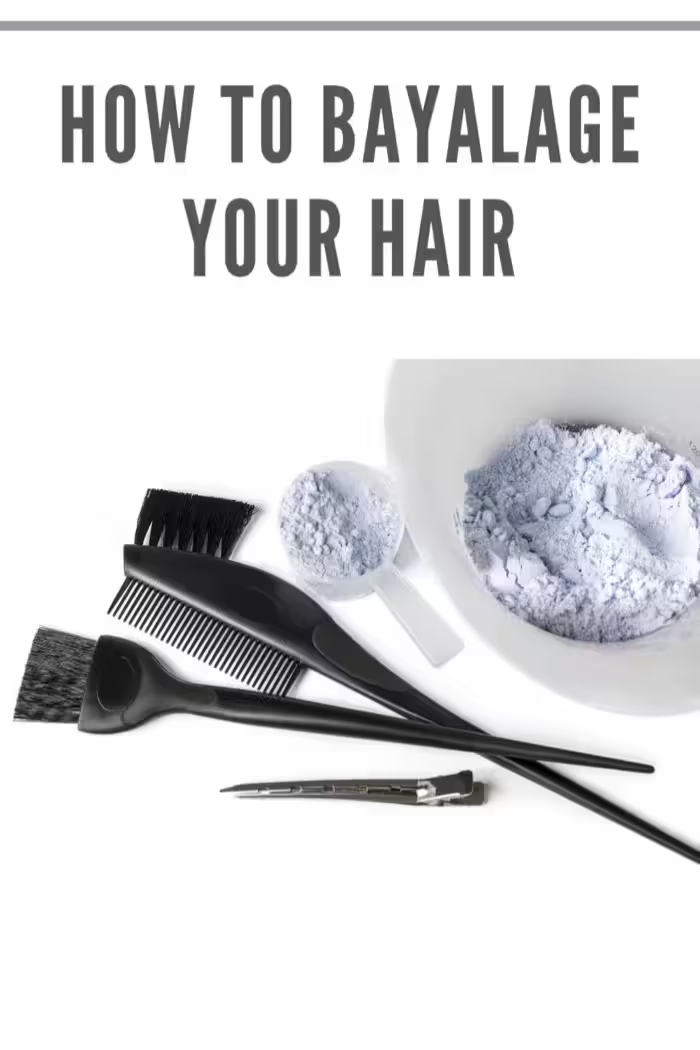
DIY Balayage Ponytail Technique
The DIY balayage ponytail technique simplifies sectioning by gathering the hair into several ponytails before applying color to the exposed lengths and ends. It is popular with beginners because it makes the back sections easier to reach, but placement still matters.
One single tight ponytail can create a blunt or uneven band. Several smaller ponytails generally give you more control over where the brightness begins.
How to Do the DIY Balayage Ponytail Technique
- Detangle and divide the hair. Create four to six sections, depending on the thickness and length of your hair.
- Secure each section. Place the elastics at slightly different heights so every highlight does not begin in one straight line.
- Lightly tease above the ends. Gentle backcombing can help soften the transition, but avoid creating tight knots.
- Paint the exposed lengths and ends. Saturate the very ends more thoroughly and feather the product upward.
- Add subtle face-framing pieces. Carefully paint a few selected strands around the face rather than lightening the entire front section.
- Separate the sections if directed. Use foil or plastic wrap only when allowed by the product instructions.
- Process within the stated time. Follow the label and do not exceed the maximum time.
- Rinse, tone, and condition. Finish according to the product directions and avoid immediately relightening an unsatisfactory area.
Who Should Avoid the Ponytail Balayage Method?
This technique may not be the best choice for very short hair, heavily layered cuts, fragile ends, corrective color, or hair with an uneven history of permanent dye. In those cases, the ponytail placement may expose different sections to the product unpredictably.


DIY Balayage Tips for Softer, More Natural Results
- Keep the first session subtle and add more dimension later if your hair remains healthy.
- Use small sections rather than painting large, heavy panels.
- Concentrate saturation on the ends and use less product as you move upward.
- Vary the starting height slightly from one section to the next.
- Use two mirrors to check the back of your head.
- Leave uncolored hair between highlighted sections.
- Avoid repeatedly brushing lightener over previously lightened ends.
- Keep a damp towel nearby to wipe away accidental product immediately.
- Follow the product directions rather than relying on a universal processing time.
- Stop if the hair becomes gummy, stretchy, unusually hot, or begins breaking.
Common Balayage DIY Mistakes
Painting a Straight Line Across the Hair
A blunt horizontal line can create an obvious band. Use light vertical strokes and gradually reduce the amount of product toward the top of each painted section.
Trying to Become Much Lighter in One Session
Attempting to lift very dark hair to pale blonde in a single home session can increase the risk of severe dryness, orange tones, unevenness, and breakage. A modest change is easier to control.
Overlapping Previously Lightened Hair
Repeatedly coating the same fragile ends can weaken them. Apply new lightener only where it is needed and avoid heavily saturating sections that are already pale.
Using Too Much Product Near the Roots
Traditional balayage usually keeps the root area softer. Beginning too high or using a heavy application near the scalp can create spots, stripes, or an unintended all-over highlight effect.
Skipping the Strand Test
A product photo cannot predict how your specific hair will respond. Your natural pigment, previous dye, texture, porosity, and condition all influence the result.
Applying More Bleach Immediately to Fix Brassiness
Warmth does not always mean the hair should be lightened again. Toner may be the appropriate next step, but severe brassiness, banding, or patchiness may require professional correction.
Perfect with a seasonal beauty reset: Fresh balayage is especially pretty before spring photographs, summer vacations, back-to-school season, holiday gatherings, or any week when you want your hair to look a little brighter. Complete your at-home pampering with a Vanilla Body Scrub DIY or make a batch of DIY Bath Fizzies for a relaxing finish.
How to Tone DIY Balayage
Toner does not make dark hair dramatically lighter. It adjusts the visible tone of hair that has already been lifted to an appropriate level.
Yellow-looking highlights may benefit from a purple-based toning product, while orange-looking hair may require a blue-based option. However, an incorrect toner can make porous hair look muddy, gray, dull, or uneven.
Test the toner on a hidden strand first and watch the processing closely. Purple or blue shampoo is generally more useful for gradual maintenance than for correcting a major home-color problem.
How to Maintain Balayage at Home
- Use a shampoo and conditioner intended for color-treated hair.
- Wash with lukewarm rather than very hot water.
- Use purple or blue shampoo only as needed to control unwanted warmth.
- Alternate toning products with a moisturizing shampoo so the hair does not become excessively dry.
- Deep condition regularly according to your hair’s needs.
- Use a heat protectant before blow-drying, curling, or straightening.
- Reduce the temperature and frequency of hot-tool styling.
- Protect the hair from prolonged sun, chlorine, and salt water.
- Trim dry or splitting ends as needed.
- Wait until the hair is healthy enough before applying additional lightener.
DIY Balayage for Different Starting Hair Colors
Balayage at Home on Dark Hair
Dark brown and black hair commonly reveal red, orange, or gold pigment as they lighten. Choose a modest goal and expect the first session to create warmth rather than an icy blonde finish.
Previously dyed dark hair may lift differently from natural hair, even when both appear to be the same starting shade.
Balayage at Home on Brown Hair
Medium and light brown hair can work well with caramel, honey, beige, or golden highlights. Staying within a few shades of the base color typically produces a softer, more believable result.
Balayage at Home on Blonde Hair
Blonde hair may need only a few brighter pieces, but previously highlighted sections can be fragile. Avoid overlapping lightener on pale ends and use the strand test to judge strength as well as color.
Balayage on Curly or Textured Hair
Balayage can emphasize the shape and movement of curls when the lighter pieces are placed where the curls naturally catch the light. Evaluate the placement while the hair is arranged in its usual curl pattern whenever possible.
What to Do When DIY Balayage Goes Wrong
The Color Looks Orange
Do not immediately apply more bleach. Allow the hair to rest, evaluate its condition, and determine whether an appropriate blue-based toner or a professional correction is the safer choice.
The Highlights Look Yellow
A purple-based toner or carefully used purple shampoo may soften yellow tones when the hair has been lifted to the correct level.
The Balayage Looks Patchy
Patchiness may result from uneven saturation, inconsistent sections, previous dye, or different processing times. Adding more bleach without a precise plan can make the unevenness worse.
There Is a Harsh Line
A colorist may be able to soften a strong line with lowlights, a root shadow, strategic blending, or corrective toner. Avoid repeatedly painting over the line if the hair already feels dry or weak.
The Hair Feels Gummy or Stretchy
Rinse immediately if product is still on the hair. Do not apply additional lightener, permanent color, or high heat. Severely compromised hair may require professional assessment and a significant trim.
How to Turn Home Balayage into a Beauty Night
Home hair color is much less frantic when everything is ready before the mixing begins. Set out your clips, brushes, towels, mirrors, timer, gloves, and aftercare products in the order you will use them.
- Wear an old button-front shirt that is easy to remove before rinsing.
- Protect the floor and countertop with old towels.
- Keep your phone timer within reach.
- Choose music, a podcast, or a familiar movie before you begin.
- Have your deep conditioner and detangling comb ready for afterward.
- Plan enough uninterrupted time so you are not rushing through the back sections.
DIY Balayage at Home FAQs
Can you do DIY balayage at home?
Yes, subtle DIY balayage can be done at home when the hair is healthy, the product is appropriate, and you follow the label carefully. Complete the required allergy test and a hidden strand test before the full application.
How do you do a balayage at home?
Divide dry, detangled hair into sections, select small pieces, paint lightener more heavily onto the ends, feather it upward through the mid-lengths, process according to the product directions, rinse thoroughly, and tone if needed.
What is the easiest way to balayage hair at home?
The ponytail technique may simplify the back sections for beginners. Use several small, staggered ponytails rather than one large ponytail so the finished color does not begin in a single blunt line.
Is DIY balayage suitable for beginners?
It can be beginner-friendly when the goal is a subtle change of only a few shades. Major transformations, color corrections, very dark dyed hair, and damaged hair are better handled by a professional.
Should hair be clean or dirty before DIY balayage?
Follow the instructions on your specific lightener or color product. Different formulas may provide different preparation directions, so the product label should take priority over general advice.
How long should home balayage process?
Use the timing printed on your product. Do not exceed the maximum processing time, even when the hair has not reached the color shown on the box.
Can you balayage dark hair at home?
Dark hair can be balayaged at home, but it commonly lifts to red, orange, or gold before reaching a lighter blonde. Keep the first result modest and avoid trying to lift too many levels in one session.
Does the DIY balayage ponytail technique work?
It can produce soft brightness through the ends when the hair is divided into several ponytails and the starting points are staggered. It is less predictable on very short, heavily layered, damaged, or unevenly colored hair.
Do you need toner after DIY balayage?
Not everyone needs toner, but it can help adjust unwanted yellow or orange tones after lightening. Choose a compatible toner based on the actual level and tone of the hair.
Why did my DIY balayage turn orange?
Hair exposes warm underlying pigment as it lightens, especially when the starting color is dark. Orange can also appear when the lightener did not lift the hair far enough or when old artificial color is present.
How do you fix patchy balayage at home?
Avoid applying more bleach immediately. Patchy color may require careful lowlights, toner, blending, or professional correction depending on the cause and the condition of the hair.
How often should balayage be touched up?
There is no single schedule for everyone. The softer root placement allows many people to go longer between full lightening sessions, while toner, gloss, conditioning treatments, and small face-framing refreshes may be used between appointments.
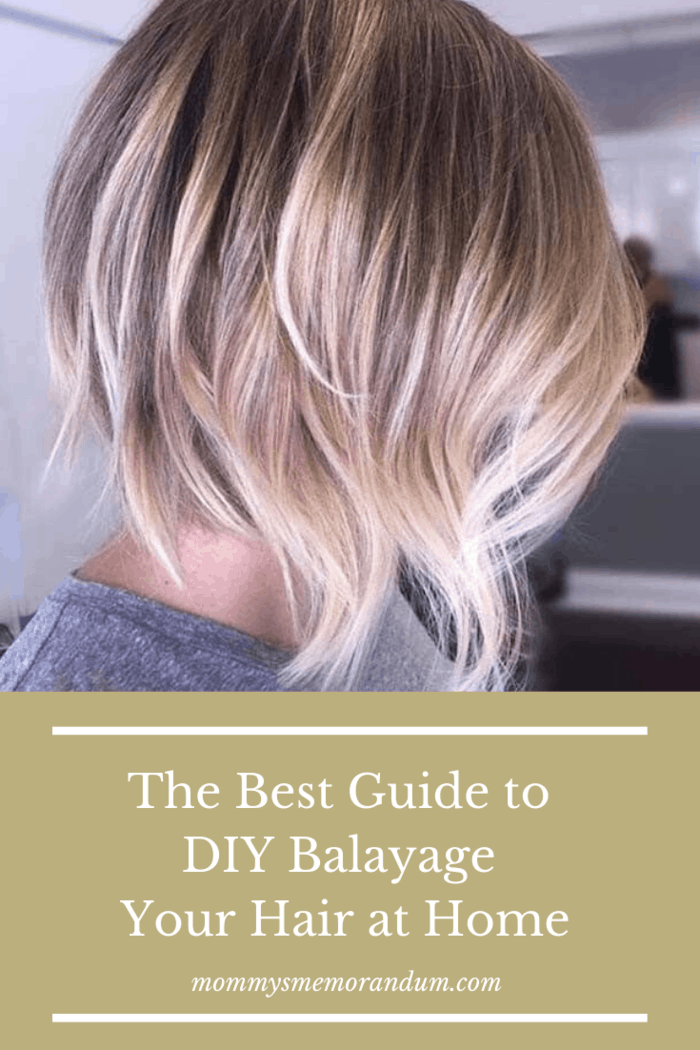
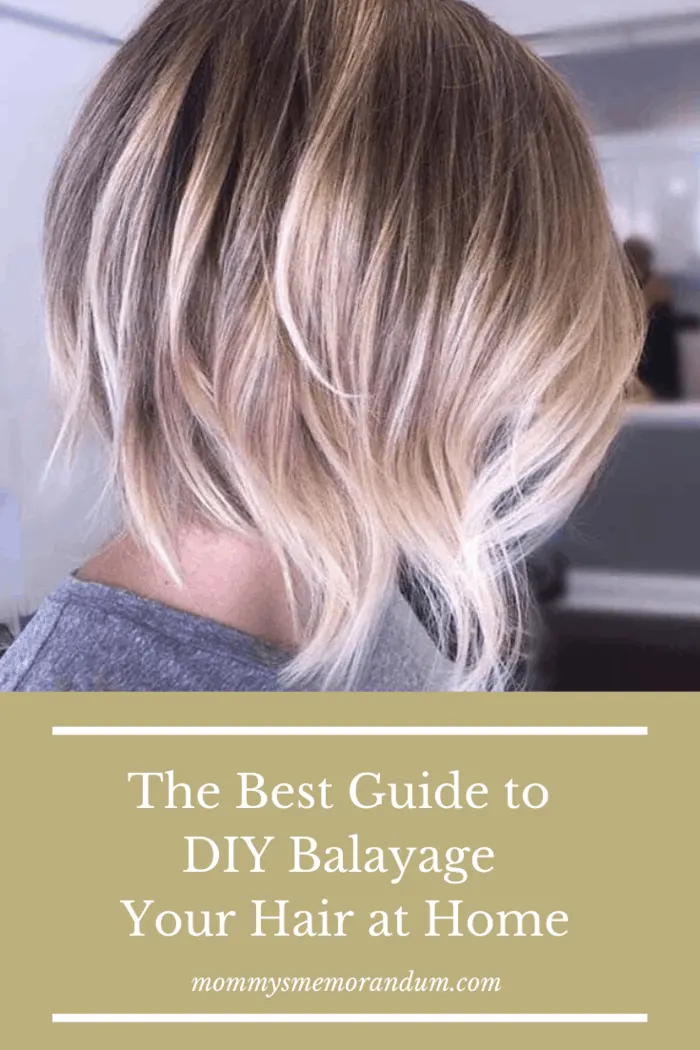
Final Thoughts on DIY Balayage at Home
Learning how to balayage at home is less about covering every strand and more about thoughtful placement. A few carefully painted sections can create more natural-looking dimension than a heavy application across the entire head.
Prepare before you begin, follow your product directions, test a hidden strand, keep the first session subtle, and protect the condition of your hair. Whether you choose traditional hand-painted highlights or the DIY balayage ponytail technique, soft blending is what keeps the finished color from looking striped or abrupt.
The goal is not to copy a salon transformation in one afternoon. It is to create a manageable amount of brightness that complements your starting color and still leaves your hair feeling healthy.
Save this DIY Balayage at Home guide for step-by-step balayage instructions, the DIY ponytail technique, sectioning tips, toning help, brassiness troubleshooting, and color-care ideas.
This article was originally published February 29, 2018, and updated with clearer DIY balayage instructions, safety guidance, troubleshooting, internal links, and new search-focused information.