Walking with The Good Dinosaur at Pixar: How Animators Brought Arlo to Life
Dinosaurs are BIG. They are also extinct. So how do you figure out how one should walk?
For Disney Pixar’s The Good Dinosaur, that question sent animators looking at animals we can still watch today. Their inspiration for Arlo’s movement came from a creature with plenty of size of its own: the elephant.
During my 2015 press visit to Pixar Animation Studios in Emeryville, California, I had the chance to hear Animator Kevin O’Hara and Directing Animator Rob Thompson explain the challenges of bringing Arlo to life. Later, Production Designer Harley Jessup shared how the characters and their world took shape.
The level of detail was mind-blowing. Something as ordinary as taking a step suddenly didn’t seem ordinary at all.
Disclosure: Disney-Pixar paid for my visit to Pixar as part of the #GoodDinoEvent.
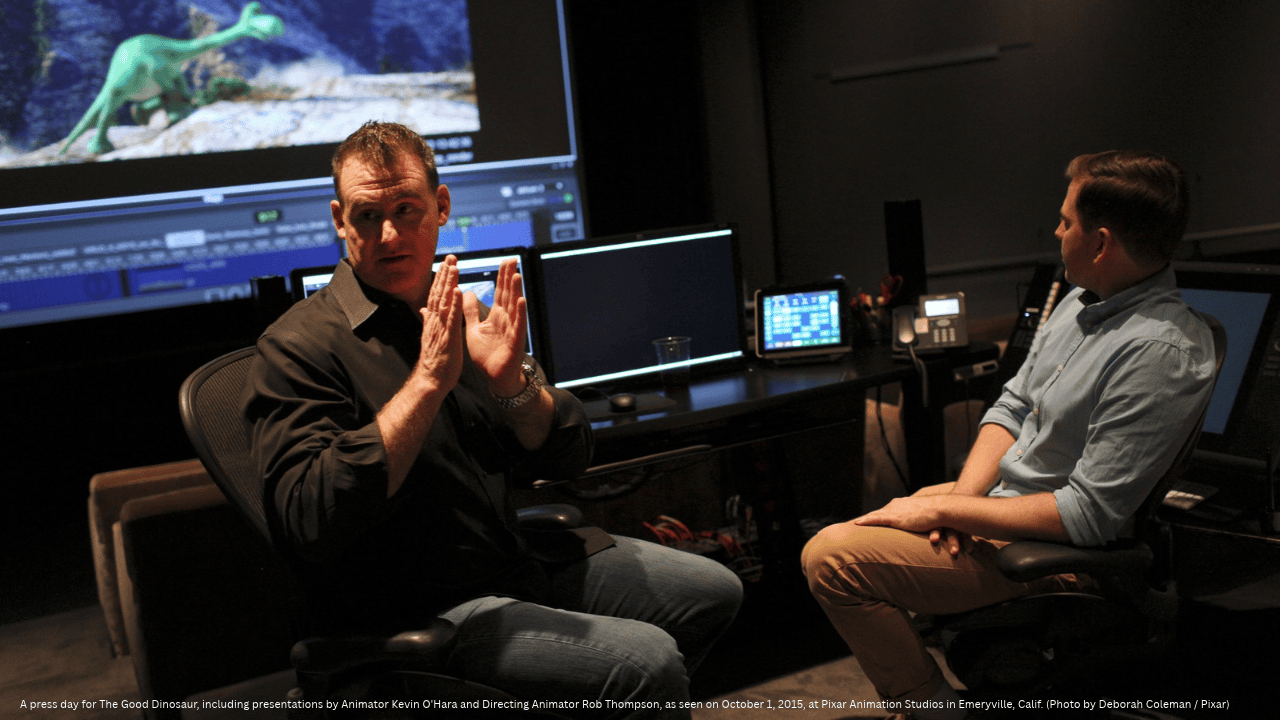
How Pixar Animated Arlo in The Good Dinosaur
The Good Dinosaur imagines a world where the asteroid that changed life on Earth missed the planet and dinosaurs never became extinct. In that world, an Apatosaurus named Arlo finds himself far from home with an unlikely companion: a human boy named Spot.
Creating Arlo meant more than deciding what a dinosaur looked like. The animators had to make him move in a way that felt believable. His feet needed to carry his weight, and his movements needed to belong to a character with feelings—not just a large animal crossing the screen.
But there was no living Apatosaurus to use as a reference. For Pixar’s team, the answer was a trip to the zoo.
“We made a research trip to the zoo to watch the elephants; to get the scale of these dinosaurs.” — Rob Thompson
Watching elephants gave the animators a way to study how a large, heavy animal moves. The placement of a foot, the shifting weight, and the coordination of the legs all mattered when it came time to animate Arlo.
Elephant Movement, Four Limbs, and Animation Poses
Kevin O’Hara explained just how challenging a four-legged character can be.
“One of the most frightening things to an animator is a quadruped.” — Kevin O’Hara
A quadruped is an animal that walks on four limbs. For Arlo, that meant working through animation poses while coordinating the right front, left front, right rear, and left rear limbs.
It wasn’t enough to move each leg. The poses had to work together so the walk felt natural and the body’s weight made sense. Watching the elephants helped the animators understand how those individual movements became one continuous walk.
From Blocking to Polishing: Building an Animated Shot
Once the movements were worked out, there was still plenty of work between the first animation and the finished scene.
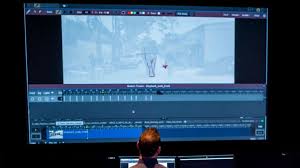
The demonstration broke the process into three stages:
- Blocking: Establishing the main poses and actions so the movement and timing begin to take shape.
- In-process animation: Developing the movement between those poses and refining the performance.
- Polishing: Working through the smaller details that make the finished movement feel convincing.
In my notes from the presentation, blocking took about four days, the in-process stage took roughly a week and a half, and polishing took another week. All that work went into about 24 seconds of screen time.
That was the example discussed during our session—not a fixed schedule for every shot. Still, imagine watching a few seconds of a movie and realizing how much work went into something you might otherwise barely notice.
Why Spot Moves on All Fours
Arlo wasn’t the only character whose movement helped tell the story. Spot, his human companion, presented a different challenge.
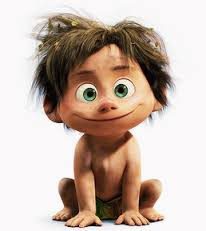
In an early version, Spot walked on two legs. Changing him to move on all fours helped establish the unusual relationship at the heart of the movie: Arlo takes the boy’s role in a boy-and-his-dog story, while Spot becomes the dog-like companion.
The way Spot moved helped make that relationship clear before anyone needed to explain it.
Harley Jessup on Designing The Good Dinosaur’s World
Animation brings a character’s performance to life. Production design helps establish what the characters and their surroundings look like.
Hearing Production Designer Harley Jessup discuss that side of the film added another layer to what I had learned from O’Hara and Thompson. Before Arlo could walk through his world, that world had to be designed.
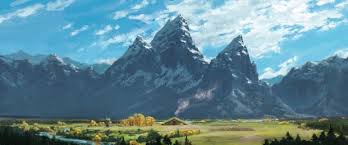
In a room full of sketches and paintings, I had a chance to see how much thought went into the characters and their surroundings. The landscape needed to feel vast, but the story still needed room for the relationship between Arlo and Spot.

A Montana Homestead and a Connection to the Campfire
It was mesmerizing to hear how Arlo’s home was inspired by a Montana homestead from around the 1950s.
That detail brought more life to Peter Sohn’s evening around the campfire and the stories from the Wyoming research trip. The places and experiences the filmmakers shared were finding their way into the world on the screen.
What Stayed with Me After Visiting Pixar
Seeing how the animators approached The Good Dinosaur was an experience I’ll never forget. A trip to the zoo helped answer a question about an extinct animal. A change in how Spot walked helped clarify a relationship. A Montana homestead helped shape Arlo’s home.
And a few seconds of movement could represent weeks of work.
It gave me a new appreciation for what happens before an animated character ever takes that first step on the screen.
More from My Good Dinosaur Pixar Visit
- Storyboarding, Pitching and Drawing The Good Dinosaur at Pixar
- An Evening Around the Campfire with Peter Sohn
- The Good Dinosaur Free Printable Activity Sheets
Originally published in 2015. Revised October 14, 2026, with clearer explanations and a refreshed image selection while preserving my firsthand experience at Pixar.