
Scott’s Liquid Gold ONE Clean Home and Wood Care Review
Does Scott’s Liquid Gold really work? I tested Scott’s Liquid Gold Wood Care on a dry, dull dresser that belonged to my husband’s Nana, and my honest answer is yes: on this particular piece of old wood furniture, the difference was visible.
The wood looked richer, the grain stood out more clearly, and the dresser lost that parched, neglected appearance it had when we inherited it. It did not magically repair damage or make the dresser look newly refinished—and I did not want it to. The driest areas also needed more than one pass before the finish looked even.
What I loved most was that, when I was finished, it still looked like Nana’s dresser. Just cleaner, less thirsty, and cared for again.
My original product test also included Scott’s Liquid Gold ONE Clean Home, which I used to remove the deep grime before applying the Wood Care. The old ONE Clean Home product page is no longer live, and the product is not part of the brand’s current featured lineup, so this updated review focuses on the Scott’s Liquid Gold Wood Care experience readers are still searching for.
Disclosure: I originally received Scott’s Liquid Gold ONE Clean Home and Scott’s Liquid Gold Wood Care as review samples. This updated review reflects my own first-hand experience with the products and the dresser shown in my original photographs.
My Honest Scott’s Liquid Gold Review
My verdict: Scott’s Liquid Gold Wood Care worked well on our dry, dull old dresser. The biggest difference was in the appearance of the wood itself. It looked less faded and parched, the natural grain became more noticeable, and the finish had a warmer, more even sheen.
I would use it again on natural wood furniture in a similar condition, after checking the current product label and spot-testing first.
I would not call it a miracle restoration product. It did not repair the wood, erase damage, or turn an inherited dresser into a newly refinished piece of furniture.
That distinction matters.
We were not trying to make this dresser look new. We were trying to take care of something old without erasing the person who had owned it before us.
The Old Dresser I Tested Scott’s Liquid Gold On
This dresser came to us when my husband’s parents loaded up and moved from Pittsburgh to Florida. Among the things we inherited were dressers that had belonged to my husband’s grandmother, who passed away decades before I ever met him.
To me, it was an old dresser.
To my husband, it was Nana’s.
That made the question of what to do with it more complicated.
The wood was dry. Its luster had faded. It clearly needed attention, and we discussed refinishing it.
My husband decided he wanted to keep it the way Nana had kept it.
So we moved it in, wiped it down with warm, soapy water, and called that enough for moving day.
Then July became August, August became several more months, and we kept talking about giving the dresser a proper cleaning and perhaps applying linseed oil.
Linseed oil can be messy.
It also requires patience and time.
We seemed to be short on both.
I kept thinking about Scott’s Liquid Gold instead.
My mother used it when I was growing up. I used it after I moved out on my own. It was one of those familiar household products that lived somewhere in the back of my memory long before I ever had an old family dresser of my own to worry about.
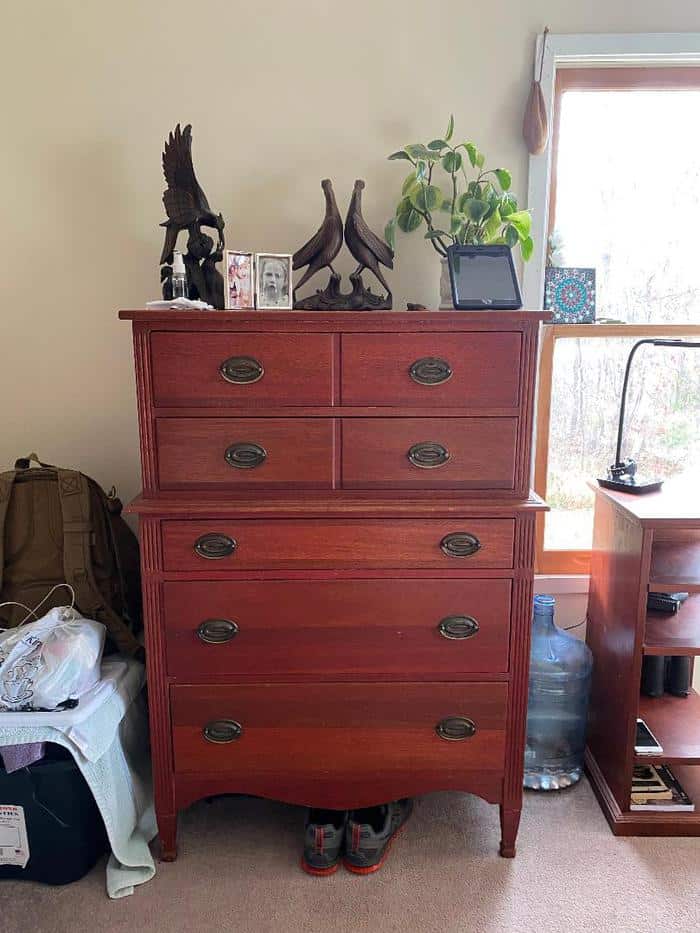
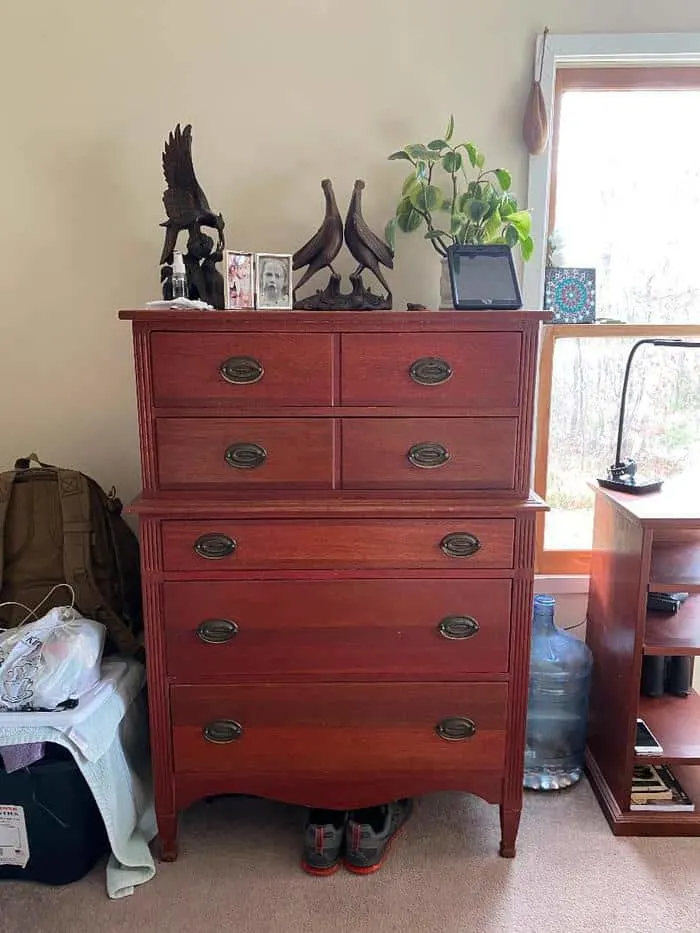
Before Using Scott’s Liquid Gold
I want to give the dresser’s condition some context because before-and-after photos are only useful when you know what “before” really means.
This dresser had not been abandoned in a barn or forgotten in a storage unit.
It had been kept in my mother-in-law’s home in a spare bedroom and dusted as part of the normal cleaning routine. When we inherited it, we also wiped it down with warm, soapy water.
It still looked dry and dull.
There were also layers of grime that normal dusting and our quick wash had not removed.
That became very obvious once I started the original product test.
How I Cleaned the Old Dresser
Step 1: The Original Deep Cleaning
In my original test, I first used Scott’s Liquid Gold ONE Clean Home, a multi-surface cleaner I was reviewing at the same time.
I want to be transparent about that because the Wood Care product was not applied to a dresser covered in years of untouched grime. I deep-cleaned the surface first and then used Scott’s Liquid Gold Wood Care.
The ONE Clean Home formula came out as a foam. My first complaint was immediate: the spray pattern was wide and uneven, so targeting a small area took a little practice.
Once I got the hang of it, I sprayed the dresser and allowed the cleaner to sit briefly before wiping.
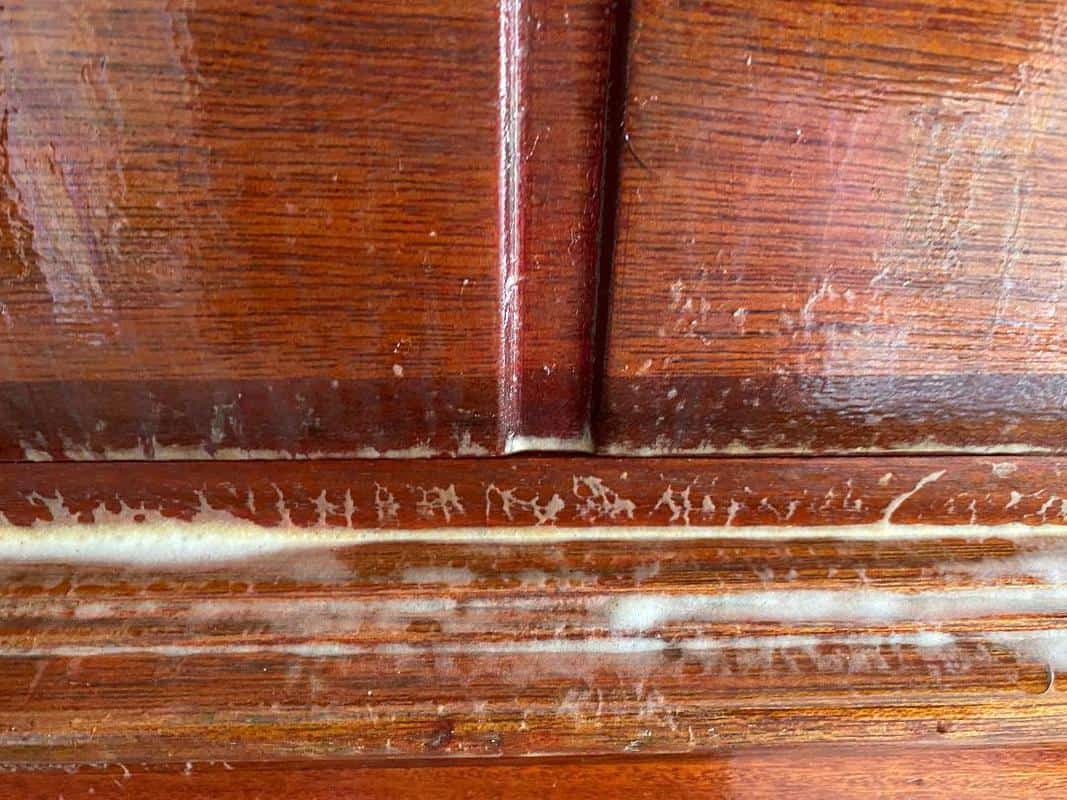
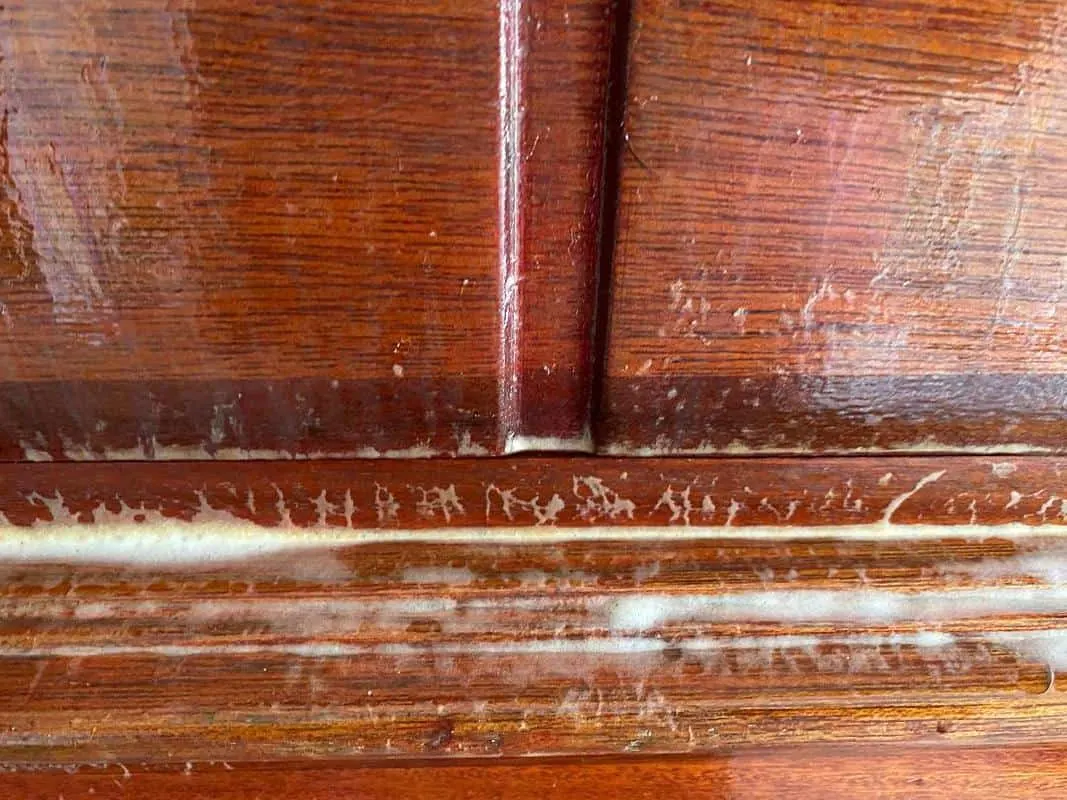
That was when I realized how much grime was still hiding on the wood.
Yellow-brown residue began lifting from the dresser. Because Nana had been a smoker, I believed at least some of what I was seeing was old smoke and nicotine residue that ordinary dusting and our earlier wash had not removed.
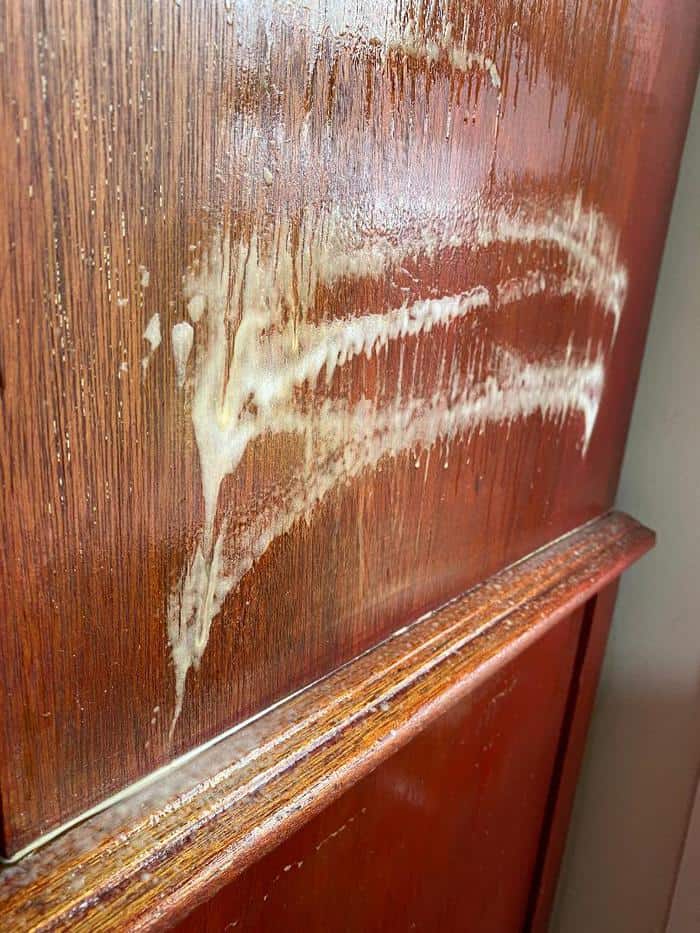
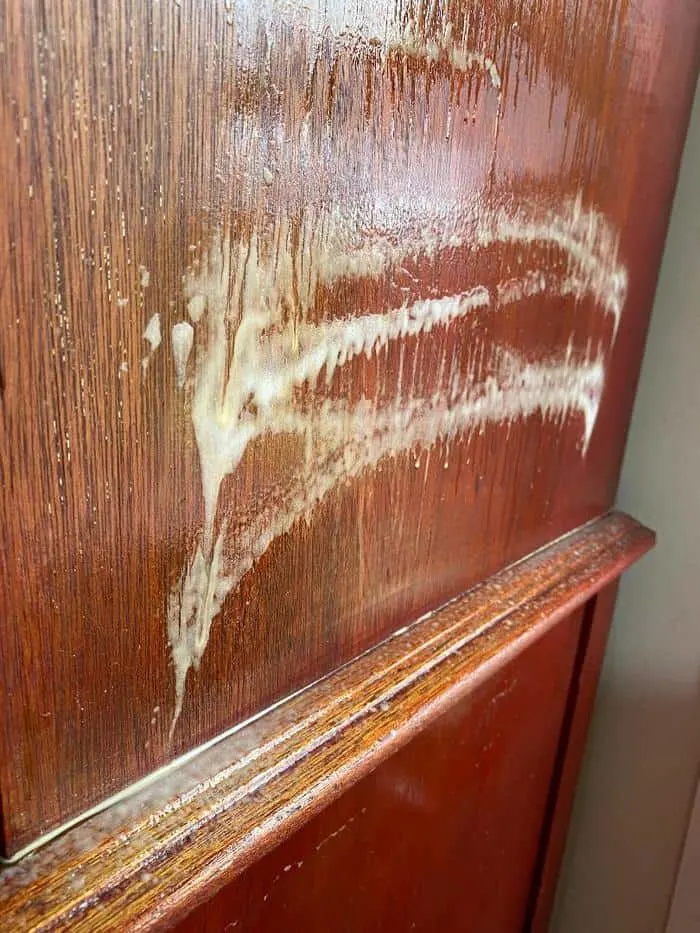
I wiped the dresser with soft cloths and paper towels.
The most stubborn areas were around the rim, near the drawer hardware, and in the gummy little corners where years of dust and residue had settled.
I could feel the cloth drag when it hit those areas. Then, as the grime loosened, the cloth began to glide again.
The dresser has a lipped rim with grooves and layers that could easily have turned this into an afternoon with a tiny scrub brush.
Instead, I was able to work through the details by wiping.
And then I looked at the paper towels.
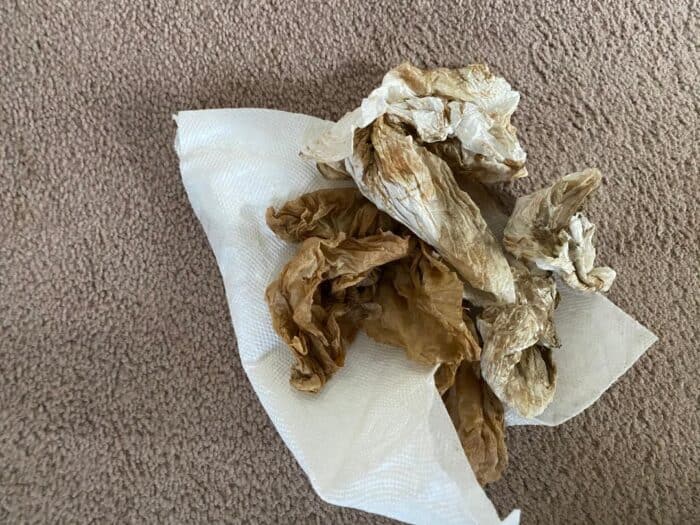
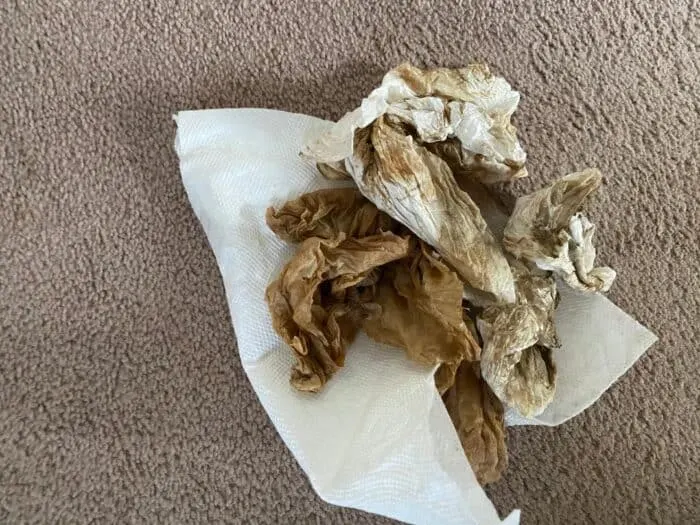
Remember, this was a dresser that had been dusted regularly and had already been wiped with warm, soapy water after the move.
That was the moment I realized the surface needed more than a quick dusting before I could judge what the Wood Care itself did.
Step 2: Applying Scott’s Liquid Gold Wood Care
Once the dresser was thoroughly cleaned and dry, I moved on to Scott’s Liquid Gold Wood Care.
This was the familiar part for me.
I grew up watching my mother use Scott’s Liquid Gold, and she had grown up watching her mother use it. There was something oddly comforting about standing in front of Nana’s dresser with a product connected to my own childhood memories.
I applied the Wood Care and wiped it across the dresser.
The wood was so dry that the first application did not look completely even. Some areas seemed to absorb more than others, so I repeated the process where needed until the appearance looked more consistent.
That is one of the most important things I learned from this test: very dry wood may not look perfectly even after one quick pass.
The result was not a hard, artificial shine.
The wood simply looked less dry.
The natural grain and color were easier to see, the finish looked more even, and I did not notice a heavy residue left behind on this dresser.
Scott’s Liquid Gold Before and After
The biggest improvement was not that the dresser suddenly looked brand new.
It was that it looked cared for again.
Before the treatment, the wood looked dry, tired, and flat. Afterward, the natural color appeared richer, the grain was more noticeable, and the surface had a more even sheen.

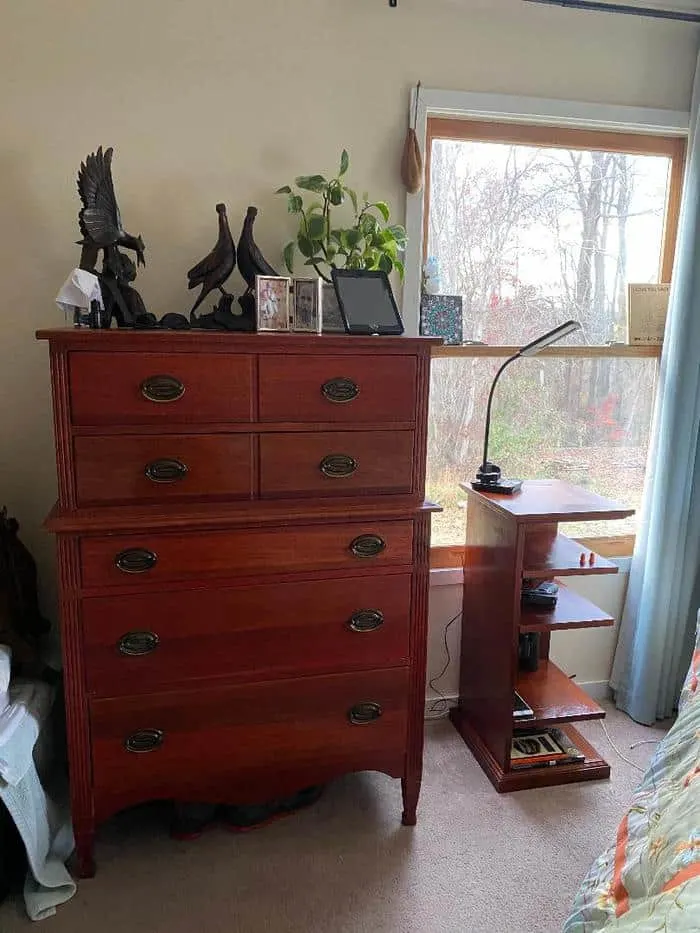
The before-and-after difference was visible to us, but it was still the same old dresser.
That was exactly what we wanted.
What I Liked About Scott’s Liquid Gold Wood Care
- It improved the appearance of dry, dull wood. The dresser looked less parched and more even after treatment.
- It brought out the natural grain. The wood’s existing character became more noticeable without looking painted over or artificially changed.
- It preserved the dresser’s old appearance. We wanted to care for Nana’s dresser, not erase its history.
- The application was straightforward. Once the surface was properly cleaned, the Wood Care was easy to work across the dresser.
- I did not notice a heavy residue on this piece. The finished wood looked richer without feeling like I had covered it in a thick coating.
What I Did Not Like
A trustworthy Scott’s Liquid Gold review also needs the things I would not oversell.
- The driest wood needed more than one pass. The dresser absorbed the product unevenly at first, so I had to work a little more to get a consistent appearance.
- This was not a miracle restoration. It did not repair damage, remove dents, or make old wood new again.
- My results are specific to this dresser. Wood species, age, condition, and existing finish can all affect the result.
- The original ONE Clean Home spray was awkward at first. Its wide, uneven spray pattern made precise application difficult until I adjusted to it.
The last point applies to the separate cleaner used in the historical test, not the Scott’s Liquid Gold Wood Care product that is the focus of this updated review.
Is Scott’s Liquid Gold Good for Wood?
Based on my experience, Scott’s Liquid Gold Wood Care was good for this dry, dull old wood dresser.
The manufacturer currently positions Wood Care for natural finished and unfinished wood and describes it as a conditioning product intended to hydrate and revitalize wood surfaces.
That lines up with what I saw.
The biggest change on Nana’s dresser was the dry, thirsty-looking wood. After treatment, it appeared richer and less dull.
That does not mean I would automatically use it on every antique or every wooden surface in my home.
Our dresser is one real-life test on one piece of inherited furniture. A valuable antique, an unknown specialty finish, or a surface with previous coatings deserves more caution.
I would always read the current label and spot-test in a hidden area first.
Is Scott’s Liquid Gold a Cleaner or a Furniture Polish?
I think this is where some of the confusion around “Liquid Gold cleaner,” “Liquid Gold furniture polish,” and “Liquid Gold Wood Care” comes from.
Scott’s Liquid Gold Wood Care is better thought of as a wood-care and conditioning product than a heavy-duty grime remover.
The brand currently describes it as helping clean and protect wood while conditioning dry surfaces.
In my own test, I would not credit the Wood Care with removing the years of embedded grime shown on the dirty paper towels. I had already completed the deep-cleaning step before I applied it.
What I saw after using the Wood Care was a change in the appearance and feel of the dry wood itself.
For heavily soiled furniture, I would separate those two jobs in my mind:
- First, determine the appropriate way to clean the specific wood and finish.
- Then, once the surface is clean and dry, decide whether a conditioning wood-care product is appropriate.
How to Use Scott’s Liquid Gold on Furniture
Always follow the current directions on the exact Scott’s Liquid Gold product and package you purchase.
My practical lessons from this old dresser are:
- Know what surface you are working with. Do not assume every old or valuable piece of furniture has the same finish.
- Read the current label. Product directions and formulas can change over time.
- Spot-test first. Choose a small, inconspicuous area before treating the visible surface.
- Remove loose dust and appropriate surface grime first. My dresser needed a deep cleaning before I could fairly judge the Wood Care.
- Work in manageable sections. This makes it easier to keep the application even.
- Do not assume more product is automatically better. Let the appearance of the wood and the current label guide you.
- Reassess before adding another pass. The driest parts of our dresser needed more attention, but I would not automatically repeat that on every piece of wood.
What Is Actually in Scott’s Liquid Gold?
My original review used broad promotional language saying the products were made with “all-natural, organic oils.” I would not repeat that claim now.
The manufacturer’s current ingredient page is much more specific.
The current aerosol Scott’s Liquid Gold Wood Care ingredient list includes:
- Base oil
- Propane
- Isobutane
- Fragrance
The current pourable Scott’s Liquid Gold Wood Care ingredient list includes:
- Base oil
- Hydrotreated light naphtha
- Fragrance
That is why I removed the old blanket claims about both products being “all-natural,” “organic,” or something I did not need to worry about inhaling around children and pets.
Those statements were too broad.
The better advice is simpler: read the current ingredient information, follow the product label, use the product as directed, and make your own decision based on your household and the surface you are treating.
Who I Think Scott’s Liquid Gold Wood Care Is Best For
Based on my experience, I think this product makes the most sense for people with:
- Natural wood furniture that looks dry or dull
- Older furniture they want to care for without making it look newly refinished
- Inherited pieces where preserving the existing character matters
- Wood surfaces that need conditioning rather than structural repair
- A willingness to check the finish, read the label, and spot-test first
When I Would Not Use It
I would not use Scott’s Liquid Gold Wood Care with the expectation that it will repair deep scratches, dents, missing finish, water damage, or structural problems.
I also would not treat a valuable antique with an unknown finish solely because the product worked well on our dresser. For a particularly valuable piece, I would first identify the finish or seek advice from someone qualified to evaluate antique furniture.
I would not skip the current product directions or the spot test.
And I would not use Wood Care as though it were the same product as Scott’s Liquid Gold Floor Restore. The current brand lineup treats those as separate products for separate jobs.
Is Scott’s Liquid Gold Worth It?
For dry, dull wood furniture like Nana’s dresser, I think Scott’s Liquid Gold Wood Care is worth considering.
I would use it again because I saw a real improvement in the appearance of this dresser.
I also appreciate what it did not do.
It did not make the piece look freshly sanded, stained, and refinished.
It did not erase the years.
It simply made the wood look richer, less dry, and better cared for.
For this particular dresser, that was the right result.

Scott’s Liquid Gold Review FAQ
Is Scott’s Liquid Gold good for wood?
Scott’s Liquid Gold Wood Care worked well on my dry, dull old wood dresser. The manufacturer currently positions Wood Care for natural finished and unfinished wood. Results can vary by the type, condition, and finish of the wood, so read the current label and spot-test first.
Does Scott’s Liquid Gold really work?
It worked on the dresser shown in my before-and-after photos. The wood looked less dry, the color and grain appeared richer, and the sheen was more even. It did not repair damage or refinish the furniture.
Is Scott’s Liquid Gold a cleaner or polish?
Scott’s Liquid Gold Wood Care is best described as a conditioning wood-care product that also helps clean and protect wood. In my test, I removed the heavy grime first and then used Wood Care to improve the dry, dull appearance of the dresser.
How do you use Scott’s Liquid Gold on furniture?
Follow the directions on the current package you purchase. Before treating furniture, identify the surface, read the label, and spot-test in an inconspicuous area. On my dresser, the surface was cleaned first and the Wood Care was then applied and wiped across the wood.
Can you use Scott’s Liquid Gold on old furniture?
I used it successfully on an inherited old dresser, but that does not mean every antique or old finish should be treated the same way. For valuable furniture or an unknown finish, use extra caution and consider identifying the finish before applying any product.
Does Scott’s Liquid Gold remove scratches?
Scott’s Liquid Gold is not a structural repair product. The manufacturer says Wood Care can help hide the appearance of some nicks and scratches, but it does not repair deep scratches or missing finish. On my dresser, the biggest improvement was in dryness, color, grain, and sheen.
What is the difference between Scott’s Liquid Gold Wood Care and Floor Restore?
They are separate products for different jobs. Wood Care is positioned for natural finished and unfinished wood surfaces and uses conditioning oils. Floor Restore is specifically intended to renew dull, worn natural hardwood floors and uses a different formula and approach.
Is Scott’s Liquid Gold still available?
Yes. Scott’s Liquid Gold Wood Care remains part of the brand’s current product lineup, and the manufacturer currently lists both local and online purchasing options.
The Part of This Review That Matters Most to Me
I cannot believe how long we talked about giving this dresser some attention before I finally did it.
Life has a way of filling the space between good intentions.
There was virtual school. Blogging. Work. The usual routines. The usual reasons to say, “We’ll get to it later.”
And then one day, later finally arrived.
I cleaned the dresser. I wiped away more history than I expected to find on those paper towels. I worked the Wood Care over the dry wood and watched the grain come back into focus.
When I finished, the dresser looked better.
But it still looked old.
It still had its history.
Most importantly, it still looked like Nana’s dresser.
That is the result I wanted all along.
For more practical home-cleaning ideas, you may also enjoy these uses for citric acid and my quick cleaning plan for surprise guests.
I originally received Scott’s Liquid Gold ONE Clean Home and Scott’s Liquid Gold Wood Care in exchange for an honest review. All opinions and photographs are my own. This article has been updated to focus on my first-hand Scott’s Liquid Gold Wood Care experience and to remove outdated promotional claims. Individual results may vary. Always read and follow the current product label before use.