Inside Out: Pete Docter & Jonas Rivera Interview
Disclosure: I attended this Disney-sponsored press event in San Francisco in 2015. Travel and event expenses were provided by Disney. All opinions and recollections are my own.
What does it take to create a movie that makes children laugh, parents cry, and families think differently about their emotions?
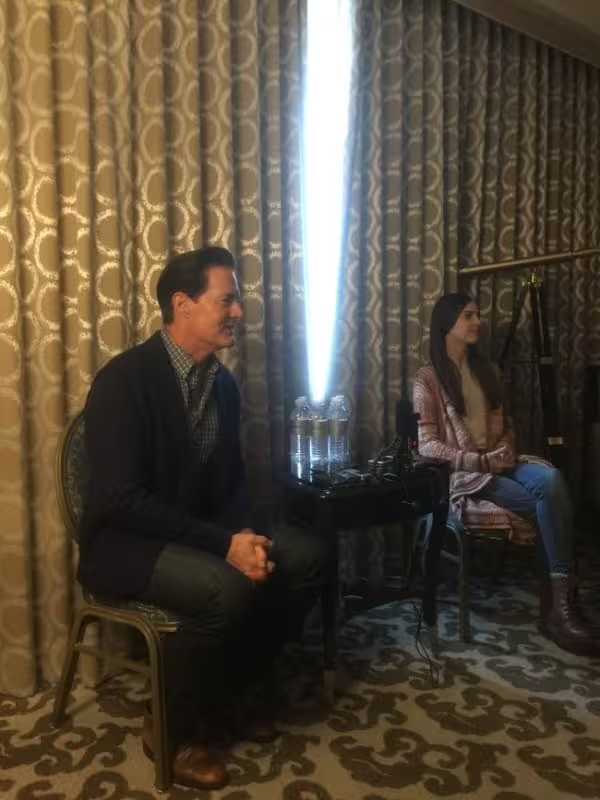
I had the opportunity to explore that question when I sat down with Inside Out director Pete Docter and producer Jonas Rivera at the historic Fairmont Hotel on Nob Hill in San Francisco.
I'd watched Pixar bring toys to life, give monsters personalities, and send an elderly man floating into the sky with a house full of balloons. But Inside Out was different. This time, Pixar wasn't taking us to another world. It was taking us inside our own minds.
And as I listened to Docter and Rivera talk about the making of Inside Out, I discovered that some of the movie's most memorable moments began with surprisingly simple ideas: a father's changing relationship with his daughter, a vintage Disneyland map, and an imaginary friend who represents everything we wish our children could hold on to just a little longer.

Inside My Interview with Pete Docter and Jonas Rivera
Some interviews feel formal. Others feel like you've been invited into a conversation between old friends.
This was the latter.
Docter and Rivera have an easy rapport. One begins a thought, the other adds to it, and suddenly they're enthusiastically describing an idea that may or may not have made it into a Pixar movie.
Their enthusiasm was contagious. These are two people who clearly love what they do, and watching them talk about storytelling made me appreciate just how much imagination, experimentation, and persistence go into creating a film like Inside Out.
Before we get to the interview, though, let's revisit the movie that brought us together.
What Is Disney-Pixar's Inside Out About?
Released in theaters on June 19, 2015, Disney-Pixar's Inside Out follows 11-year-old Riley Andersen as her family moves from Minnesota to San Francisco.
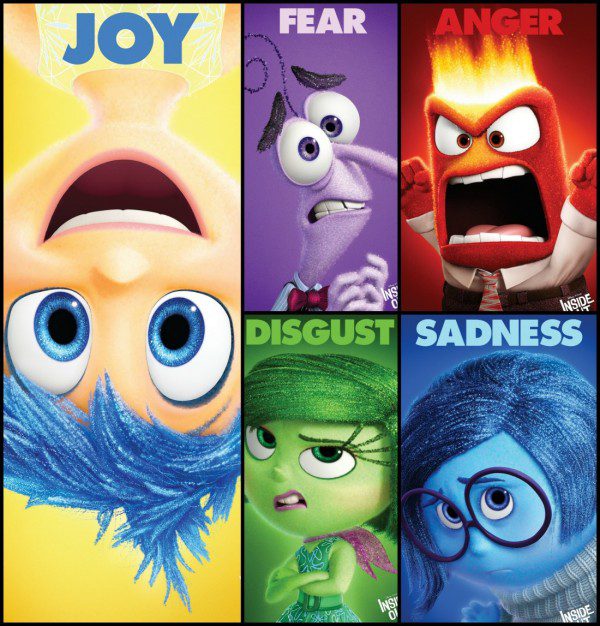
Leaving her familiar home, friends, and routines behind isn't easy. Fortunately, Riley has five emotions working inside Headquarters, the control center of her mind:
- Joy (Amy Poehler): Determined to keep Riley happy and find the positive in every situation.
- Sadness (Phyllis Smith): The emotion whose importance isn't immediately understood by the others.
- Anger (Lewis Black): Passionate about fairness and quick to express frustration.
- Fear (Bill Hader): Constantly watching for danger and trying to protect Riley.
- Disgust (Mindy Kaling): Helping Riley avoid things she finds unpleasant, from questionable food to awkward social situations.
When Joy and Sadness become separated from Headquarters, the other emotions must figure out how to guide Riley through one of the most difficult changes of her young life.
But while Riley is the human heart of the story, the filmmakers had the unusual challenge of making her emotions the central characters.
That decision opened the door to an entirely new kind of animated adventure.
Who Are Pete Docter and Jonas Rivera?
If you're a Pixar fan, chances are you've already fallen in love with something these two filmmakers helped create.
Pete Docter: The Imagination Behind Monsters, Inc., Up, and Inside Out

Pete Docter describes himself as a geeky kid from Minnesota who likes to draw cartoons. That's a wonderfully modest description of someone whose imagination has helped shape some of Pixar's most beloved films.
Docter joined Pixar in 1990 as its third animator and worked on the story and characters for Toy Story. He later directed Monsters, Inc., Up, and Inside Out.
One of my favorite little pieces of Pixar trivia is that Docter joined the studio when he was just 21 years old, shortly after graduating from college.
He also helped develop Buzz Lightyear, reportedly drawing in part from his own personality while working on the character.
It's fascinating to consider that someone who helped create the world of Toy Story would eventually give audiences a completely different kind of animated character: a feeling.
Jonas Rivera: From Pixar Intern to Inside Out Producer

Jonas Rivera joined Pixar in 1994, while the studio was working on its first feature film, Toy Story.
Starting as a production intern, he went on to work in various production roles before producing Up and later reuniting with Docter for Inside Out.
The partnership makes sense when you listen to them talk. They share a love of animation, an appreciation for the smallest storytelling details, and an unmistakable excitement about finding ideas no one has explored before.
Both filmmakers understand something that makes Pixar special: an extraordinary movie doesn't necessarily begin with an extraordinary event.
Sometimes, it starts with an ordinary moment that someone sees differently.
How Did Pete Docter Come Up with the Idea for Inside Out?
The original inspiration for Inside Out came partly from Docter's experience watching his daughter grow up.
His daughter, Elie, had provided the voice of young Ellie in Up. As a child, she had been outgoing and enthusiastic. But as she approached adolescence, Docter noticed that she was becoming quieter and more reserved.
He began wondering what was happening inside her mind.
For any parent who has watched a once-chatty child become more private as they grow older, that question probably sounds familiar.
What changes? What are they thinking? And why does the child we know so well sometimes begin to feel like a mystery?
For Docter, those questions eventually became the foundation of a movie about the emotions working inside an 11-year-old girl's head.
Pixar researched psychology and neuroscience while developing the story, consulting experts about emotions, memory, and the way people think and feel.
Of course, Inside Out isn't intended to be a literal map of the human brain. The filmmakers used scientific ideas as a starting point, then added plenty of imagination to make the concepts understandable, entertaining, and visually engaging.
That balance between recognizable human experiences and wonderfully impossible places became one of the film's greatest strengths.
From Up to Inside Out: Why Pixar Wanted a Completely New Adventure
During our conversation, Rivera explained that after working together on Up, he and Docter began discussing what they might create next.
"We worked on UP together and when we were done, we put our heads together and said, 'Can you imagine a world where there's more adventures?'"
— Jonas Rivera, 2015 interview
He explained that they get especially excited when an idea feels completely new.
That enthusiasm led them toward a story set inside the human mind.
The initial concept, Docter told us, involved a control room that he imagined somewhat like a spaceship. Eventually, that concept developed into Headquarters, where Riley's emotions monitor her experiences and influence her decisions.
But Headquarters was only the beginning.
Once the filmmakers decided to explore the human mind, they had to imagine what the rest of that world would look like.
And an unexpected source of inspiration came from a place where imagination has always been part of the experience: Disneyland.
How a 1959 Disneyland Map Inspired the World of Inside Out
This was one of my favorite discoveries from the interview.
Rivera explained that while developing the geography of Riley's mind, the team found inspiration in a framed 1959 Disneyland map hanging above a monitor in their war room.
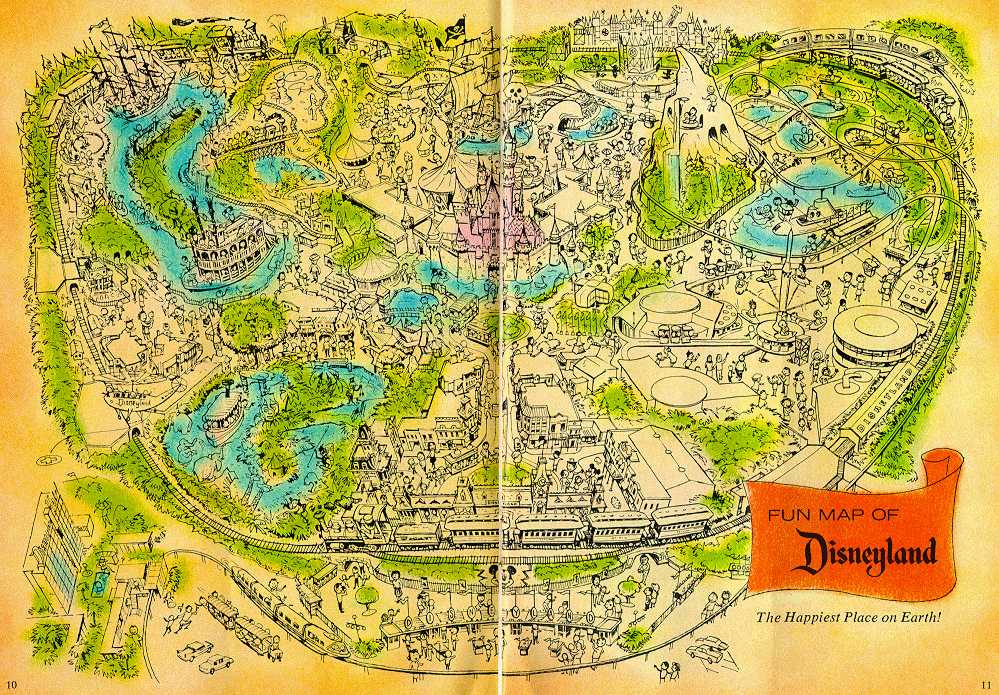
Rivera remembered thinking about the different regions of Disneyland and the train connecting them.
"Different regions--and there's a train."
— Jonas Rivera
Suddenly, the idea of creating separate places inside Riley's mind became a little easier to visualize.
Like Disneyland, the imaginary landscape could have distinct destinations, each with its own purpose and personality.
The finished movie would include Headquarters, Imagination Land, Long-Term Memory, Dream Productions, the Train of Thought, and the Islands of Personality.
It was such an imaginative way to make an invisible world feel like a real place.
And perhaps that's why I love this detail so much. The creative minds behind one of Pixar's most inventive movies drew inspiration from another place built around storytelling, exploration, and the magic of childhood.
Creating Riley's Islands of Personality Wasn't Easy
As polished as the finished movie appears, Docter admitted that developing Riley's mind was anything but straightforward.
Every time the story changed, the imaginary world surrounding it often had to change, too.
The filmmakers experimented with several ways to organize the mind, including a spiral arrangement resembling layers of cake, pillars rising through fog, and structures suspended within domes.
None of those designs completely solved the storytelling problem.
Eventually, they realized that the most important thing at stake wasn't simply Riley's memories. It was her developing personality.
As parents, we love the people our children are. Watching them grow means accepting that those personalities will change, sometimes in ways we don't expect.
The Islands of Personality gave the filmmakers a way to show those changes visually.
Each island represented a meaningful part of Riley's identity, such as Family Island, Friendship Island, Hockey Island, Honesty Island, and Goofball Island.
And when something changed in Riley's life, the world inside her mind could change along with it.
Docter explained that the connection between story and environment created ongoing challenges for production. A change in Riley's behavior could mean reworking an entire part of the imagined landscape.
It made me appreciate how much thought goes into a Pixar movie. Even the most whimsical details have a storytelling purpose.
If you enjoy discovering how Pixar brings its ideas to life, you'll also love my behind-the-scenes look at storyboarding, pitching, and drawing The Good Dinosaur at Pixar, where I visited the creative spaces where another Pixar film took shape.
The Story Behind Bing Bong: Why He's More Than Riley's Imaginary Friend
Of all the characters in Inside Out, Bing Bong may be the one who makes parents reach for the tissues.
Riley's imaginary friend is a wonderfully peculiar combination of childhood creativity: part elephant, part cat, part cotton candy, and completely unforgettable.
But during our interview, Docter explained that Bing Bong represented something much deeper.
The filmmakers initially believed they were telling a story about growing up through Riley's eyes. Eventually, they realized that much of the movie reflected a parent's perspective.
It's about watching children grow and learning to let go of the little versions of them we wish we could keep forever.
Docter described the difficulty parents experience when their children begin moving away from childhood and the comfort of being held close.
When Bing Bong developed into a representation of that childhood joy, the character found his place in the film.
As a mother, that part of our conversation stayed with me.
Parenting is a strange combination of wanting our children to grow into confident, independent people and wishing we could borrow just one more afternoon with the little people they used to be.
Perhaps that's why Bing Bong's story is so emotional. He reminds us that growing up brings wonderful possibilities, but sometimes it also means saying goodbye to things we once loved.
The Imaginary Friends Who Didn't Make the Final Movie
Here's a behind-the-scenes detail I particularly enjoyed: Bing Bong wasn't always alone.
In early versions of the story, the filmmakers explored other imaginary characters from Riley's childhood.
One was Miss Scribbles, based on the kind of drawings Riley might have created when she was three years old.
Another was a sun inspired by that familiar childhood drawing where the sun peeks out from the corner of a piece of paper.
Docter and Rivera laughed about how those drawings could look like a little slice of pie.
Those characters didn't survive the storytelling process, but I love knowing they were considered.
They reveal just how thoroughly Pixar explores an idea before deciding what belongs in the finished movie.
And Richard Kind brought Bing Bong to life with a performance that Docter praised during our conversation.
For more about the voices behind these unforgettable characters, my Inside Out interview with Phyllis Smith and Richard Kind explores Sadness, Bing Bong, and the actors who made both characters so memorable.
Which Inside Out Emotion Do Pete Docter and Jonas Rivera Relate to Most?
Of course, when you're sitting across from the people who created a movie about emotions, you have to wonder which of those emotions they recognize in themselves.
Docter laughed at the question because, like the rest of us, his answer changes depending on the day.
"It really depends on the day! Some days, Fear for sure. Most of the time, Joy. Once in a while Anger."
— Pete Docter
Rivera identified most closely with Joy.
"I have one of the greatest jobs in the world. Every now and then I pinch myself."
— Jonas Rivera
But there was something else about Joy that Rivera recognized in himself.
He described her as someone who remains optimistic while also looking backward at cherished memories.
"She's very much into her memories and I guess she's a nostalgist. I'm a little bit that way, too."
— Jonas Rivera
I found that particularly touching.
Joy isn't simply about happiness in the moment. She also wants to preserve the memories that make us who we are.
And isn't that something many of us do? We take photographs, save school drawings, hold on to favorite toys, and treasure the stories that remind us of particular seasons in our lives.
How Inside Out Helped Children Talk About Their Feelings
By the time I spoke with Docter and Rivera in San Francisco, Inside Out had already reached audiences, and the filmmakers were hearing stories about its influence.
Rivera shared a simple moment from that morning involving his four-year-old daughter, Ava.
She had dressed herself wearing one Joy sock and one Fear sock.
When her father questioned the choice, she explained that she had Fear and Joy that day.
What struck Rivera was that his daughter had begun using the characters to describe something about how she felt.
He was seeing the movie's language become part of her everyday understanding of emotions.
Another especially moving story shared during the interview concerned a family with an autistic child.
The family reportedly placed representations of the movie's emotions on a table so their child could choose the one that best described how they were feeling.
The filmmakers hadn't set out to create a therapeutic resource. They wanted to tell an entertaining story. Yet hearing how one family used the characters to support communication gave their work an additional meaning.
"It's a pretty cool reward. A cherry on top of the whole thing that it has done that."
— Jonas Rivera
It's important to recognize that these were personal experiences shared during the interview, not scientific evidence of a particular therapeutic outcome.
Still, they demonstrate something lovely about storytelling: people sometimes find uses and meanings in a work that its creators never anticipated.
For families, the film can also be a starting point for conversations about what it means to feel more than one emotion at a time, why sadness deserves attention, and how difficult changes affect us.
Sometimes, having a familiar character to point to makes a complicated feeling easier to talk about.
Did Pete Docter and Jonas Rivera Plan an Inside Out Sequel?
At the time of our 2015 interview, the filmmakers told us they weren't discussing or planning an Inside Out sequel.
They were proud of what they'd created but were excited about discovering fresh stories and exploring new worlds.
The conversation also turned toward Pixar's upcoming projects, including The Good Dinosaur and Finding Dory.
Those comments reflected where the studio and filmmakers stood in 2015, rather than what would happen years later.
Of course, audiences eventually returned to Riley's mind when Inside Out 2 arrived in theaters in 2024, introducing new emotions as Riley entered her teenage years.
It's interesting to revisit that original conversation now and see how the world of Inside Out continued to evolve.
Looking Back at My Inside Out Interview
I've had some memorable experiences covering Disney and Pixar over the years, but this conversation with Pete Docter and Jonas Rivera remains special.
There was something wonderful about listening to two incredibly creative people explain how they turn an abstract idea into a story that audiences can feel.
A father notices his daughter growing quieter.
A Disneyland map helps inspire a world inside the human mind.
An imaginary friend becomes a reminder of childhood and the difficulty of letting go.
And a little girl puts on two mismatched socks because she recognizes both Joy and Fear in herself.
Those are the details I remember most.
Pixar is known for its incredible animation, but after listening to Docter and Rivera, I think the real magic lies in the way they find something recognizable and deeply human inside the most imaginative stories.
We may not have actual islands floating around in our minds, or little characters pushing buttons inside Headquarters, but we all know what it's like to feel joy, fear, sadness, anger, and disgust.
And perhaps the greatest lesson of Inside Out is that all those emotions deserve a place in our stories.
For another look at my time covering Disney and Pixar in San Francisco, visit my original San Francisco press-trip announcement, which includes more about our visits and the Disney projects we were covering.
Frequently Asked Questions About Inside Out
Who directed the original Inside Out?
Pete Docter directed Disney-Pixar's 2015 film Inside Out, with Ronnie del Carmen serving as co-director. Jonas Rivera produced the film.
What inspired Pete Docter to create Inside Out?
Docter was partly inspired by watching his daughter change as she approached adolescence. His curiosity about what was happening inside her mind eventually helped shape the story.
Why did Pixar create the Islands of Personality?
The Islands of Personality offered a visual way to represent important parts of Riley's identity and show how those parts could change as she grew older.
What does Bing Bong represent in Inside Out?
Bing Bong is Riley's childhood imaginary friend. He also symbolizes childhood memories, imagination, and the bittersweet process of growing up.
Was Inside Out based on real psychology?
Pixar consulted experts in psychology and neuroscience during development. However, the film's depiction of emotions, memories, and the mind is a creative interpretation rather than a literal scientific model.
Editor's note: This article preserves highlights from my 2015 Disney-Pixar interview, with additional background and historical context added for readers revisiting Inside Out today.