
How to Make Balsamic Pearls with Agar Agar
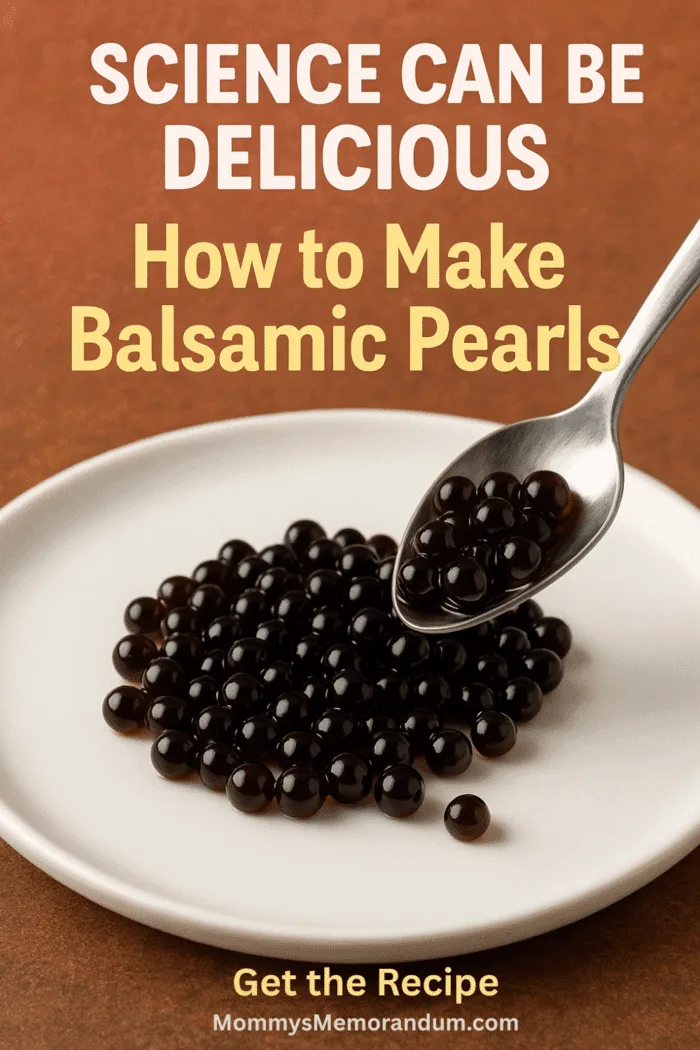
These balsamic pearls turn balsamic vinegar into glossy little spheres that make salads, crostini, cheese boards, appetizers, meats, and plated desserts look restaurant-worthy. They are made with just three ingredients: balsamic vinegar, agar agar, and very cold neutral oil.
The technique is easier than it looks. Heat the balsamic vinegar with agar agar until the agar is completely dissolved, then drop the warm mixture into chilled oil. The temperature change causes each drop to set into a tiny balsamic sphere.
A quick note about “popping” pearls: You may see these called balsamic popping pearls, balsamic popping boba, or balsamic caviar. Pearls made with the cold-oil agar method are soft, solid gel pearls rather than liquid-filled popping boba. If you want pearls with a truly liquid center, that requires a sodium alginate and calcium spherification method instead.

Readers Also Make
If experimenting with edible pearls sounds like your kind of kitchen project, these recipes take the idea in a few different directions:
- How to Make Popping Boba at Home shows you how to make colorful pearls for drinks and desserts.
- Sodium Alginate Popping Boba Recipe explains the method used to make liquid-centered popping pearls.
- How to Make Boba with Fruit Juice turns fruit juice into a fun homemade boba-style treat.
What Are Balsamic Pearls?
Balsamic vinegar pearls, sometimes called balsamic caviar, are small spheres of concentrated balsamic flavor used as a finishing garnish. Instead of drizzling vinegar across the entire dish, you can place or scatter the pearls exactly where you want them.
This recipe uses the cold-oil agar method. Agar agar is dissolved in balsamic vinegar with heat. When individual drops hit very cold oil, they cool rapidly and set into round gelled pearls.
The result is an easy bit of molecular gastronomy you can make at home without specialized restaurant equipment.
Ingredients for Balsamic Pearls
- 2 grams agar agar: Weighing the agar gives you much more consistent results than measuring such a small amount by volume.
- ⅔ cup balsamic vinegar: Because the flavor becomes concentrated in each pearl, use a balsamic vinegar you already enjoy.
- 1 cup neutral-flavored refined oil: Vegetable or canola oil works well for the cold-oil bath. Avoid extra-virgin olive oil for the freezer step because it may become cloudy or partly solid.
Equipment You’ll Need
- Tall freezer-safe glass
- Small saucepan
- Kitchen scale capable of measuring grams
- Dropper or pipette
- Fine-mesh sieve
- Airtight container


How to Make Balsamic Pearls at Home
1. Chill the Oil
Pour the neutral oil into a tall freezer-safe glass and place it in the freezer for at least 30 minutes. You want the oil extremely cold but still liquid.
If your first test drops flatten, stick together, or collect as a puddle at the bottom of the glass, return the oil to the freezer and let it chill longer before trying again.
2. Heat the Balsamic Vinegar and Agar Agar
Combine the balsamic vinegar and agar agar in a small saucepan. Heat over medium heat while whisking or stirring continuously.
Bring the mixture to a full boil so the agar dissolves completely, then remove the saucepan from the heat. Let the balsamic mixture cool for about 5 minutes. It should still be warm and fluid enough to move easily through the dropper.
3. Form the Balsamic Pearls
Fill the dropper with the warm balsamic mixture. Hold it close to the surface of the chilled oil and release one drop at a time.
The droplets should become round as they travel through the cold oil and set into glossy balsamic pearls. Work gradually rather than releasing too many drops into the same spot.
4. Strain the Pearls
When you have finished forming the pearls, pour the oil and pearls through a fine-mesh sieve.
If you are serving the balsamic pearls immediately, rinse them briefly with cold water to remove excess oil and allow them to drain well before plating.
Watch How to Make Balsamic Pearls
Watch the technique below to see how the balsamic-and-agar mixture changes as the droplets fall into the chilled oil and form individual pearls.
Why the Cold-Oil Method Works
The science is what makes this recipe look far more complicated than it really is.
- Agar agar needs heat. Bringing the balsamic mixture to a boil hydrates and dissolves the agar so it can form a gel.
- The oil needs to be very cold. The dramatic drop in temperature helps each warm balsamic droplet set before it reaches the bottom of the glass.
- A tall container gives the droplets room to fall. That extra travel time helps them form a more rounded shape before they settle.
- Small individual drops matter. Releasing the mixture gradually helps prevent the pearls from sticking together.

How to Use Balsamic Pearls
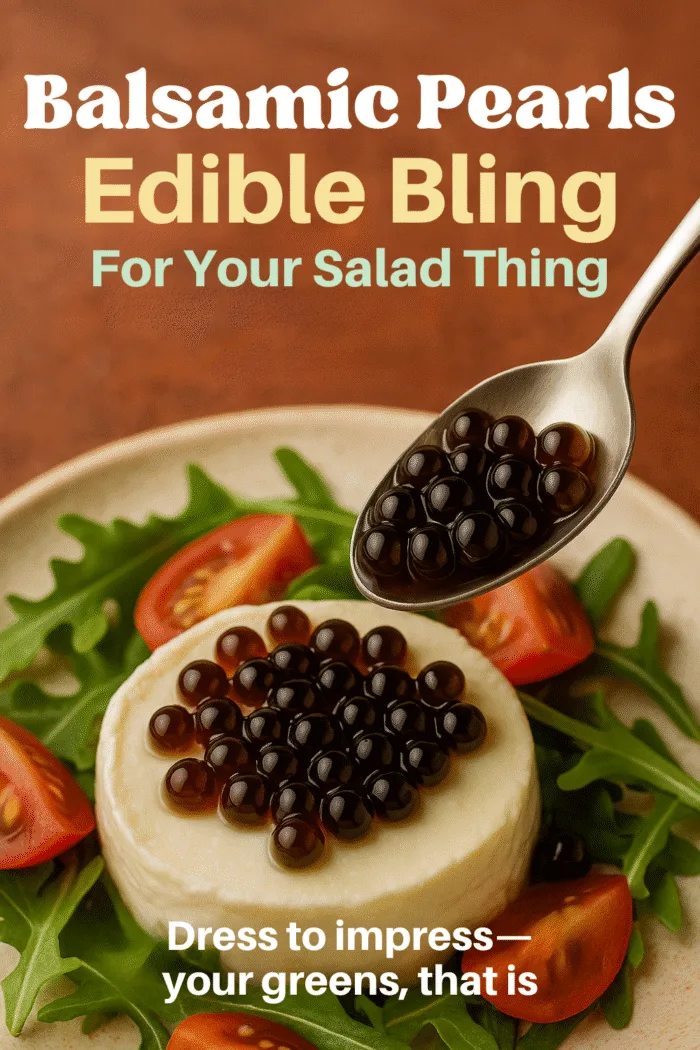
One of the best things about this recipe is how many ways you can use the finished pearls. Because each one delivers a concentrated taste of balsamic vinegar, a small amount can add both flavor and visual contrast.
- Goat cheese crostini: Spoon a few pearls over creamy goat cheese and finish with microgreens or fresh herbs.
- Strawberry arugula salad: Scatter the pearls over the greens so each bite gets an occasional tangy balsamic accent.
- Caprese skewers: Pair them with tomato, fresh mozzarella, and basil instead of pouring balsamic vinegar over the entire platter.
- Charcuterie boards: Serve the pearls in a small ramekin beside cured meats, cheeses, and fruit.
- Seared scallops or tuna: Place a few pearls around the plate for a concentrated balsamic contrast.
- Cheesecake or panna cotta: Use a few balsamic pearls with strawberries or other fresh berries for a sweet-savory finish.
Perfect With Easy Appetizers and Salads
Balsamic pearls are especially useful when you want balsamic flavor without pouring dressing or glaze over the entire dish.
Try them with ham, cheese and melon skewers for a sweet-and-savory appetizer, spoon a few over tomato artichoke bruschetta, or use them as a finishing garnish for avocado and mandarin orange salad.
How to Store Balsamic Pearls
If you are not serving the pearls immediately, strain them from the original cold-oil bath and transfer them to a clean airtight container with enough neutral oil to keep them covered. Refrigerate until needed.
Before serving, strain the pearls from the storage oil, give them a quick cold-water rinse, and drain well.
Reheating: These are intended to be used as a finishing garnish, so there is no need to reheat them before serving.


Troubleshooting Balsamic Pearls
Why aren’t my balsamic pearls forming?
The oil is usually not cold enough or the agar was not completely dissolved. Chill the oil longer and make sure the balsamic-and-agar mixture reaches a full boil before you remove it from the heat.
Why are the pearls flattening or sticking together?
Make sure the oil is thoroughly chilled and avoid releasing too many drops into exactly the same area. Let each drop enter the oil separately.
Why did my balsamic mixture get too thick for the dropper?
Agar begins setting as it cools. If the mixture thickens before you finish, gently warm it again until it becomes fluid enough to dispense.
Why are my pearls shaped like little tails instead of balls?
Release the balsamic mixture slowly and hold the dropper fairly close to the oil. A steady single drop has a better chance of becoming round than a stream of liquid.
Expert Tips for Better Balsamic Pearls
- Use a gram scale. With only 2 grams of agar in the recipe, accurate measurement matters.
- Use a tall, narrow oil bath. The droplets need enough distance to cool and set before reaching the bottom.
- Choose neutral oil for the freezer. Save strongly flavored oils for serving rather than forming the pearls.
- Work while the balsamic mixture is fluid. Agar begins setting as the mixture cools.
- Make a test pearl first. One test drop can tell you whether the oil is cold enough before you make the entire batch.
- Experiment with flavor carefully. Rosemary, thyme, cracked pepper, or a small amount of cinnamon can give the balsamic mixture a different personality without changing the basic technique.
Frequently Asked Questions About Balsamic Pearls
Are balsamic pearls the same as popping boba?
Not exactly. This balsamic pearls recipe uses agar agar and cold oil, which produces a soft but solid gel pearl. Traditional liquid-centered popping boba is generally made through an alginate-and-calcium spherification process. If you want to try that technique, see my sodium alginate popping boba recipe.
Can you make balsamic pearls without agar agar?
Yes, but you would need to use a different spherification technique. Sodium alginate and calcium can be used to create a thin gel membrane around liquid, rather than the solid agar pearls made with this cold-oil method.
Can I use olive oil to make balsamic pearls?
A neutral refined oil such as vegetable or canola oil is the more dependable choice for the chilled oil bath. Olive oil can become cloudy or partly solid when very cold, which can interfere with pearl formation.
What do you use balsamic pearls for?
Use balsamic pearls as a finishing garnish for salads, crostini, Caprese appetizers, charcuterie boards, fresh mozzarella, grilled or seared meats, seafood, strawberries, cheesecake, panna cotta, and other dishes that pair well with balsamic vinegar.
What are balsamic pearls made of?
This version is made with balsamic vinegar and agar agar. Neutral oil is used as the cold setting bath and is strained away after the pearls form.
Ready to experiment? You can find the ingredients and tools for this recipe through my Amazon affiliate link.
Balsamic Pearls with Agar Agar

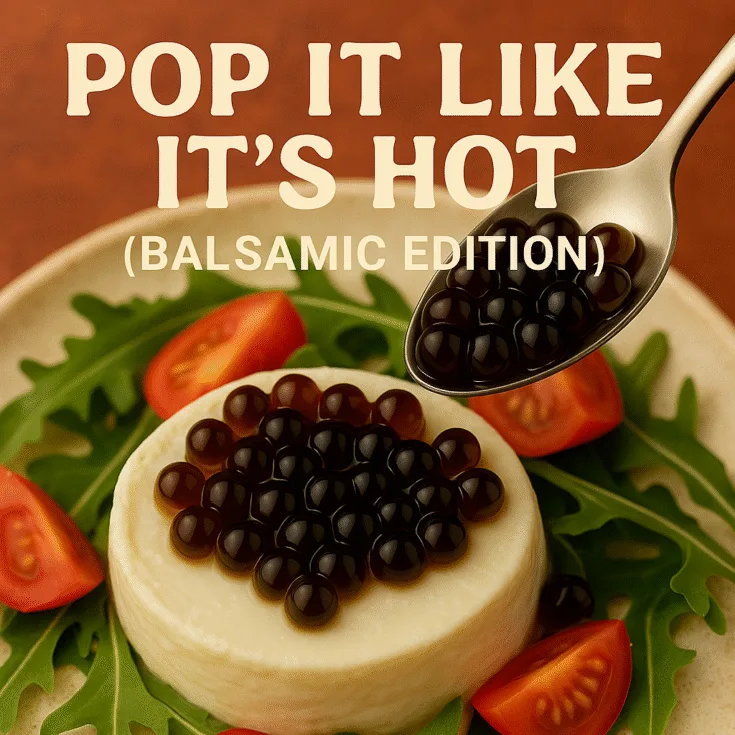
Make glossy balsamic pearls with balsamic vinegar, agar agar, and cold oil for salads, crostini, cheese boards, meats, and plated desserts.
Ingredients
- 2 grams agar agar
- ⅔ cup balsamic vinegar
- 1 cup neutral-flavored refined oil, such as vegetable or canola oil
Instructions
1. Chill the oil. Pour the neutral oil into a tall freezer-safe glass and place it in the freezer for at least 30 minutes. The oil should be extremely cold but still liquid.
2. Prepare the balsamic mixture. Combine the balsamic vinegar and agar agar in a small saucepan. Heat over medium heat, stirring continuously, until the mixture reaches a full boil and the agar agar is completely dissolved.
3. Cool briefly. Remove the saucepan from the heat and let the balsamic mixture cool for about 5 minutes. It should remain warm and fluid enough to pass easily through a dropper or pipette.
4. Form the balsamic pearls. Fill a dropper or pipette with the warm balsamic mixture. Hold it close to the surface of the chilled oil and release the mixture one drop at a time. The droplets will cool and set into small balsamic pearls as they fall through the oil.
5. Strain the pearls. Pour the oil and balsamic pearls through a fine-mesh sieve.
6. Rinse and serve. If serving immediately, rinse the pearls briefly with cold water to remove excess oil, drain well, and use as a garnish.
Notes
Equipment
Tall freezer-safe glass
Small saucepan
Kitchen scale capable of measuring grams
Dropper or pipette
Fine-mesh sieve
Airtight container
Expert Tips
Weigh the agar agar rather than estimating such a small quantity by volume. Accurate measurement helps the pearls set consistently.
Use a tall, narrow glass for the oil bath. The extra depth gives each balsamic droplet more time to cool and become round before reaching the bottom.
Use a neutral-flavored refined oil such as vegetable or canola oil. Extra-virgin olive oil can become cloudy or partly solid when very cold.
Make one test pearl before adding the entire balsamic mixture. If the drop flattens, sticks to other pearls, or fails to set, return the oil to the freezer and chill it longer.
Bring the balsamic vinegar and agar agar to a full boil so the agar dissolves completely.
Work while the balsamic mixture is still warm and fluid. Agar begins to set as it cools.
Release the mixture one drop at a time rather than in a stream to help create individual round pearls.
What to Expect
These balsamic pearls are made using the cold-oil agar method. They are soft, gelled spheres rather than liquid-centered popping boba.
You may also see this style of garnish called balsamic vinegar pearls, balsamic caviar, balsamic popping pearls, or balsamic popping boba.
For liquid-centered popping pearls, use a sodium alginate and calcium spherification technique instead.
Variations
Infuse the balsamic vinegar with rosemary or thyme before adding the agar agar for an herbaceous variation.
Add a little freshly cracked black pepper for a savory version that works especially well with cheese, tomatoes, and grilled meats.
A small amount of cinnamon can complement balsamic pearls intended for berries, cheesecake, or panna cotta.
Serving Ideas
Serve balsamic pearls over goat cheese crostini, bruschetta, Caprese skewers, tomato and mozzarella salads, arugula salads, charcuterie boards, grilled meats, seared scallops, tuna, fresh berries, cheesecake, or panna cotta.
Use the pearls as a finishing garnish rather than mixing them heavily into a dish so their shape and presentation remain intact.
Storage
If you are not serving the balsamic pearls immediately, strain them from the original cold-oil bath and transfer them to a clean airtight container.
Cover the pearls with enough fresh neutral oil to keep them submerged and refrigerate until ready to use.
Before serving, strain the pearls from the storage oil, rinse briefly with cold water, and drain well.
Reheating
Do not reheat balsamic pearls. They are intended to be served as a finishing garnish at cool or room temperature.
Make Ahead
Balsamic pearls can be prepared ahead of time and refrigerated in neutral oil until needed. For the best presentation, strain, rinse, and drain them shortly before serving.
Freezing
Do not freeze the finished balsamic pearls. The freezer is used only to chill the oil bath before forming the pearls. Freezing the finished pearls may negatively affect their texture.
Troubleshooting
Pearls are not forming: The oil may not be cold enough, or the agar agar may not have dissolved completely. Chill the oil longer and make sure the balsamic mixture reaches a full boil.
Pearls flatten at the bottom: The oil is probably too warm. Return it to the freezer before continuing.
Pearls stick together: Release individual drops slowly and avoid dispensing repeatedly into exactly the same place in the glass.
Balsamic mixture becomes too thick: Agar begins setting as it cools. Gently rewarm the mixture just until it becomes fluid enough to dispense again.
Pearls have tails instead of being round: Hold the dropper closer to the surface of the oil and release one clean drop at a time instead of allowing the liquid to stream.
Pearls are too large: Use smaller drops or a finer pipette.
More Recipes to Try
How to Make Popping Boba at Home
Sodium Alginate Popping Boba Recipe
How to Make Boba with Fruit Juice
Ham, Cheese and Melon Skewers
Tomato Artichoke Bruschetta
Avocado and Mandarin Orange Salad
Nutrition Disclaimer
Nutrition information is provided as an estimate for convenience only. Actual values can vary depending on the brands and ingredients used.
Because the oil in this recipe functions primarily as a chilled setting bath and most of it is strained away rather than consumed, automated nutrition calculations that include the entire cup of oil may significantly overstate the calories and fat in the finished balsamic pearls.
Nutrition Information:
Yield:
4Serving Size:
2½ tablespoons balsamic pearlsAmount Per Serving: Calories: 1183Total Fat: 123gSaturated Fat: 9gUnsaturated Fat: 114gSodium: 19mgCarbohydrates: 14gSugar: 12gProtein: 0g
The Nutritional Information may not be accurate. This website provides approximate nutrition information for convenience and as a courtesy only. Nutrition data is gathered primarily from the USDA Food Composition Database, whenever available, or otherwise other online calculators.