Easy Baked Apricot Ham with a Sticky-Sweet Glaze
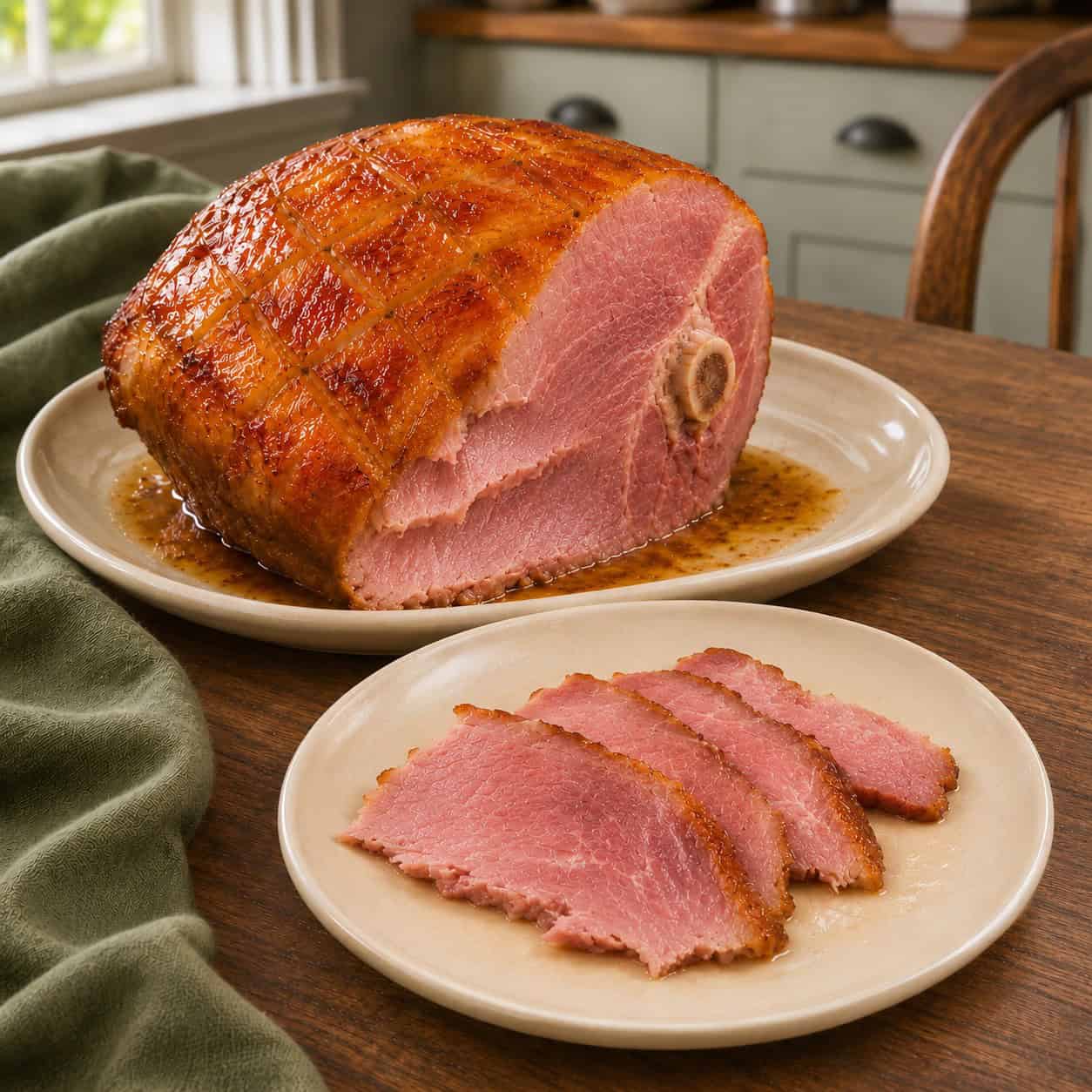
If you want a holiday centerpiece that looks like you fussed without asking you to spend the whole day in the kitchen, this easy baked apricot glazed ham is ready to help. A fully cooked, bone-in smoked ham gets dressed up with whole cloves and a simple glaze made with apricot preserves, butter, and Dijon mustard.
The result is sweet and savory, with just enough tang to balance the smoky ham. Serve it for Thanksgiving, Christmas, Easter, or a Sunday dinner that deserves a little extra attention.
Why You’ll Love This Apricot Glazed Ham
- The ham is already fully cooked. You’re warming it and adding flavor, not starting with a raw ham.
- The glaze is simple. Apricot preserves, butter, and Dijon mustard come together in a small saucepan.
- It fits a holiday menu. Add buttery pull-apart rolls and a seasonal salad, and dinner is on its way.
- Leftovers are useful. Tuck extra ham into sandwiches, omelets, or casseroles.
Ingredients for Apricot Glazed Ham
Here’s what you’ll need. The complete directions are also in the recipe card below.
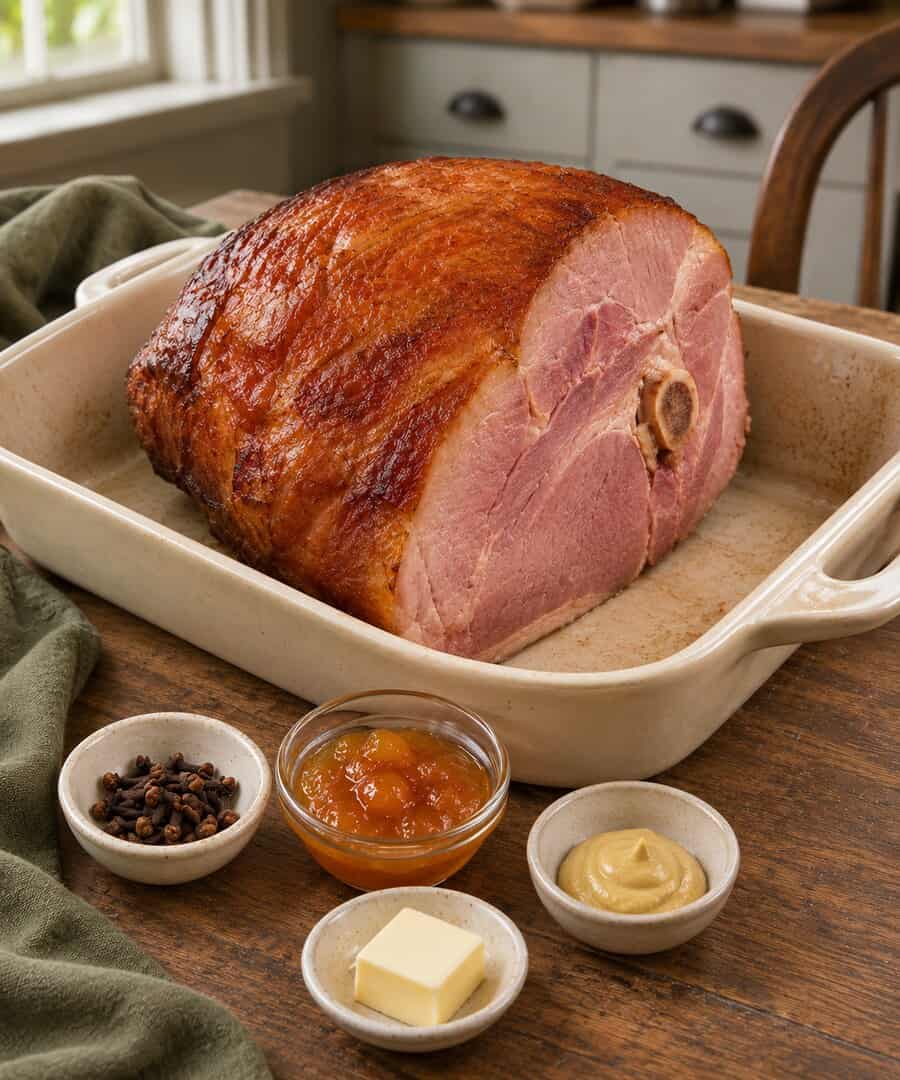
- 1 (6–7 pound) fully cooked bone-in smoked half ham: Check the label for “fully cooked” or “ready to eat,” since the directions below are for reheating, not cooking a raw ham.
- 1 tablespoon whole cloves: Press them into the scored surface for that classic holiday flavor. Remove them before slicing and serving.
- ¼ cup apricot preserves: These make up the sweet, fruity base of the glaze.
- 1 tablespoon butter: Use real butter for the glaze.
- 2 teaspoons Dijon mustard: A little mustard balances the sweetness of the preserves.
Disclosure: This post contains affiliate links. As an Amazon Associate, I earn from qualifying purchases. I may also earn from other affiliate programs for clicks, purchases, or sign-ups made through links in this post. Thank you for supporting Mommy’s Memorandum!
Equipment You’ll Need
- A shallow roasting pan, about 2 to 3 inches deep
- A sharp knife for scoring and carving
- A small heavy-bottomed saucepan for the glaze
- A spoon or silicone pastry brush
- A food thermometer
How to Make Apricot Glazed Ham
1. Heat the oven. Preheat the oven to 325°F. Place the fully cooked ham fat side up in a shallow roasting pan.
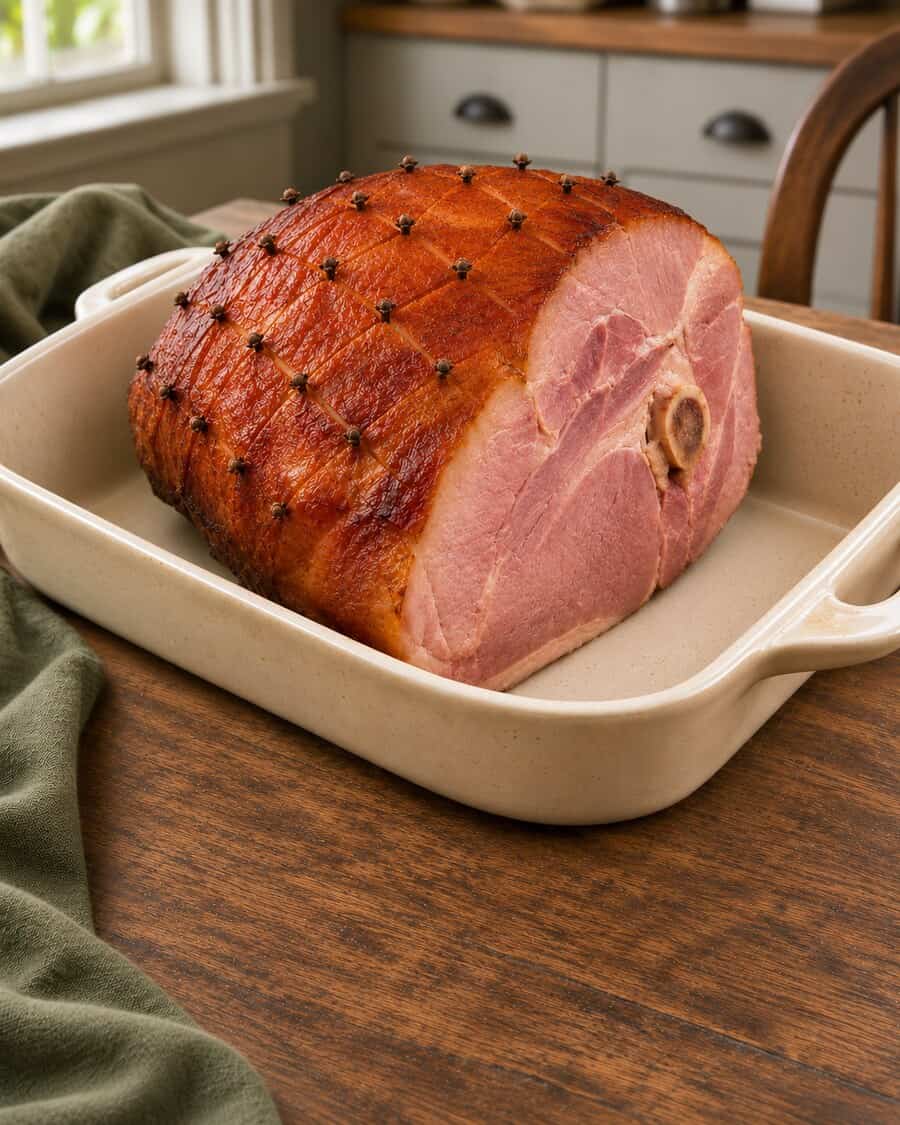
2. Score the ham. Use a sharp knife to make shallow cuts in a diamond pattern across the fat. Cut just through the surface without cutting deeply into the meat.
3. Add the cloves. Press the whole cloves into the intersections of the scored lines. Keep track of them so you can remove them before serving.
4. Begin baking. Bake the ham uncovered for 1 hour and 15 minutes. While it bakes, check the package directions and allow extra time if needed: a bone-in ham’s heating time varies with its size and shape.
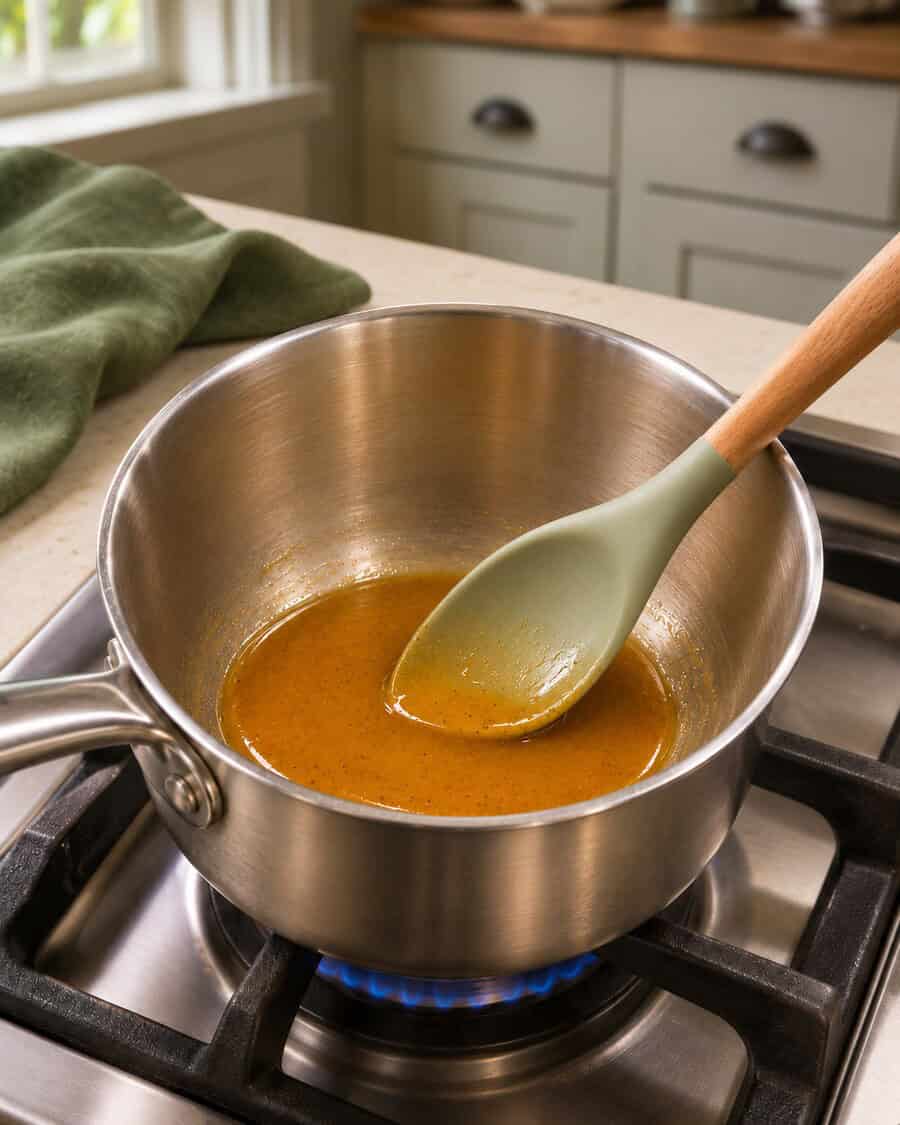
5. Make the glaze. While the ham bakes, combine the ¼ cup apricot preserves, 1 tablespoon butter, and 2 teaspoons Dijon mustard in a small saucepan. Warm over low heat, stirring until the butter melts and the mixture is smooth.
6. Glaze and finish baking. Spoon or brush the warm glaze over the ham. Return it to the oven and bake for about 30 minutes more, then check the temperature in the thickest part without touching the bone. Continue heating as needed. If the glaze starts to brown too much before the ham is hot, loosely tent it with foil.
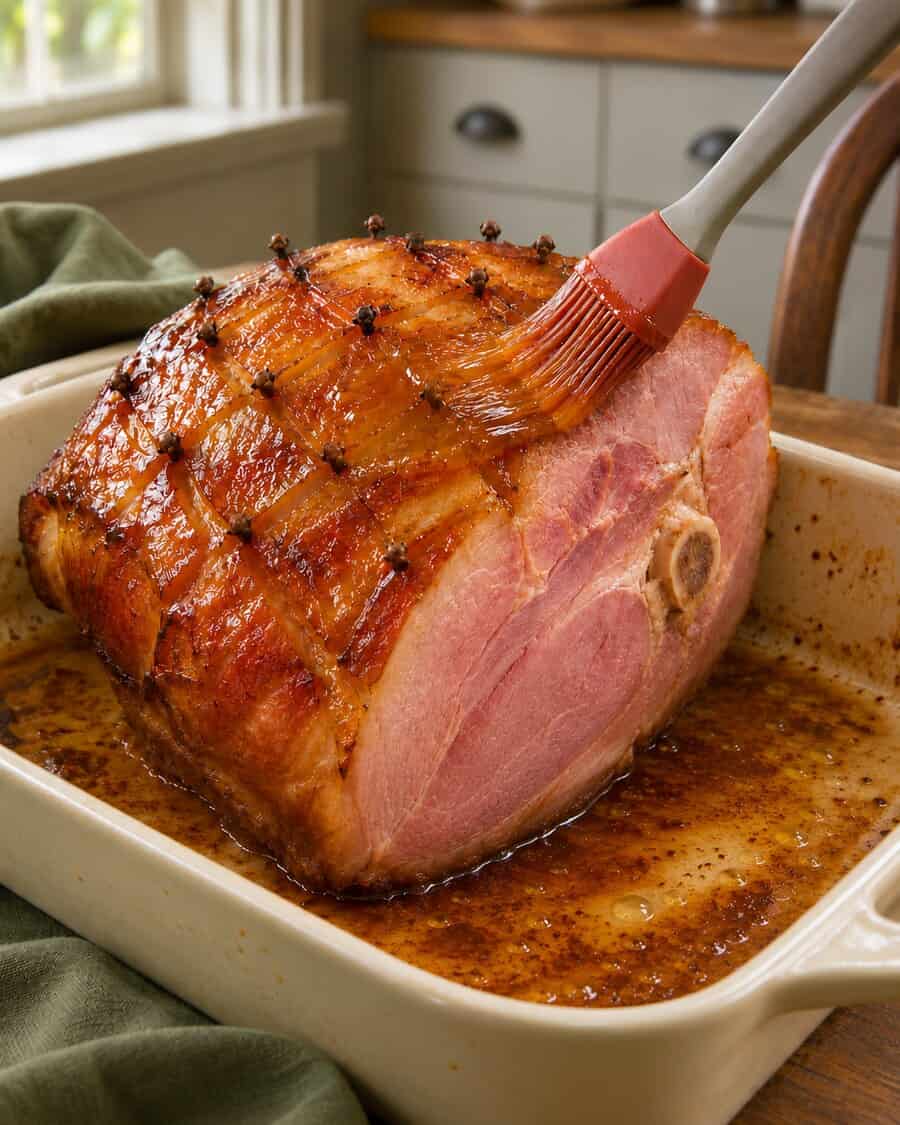
7. Check the temperature. For a fully cooked ham packaged in a USDA-inspected plant, heat to 140°F. If the cooked ham was repackaged outside the plant, heat it to 165°F. Follow the package directions and use a food thermometer; time alone cannot tell you when the center is hot.
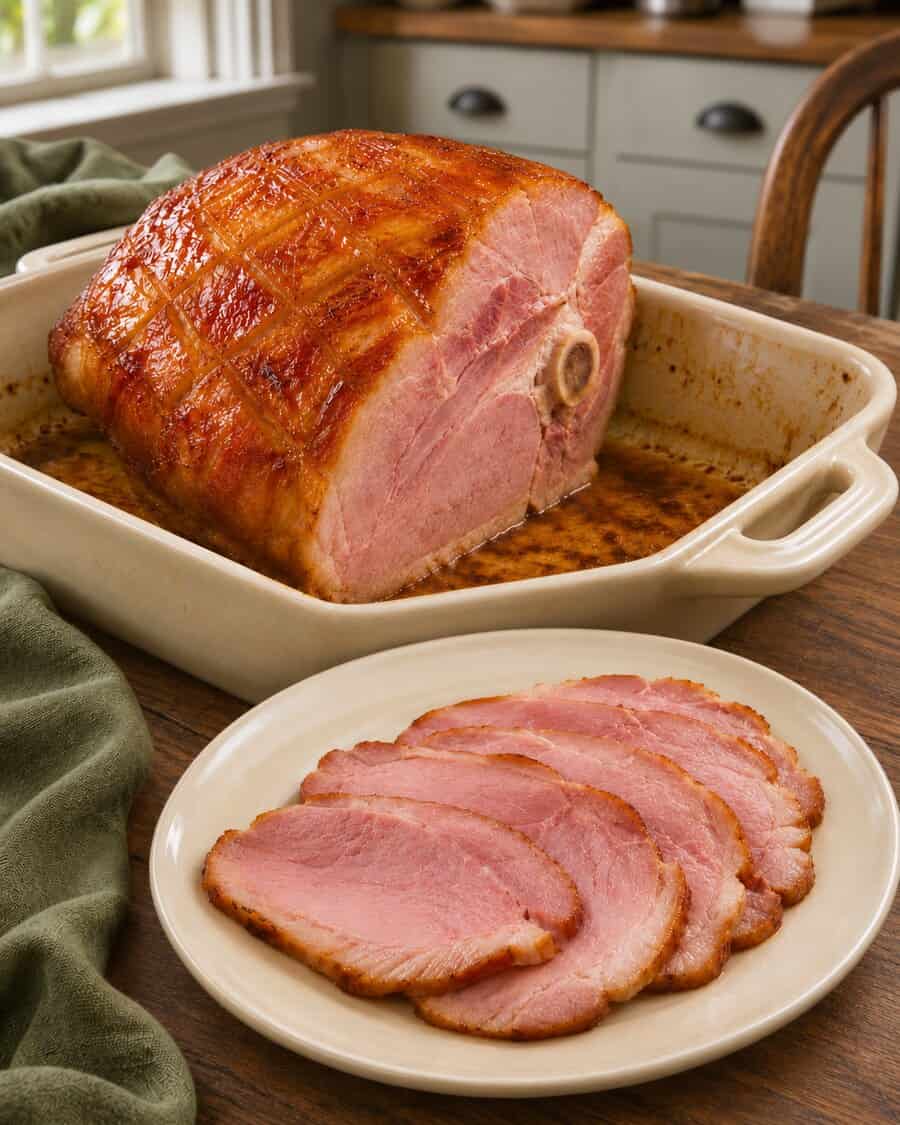
8. Rest and serve. Remove the ham from the oven and let it rest for 10 minutes. Remove the whole cloves, carve around the bone, and serve warm.
How Long Does a Bone-In Ham Take to Heat?
The original recipe estimates 1 hour and 45 minutes, including the initial bake and the time after glazing, but a 6- to 7-pound bone-in ham may need longer. As a planning guide, FoodSafety.gov estimates 18 to 24 minutes per pound for a fully cooked, bone-in half ham at 325°F—roughly 1 hour 48 minutes to 2 hours 48 minutes for a 6- to 7-pound ham. Actual time varies; use a thermometer to determine when it is ready.
Plan ahead, follow the heating instructions on your ham’s package, and check the thickest part with a thermometer without touching the bone. If the center needs more time after glazing, return the ham to the oven and cover it loosely with foil if the outside is browning too quickly.
Tips for the Best Glazed Ham
- Start with the right ham. This recipe is written for a fully cooked, bone-in smoked half ham. A ham labeled “cook before eating” needs different cooking instructions.
- Keep the scoring shallow. You want a diamond pattern across the surface, not deep cuts into the meat.
- Watch the glaze. Apricot preserves contain sugar, so the surface can brown before the center is hot. A loose foil tent helps protect it.
- Remove the cloves. Whole cloves are fragrant but unpleasant to bite into. Take them out before carving.
- Let it rest. Ten minutes gives you a chance to finish the sides before slicing.
Glaze Variations
The apricot-Dijon combination is the version in the recipe card, but you can have a little fun with it:
- Spiced: Stir a pinch of cinnamon or ground ginger into the glaze.
- Citrus: Replace half the apricot preserves with orange marmalade.
- Peach: Use peach preserves in place of the apricot preserves.
What to Serve with Apricot Glazed Ham
For a holiday table, I like pairing a sweet and savory main dish with something fresh and something warm from the oven. Try these buttery pull-apart rolls and autumn chopped salad alongside the ham.
For leftovers, add slices to sandwiches, dice them into an omelet, or fold them into a favorite casserole. Remove any remaining cloves before storing the ham.
Make-Ahead and Storage
Make the glaze ahead: Combine the preserves, butter, and mustard up to one day in advance. Cover and refrigerate, then warm gently in a saucepan until spreadable before using.
Prepare the ham ahead: You can score the ham and add the cloves up to one day ahead. Keep it covered and refrigerated until you’re ready to bake.
Refrigerate leftovers: Within 2 hours of serving, place leftover ham in a covered container and refrigerate. Enjoy within 3 to 4 days.
Reheat leftovers: Warm leftover ham to 165°F, checking with a food thermometer. A covered dish can help keep it from drying out.
Frequently Asked Questions
Can I use a spiral-sliced ham?
You can use the same glaze, but spiral-sliced ham can dry out more easily. Follow the package’s reheating instructions and check the temperature with a thermometer rather than automatically subtracting time. If desired, cover the ham while reheating and add the glaze near the end.
Does a cured ham need to be fully cooked before I start?
For this recipe, yes: choose a ham labeled “fully cooked” or “ready to eat.” Cured and smoked do not always mean the ham is ready to eat, so check the label. A ham labeled “cook before eating” requires different cooking directions.
Can I use a different preserve?
Peach preserves are an easy alternative. Orange marmalade will give the glaze a more noticeable citrus flavor.
Do I eat the whole cloves?
No. They flavor the ham while it heats, but remove them before slicing and serving.
Can I make extra glaze?
Yes. If you want extra for serving, make a separate batch and keep it separate from any brush or spoon that has touched the ham.
Easy Baked Apricot Glazed Ham
This Easy Baked Apricot Ham with a Sticky-Sweet Glaze is the ultimate holiday centerpiece—beautifully caramelized, loaded with nostalgic flavor, and incredibly simple to make. A fully cooked smoked ham gets dressed in a glossy apricot-Dijon glaze and baked until tender and irresistible. It pairs perfectly with cozy classics like Buttery Pull-Apart Rolls Recipe and sweet holiday favorites such as Gingerbread Yule Log Recipe.
Ingredients
- 1 (6–7 pound) fully cooked, bone-in smoked half ham
- 1 tablespoon whole cloves
- ¼ cup apricot preserves
- 1 tablespoon butter
- 2 teaspoons Dijon mustard
Instructions
1. Preheat the oven to 325°F. Place the fully cooked ham fat side up in a shallow roasting pan.
2. Score the fat with shallow cuts in a diamond pattern. Press the whole cloves into the intersections of the scored lines.
3. Bake the ham uncovered for 1 hour and 15 minutes.
4. While the ham bakes, combine the apricot preserves, butter, and Dijon mustard in a small saucepan. Warm over low heat, stirring until the butter melts and the glaze is smooth.
5. Spoon or brush the glaze over the ham. Return it to the oven and bake for about 30 minutes more. Check the temperature in the thickest part of the ham without touching the bone. Continue heating as needed; loosely tent with foil if the glaze browns too quickly.
6. Heat a fully cooked ham packaged in a USDA-inspected plant to 140°F. If the cooked ham was repackaged outside the plant, heat it to 165°F. Follow the package directions and use a food thermometer.
7. Remove the ham from the oven and let it rest for 10 minutes. Remove the whole cloves, carve around the bone, and serve.
Notes
Equipment
Use a shallow roasting pan, a sharp knife, a food thermometer, and a small heavy-bottomed saucepan. A silicone pastry brush is handy for spreading the glaze.
Tips
Choose a ham labeled fully cooked or ready to eat. Score the surface lightly and remove the whole cloves before serving. The original recipe estimates 1 hour and 45 minutes of baking, but a bone-in ham may need longer. Use a thermometer and allow extra time. Tent loosely with foil if the glaze browns too quickly.
Make-Ahead and Storage
Make the glaze up to one day ahead, cover, and refrigerate. Warm gently before using. The ham can also be scored and studded with cloves one day ahead; keep it covered and refrigerated. Refrigerate leftovers within 2 hours and enjoy within 3 to 4 days. Reheat leftovers to 165°F.
Variations
Try a pinch of cinnamon or ground ginger in the glaze. For a citrus variation, replace half the apricot preserves with orange marmalade. Peach preserves can be used in place of apricot.
Serving
Serve with buttery pull-apart rolls and autumn chopped salad. Use leftover ham in sandwiches, omelets, or casseroles.
FAQs
Can I use a spiral-sliced ham? Yes, but follow its package reheating directions and use a thermometer. Spiral slices can dry out more easily; cover while reheating if directed and add the glaze near the end.
Can I eat the cloves? Remove the whole cloves before slicing and serving.
Nutrition Disclaimer
Nutrition information is an estimate and will vary with the ham, serving size, and products used.
Nutrition Information:
Yield:
10Serving Size:
1Amount Per Serving: Calories: 37Total Fat: 2gSaturated Fat: 1gUnsaturated Fat: 1gCholesterol: 12mgSodium: 155mgCarbohydrates: 2gFiber: 1gSugar: 1gProtein: 3g
The Nutritional Information may not be accurate. This website provides approximate nutrition information for convenience and as a courtesy only. Nutrition data is gathered primarily from the USDA Food Composition Database, whenever available, or otherwise other online calculators.
Next Recipe to Try
Need something warm and buttery for the table? Make my Buttery Pull-Apart Rolls to serve alongside your ham.