
Natural Bridge Virginia: What to Know Before You Visit
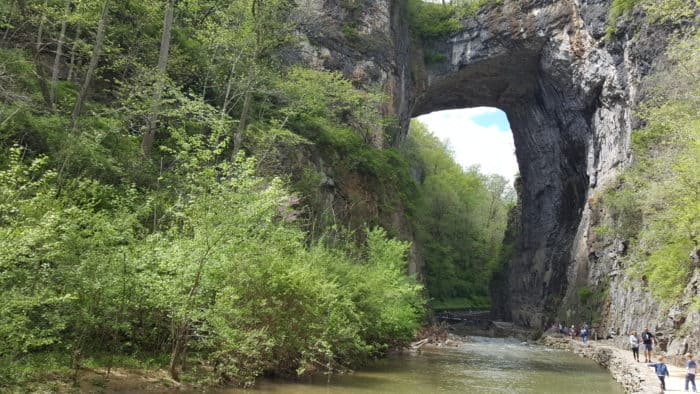
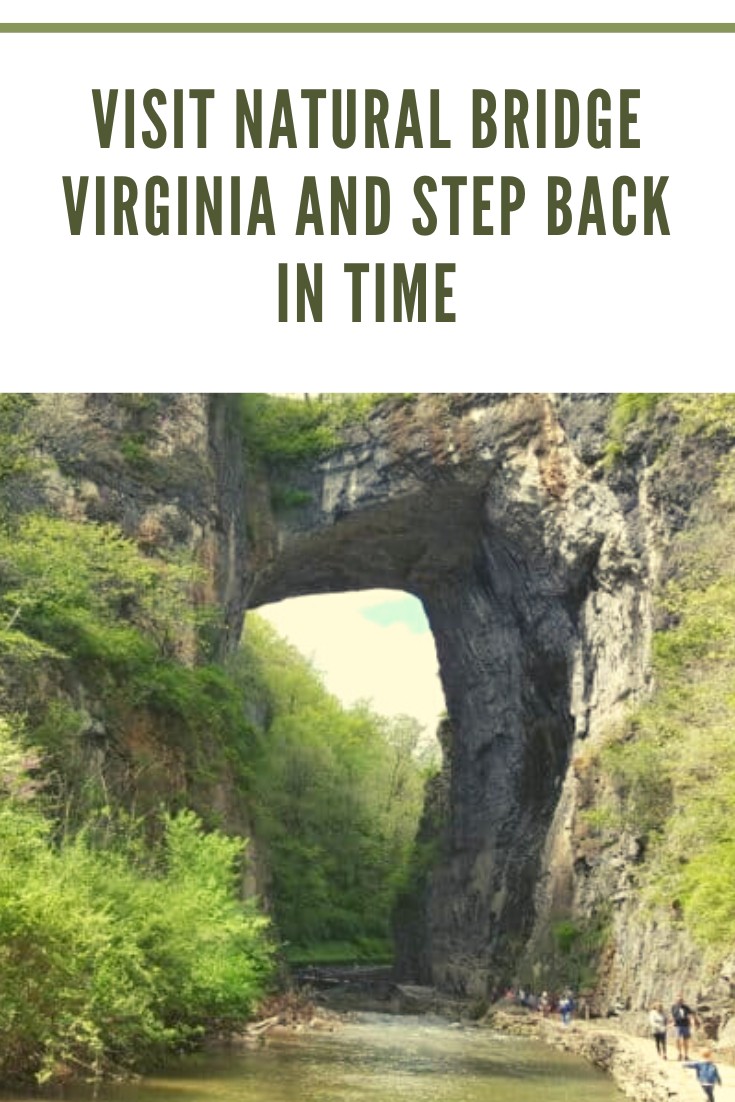
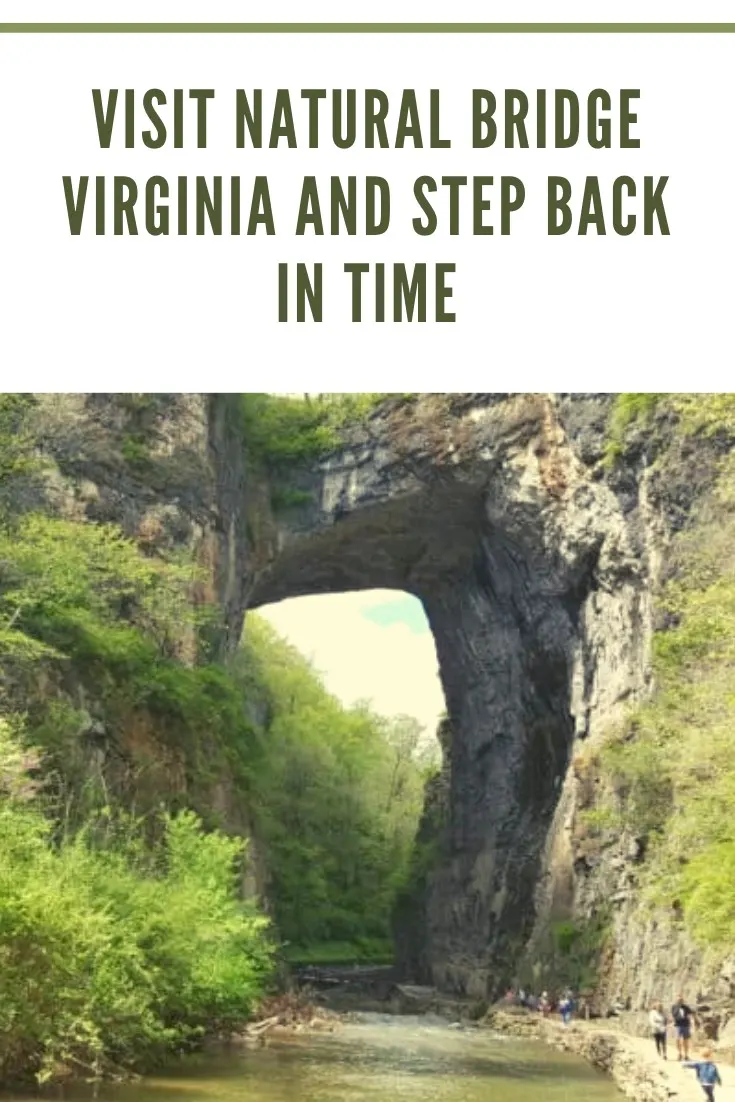
Natural Bridge Virginia is a 215-foot limestone arch inside Natural Bridge State Park, where Cedar Creek winds beneath the bridge along an easy, scenic trail with waterfalls, history, mountain views, and one of Virginia’s most unforgettable natural landmarks.
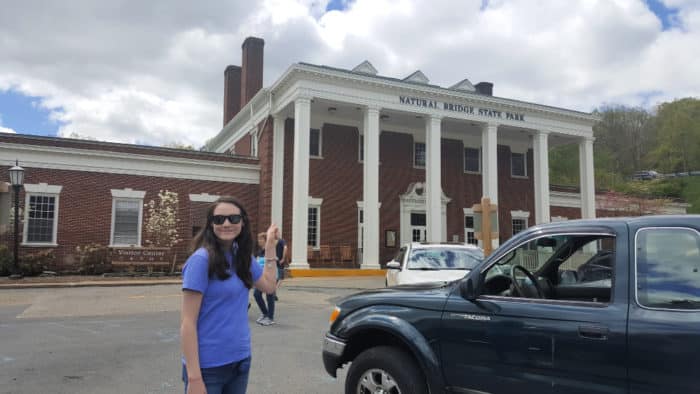
This guide is for families, road-trippers, Virginia history lovers, homeschool travelers, and anyone planning a day trip to Natural Bridge State Park who wants to know what to see, how long the trail takes, what to bring, and why the stop is worth adding to a Virginia itinerary.
Jump to Natural Bridge Visitor Guide
Natural Bridge Virginia Visitor Guide
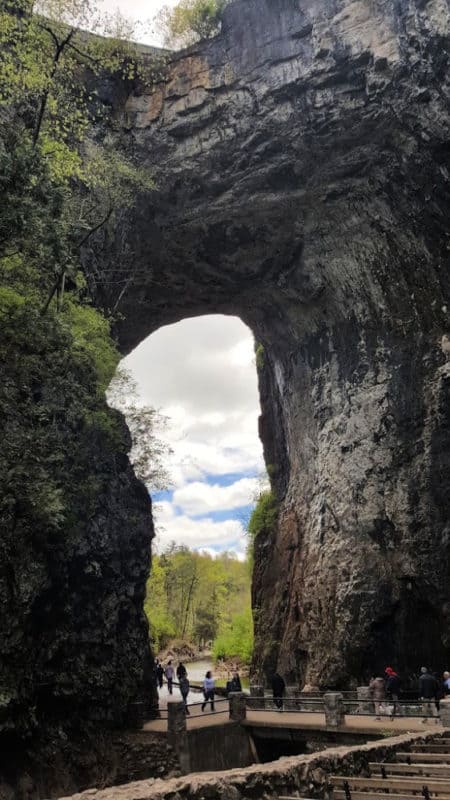
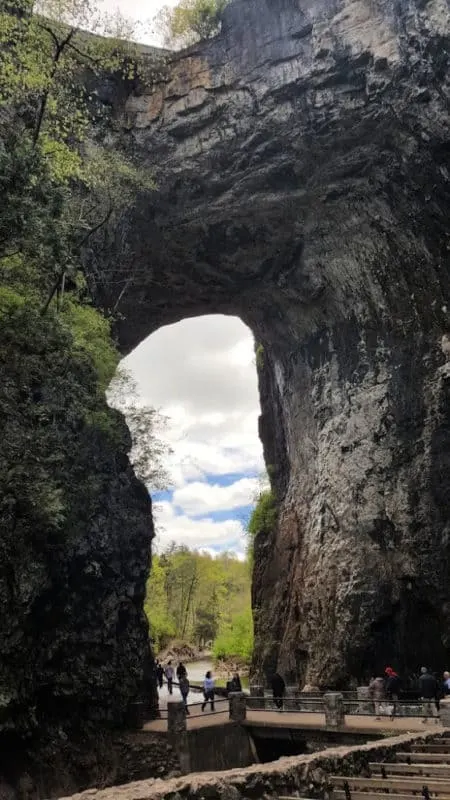
Nature is spectacular, and Natural Bridge Virginia proves it in the grandest way. This massive limestone arch rises 215 feet above Cedar Creek, tucked inside the Blue Ridge Mountains and surrounded by trail views, rock walls, forest, history, and the steady hush of moving water.
The main Natural Bridge State Park experience follows Cedar Creek Trail, an out-and-back walk that leads from the Visitor Center area down toward the bridge, past historic markers, a Monacan Living History area, Saltpeter Cave, Lost River, and on toward Lace Falls when trail conditions allow.
The walk is family-friendly, but it does involve stairs from the Visitor Center area unless you use available accessibility accommodations or shuttle/service options. Wear comfortable walking shoes, bring water, and give yourself time to stop for photos. This is not a hurry-through-it kind of place. Natural Bridge asks you to slow down, look up, and let your jaw do what jaws do when they meet something older and larger than your to-do list.
Natural Bridge is also a wonderful Virginia history stop. Stories connect the area to Monacan people, early travelers, George Washington legends, and Thomas Jefferson, who purchased the Natural Bridge property in 1774. The combination of natural wonder, easy trail access, and layered history makes it a strong day trip for families, couples, homeschool outings, and anyone exploring the Shenandoah Valley or Blue Ridge Mountains.
Readers Also Plan These Virginia Stops
If you are building a Virginia road trip around Natural Bridge, these nearby and history-rich ideas pair naturally with this visit:
- Life, Liberty and the Pursuit of Happiness at Thomas Jefferson’s Monticello for another meaningful Virginia history stop.
- Great Wolf Lodge Williamsburg if your family trip needs kid-friendly indoor water park fun.
- 4 Reasons to Hire a Philadelphia Party Bus for travel-planning inspiration beyond Virginia.
Why You’ll Love Visiting Natural Bridge State Park
- It is easy to recognize and unforgettable in person. The bridge is enormous, dramatic, and even more impressive when you are standing beneath it.
- The trail is manageable for many families. Cedar Creek Trail is scenic and relatively easy, with plenty of places to pause and take photos.
- It blends nature and history. You get geology, Virginia history, Monacan history, Thomas Jefferson connections, and mountain scenery in one stop.
- It works as a day trip or road trip stop. Natural Bridge is convenient for travelers exploring Lexington, Roanoke, the Shenandoah Valley, or the Blue Ridge Mountains.
- It gives you those “look up and be quiet for a minute” moments. Every now and then, the world hands you something that does not need much editing. Natural Bridge is one of those places.
Where Is Natural Bridge Virginia?
Natural Bridge State Park is located in Natural Bridge, Virginia, in the Blue Ridge Mountains. It is a convenient stop from I-81 and a beautiful addition to a Virginia road trip, especially if you are already visiting Lexington, Roanoke, Shenandoah Valley attractions, or historic Virginia landmarks.
From I-81, take exit 175 or 180A to U.S. 11 and follow signs to the park.
How Long Is the Natural Bridge Trail?
The main Cedar Creek Trail is an out-and-back trail. The walk from the Visitor Center area toward Lace Falls and back is about 1.8 miles total when the full trail is open. The trail is paved part of the way, fairly flat in many sections, and easy enough for many families, though the stairs near the Visitor Center can be the most challenging part.
Walking shoes are a good idea. So is water. There is a lot to see along the way, and you will want both hands free for photos, pointing, and possibly gesturing wildly while saying, “Can you believe this is real?”
What to Bring to Natural Bridge State Park
- Comfortable walking shoes
- Water, especially in warm weather
- A camera or phone with plenty of storage
- Weather-appropriate layers
- A small snack if you are visiting with kids
- Leash and pet supplies if bringing a dog
- Patience for stairs, photos, and stopping to admire the view
Walking Down to Cedar Creek Trail
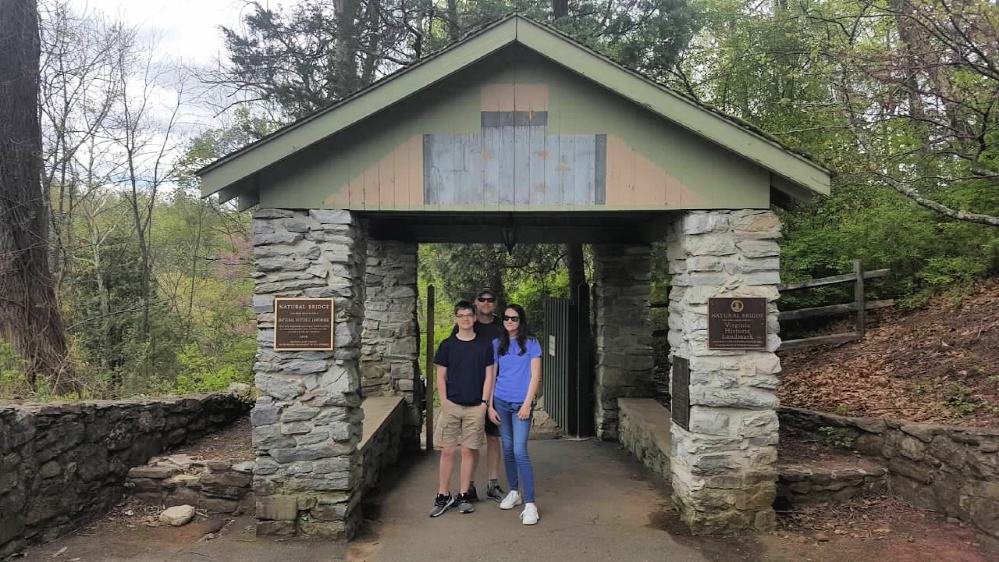
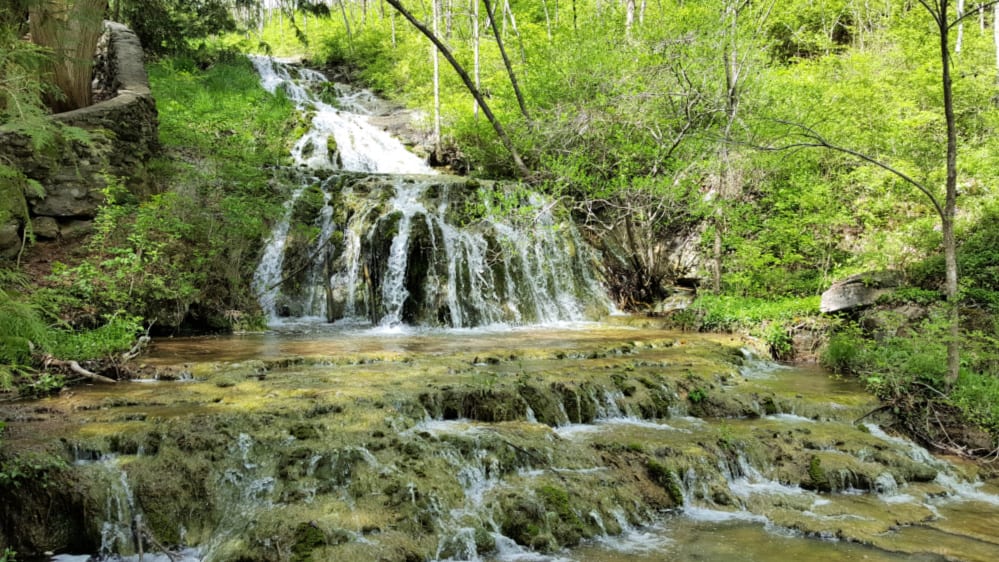
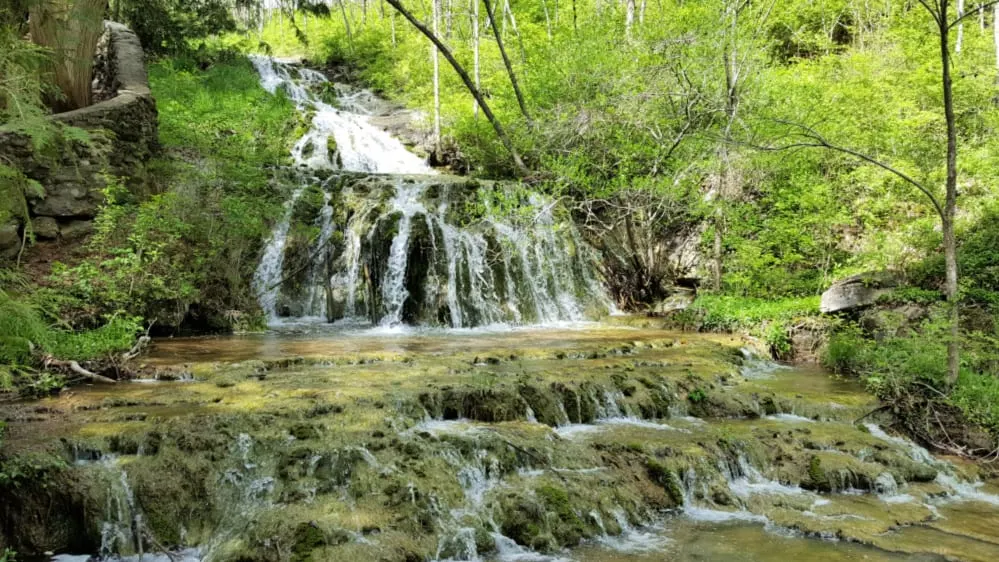
After checking in, guests walk from the Visitor Center area down toward Cedar Creek Trail. The path leads through the rock building and down flights of stairs. Cascade Creek runs alongside, eventually connecting with Cedar Creek downstream of Natural Bridge.
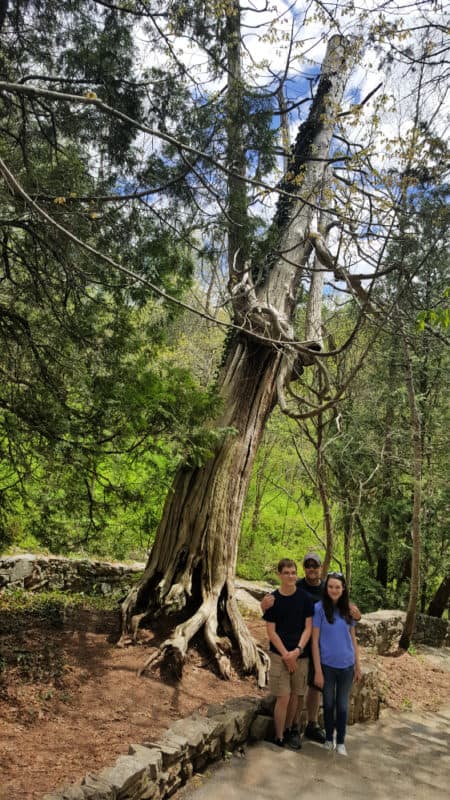
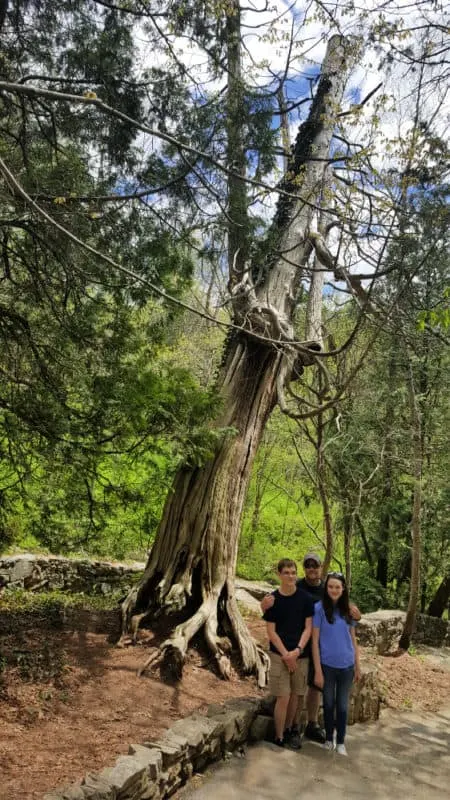
Thuja Occidentalis Along Cedar Creek Trail
Along the trail, you may notice Thuja occidentalis, also known as arborvitae or northern white cedar. It is a somewhat uncommon species found along Cedar Creek Trail.
One of the trees displayed along the trail died in 1980. Using average growth rate estimates, it is thought to be more than 1,600 years old, though the exact age cannot be confirmed without cutting the tree and counting the rings.
The First View of Natural Bridge
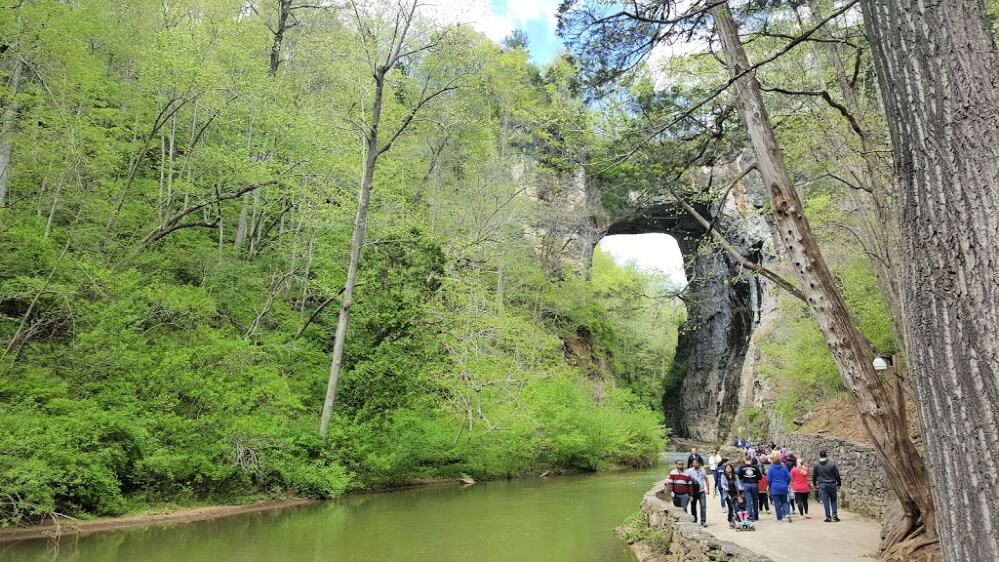
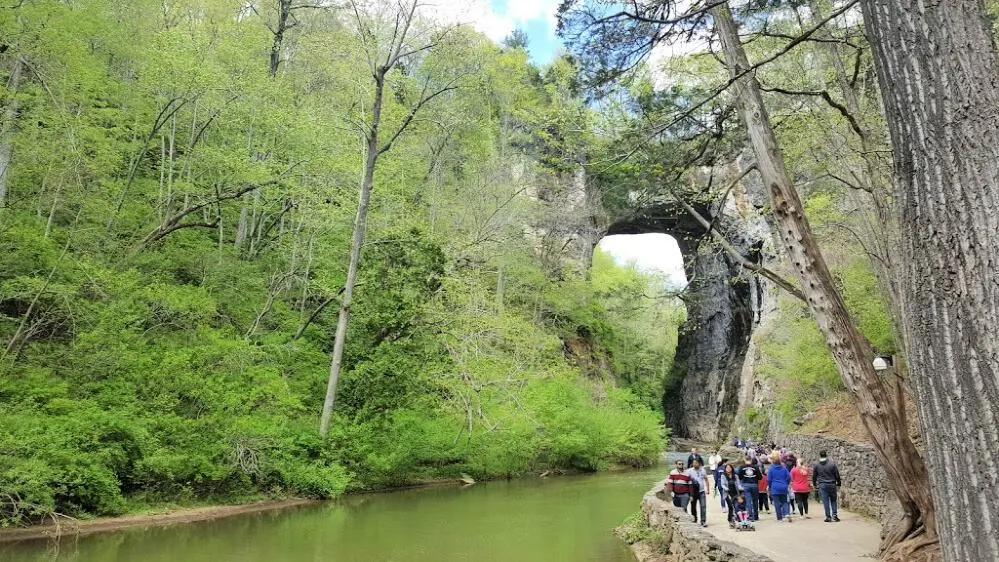
From the Cedar Creek Cafe area, it is not long before you catch your first glimpse of Natural Bridge. This is the moment the photos begin to make sense, and also the moment you realize photos were never going to do it justice.
How Natural Bridge Was Formed
Natural Bridge and the surrounding rocks along Cedar Creek Trail are made of limestone. The layers were deposited long ago under a shallow tropical sea. Over time, groundwater slowly dissolved the limestone and formed a cavern. Cedar Creek flowed through the opening, widening it more and more until part of the cavern collapsed and left behind the natural stone arch we see today.
In other words, Natural Bridge was not built. It was carved, shaped, worn, and revealed by time, water, and geology. Mother Nature does not always work quickly, but she certainly knows how to make an entrance.
The Front of Natural Bridge
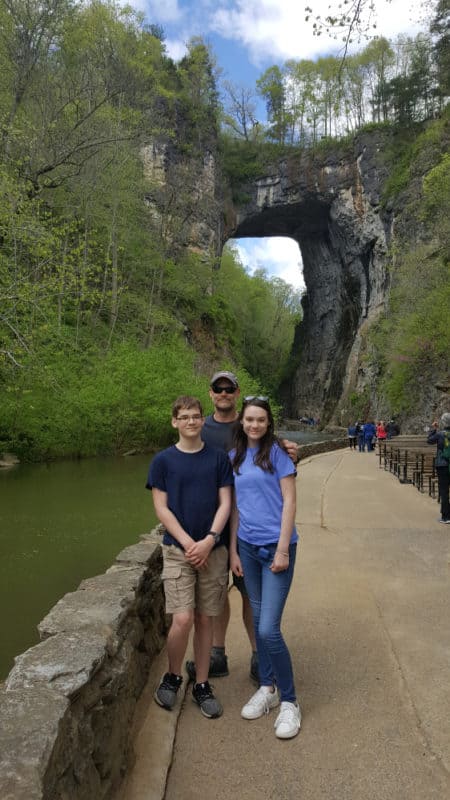
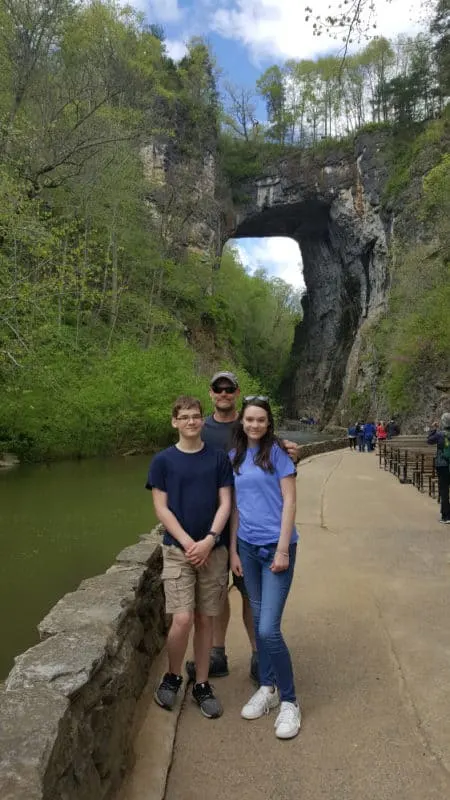
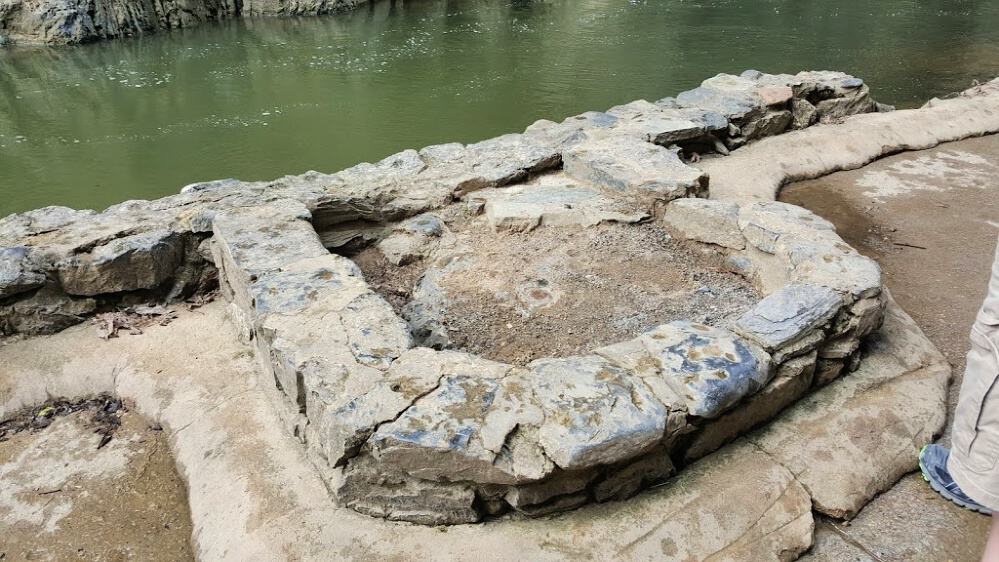
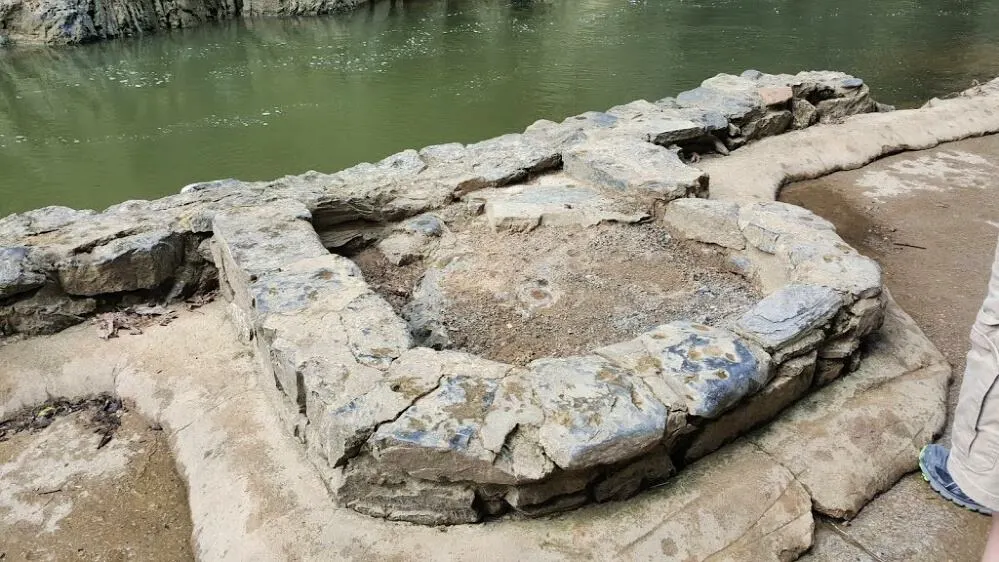
The front side of Natural Bridge gives you that classic, towering view. Look for the survey marker in the walkway beneath the bridge. It marks the area where the first survey was conducted in 1750.
George Washington Legend at Natural Bridge
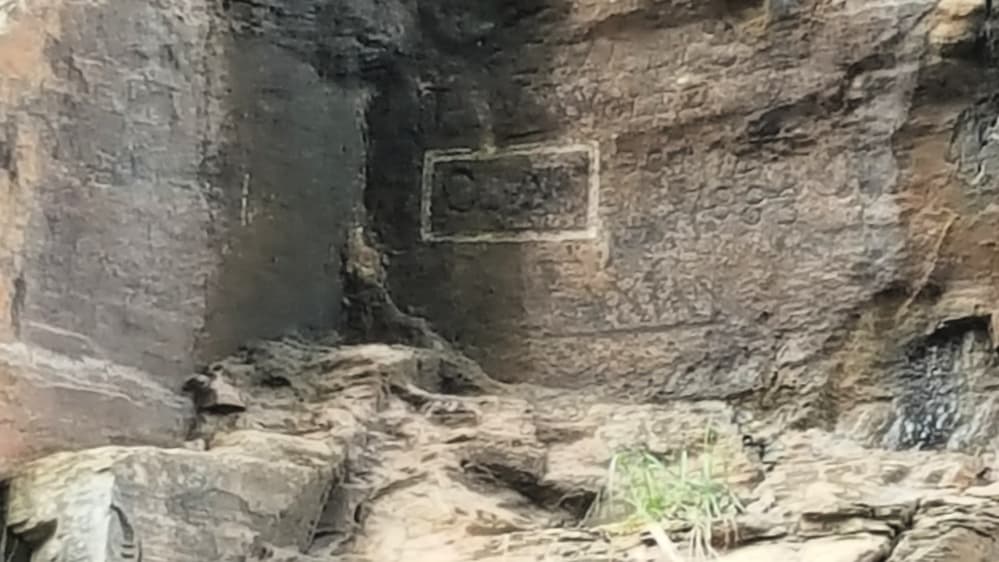
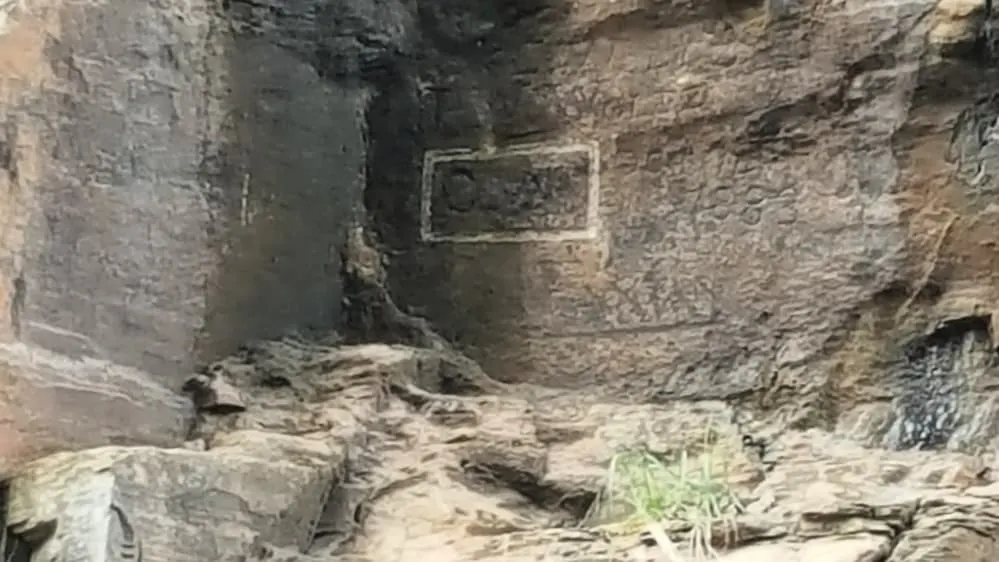
Legend says George Washington was part of the survey crew led by Peter Jefferson and Joshua Fry. The survey provided early measurements of Natural Bridge. Another long-told story says Washington climbed about 20 feet up the rock and carved his initials into the creek side of the bridge.
There is no conclusive evidence that George Washington carved the initials, but a “GW” is still visible. Look across the creek, about 20 feet up from the water’s surface, and you may spot the white box around the initials.
The Back of Natural Bridge and Thomas Jefferson History
The back of Natural Bridge offers another beautiful view and a deeper connection to Thomas Jefferson. After Peter Jefferson surveyed Natural Bridge, he carried stories of the site back to his young son, Thomas Jefferson.
Thomas Jefferson later visited Natural Bridge in his twenties and purchased the Natural Bridge property from King George III in 1774. Jefferson owned the property until his death, and the land passed through private ownership for many years before becoming a Virginia State Park.
If you enjoy this part of the story, pair your Natural Bridge trip with Life, Liberty and the Pursuit of Happiness at Thomas Jefferson’s Monticello for another meaningful Virginia history stop.
Perfect With a Virginia History Weekend
Natural Bridge fits beautifully into a Virginia history weekend, especially if you love places where scenery and story walk hand in hand. After visiting the bridge, consider adding Thomas Jefferson’s Monticello to your itinerary, or browse more seasonal family travel ideas in my Fourth of July collection if you are planning a summer road trip around patriotic stops, cookouts, and family-friendly adventures.
Monacan Living History Exhibit
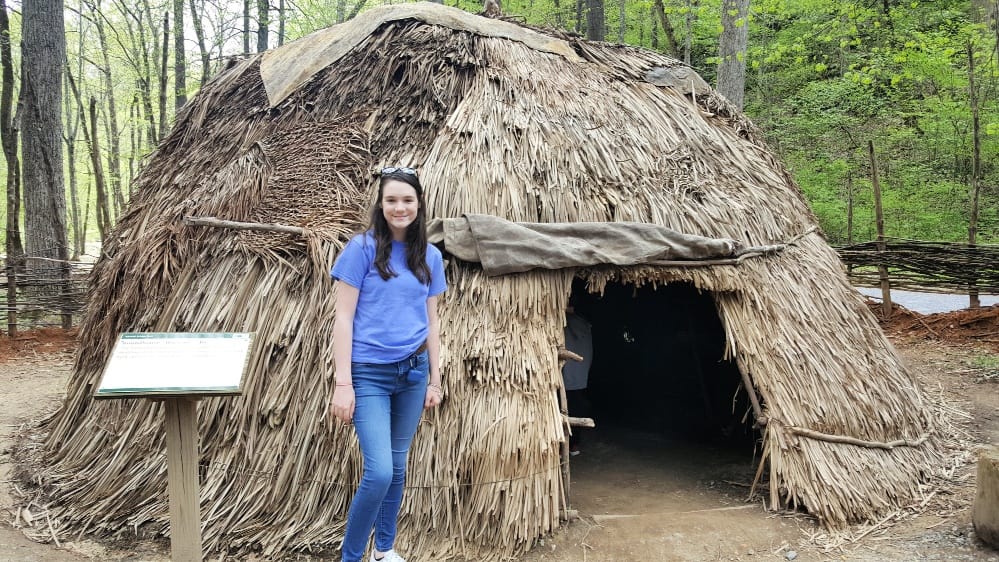
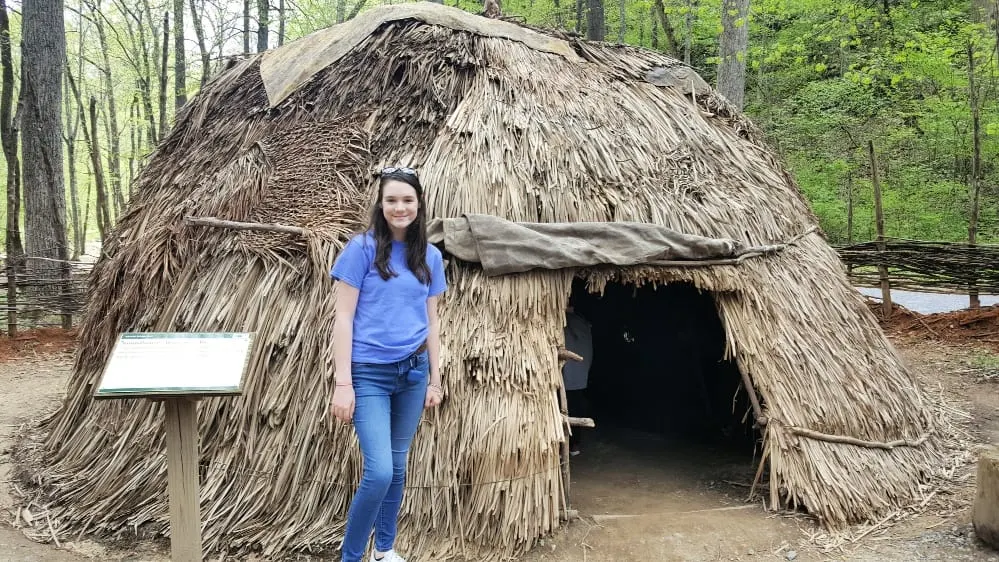
The Monacan Living History Exhibit is another important stop along the trail. This recreated Monacan town offers a look at seasonal activities, shelters, tools, and daily life. Depending on staffing and timing, guests may be able to speak with interpreters and learn more about Monacan history and culture.
J.R.R. Tolkien Quote at Natural Bridge
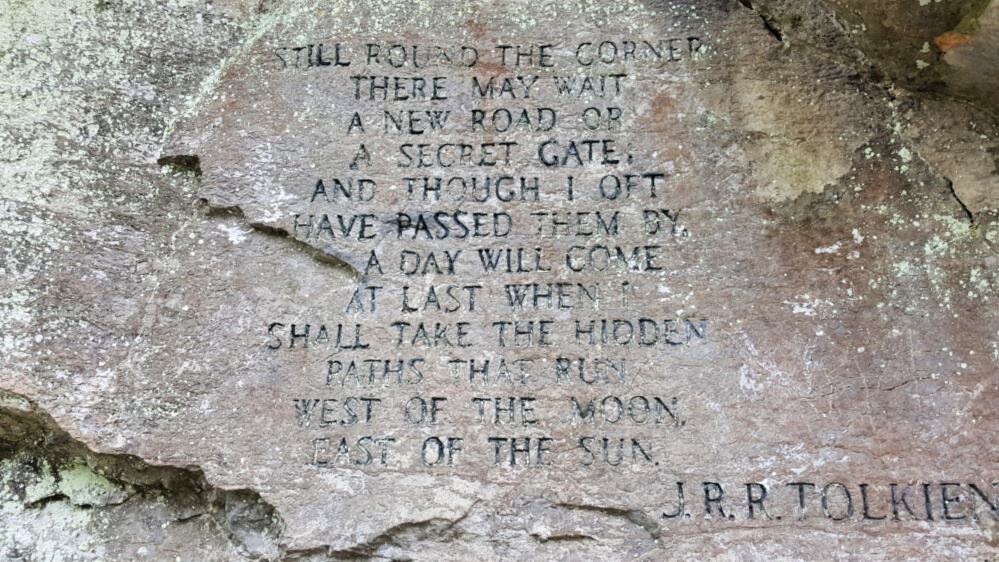
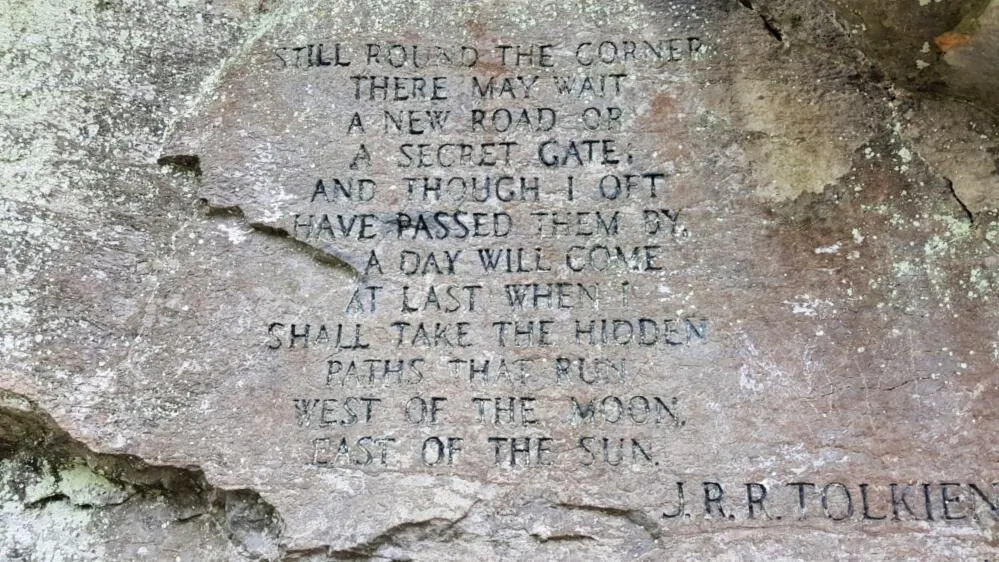
Not every interesting find at Natural Bridge is part of the main self-guided tour. One curious detail is a J.R.R. Tolkien quote carved into the rock. No one seems to know exactly how the quote came to be there.
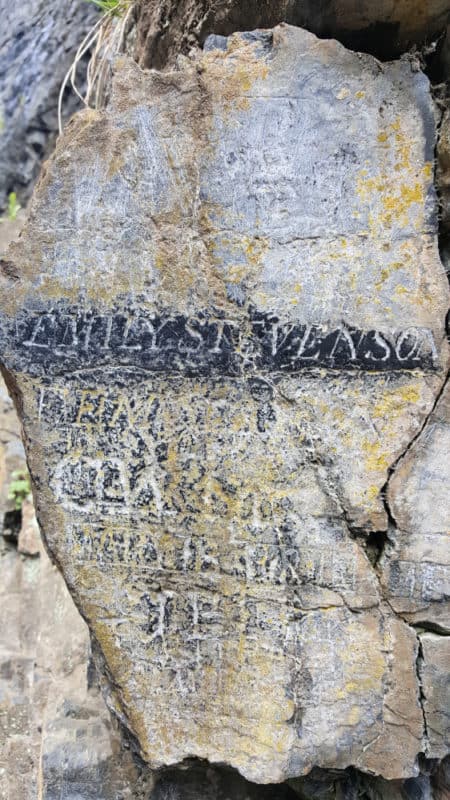
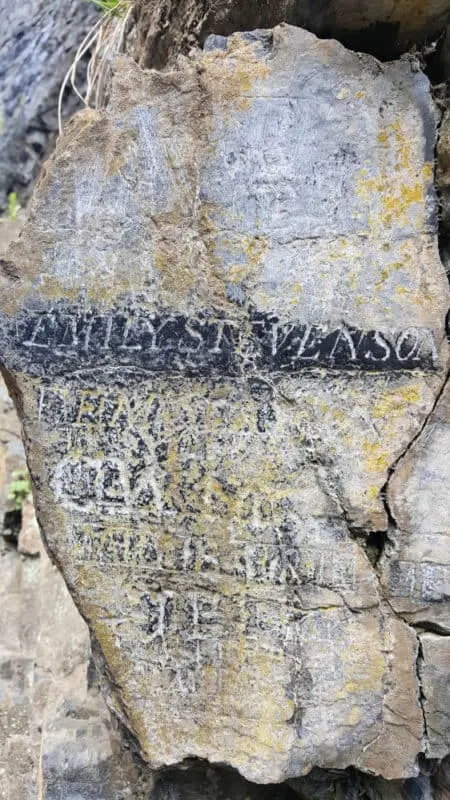
Perhaps Tolkien passed through. Perhaps a traveler with a stone carving set and a literary heart left it behind. At Natural Bridge, you will see a mix of neat, uniform carvings and more personal-looking marks in the stone. It is hard to say what belongs to which story, and that mystery is part of the fun.
Saltpeter Cave and the Walk Toward Lace Falls
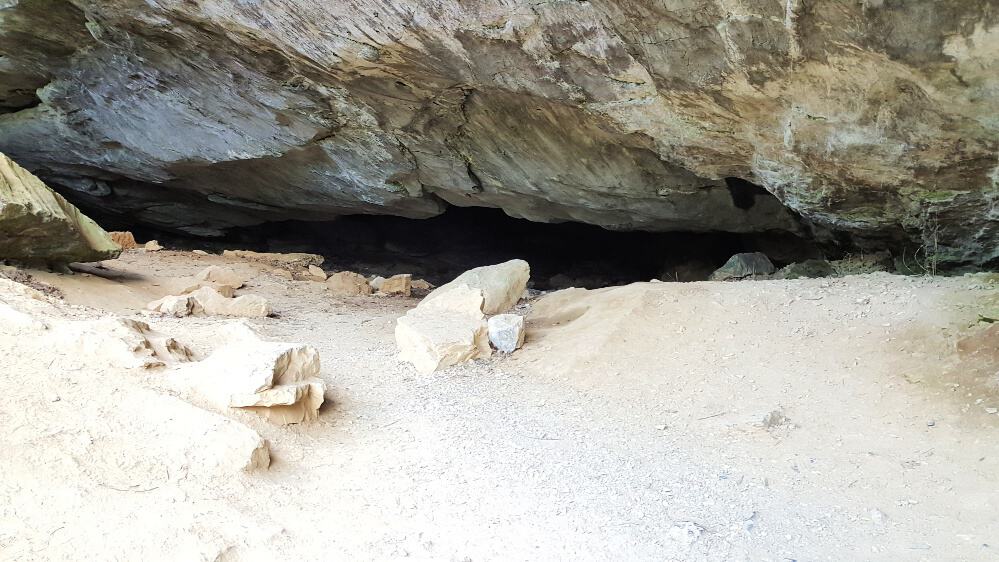
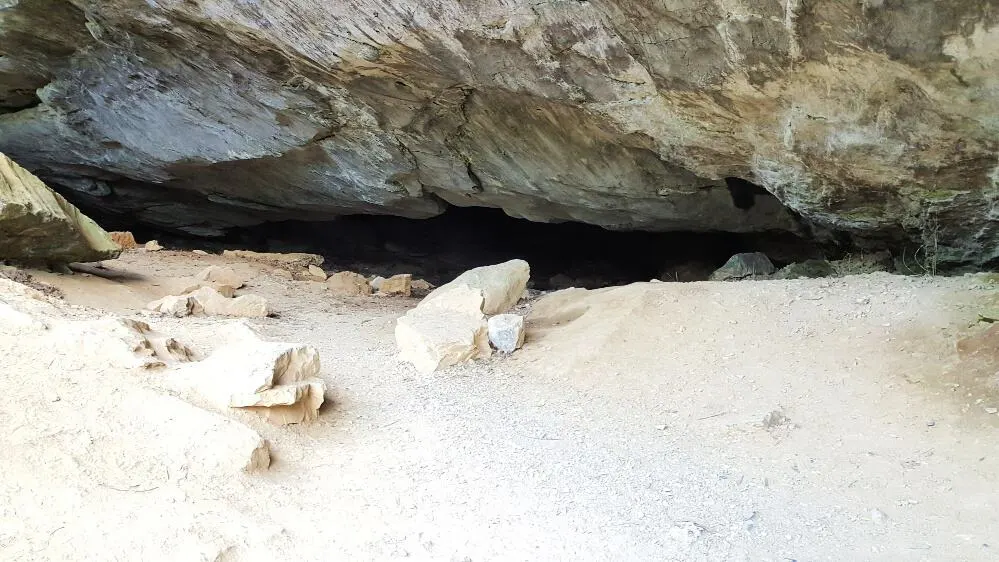
Saltpeter Cave is another stop along Cedar Creek Trail. The cave formed when a bend in the creek washed away a softer layer of rock. Continue along the trail and you will pass Saltpeter Cave, Lost River, and, when accessible, Lace Falls.
The trail feels calm and shaded in places, with Cedar Creek guiding the way. It is the kind of walk where kids can burn a little energy, adults can sneak in a little history, and everyone gets a reason to look up from their screens.
Natural Bridge Virginia Pinterest-Worthy Photo Ideas
Natural Bridge is easy to photograph, but a few simple ideas help capture the scale and feeling of the place:
- Take one vertical photo from beneath the bridge to show the full height.
- Include a person in the frame to show scale.
- Photograph Cedar Creek leading toward the bridge for a natural leading line.
- Capture small trail details, like carvings, signs, water, trees, and rock texture.
- Take a wide landscape photo and a tall Pinterest-friendly image for saving later.
Tips for Visiting Natural Bridge State Park
- Go earlier in the day when you can. You will have cooler temperatures, softer light, and more time to enjoy the trail.
- Check current conditions before you go. Trail access, programs, food service, and hours can change seasonally or because of weather.
- Plan for stairs. The walk down from the Visitor Center includes stairs, though accessibility options may be available.
- Do not skip the trail beyond the bridge. The bridge is the main attraction, but the trail stops add context and beauty.
- Bring water. Even an easy trail feels longer when the Virginia sun gets bossy.
- Give yourself time. You can see the bridge quickly, but the full experience is better when you linger.
Troubleshooting Your Natural Bridge Visit
What if someone in your group cannot use the stairs?
Ask park staff about current accessibility options before heading down. The Visitor Center area and trail access may involve stairs, but accommodations or shuttle/service options may be available.
What if you are visiting with kids?
Natural Bridge is a great family stop, but bring water, use the restroom before the trail, and set expectations that there will be walking. The bridge itself is a big payoff for little travelers.
What if you only have one hour?
Prioritize the walk to Natural Bridge and back. If you have more time, continue along Cedar Creek Trail toward the additional stops.
What if the weather is hot?
Go early, bring water, wear comfortable shoes, and take your time. The trail has shaded areas, but summer heat can still make the walk feel longer.
Is Natural Bridge Virginia Good for Families?
Yes, Natural Bridge Virginia is a memorable family travel stop, especially for kids who enjoy nature, history, rocks, waterfalls, and places that feel a little larger than life. It also works well for homeschool field trips because you can naturally connect geology, Virginia history, Native American history, Thomas Jefferson, and state parks in one outing.
If your family loves travel stops with built-in wonder, Natural Bridge is one of those places that does the heavy lifting for you. You do not have to convince anyone it is impressive. They just have to stand under it.
Seasonal Ideas for Visiting Natural Bridge Virginia
- Spring: Enjoy fresh greenery, comfortable walking temperatures, and mountain scenery.
- Summer: Pair Natural Bridge with a family road trip, Fourth of July travel, or a Blue Ridge Mountains getaway.
- Fall: Visit during leaf season for beautiful color around the trail and surrounding mountains.
- Winter: Expect a quieter visit, but always check hours, weather, and trail conditions before you go.
Related Virginia Travel Posts
Natural Bridge State Park Hours, Admission, and Location
Before visiting, always confirm current hours, admission, trail access, and program availability with the official Virginia State Parks Natural Bridge State Park page.
Hours
Natural Bridge State Park is generally open daily from 8 a.m. to dusk, weather permitting. The Visitor Center is generally open daily from 10 a.m. to 6 p.m.
Admission
Current Virginia State Parks admission information lists Natural Bridge admission as $6 for ages 3–12 and $9 for ages 13 and older. Fees can change, so check the official park information before your trip.
Location
Natural Bridge State Park is located at 6477 South Lee Highway, Natural Bridge, Virginia 24578.
Drive Time
- Richmond: about 2 hours
- Roanoke: about 30 minutes
- Northern Virginia: about 3.5 hours
- Tidewater, Norfolk, or Virginia Beach: about 4 hours
Park Size
Natural Bridge State Park includes more than 1,500 acres of forests, meadows, karst terrain, mountain views, and the famous limestone bridge.
Natural Bridge Virginia FAQs
Is Natural Bridge Virginia worth visiting?
Yes. Natural Bridge Virginia is worth visiting for its 215-foot limestone arch, scenic Cedar Creek Trail, Virginia history, and easy family-friendly access. It is one of the most memorable natural landmarks in Virginia.
How long does it take to visit Natural Bridge State Park?
Plan at least 1.5 to 2 hours if you want to see Natural Bridge, take photos, and walk part of Cedar Creek Trail. Allow more time if you want to explore the trail stops, exhibits, and Lace Falls when open.
How long is the walk to Natural Bridge?
The full Cedar Creek Trail walk to the waterfall and back is about 1.8 miles. The bridge itself is reached much sooner, so visitors with limited time can still enjoy the main landmark.
Are dogs allowed at Natural Bridge State Park?
Pets are generally welcome at Natural Bridge State Park, but they should be leashed and cleaned up after. Always check current park rules before visiting with a pet.
Is Natural Bridge State Park stroller friendly?
Parts of the trail are paved and easy to walk, but stairs near the Visitor Center can make stroller use difficult. Ask park staff about current accessibility options before heading down.
Can you see Natural Bridge without walking?
Most visitors reach Natural Bridge by walking down from the Visitor Center area and following the trail. If stairs or walking are a concern, contact the park ahead of time or ask staff about accessibility options.
What should I wear to Natural Bridge Virginia?
Wear comfortable walking shoes and weather-appropriate clothing. The trail is not difficult for many visitors, but sturdy shoes make the stairs, paved path, and natural areas more comfortable.
What else is near Natural Bridge Virginia?
Nearby trip ideas include Lexington, Roanoke, the Blue Ridge Mountains, Shenandoah Valley stops, and historic Virginia destinations such as Thomas Jefferson’s Monticello.
Final Thoughts on Visiting Natural Bridge Virginia
Natural Bridge is one of those places that reminds you nature has been telling stories far longer than we have. It is big, beautiful, historic, and surprisingly easy to add to a Virginia road trip.
Come for the 215-foot limestone arch, stay for Cedar Creek Trail, the history, the quiet corners, and that wonderful little feeling of being small in the best possible way.