
Thomas Jefferson’s Monticello: A Family Visit to Charlottesville, Virginia
Thomas Jefferson’s Monticello is a historic home and family-friendly landmark in Charlottesville, Virginia, where visitors can walk the grounds, see Jefferson’s iconic house, explore the gardens, visit the family cemetery, learn about Mulberry Row, and reflect on the complicated history of one of America’s most recognizable places.
If you are planning a family trip to Monticello, this guide shares what we saw, what stood out, why the visit felt meaningful with children, and how the home on the “little hill” connects to Virginia history, Fourth of July history, architecture, agriculture, and the story of Thomas Jefferson.
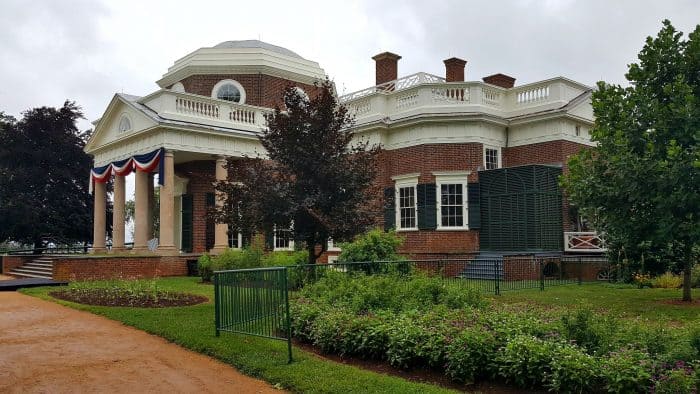
Thomas Jefferson’s Monticello Family Visit
There is an iconic house on a little hill in the center of Virginia. It is a place where history was made, tragedy struck, and triumph prevailed. Its beauty is undeniable. Its architecture is a masterpiece. Its story is layered, complicated, inspiring, and sometimes uncomfortable.
As a child, I remember a family vacation where we visited the homes of Presidents of the United States. The one I remembered most was Thomas Jefferson’s Monticello, pronounced Mon-ti-chel-lo. I have had more than three decades since that first visit to shape my thoughts, explore my ideas, love my country, and pursue happiness in my own way.
Today, I took my children to the home on the little hill in Charlottesville, Virginia, and challenged them to pursue their own path, but also to reflect on the people, decisions, courage, contradictions, and sacrifices that helped shape the country they call home.
Monticello is not just a house tour. It is a walk through Virginia history. It is a study in architecture and invention. It is a look at Jefferson’s passions, his gardens, his ideas, his family, and the lives of the enslaved, free, and indentured people whose labor made life on that mountain possible.
For families, Monticello is the kind of place that gives kids something to see while giving parents something to think about long after the visit is over.
Readers Also Plan These Virginia Family Adventures
If you are planning a family trip to Thomas Jefferson’s Monticello, these nearby Virginia travel ideas can help turn one historic stop into a fuller weekend itinerary.
- Visit Natural Bridge Virginia: Step Back in Time for another unforgettable Virginia landmark filled with history, scenery, and family-friendly exploring.
- Great Wolf Lodge Williamsburg if you want to pair Virginia history with a kid-approved indoor water park getaway.
- Fourth of July ideas for patriotic travel, family activities, recipes, and red-white-and-blue inspiration.
Why Visit Thomas Jefferson’s Monticello With Kids?
Monticello is a strong family travel stop because it gives children a real place to connect with American history. Instead of only reading about Thomas Jefferson, the Declaration of Independence, the early United States, or plantation life, they can stand on the hill, walk the paths, see the gardens, and look across the Blue Ridge landscape that Jefferson loved.
It is also a visit that invites conversation. Monticello is beautiful, but it is not simple. It represents big ideas, personal ambition, family memory, national history, and the painful reality of slavery. That makes it a meaningful place for families who want travel to be more than just a pretty backdrop.
For us, it was a chance to walk, observe, ask questions, and let history feel less distant.
Buying Tickets for Thomas Jefferson’s Monticello
We bought our tickets to Thomas Jefferson’s Monticello before heading up to the trail. I recommend buying tickets online and in advance when possible, especially if you are visiting during a busy travel season, holiday weekend, or summer road trip.
Monticello is one of those Virginia destinations where a little planning makes the day easier. Comfortable shoes, water, patience for the Virginia humidity, and enough time to wander the grounds all help make the visit more enjoyable.
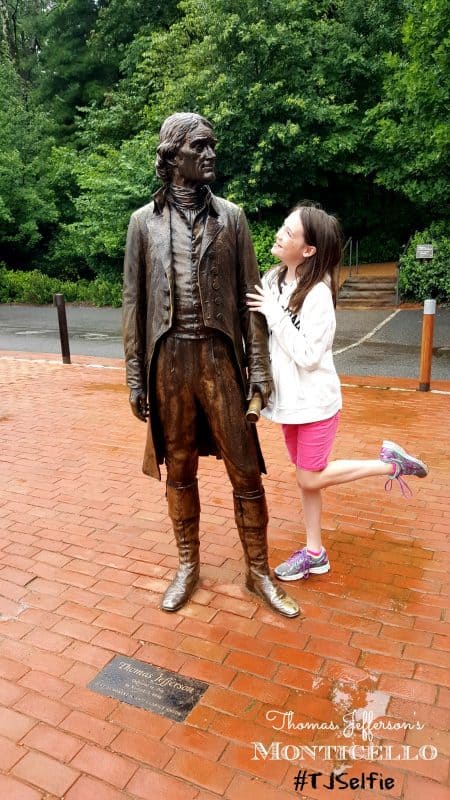
At the top of the stairs, where you meet the shuttle, there is a statue of Thomas Jefferson. Visitors are encouraged to take a #TJSelfie. Miss M was up for it.
Walking the Trail to Thomas Jefferson’s Monticello
We chose to walk the path that leads to the place on the hill. For me, walking made the arrival feel more meaningful. The trail gives the visit a little anticipation, a little effort, and a little time to shift from the hurry of the parking lot into the quiet weight of the place.
There is no hiding from Virginia humidity. It coats you with a sticky mist as you enter the gravel-covered trail. The path is wide enough for people both coming and going, and though the brochure refers to it as gravel, I found it more like sand on a beach where shells have crashed and tumbled.

The trail is a pleasant walk. It is mostly uphill at a slight grade and winds about 0.35 miles to the first major stop.
Thomas Jefferson’s Monticello Family Cemetery
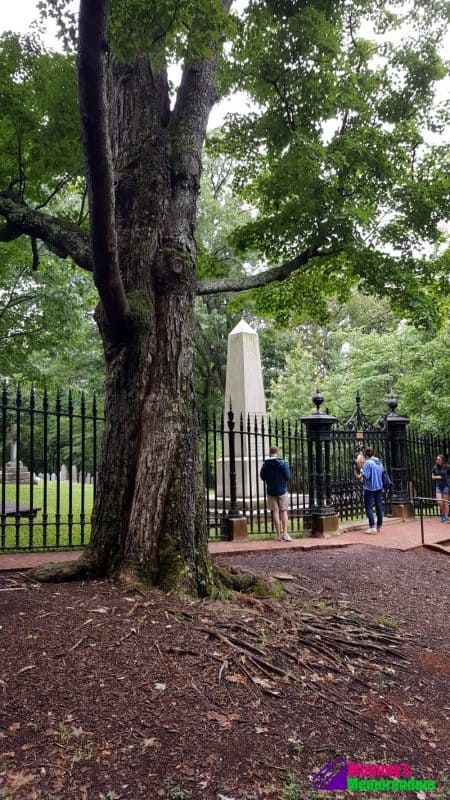
One of the first places we reached was the Thomas Jefferson family cemetery. The cemetery rests inside a wrought iron gate and is more than a burial plot. It is a promise made and a promise kept.
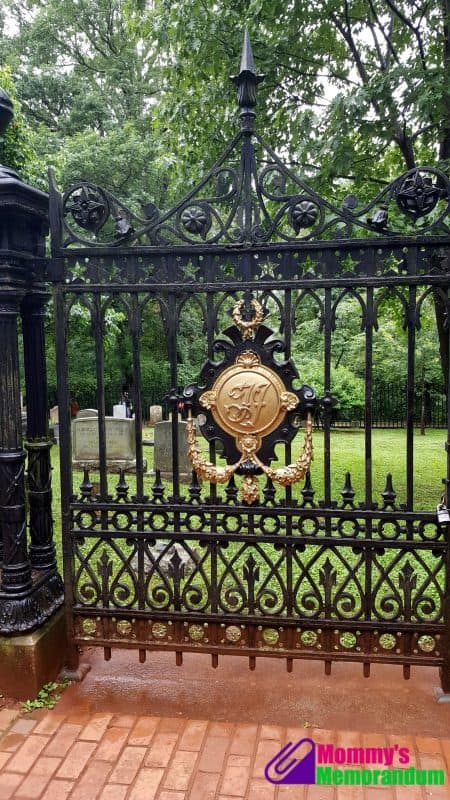
The Thomas Jefferson Family Cemetery rests inside this wrought iron gate.
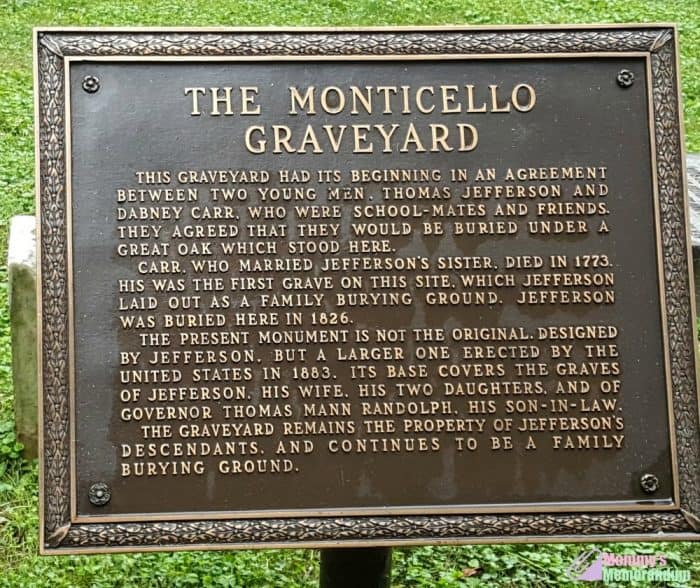
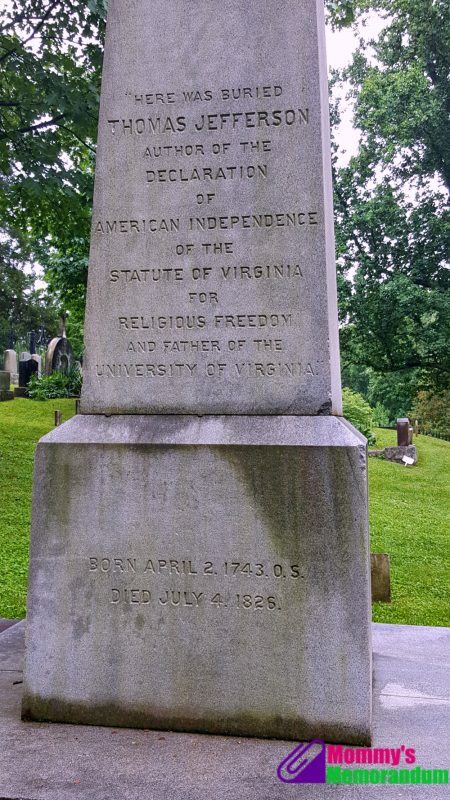
Looters chiseled away at Jefferson’s original tombstone, which Jefferson himself designed. Uriah Phillips Levy, who purchased Monticello in 1836, moved the tombstone up to the house to protect it from further damage. It was later taken by Thomas Jefferson Randolph to Edgehill for safekeeping.
Jefferson’s descendants later donated the original obelisk to the University of Missouri, where it was unveiled on July 4, 1885. A joint resolution of Congress in 1882 provided funding for the granite monument now locked behind the wrought iron gate that displays his family crest.
It is here, perhaps, that we see the humility in Jefferson. He wrote his own epitaph and omitted any mention of his presidency.
Miss M and I spotted these two grave markers and thought they were such a loving tribute to the people resting here.

Thomas Jefferson’s Monticello Mulberry Row
The trail continues a little farther and arrives at Mulberry Row. There are splendid views from here, and some of the finest woodwork in Virginia was made at the Joiner’s Shop.
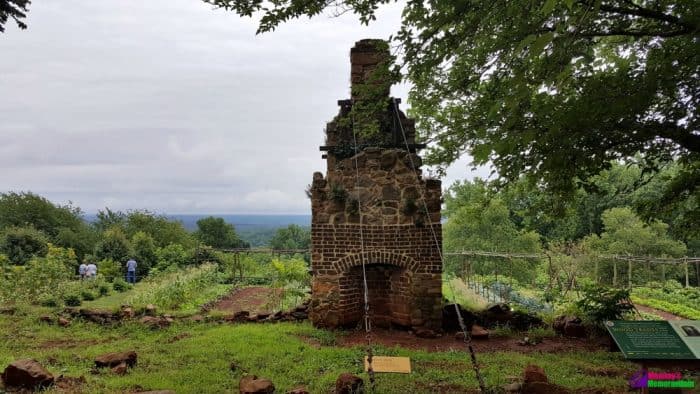
The foundation and chimney are all that remain of the Monticello Joiner’s Shop. I found it to be one of the highlights of the trip.
The decades between my first visit and today taught me an appreciation for more of my surroundings. Now much older, I found Jefferson’s garden to be one of the most stunning parts of Monticello.
The Vegetable Garden at Thomas Jefferson’s Monticello
The garden sits about 250 feet southeast of the house. It is about 1,000 feet long and 80 feet wide. It was cut out of a hillside and constructed by backfilling against a wall. A ten-foot-wide path runs the length of the garden along the edge of the retaining wall.
Perhaps Jefferson described this area of Monticello best:
“I am constantly in my garden or farm, as exclusively employed out of doors as I was within doors when at Washington, and I find myself infinitely happier in my new mode of life.”
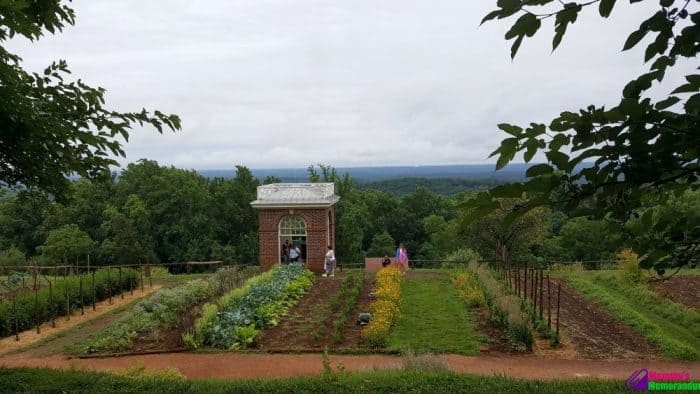 The vegetable garden at Monticello shows Jefferson’s deep interest in agriculture, experimentation, and the land.
The main part of the garden is divided into twenty-four growing plots arranged by which part of the plant was harvested.
Jefferson was very fond of English peas and harvested them from early May until late August. There was even an annual neighborhood pea contest. Whoever brought the first English pea to the table would host a dinner that included the winning dish of peas.
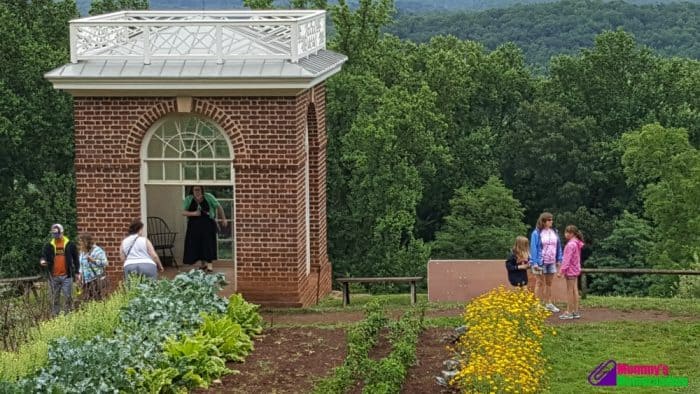
In the center, on the outer edge, Jefferson built a pavilion where he could sit to contemplate, read, and enjoy the stunning view.
The brick pavilion is 13 feet 6 inches square and reflects similarities to the main house. It overlooks an eight-acre orchard of 300 trees, a vineyard, and Monticello’s berry squares, which included figs, currants, gooseberries, and raspberries.
Two Italians, Filippo Mazzei and Antonio Giannini, contributed their experience and knowledge with fruit orchards. In 1774, Mazzei gave Jefferson apricot stones and 200 cherry pits, which were planted below the ridge where the vegetables were grown.
Beyond the kitchen garden, Jefferson’s plantation featured four satellite farms where he grew dozens of crops, from corn and peas to clover and oats. He raised sheep, hogs, and cattle. For many years, his mills provided cornmeal and flour to the local area.
What Families Should Know About Mulberry Row
On the other side of Mulberry Row was housing for enslaved, free, and indentured workers and craftsmen. This part of Monticello matters. It is where the beauty of the house and gardens meets the reality of the labor that supported them.
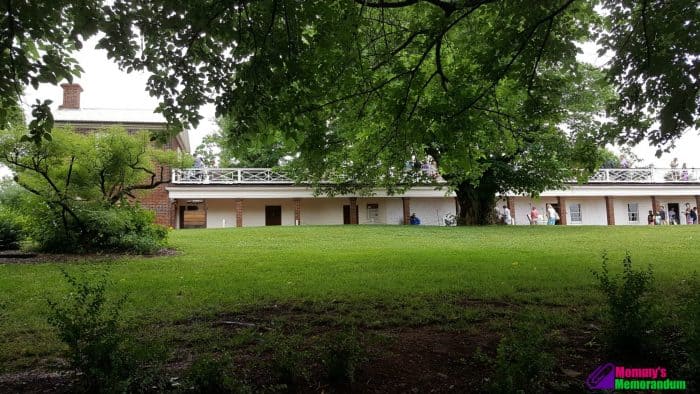
The pathway is lined with mulberry and sugar maple trees. Thomas Jefferson had hoped for syrup from the sugar maples, but found that it was not cold enough here for them to produce maple syrup.
Uriah Levy’s mother, Rachel, is also buried here on Mulberry Row.
Archaeologists have discovered more than 1,000 artifacts here, and small signs show what buildings once stood on this 400-yard row. From the house, this view of Mulberry Row is hidden, but for visitors, it is one of the most important places to pause.
Seeing Thomas Jefferson’s Monticello for the First Time
Then you see it: the iconic home.
You have seen it on the back of every nickel you have bartered, and yet here, in its presence, it takes on a new life.
I stood in the grass of Monticello.
I kicked my shoe off and let the blades of soft grass caress my feet. I imagined what it might have been like to be welcomed here by Thomas Jefferson.
I stood looking at the view in awe of the magnificent backdrop it has played in history. The embrace Jefferson shared on the last visit General Lafayette paid to Monticello. The magistrates, Presidents, family, and friends who stood here. The time British dragoons rushed the hill during the Revolutionary War and Jefferson narrowly escaped. The death of his wife, four of his children, and even his own death. It all happened right here.
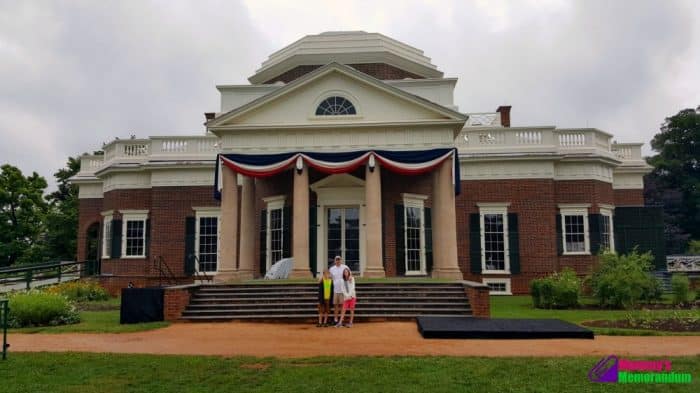
Architecture Details at Thomas Jefferson’s Monticello
If the historical moments do not move you, the details of the architecture surely will.
Thomas Jefferson officially named the two entrances the East Front and West Front. The latter is the famous nickel view.
Monticello is an artistic reflection of the local resources surrounding it. At a time when brick was still mostly imported from England, Jefferson chose to mold and bake his own bricks with clay found on the property. He used lumber, stone, and even manufactured nails on site.
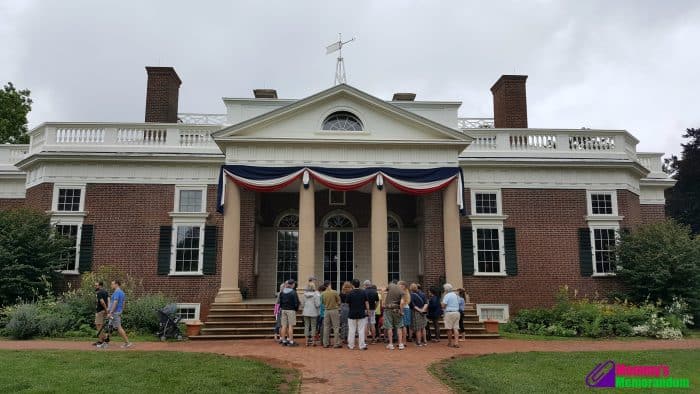
The front and back of the home face northwest and northeast. They open to flat green lawns. Each is highlighted by a long, narrow porch, and each porch showcases five wooden steps that descend to a lawn adorned with oval flower beds.

The lawn fades into forests topped off with views of the Blue Ridge Mountains.

There are flourishes attached to the home’s red brick structure and white trim. Three white columns support Monticello’s understated three-story-high rotunda, the first dome placed on an American home.
The Clock and Weather Vane at Monticello
The front porch of Monticello features two very unique items. One is the clock with only an hour hand.
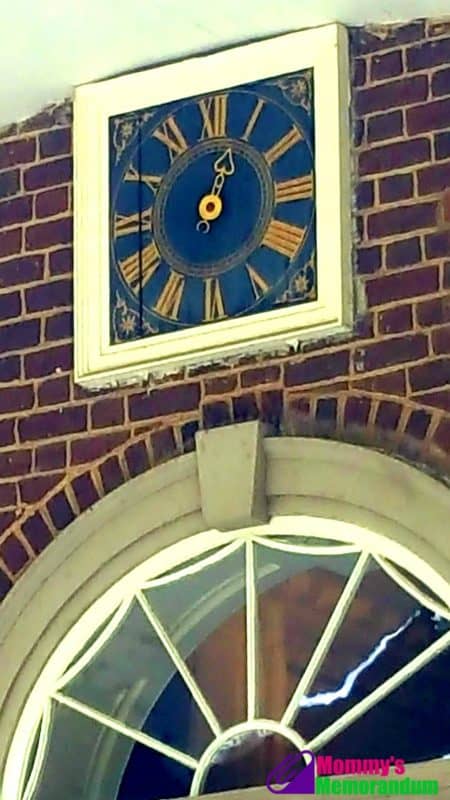
The second is the weather vane on top of Monticello.

The weather vane is attached to a dial on the ceiling of the porch, making it easy for residents and guests inside the home to see the direction of the wind without stepping outside.

Perfect With a Fourth of July Virginia Weekend
A visit to Monticello feels especially meaningful around the Fourth of July because Thomas Jefferson authored the Declaration of Independence and died at Monticello on July 4, 1826. If your family likes trips that mix history, scenery, and patriotic reflection, this is one of those Virginia places that gives the holiday more depth than fireworks alone.
Pair your Monticello visit with a picnic-style lunch, a drive through the Blue Ridge foothills, or another historic Virginia stop. For more patriotic ideas, family activities, recipes, and seasonal inspiration, visit my Fourth of July collection.
Thomas Jefferson’s Monticello and the Fourth of July
On July 4, 1826, in his bedroom at Monticello, on the fiftieth anniversary of the signing of the Declaration of Independence, our country’s third President and the author of the Declaration of Independence died.
His last words are often remembered as, “Is it the Fourth yet?”
John Adams, the second President of the United States, Jefferson’s political adversary and friend, died the same day. His last words are remembered as, “Jefferson still lives.”
Hearing these last words of two great men gave me cause to think. Most of us hope to live to see another birthday. These two men seemed to hope to live to see the birthday of the country they helped shape.
For families visiting around Independence Day, Monticello can turn the Fourth of July from a date on the calendar into a place, a story, and a conversation.
Thomas Jefferson’s Monticello and the Levy Family
About ten years after Jefferson’s death in 1826, Uriah P. Levy purchased Jefferson’s run-down estate, which was nearly in ruin. Levy began a long and costly program of renovation and restoration, including the purchase of an additional 2,500 acres adjoining the historic property.
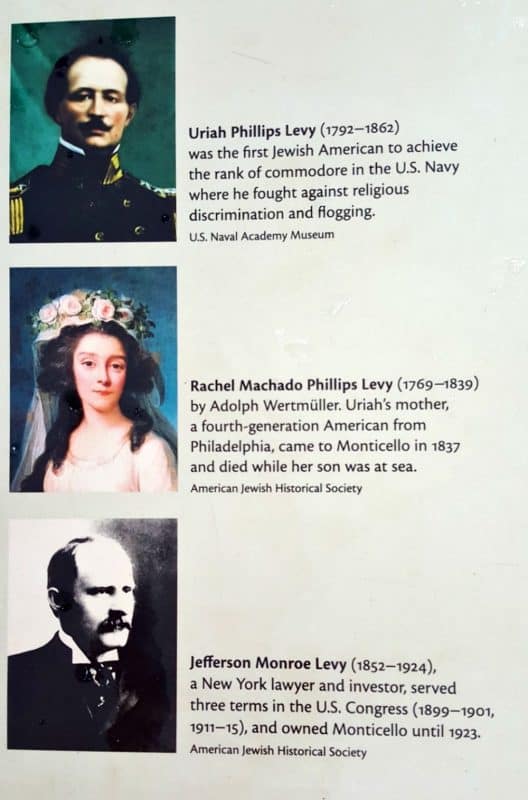
After Levy’s death in 1862, his will directed that Monticello, the house and property, be left “to the people of the United States.”
The government declined the offer.
That detail stayed with me. Monticello was Jefferson’s life’s work. It was later nearly lost. It took decades after his death for the place to be fully realized as one of America’s most significant historic homes.
Tips for Visiting Thomas Jefferson’s Monticello With Family
A family visit to Thomas Jefferson’s Monticello is easier when you give yourself enough time to do more than simply look at the house and leave. The grounds, gardens, cemetery, Mulberry Row, views, and small architectural details all add to the experience.
- Buy tickets in advance. This helps save time, especially during summer, holiday weekends, or busy travel seasons.
- Wear comfortable shoes. The trail and grounds include walking, slight inclines, gravel-like paths, and plenty of places to wander.
- Bring water. Virginia humidity can sneak up on you, especially with children.
- Talk with kids before you go. Monticello is beautiful, but it is also a place to discuss slavery, freedom, history, invention, and contradiction.
- Slow down in the gardens. The vegetable garden, pavilion, orchard views, and Mulberry Row help tell a fuller story than the house alone.
- Leave time for reflection. Monticello is not a theme park stop. It is a place that feels better when you let it breathe.
Is Thomas Jefferson’s Monticello Worth Visiting?
Yes, Thomas Jefferson’s Monticello is worth visiting, especially if your family enjoys historic homes, Virginia travel, architecture, gardens, presidential history, or meaningful educational trips.
For me, Monticello was both beautiful and complicated. It is the good and the bad. It is the past and the future. It is the old and the new. It is a reminder to dream, work hard, remember the sacrifices of others, and keep asking questions about the stories we inherit.
It is also one of those places where children may not understand every layer in the moment, but they will remember the hill, the house, the walk, the view, and the feeling of standing somewhere that mattered.
What to See at Thomas Jefferson’s Monticello
If you are planning your first Monticello visit, these are the stops that stood out most from our family trip:
- The walk up the trail, which gives the visit a slower and more meaningful beginning.
- The Thomas Jefferson family cemetery, a quiet place that adds personal weight to the visit.
- Mulberry Row, an essential part of understanding the full history of Monticello.
- The Joiner’s Shop, where the remaining foundation and chimney help visitors imagine the work once done there.
- The vegetable garden, one of the most beautiful and interesting parts of the property.
- The garden pavilion, with views over the orchard, vineyard, berry squares, and Virginia landscape.
- The main house, with its famous red brick, white trim, dome, porches, and nickel view.
- The clock and weather vane, two clever porch details that show Jefferson’s practical imagination.
My Thoughts on Thomas Jefferson’s Monticello
Wandering the trails and seeing the views from Monticello inspired me. From every direction, there is beauty. There is greatness: rivers that run to the ocean, mountains that lead north to south, and a house that still stands on its little hill.
Monticello is what Jefferson himself called an “essay in architecture.” He built it, tore parts of it down, changed it, and perhaps died without it ever feeling completely finished.
One of our country’s forefathers followed his dreams so passionately. He died in debt. His children sold Monticello, his life’s work. The United States did not want it when it was left in Levy’s will. It took decades after his death for the sacrifices, contradictions, and legacy tied to this place to be more fully realized.
Monticello is the good and the bad.
It is the past and the future.
It is the old and the new.
It is a reminder to dream, to work hard, to live fully, to remember the sacrifices, and to strive always to be happy.
“I am as happy no where else and in no other society, and all my wishes end, where I hope my days will end, at Monticello. Too many scenes of happiness mingle themselves with all the recollections of my native woods and fields, to suffer them to be supplanted in my affection by any other.” — Thomas Jefferson
I had to climb the hill to realize it.
Perhaps the iconic house on the little hill, in the center of the state of Virginia, is the story of a life well lived, the story of the man who penned our Declaration of Independence from a country that denied us all that Monticello represents.
On that little hill, I stood in a place where history has been recorded, where tragedy has happened, where mistakes have been made, and where freedom was imagined.
I was inspired, and my feelings were conflicted.
With one last view of the rolling hills where the tree lines meet the sky, I headed down the little hill known as Monticello. I no sooner reached the bottom than I wanted to return.
FAQs About Visiting Thomas Jefferson’s Monticello
Where is Thomas Jefferson’s Monticello?
Thomas Jefferson’s Monticello is located in Charlottesville, Virginia. It sits on a hilltop property with views of the surrounding Virginia landscape and Blue Ridge Mountains.
Is Monticello good for kids?
Yes, Monticello can be a meaningful place to visit with kids, especially if your family enjoys history, gardens, architecture, walking trails, and educational travel. It also opens the door to important conversations about freedom, slavery, leadership, and American history.
What can you see at Thomas Jefferson’s Monticello?
Visitors can see Jefferson’s historic home, the family cemetery, Mulberry Row, the vegetable garden, garden pavilion, orchard views, architectural details, and exhibits that help tell the story of the people who lived and worked at Monticello.
Why is Monticello important to Fourth of July history?
Thomas Jefferson authored the Declaration of Independence and died at Monticello on July 4, 1826, the fiftieth anniversary of the signing of the Declaration. That makes Monticello especially meaningful for Fourth of July travel and patriotic family history trips.
Should you buy Monticello tickets in advance?
Buying Monticello tickets in advance is a good idea, especially during summer, weekends, holidays, and busy travel seasons. It can save time and make the visit easier for families.
How much walking is involved at Monticello?
There is walking involved, especially if you choose to take the trail up toward the house. The path we walked was about 0.35 miles, mostly uphill at a slight grade. Comfortable shoes are helpful.
What should families bring to Monticello?
Families should bring comfortable walking shoes, water, weather-appropriate clothing, and enough time to explore slowly. In warm months, be prepared for Virginia humidity.
Is Monticello only about Thomas Jefferson?
No. While Monticello is Thomas Jefferson’s historic home, the full story also includes his family, the enslaved people who lived and worked there, free and indentured workers, craftsmen, gardens, agriculture, architecture, and preservation history.