
Miss M has always been about Fairies–especially the Disney kind. We have watched, more times than I can count, The Pirate Fairy, Peter Pan and anything featuring the pint-sized sprite. I don’t mind, I love the stories and the animation makes it even more magical.

Earlier this month, I beat Miss M to watching a Tinkerbell movie. I attended the TinkerBell and the Neverbeast (n Blu-ray/DVD March 3, 2015), event in Los Angeles. It was a great time!
TinkerBell and the Neverbeast is set in Pixie Hollow and a mysterious creature is discovered. He’s a monster looking creature known as the Neverbeast, or “Gruff” to those close to him. Why is he in Pixie Hollow? This is what Fawn and her fairy friends must learn.

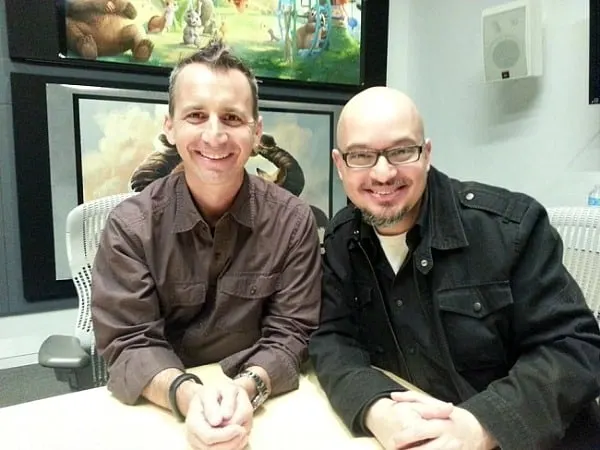
TinkerBell and the Neverbeast Producer Michael Wigert and Director Steve Loter
After viewing the film, we had the opportunity to meet up with Neverbeast Director Steve Loter and Producer Michael Wigert.
This was my first experience with animation and its process. I found it fascinating.
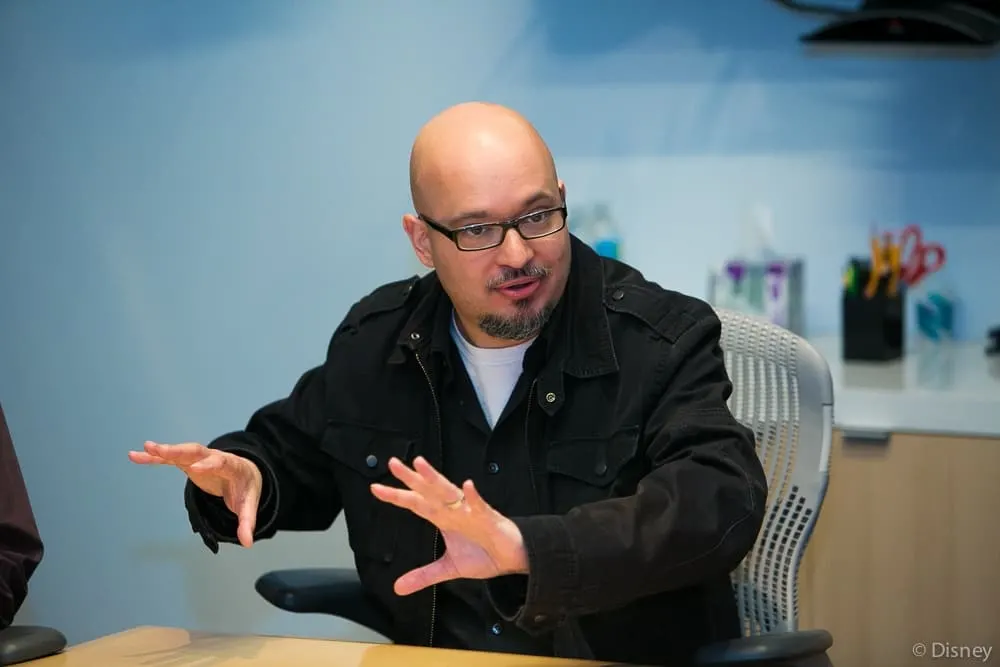
Wigert and Loter talk about their favorite part of animation:

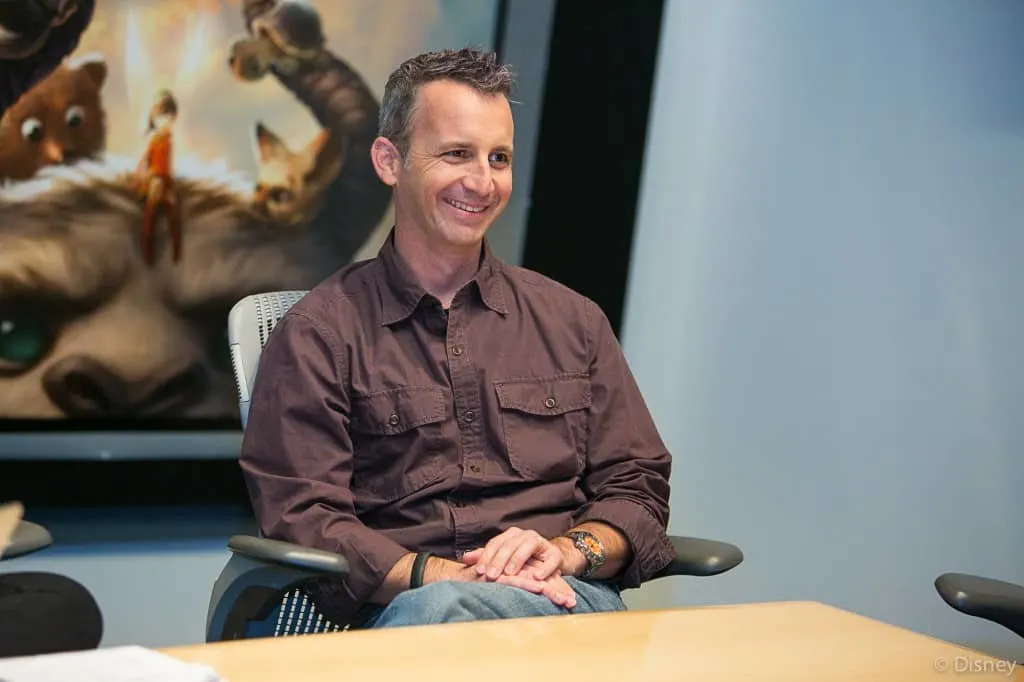
Producer Michael Wigert photo courtesy of Disney
Wigert: My favorite part of the animation process is the collaboration and seeing an idea come to life through the work of a fantastic team of artists. It’s been an absolute joy seeing Steve’s idea, which started 4½ years ago, through storyboarding and design and animations, to see that coming to life through with some amazing people was absolutely a joy.
Loter: For me it was a story. You get to this really sweet spot when you’ve got a script and then you’ve got storyboard artists visualizing the script. And there’s that something magical that happens there because the storyboard artist is a new voice. They look at the written word and they say, “Oh I can add a joke here. I can put the camera here that’s gonna’ emphasize this moment or emotion.” And for me, that’s when things really elevate. That’s a magic time for me.
The story about Tinkerbell and the Neverbeast is awesome, Loter shares how the movie came to be:
Loter: The movie was inspired by my daughter. I grew up in a household with no pets of any kind, none. No dogs. No cats. Nothing. Because of having no pets around, I have a fear of very large dogs. Many years have passed and I have a family of my own. My daughter loves one thing above all else… very large dogs. Our neighborhood just has a ton of dogs. She’ll see a neighbor walking a dog down the street and she’ll run up to the dog and she’ll throw her arms the dog in a big loving hug. It showed me something. Something very important.
My daughter has a huge open heart. I had to sit her down and we had to talk about this encounter we just had with the dog. She would say, “Well all animals are my friends. Why wouldn’t they be? In fact, the bigger they are the bigger the love they have to give.” I thought that’s the story. That’s the story. Fawn, the animal fairy, loves animals unconditionally. She takes care of animals and she encounters a creature that can be perceived as a monster and her open heart’s going to be put to the test.

In TinkerBell and the Neverbeast, we are introduced to a new type of fairy, Scout Fairies, led by Fairy Nyx. Loter shares how they came to be.

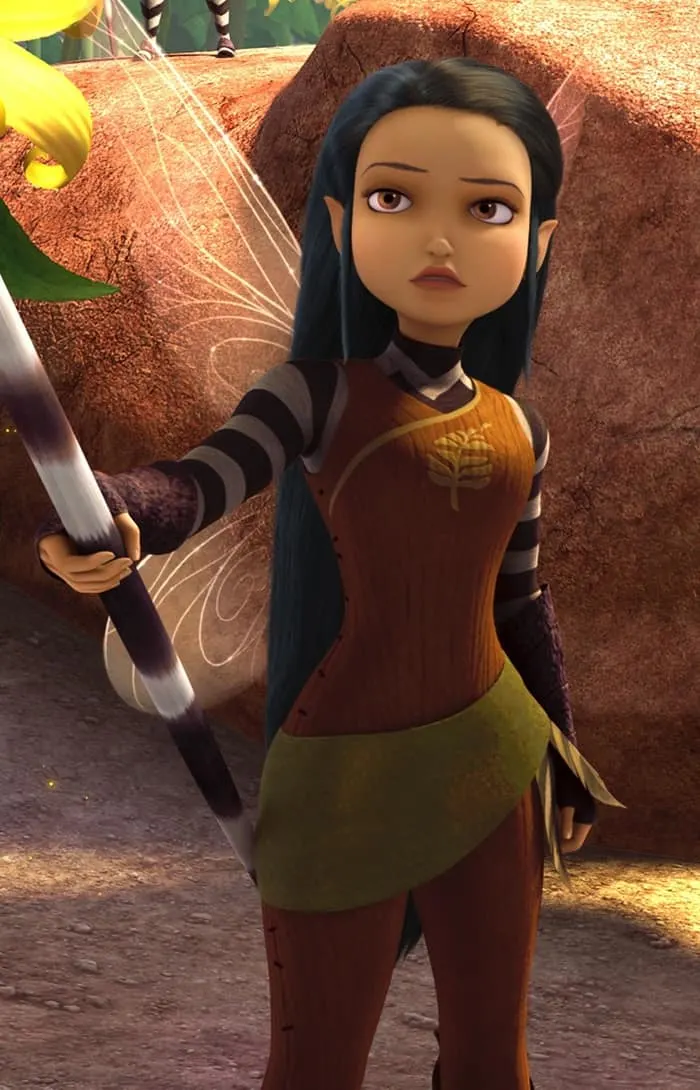
Fairy Nyx photo courtesy of Disney
Loter: Nyx is a very interesting character. As soon as I was hired on to direct the movie, my daughter is in a gymnastics team, so we would go to a gymnastics meet; her team would run up to me and say, “We heard you’re working on a fairy movie. Can you make fairies like us? We’re physical. We run, we jump. We do all these things. Can you make fairies like us?” And I thought, “That’s right. There isn’t. Where’s the physical fairy? Where’s the action hero?” And the Scouts came from that. That’s who the Scouts are. They’re physical. They’re very athletic and there’s a Pixie Hollow for them, absolutely.
With the story in place, it became time to chose the voices for the characters. Wigert shares who they had in mind.
Wigert: We loved Ginnifer Goodwin and we knew she was going to be Fawn. That was easy for us. We had a conversation about who would be playing against her and we wanted somebody who could contrast the joyful bubbly nature that was Fawn. For Nyx we then discovered Rosario [Dawson]. When we brought Rosario up she just has this cool voice. You can hear her passion and her belief in what she feels is right. That contrast was really beautiful and really nice. Working with both of them was just an absolute joy.
Gruff, the Neverbeast, is an unusual creature, Loter talks about how he came to be.

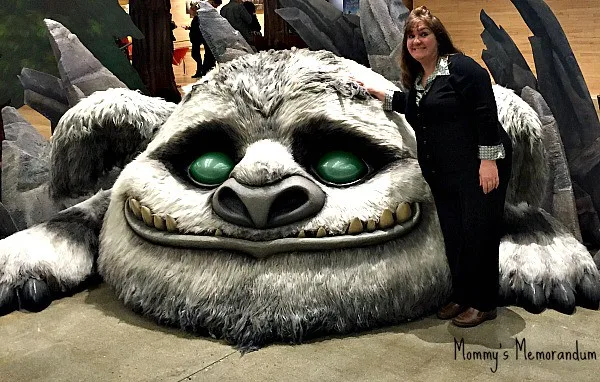
Loter: The Neverbeast came very quickly. Initially, I hired a few designers to work with me to do some drawings from a verbal idea. Pretty quickly I realized I had this character in my head. I knew what I wanted. I did a drawing very early in the process and we did a painting of it and then we showed it to John Lasseter and John said, “That’s it! Done! There’s your character.” The challenge was following up on that because you have a beautiful 2-D painted imagine and now you have to realize that in a CG world, in a dimensional world.
The thing about Gruff is he’s made up of a bunch of different animals. I wanted elements to be recognizable by a child. “Oh my dog does that, my cat does that. I’ve seen that creature in a zoo.” All familiar elements. So he has the walk of a hippo or a rhino. He has horse fur like a yak and it’s white. He has these floppy dog ears. He has an armadillo tail that he can hang on stuff, but it also acts like a cat. You could tell his mood by the swinging of the tail and these big beautiful green cow eyes that you see you’re reflection in. Fawn sees a reflection in that.
Loter continues on the ornamental designs Gruff wears.
Loter: They’re intended to be tribal and earthy. I did a lot of reference. I looked at a lot of ancient literature. I also looked at some of the more modern comic book graphic novel sensibilities. I wanted to find something that looked so old world. Something familiar, but very old. It was from imagination but definitely rooted in a lot of truth and material research.
Turns out, Gruff also was the most challenging part of creating Tinkerbell and the Neverbeast. Loter and Wigert explain:
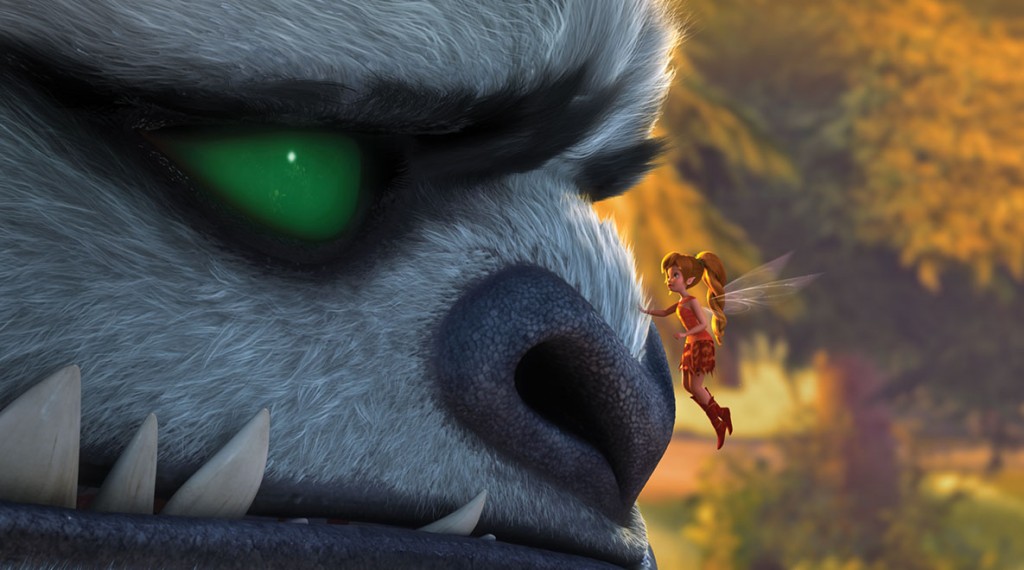
Fawn talking to Gruff photo courtesy of Disney
Wigert: Animating Gruff was definitely a challenge and bringing to life because his scale is so much larger than the other characters. 6’ character interacting with a 5” fairy. That proved to be very difficult because even just the choices in camera lengths you have to do something drastically different. We would have scenes where the background is being fish-eyed warped because we’re trying to fit the characters in to the scene. But really it was all with the goal of making the relationship between Fawn and Gruff be believable.
Logert: What I thought was going to be a challenge was the ending honestly. In speaking of real life events, the ending was a real life event umwhen we had to put the family pet down. And a lot of dialogue spoken by Fawn is actual dialogue. My wife said it to our dog. I’m capturing the moment in time it actually happened to me and I’m probably going to be very particular about how I want this scene to feel. But when Ginnifer Goodwin came in to record that she did it in one take. She got it down in one take. She said, “I know what you’re going for. I’ve been there, I can do this.” And she did it.
Wigert: It was beautiful, but it was very hard to witness. I mean she definitely got into that moment and she was very choked up. I think everybody was. And so everybody had to take a few minutes after that and it was amazing to witness. We knew we had something very beautiful.
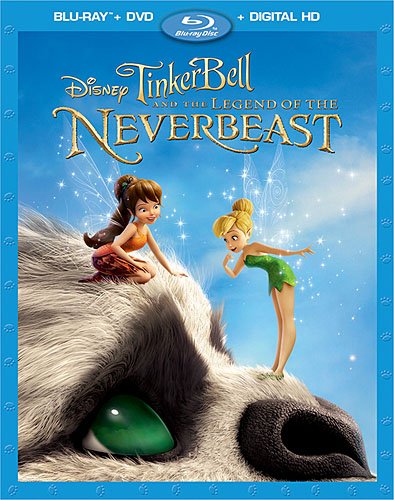
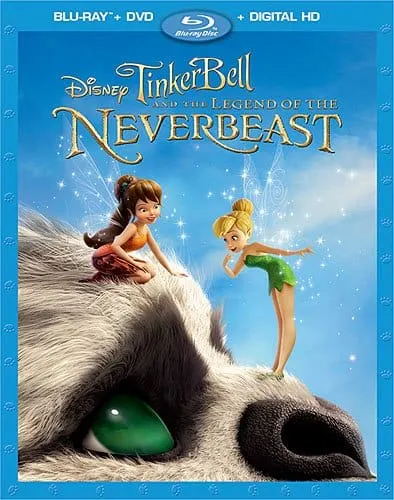
TinkerBell and the Legend of the Neverbeast On Blu-ray and Disney HD March 3, 2015