
Can a Hair Straightener Kill Lice and Nits? What Parents Need to Know
A hair straightener may kill an individual head louse trapped directly between its hot plates, but it cannot reliably eliminate lice or nits throughout the hair and should not replace a proven lice treatment and combing process.
Flat irons cannot safely reach every louse or egg attached near the scalp, where using extreme heat could burn the skin and damage the hair. Parents will get better results by confirming the infestation, choosing an age-appropriate lice treatment, following the directions exactly, and completing any required follow-up treatment.
Jump to the Answer | Jump to Treatment Steps
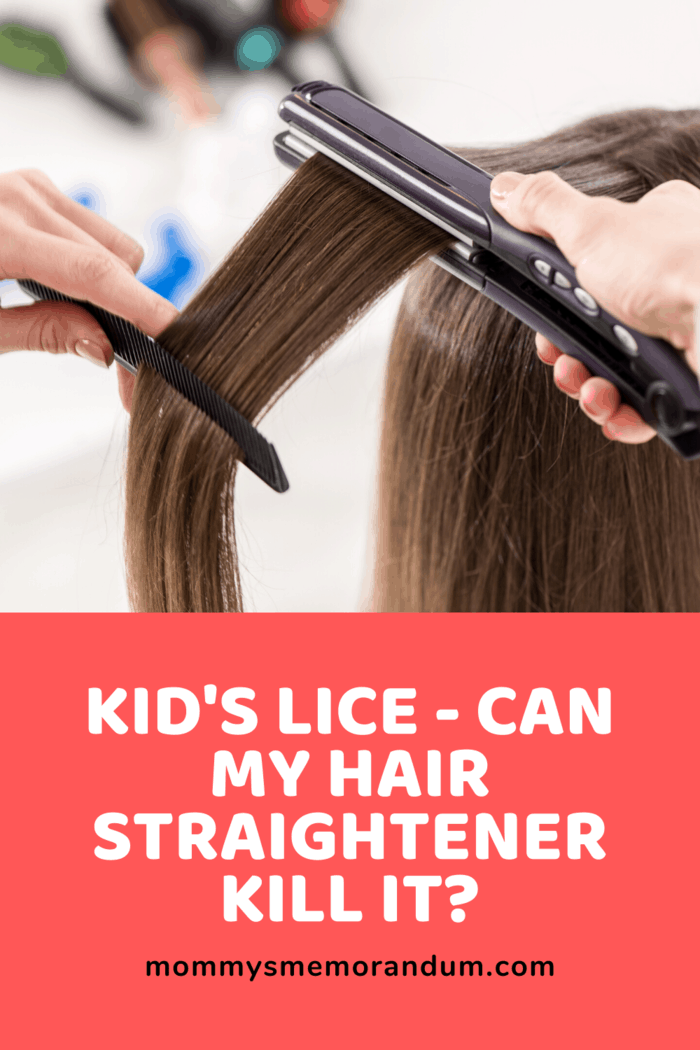

Can a Hair Straightener Kill Head Lice?
A flat iron may kill a louse that is trapped directly between the heated plates, but straightening your hair will not reliably get rid of head lice.
Head lice live and feed close to the scalp. They often gather behind the ears, near the neckline, and around the roots of the hair. Those are precisely the areas where you cannot safely clamp a hair straightener without risking a painful burn.
A straightener also treats only the small section of hair placed between its plates. Lice hiding near the scalp or moving between untreated strands may never come into direct contact with the heat.
That means the honest answer to “will a flat iron kill head lice?” is this: it might kill an individual louse it touches directly, but it cannot be counted on to clear the infestation.
Does Straightening Your Hair Kill Lice and Nits?
No. Straightening the hair does not consistently kill every crawling louse or every attached egg.
Nits are glued firmly to individual strands, usually close to the scalp. A flat iron cannot safely pass over that entire root area. Even when an egg is farther down the strand, there is no guarantee it will be caught squarely between the plates or exposed to heat long enough to prevent it from hatching.
A flat iron may damage some eggs that receive direct heat, but parents should not assume that a heated or flattened nit is dead. Missed eggs may hatch later and restart the infestation.
For that reason, a hair straightener cannot replace an appropriate lice treatment, careful inspection, and any combing or retreatment required by the product instructions.
Readers Also Make Time for These Family Health Guides
Unexpected health concerns have a way of turning an ordinary day upside down. After reviewing your lice-treatment plan, read about common misconceptions about managing a child’s fever, explore this acne treatment guide for teens, or visit our Health & Wellness guides for families.
Why a Flat Iron Is Not a Complete Lice Treatment
I understand why parents consider it. The moment someone says “lice,” your own scalp starts itching, every plan for the evening disappears, and suddenly the hair straightener in the bathroom looks like a possible rescue tool.
Unfortunately, a flat iron has several serious limitations:
- It cannot safely reach the entire scalp. Lice and newly laid eggs are commonly found close to the roots.
- It treats only a small section at a time. Lice can remain hidden between strands or near untreated areas.
- It may miss most nits. Eggs are tiny, firmly attached, and not always easy to see.
- It creates a burn risk. This is especially concerning when treating a frightened, uncomfortable, or squirming child.
- It can damage the hair. Repeated slow passes at very high temperatures may cause dryness, breakage, and scalp irritation.
- It can create false confidence. Seeing fewer crawling lice does not mean all lice and viable eggs are gone.
Use the flat iron later for styling. It should not be the main tool in your lice-removal plan.
What Are Head Lice and Nits?
Head lice are small parasitic insects that live on the human scalp and feed on blood. They crawl rather than jump or fly, and they spread most commonly through direct hair-to-hair contact.
A female louse lays eggs called nits. The eggs are attached firmly to individual hairs, often within a short distance of the scalp where conditions are warm enough for development.
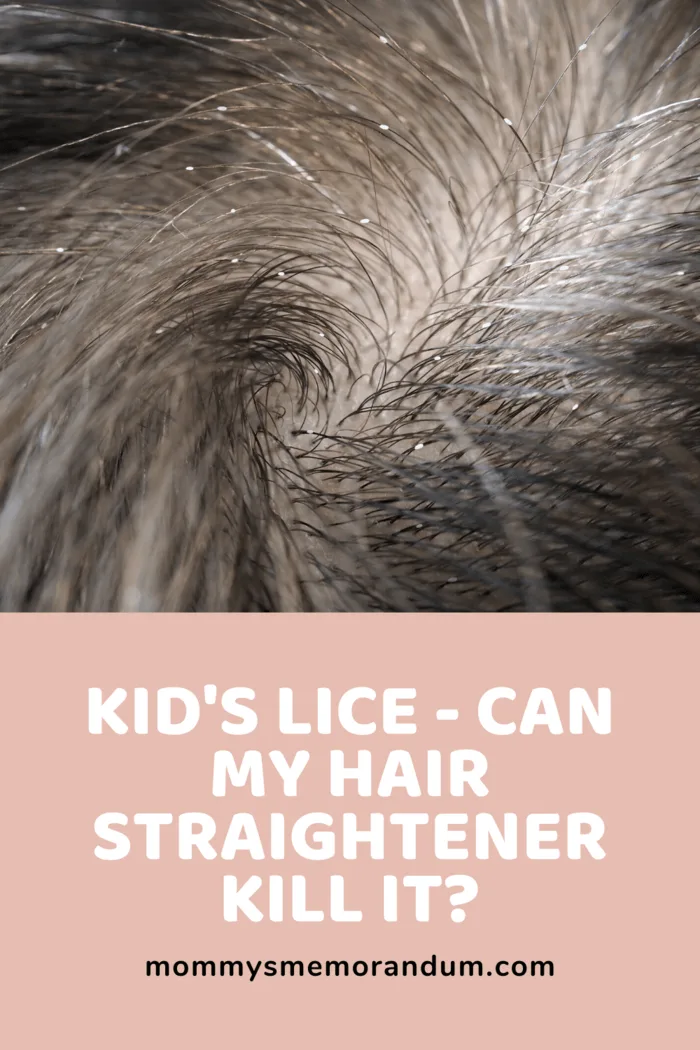
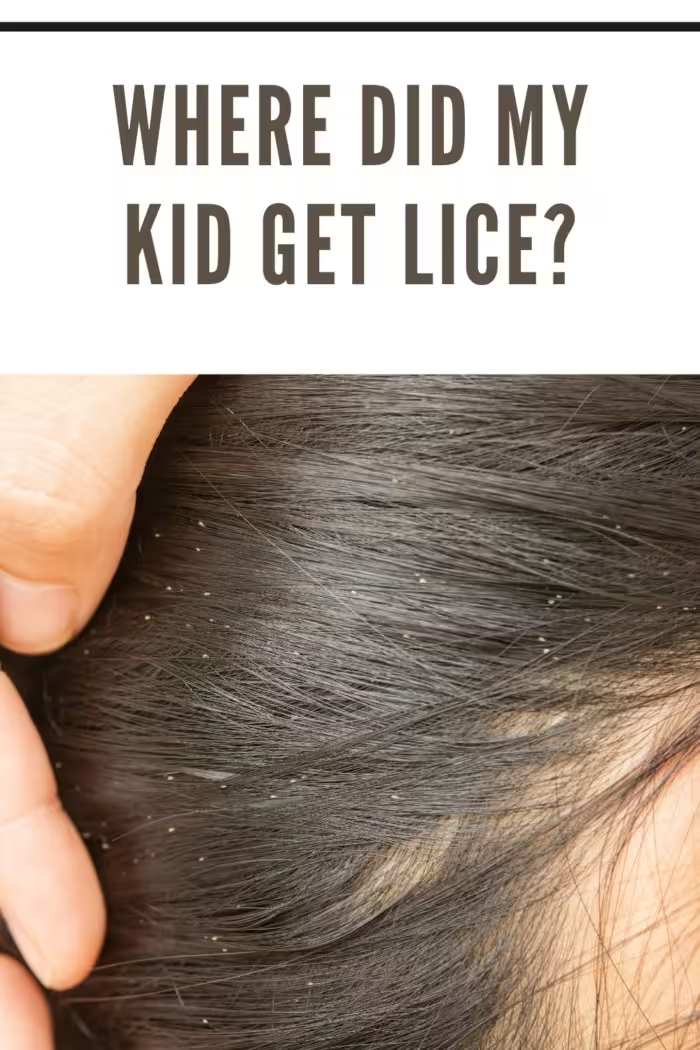
Unlike dandruff or lint, nits do not usually brush away easily. They may look tan, brown, yellowish, or white depending on their stage and whether they have already hatched.
Finding a live crawling louse is the best way to confirm an active infestation. Dandruff, hair-product residue, dried skin, sand, and lint can all be mistaken for lice eggs.
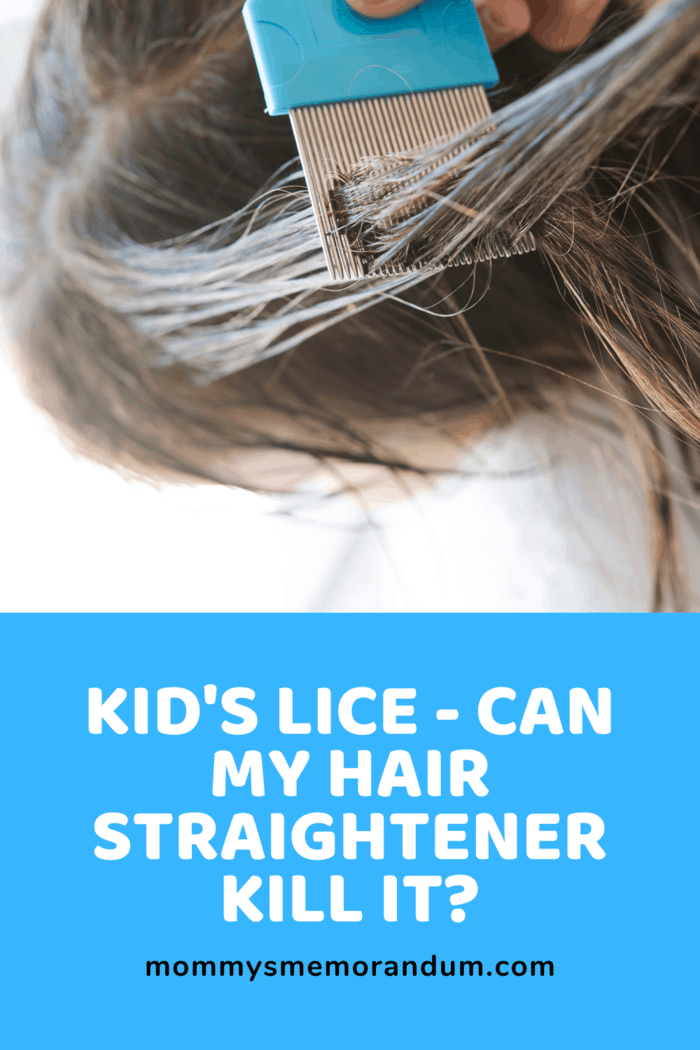
Can Lice Survive a Hair Straightener?
Yes. Many lice can survive an attempt to straighten infested hair because they may never touch the heated plates.
Lice stay close to the scalp and move between individual strands. A straightener heats only the hair clamped between its plates. Insects near the roots, underneath the section, or on nearby untreated strands may escape the direct heat completely.
Hair thickness, section size, straightener temperature, styling speed, and distance from the scalp also make the results unpredictable.
Even if several adult lice are killed, the remaining lice can continue feeding and laying eggs. That is why seeing one or two dead insects after straightening does not mean the infestation has been treated.
Does Straightening Hair Kill Lice Eggs?
Straightening hair does not reliably kill lice eggs.
Nits are commonly attached close to the scalp, where using hot flat-iron plates would be unsafe. Some eggs may be farther down the hair shaft when they are discovered, but a flat iron will still miss many of them.
It may also be impossible to tell by looking whether a heated egg is no longer viable. The nit can remain glued to the hair even after treatment, which is one reason continued inspection and properly timed follow-up care are important.
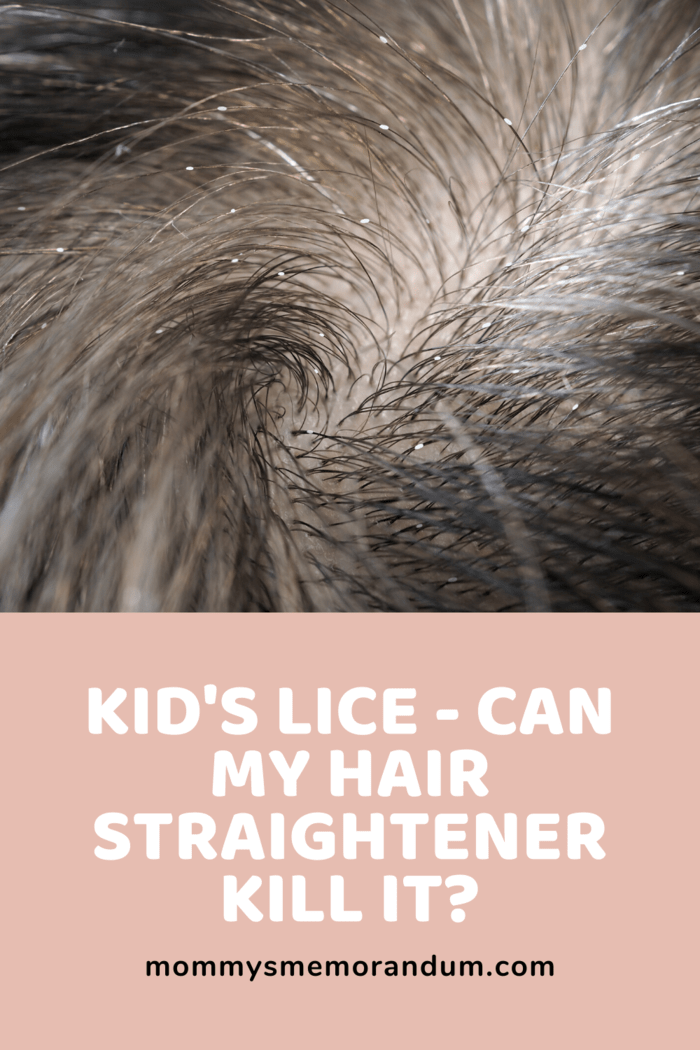
What Temperature Kills Head Lice?
There is no safe flat-iron temperature that parents should use on a child’s scalp to treat head lice.
Heat can harm lice under controlled conditions, but laboratory findings or appliance temperatures do not translate into a safe do-it-yourself scalp treatment. A household flat iron may reach several hundred degrees, yet it heats only the hair between its plates and could burn the scalp long before every louse or egg is reached.
The CDC recommends water that is at least 130°F for soaking combs and brushes and for washing recently used items. That temperature guidance applies to washable belongings and hair tools after they have been removed from the person. It is not a recommended temperature for heating a child’s scalp or hair.
Do not try to heat the entire head to a particular temperature. Use a treatment specifically intended for head lice and follow its label directions instead.
Can a Blow Dryer Kill Head Lice?
A regular household blow dryer is not a reliable head lice treatment.
The heat and airflow from a home hair dryer are difficult to control evenly, particularly around the scalp. Prolonged high heat can cause burns, discomfort, or hair damage, while moving air may make it harder to keep track of crawling lice.
There are professional lice-removal devices that use controlled heated airflow and are different from ordinary household blow dryers. Those devices have specific operating instructions and may be intended for trained or professional use.
Do not assume that holding a regular blow dryer close to the scalp will produce the same result. A standard hair dryer should not replace a proven treatment plan.
How Do Children Get Head Lice?
Head lice spread mainly through direct hair-to-hair contact with someone who has an active infestation.
Children may be exposed while hugging, playing closely, sharing a bed, taking group pictures, attending sleepovers, playing sports, or leaning their heads together during school and camp activities.
Spread through personal belongings such as brushes, combs, towels, hats, helmets, pillows, or hair accessories is possible but less common than direct head contact.
Head lice are not a sign that a child is dirty, and pets do not spread human head lice. Lice move by crawling; they cannot jump or fly.
Perfect With a Back-to-School Health Reset
Lice concerns often surface when children return to classrooms, camps, sports, sleepovers, and other close-contact activities. Add a quick scalp check to your back-to-school routine, label personal brushes, remind children not to share hats or hair accessories, and keep a fine-tooth comb somewhere you can find it without emptying the entire bathroom cabinet.
What Should I Do Immediately After Finding Lice?
Finding lice can feel overwhelming, but you do not have to treat the hair, wash the entire house, and notify everyone you have ever met within the same five minutes.
Start with these practical steps:
- Confirm that you found a live louse. Use bright light and inspect behind the ears and near the nape of the neck.
- Check close household contacts. Pay particular attention to anyone who shares a bed or has frequent hair-to-hair contact.
- Select an appropriate lice treatment. Check age limits, allergies, active ingredients, and product directions.
- Do not combine multiple lice products. More treatment is not necessarily better and may cause irritation or other harm.
- Gather a fine-tooth comb, hair clips, towels, and good lighting.
- Wash only the recently used items that matter. You do not need to dismantle the house.
- Review the retreatment schedule before beginning. Different active ingredients have different instructions.
How to Treat Head Lice at Home
The best treatment depends on the person’s age, health history, allergies, previous lice treatments, and the product being used. Read the entire label before starting and ask a pediatrician, pharmacist, or other qualified healthcare professional when you are uncertain.
1. Confirm an Active Infestation
Look for a live crawling louse with bright light and a fine-tooth comb. Nits alone can be difficult to identify correctly, particularly when they are located farther from the scalp.
2. Choose an Age-Appropriate Treatment
Both over-the-counter and prescription products are available. Common treatments work in different ways and do not all kill unhatched eggs.
Check the product’s minimum age, ingredients, warnings, and instructions. Ask a healthcare professional before treating a very young child or anyone with significant allergies, asthma, sensitive skin, seizures, or another health concern.
3. Follow the Product Directions Exactly
Apply the product to wet or dry hair as specified. Use the recommended amount, leave it on only for the instructed time, and rinse it exactly as directed.
Using more product, leaving it on longer, or repeating it sooner will not necessarily improve the result and may increase the risk of irritation.
4. Comb the Hair as Directed
Some products call for nit combing, while others do not require it for the treatment to work. Even when it is optional, many parents choose to comb out remaining insects and eggs.
Separate the hair into small sections and work methodically from near the scalp to the ends. Wipe or rinse the comb between passes so you can see what has been removed.
5. Continue Checking the Hair
Inspect the hair every two to three days for the next several weeks, paying special attention behind the ears and near the neckline.
Follow the treatment label regarding continued combing, checking, and removal of remaining nits.
6. Repeat Treatment Only When Directed
Some products kill crawling lice but do not kill every unhatched egg. Those products may require another application after newly hatched lice appear but before they are old enough to lay more eggs.
The correct timing varies by active ingredient. Some products are repeated after seven days, while others may be repeated around day nine or ten. Some newer treatments may not require a second application unless live lice are still seen.
Use the exact retreatment schedule printed on the product or provided by a healthcare professional rather than automatically repeating every product after the same number of days.
7. Recheck Close Contacts
Continue checking household members and others with close hair-to-hair exposure. Treat people who have an active infestation according to current professional guidance.
For current information, review the CDC’s head lice treatment guidance and recommendations for caring for someone with head lice.
How to Comb Out Lice and Nits
Combing takes patience, but good lighting and small sections make the process much easier.
- Seat the child somewhere comfortable with a movie, audiobook, or favorite show.
- Use clips to divide the hair into manageable sections.
- Begin close to the scalp and pull the comb slowly through to the ends.
- Check carefully behind the ears and at the nape of the neck.
- Wipe or rinse the comb after each pass.
- Remove any crawling lice or attached nits you find.
- Continue until the entire head has been inspected.
- Repeat combing and checks according to the treatment instructions.
Long, thick, curly, or tightly coiled hair may take more time. Work gently to avoid pulling and breakage.
Do not apply conditioner before treatment unless the product specifically says it is allowed. Conditioner and combination shampoo-conditioner products may interfere with how some lice medications attach to the hair.
What Should You Wash After Finding Lice?
You do not need to deep-clean every wall, carpet, toy, curtain, and piece of furniture. Head lice survive poorly once they are away from a human scalp.
Focus on clothing and belongings used by the infested person during the two days before treatment:
- Pillowcases and sheets
- Towels and washcloths
- Pajamas and recently worn clothing
- Hats, scarves, and fabric hair accessories
- Brushes, combs, clips, and hair tools
- Pillows or soft items that had recent direct contact with the person’s head
Machine wash and dry washable items using the hot settings recommended for lice control and appropriate for the fabric. Items that cannot be washed or dry-cleaned can be sealed in a plastic bag for two weeks.
Soak combs and brushes in water that is at least 130°F for five to ten minutes. Keep children away from the hot-water container to prevent scalding.
Vacuum places where the person recently sat or rested, but remember that the risk of catching lice from furniture or carpeting is small.
Do not use insecticide sprays or foggers. They are unnecessary for head lice control and may be toxic if inhaled or absorbed through the skin.
Why Are There Still Lice After Treatment?
The Infestation Was Misidentified
Dandruff, dried skin, lint, sand, and hair-product residue can resemble nits. If you cannot find a live crawling louse, ask a healthcare professional or experienced lice specialist to help confirm the diagnosis.
The Product Was Not Used Correctly
Using too little product, applying it to the wrong type of hair, rinsing too soon, or using conditioner beforehand may reduce the effectiveness of some treatments.
The Product Does Not Kill Every Egg
Some treatments kill crawling lice but do not kill unhatched eggs. A correctly timed second application may be necessary to interrupt the life cycle.
The Second Treatment Was Given at the Wrong Time
Retreating too soon or too late can leave newly hatched lice alive long enough to mature. Follow the schedule for the specific active ingredient being used.
The Lice May Be Resistant
Resistance to some lice medications has been reported. If live lice remain after the complete treatment and retreatment were performed correctly, ask a healthcare professional about a different option.
There Was Another Exposure
An untreated close contact may pass lice back through hair-to-hair contact. Recheck household members and others with frequent close exposure.
How to Help Prevent Head Lice From Spreading
- Encourage children to avoid direct hair-to-hair contact during an active outbreak.
- Do not share brushes, combs, towels, hats, helmets, hair ribbons, or barrettes.
- Tie back long hair for school, camp, sports, and sleepovers when practical.
- Check children after a known close exposure.
- Treat confirmed infestations promptly and according to the product directions.
- Clean recently used personal items without resorting to excessive whole-house cleaning.
Preventive sprays may be marketed for head lice, but they should not replace checking, avoiding direct head contact during outbreaks, and using evidence-based treatment when lice are confirmed.
Can My Child Return to School After Lice Treatment?
School and child-care policies vary, so check the rules for your child’s program.
Current public-health guidance does not support sending a child home early solely because lice are discovered during the school day. A child can generally complete the day, begin an appropriate treatment at home, and return after treatment has started.
Nits may remain attached to the hair after successful treatment. Their presence alone does not always mean live crawling lice remain.
When to Contact a Healthcare Professional
Ask a pediatrician, pharmacist, dermatologist, or other qualified healthcare professional for guidance when:
- You are not sure the child actually has head lice.
- The child is very young.
- The person has asthma, allergies, seizures, broken skin, or significant scalp sensitivity.
- The scalp is swollen, infected, bleeding, or severely irritated.
- Live lice remain after treatment and retreatment were completed correctly.
- You are considering combining products or repeating treatment early.
- Lice or nits appear on the eyebrows or eyelashes.
- You need help selecting an age-appropriate over-the-counter or prescription treatment.
This article is for general educational purposes and is not a substitute for diagnosis or treatment from a qualified healthcare professional.
Frequently Asked Questions
Can a hair straightener kill lice?
A hair straightener may kill a louse trapped directly between its heated plates, but it will not reach every louse or nit and is not a reliable treatment for an infestation.
Will a flat iron kill head lice?
A flat iron may affect individual lice through direct heat contact, but many lice remain close to the scalp or on untreated strands. It should not replace an approved lice treatment.
Does straightening your hair kill lice?
No. Straightening may expose a few lice to heat, but it does not treat the entire scalp and cannot reliably eliminate an infestation.
Can lice survive a hair straightener?
Yes. Lice that are not trapped directly between the plates may survive, particularly those hiding near the roots and scalp.
Does straightening hair kill lice eggs?
It does not reliably kill every lice egg. Nits are often attached close to the scalp, where using a flat iron would risk burning the skin.
Will a flat iron kill lice nits?
A directly heated nit may be damaged, but many eggs will be missed. Flat ironing cannot replace treatment, inspection, and any necessary combing or retreatment.
Can nits survive hair straighteners?
Yes. Nits may remain outside the heated plates or receive inconsistent heat. Viable missed eggs can later hatch.
What temperature kills head lice?
There is no safe flat-iron temperature parents should use on the scalp to kill lice. The CDC’s 130°F recommendation applies to laundering items and soaking combs and brushes, not heating a child’s head.
Can a blow dryer kill lice or nits?
A household blow dryer is not a dependable lice treatment. The heat is difficult to apply evenly and may cause burns or hair damage. Professional controlled-air devices are different from ordinary home dryers.
What kills head lice and eggs?
Use an age-appropriate over-the-counter or prescription lice treatment and follow its directions exactly. Because treatments affect eggs differently, combing or a properly timed second treatment may also be required.
How soon should lice treatment be repeated?
The timing depends on the specific product. Some treatments are repeated after seven days, others around day nine or ten, and some are repeated only when live lice remain. Follow the package or healthcare provider’s directions.
Do I need to clean my entire house after finding lice?
No. Focus on clothing, bedding, brushes, and other items that had recent direct contact with the person’s head. Extensive cleaning, fumigation, and pesticide sprays are unnecessary.
Do lice jump or fly?
No. Head lice crawl. They spread most commonly through direct hair-to-hair contact.
Are head lice caused by poor hygiene?
No. Head lice can affect clean or unwashed hair and are not evidence of poor parenting or an unclean home.
Final Thoughts: Should You Use a Hair Straightener to Kill Lice?
A hair straightener is not the quick lice cure parents hope it will be. It may kill a louse trapped directly between the plates and may damage an egg receiving direct heat, but it cannot safely reach every insect or nit near the scalp.
The risk of burns, hair damage, missed eggs, and an ongoing infestation outweighs any possible benefit.
Use an age-appropriate treatment, follow the directions precisely, comb when directed, check the hair regularly, and complete any required follow-up treatment. It takes more patience than one dramatic pass with a flat iron, but it is far more likely to end the tiny, itchy uprising.
Most importantly, remember that head lice are not a sign of poor hygiene or bad parenting. They are an unpleasant but manageable problem that calls for the right treatment, a good comb, bright lighting, and perhaps a very long movie to keep everyone occupied.
Have you dealt with lice in your family? Share the practical tip that helped make treatment or combing day easier.