
Family Strengths: Love and Respect
Love and respect in the family are the daily words, choices, habits, and actions that help a home feel safe, valued, and connected.
If you are wondering how to build more respect in family relationships, this guide gives simple, real-life ways to show love, keep trust, and strengthen your family one ordinary day at a time.
Jump to Family Love and Respect Tips


Family Strengths: Love and Respect
A strong family does not happen because everyone agrees all the time. It grows when family members feel loved, respected, listened to, and safe enough to be themselves.
Love is often the feeling that pulls a family close. Respect is the behavior that helps that love last. One says, “You matter to me.” The other says, “I will treat you like you matter.”
That is why family love and respect belong together. Love without respect can feel messy or one-sided. Respect without love can feel cold. But when they work together, they create the kind of home where people can make mistakes, apologize, try again, and still know they belong.
For parents, spouses, siblings, grandparents, and children, respect in family relationships shows up in ordinary ways: keeping promises, using a kind tone, listening before correcting, giving affection, saying thank you, and making room for someone else’s feelings.
This does not mean every family moment will be picture-perfect. Real families have hard mornings, tired evenings, misunderstandings, and those “everybody needs a snack and a reset” moments. But love and respect give you a steady place to return to.
Why Love and Respect Matter in the Family
Love and respect are the guiding forces that bind a family together. They help children learn trust. They help partners feel appreciated. They help parents lead without constantly scolding. They help siblings feel like teammates instead of competitors.
Respect for family does not mean everyone gets their way. It means each person is treated with dignity, even during disagreement.
It can look like:
- Listening without interrupting.
- Keeping your word when you make a promise.
- Using a gentler tone when you are frustrated.
- Apologizing when you have hurt someone.
- Not embarrassing or correcting someone in a harsh way.
- Showing affection in ways your family member appreciates.
- Making time for small acts of care.
According to Psychology Today, respect starts at home. That is such a simple idea, but it carries a lot of weight. The way we speak to one another inside our homes often becomes the model for how our children treat others outside of it.
Ingredients for Love and Respect in the Family
No shopping list required here, though wouldn’t it be lovely if patience came in bulk with a coupon?
To build more love and respect family-wide, start with these everyday ingredients:
- Kind words: Words can soften a hard day or make one worse.
- Follow-through: Keeping promises builds trust.
- Time: Even a few focused minutes can matter.
- Affection: Hugs, notes, and small gestures remind people they are loved.
- Listening: Respect grows when people feel heard.
- Apologies: A sincere “I was wrong” can repair more than we think.
- Consistency: Strong families are built in ordinary moments, not only big ones.
How to Respect Family and Show Love Daily
If you are wondering how to respect family in a practical way, start small. The most meaningful family habits are often the ones that can be repeated on a regular Tuesday, when everyone is tired and dinner is somehow still not making itself.
Here are simple ways to strengthen love and respect in the family in both word and deed.
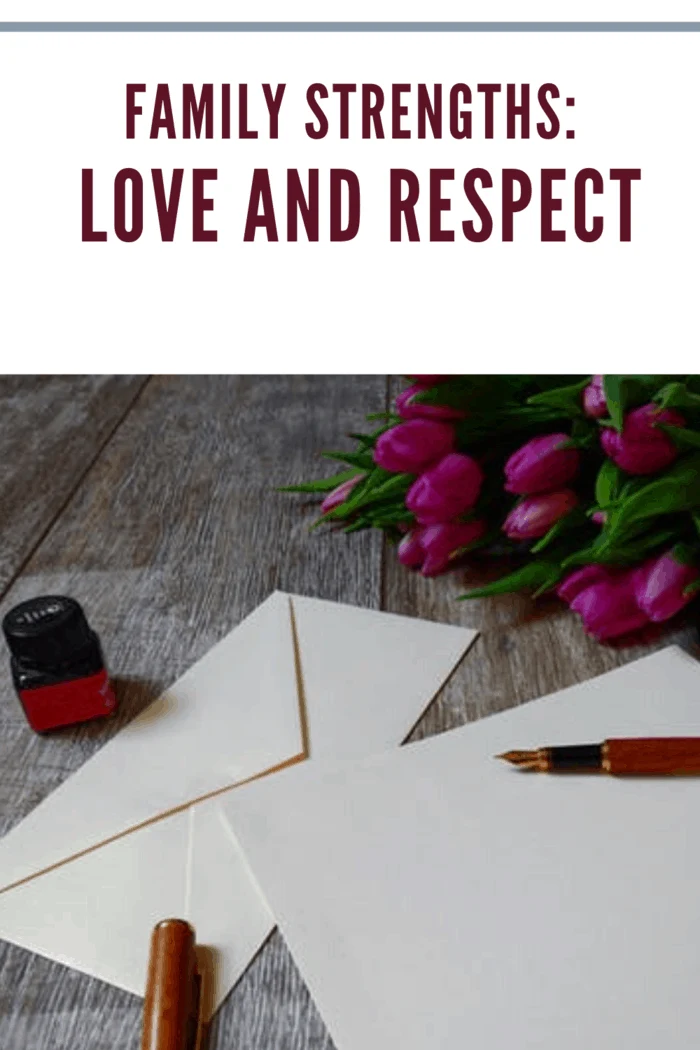
Write Love Notes and Messages
Try writing short love notes and messages to encourage your family members and express appreciation as often as you can.
A note under a pillow, a sticky note on a bathroom mirror, or a quick text in the middle of the day can remind someone that they are not invisible in the rush of family life.
You do not need fancy words. Try something simple:
- “I’m proud of you.”
- “Thank you for helping today.”
- “I love the way you make us laugh.”
- “I noticed how kind you were.”
- “You matter so much to me.”
Love notes are especially powerful because they give your family something they can return to later. A child may tuck one in a drawer. A spouse may reread one after a long day. Sometimes the smallest written words become the ones people remember most.

Keep Your Promises
Breaking your word to a family member can quietly damage trust. Keeping your promises shows love and respect because it tells your family, “You can count on me.”
This is true for big promises, but it is also true for small ones. If you say you will play a game after dinner, try to follow through. If you promise to call, call. If plans change, explain why instead of brushing it off.
Family trust is built in little moments of reliability.
Of course, nobody keeps every promise perfectly. Life happens. Work runs late. Someone gets sick. The important part is acknowledging it and repairing it.
Try saying:
- “I know I said we would do that today. I’m sorry I didn’t follow through.”
- “That mattered to you, and I should have treated it that way.”
- “Let’s pick a new time, and I’ll make sure it happens.”
Avoid Constant Ordering, Directing, or Correcting
It is easy to fall into a business-like tone at home, especially when there is homework to finish, dishes to clear, laundry to fold, and exactly one shoe missing five minutes before everyone needs to leave.
But constant ordering, directing, or correcting can make family members feel managed instead of loved.
Respect in family relationships often begins with tone. The same request can feel completely different depending on how it is spoken.
Instead of:
“Why haven’t you done this yet?”
Try:
“Can you help me get this finished before dinner?”
Instead of:
“You never listen.”
Try:
“I need you to hear me on this.”
That little shift helps protect connection while still getting the point across.


Use the Power of Touch
Touch can be a beautiful way of showing love and respect when it is welcome and comfortable for the person receiving it.
Hugs, kisses, pats on the back, holding hands, or sitting close can say what words sometimes cannot. They can remind your nearest and dearest people that you are still on their side.
This is especially meaningful in both good times and hard ones. A hug after an argument, a hand squeeze before a difficult day, or a goodnight kiss can help family members feel emotionally safe.
At the same time, respect means noticing personal boundaries. Some children, teens, and adults do not always want touch in the same way. Asking, “Do you want a hug?” can be a loving and respectful gesture all by itself.
Arrange Caring Days
Love and respect become stronger when they move from words into action.
One practical idea is to arrange “caring days.” These are simple days when family members agree to do a few small, loving actions for one another on purpose.
Start by asking your spouse, children, or family members what loving actions would mean the most to them. Keep the requests specific, positive, and realistic.
Good caring-day ideas might include:
- Leaving a note in a lunch box, jacket pocket, or backpack.
- Sending one encouraging message during the day.
- Cooking dinner together.
- Taking a walk after dinner.
- Letting someone choose the family movie.
- Calling during lunch just to check in.
- Doing one chore for someone without being asked.
For example, if you want to show mother-daughter love, you might agree to leave love notes for each other, call during lunch to hear how the day is going, and cook dinner together one evening.
The point is not to create another complicated family project. The point is to make love visible.
Perfect With a Slower Family Night
These family love and respect ideas work especially well when you pair them with a slower evening at home. Choose one simple habit, such as writing a note, cooking together, or taking a short walk, and let that become the moment where connection gets a little breathing room.
For more everyday encouragement and home-centered ideas, visit the Home and Family category.
Simple Habits That Build Respect in Family Relationships
Respect in family relationships is not only about rules. It is about how people are treated while the rules are being taught, discussed, and lived.
Here are a few habits that help respect become part of the family culture.
Listen Before You Answer
Sometimes people need to feel heard before they can receive advice. This is true for children, teenagers, spouses, and grown family members.
Try pausing before you correct. Ask one more question. Repeat back what you heard. It can change the entire tone of a conversation.
Say Thank You Often
Families can become so familiar with one another that helpful actions go unnoticed. Saying thank you reminds people that their effort matters.
Thank the child who cleared the table. Thank the spouse who made the appointment. Thank the teen who helped without being asked. Appreciation is one of the simplest ways to build family love and respect.
Apologize Without Making Excuses
One of the most respectful things a family member can say is, “I’m sorry.”
A real apology does not need a speech. It simply takes responsibility and makes room for repair.
Try:
- “I’m sorry I snapped at you.”
- “I should have listened better.”
- “That came out harsher than I meant.”
- “You deserved a kinder answer.”
Respect Differences
Family members can share a home, a last name, a holiday table, or a long history and still have different personalities, preferences, opinions, and needs.
Respect does not require everyone to be the same. In fact, strong families learn how to make room for differences without turning every difference into a battle.
Troubleshooting Family Love and Respect Problems
Even loving families can get stuck in patterns that feel discouraging. Here are a few common trouble spots and gentle ways to begin shifting them.
If Your Home Feels Too Critical
Start noticing the ratio of correction to encouragement. If most interactions are reminders, complaints, or instructions, add more appreciation on purpose.
A simple goal is to say one encouraging thing before giving another correction.
If Promises Keep Getting Broken
Make fewer promises and keep the ones you make. It is better to say, “I’m not sure yet,” than to promise something you cannot realistically do.
If Family Members Feel Disconnected
Begin with one small ritual. A bedtime check-in, Sunday breakfast, a walk after dinner, or a weekly phone call can become an anchor.
If Arguments Escalate Quickly
Take a pause before continuing. Sometimes the most respectful choice is to step away, breathe, and return when everyone can speak more calmly.
You can say, “I want to talk about this, but I need a few minutes so I can do it kindly.”
Creative Ways to Show Family Love and Respect
Not every loving action needs to be serious. Some of the best family memories come from playful, ordinary moments.
- Create a family compliment jar and read notes once a week.
- Start a “kind text” tradition during school or work days.
- Let each person choose one small family activity each month.
- Write birthday letters that name what you admire about each person.
- Make a family gratitude board in the kitchen.
- Take a photo of small family traditions and save them in an album.
- Choose a “no correcting for 30 minutes” dinner where everyone simply enjoys being together.
These ideas are Pinterest-friendly because they are simple, visual, and meaningful. They also work because they turn family love and respect into something people can see and remember.
Seasonal Ways to Practice Love and Respect as a Family
Family connection can be practiced all year long. The season may change, but the heart of it stays the same.
- Back-to-school season: Leave encouraging notes in backpacks or lunch boxes.
- Holiday season: Let each person choose one tradition that matters to them.
- Summer break: Plan a simple weekly family night without making it complicated.
- Busy work seasons: Send quick check-in messages during the day.
- Hard family seasons: Focus on listening, apologizing, and keeping the door open for repair.
What Love and Respect Look Like for Different Family Members
Every person receives love a little differently. One child may treasure a handwritten note. Another may want time together. A spouse may feel loved when you follow through. A parent or grandparent may appreciate a phone call more than anything.
For Children
Love and respect can look like listening to their stories, keeping your promises, apologizing when you are wrong, and guiding them without humiliating them.
For Teenagers
Respect often means giving them room to grow while still offering structure, warmth, and steady support.
For Spouses or Partners
Love and respect show up in appreciation, reliability, affection, shared responsibilities, and the willingness to speak kindly even during stress.
For Extended Family
Respect may mean honoring boundaries, making time to connect, and allowing relationships to be loving without requiring them to be perfect.
How to Keep Love and Respect Going
Most of us value our families, but many of us underestimate how much daily effort it takes to keep family life strong.
The work is not always dramatic. It is usually quiet. It is choosing the softer tone. It is keeping the promise. It is writing the note. It is saying, “I love you,” and then backing it up with action.
It is also choosing to begin again after a hard day.
A happy, strong family is not built by accident. It grows through small, repeated choices that say: You are loved. You are respected. You belong here.
FAQs About Love and Respect in the Family
Why are love and respect important in a family?
Love and respect are important in a family because they help people feel safe, valued, and connected. Love creates closeness, while respect helps family members treat one another with kindness, dignity, and trust.
How do you show respect for family?
You can show respect for family by listening, keeping promises, using a kind tone, apologizing when needed, honoring boundaries, and treating each person’s feelings as important.
What does respect in family relationships look like?
Respect in family relationships looks like speaking kindly, not embarrassing one another, allowing differences, following through on promises, and making sure each person feels heard.
Can a family have love without respect?
A family can feel love without always showing respect, but the relationship may become strained. Respect helps love feel safe, steady, and trustworthy.
How can parents teach love and respect at home?
Parents teach love and respect at home by modeling it. Children learn from how adults speak, listen, apologize, handle frustration, and treat others during everyday family life.
What are simple ways to build family love and respect?
Simple ways to build family love and respect include writing notes, saying thank you, keeping promises, giving affection, listening before correcting, and creating small family traditions.
Final Thoughts on Family Strengths: Love and Respect
Love and respect are not one-time family lessons. They are daily practices.
Some days, they come easily. Other days, they require a deep breath, a softened voice, and the humility to try again. But every kind word, every kept promise, every apology, and every loving action adds another small layer of strength to your family.
The work you put into strengthening your family can be well worth the effort, not because it makes family life perfect, but because it makes home feel like a place where love is spoken, respect is practiced, and everyone has room to belong.
Next Post to Try
Keep building a home that feels warm, connected, and lived-in with more ideas from Home and Family.