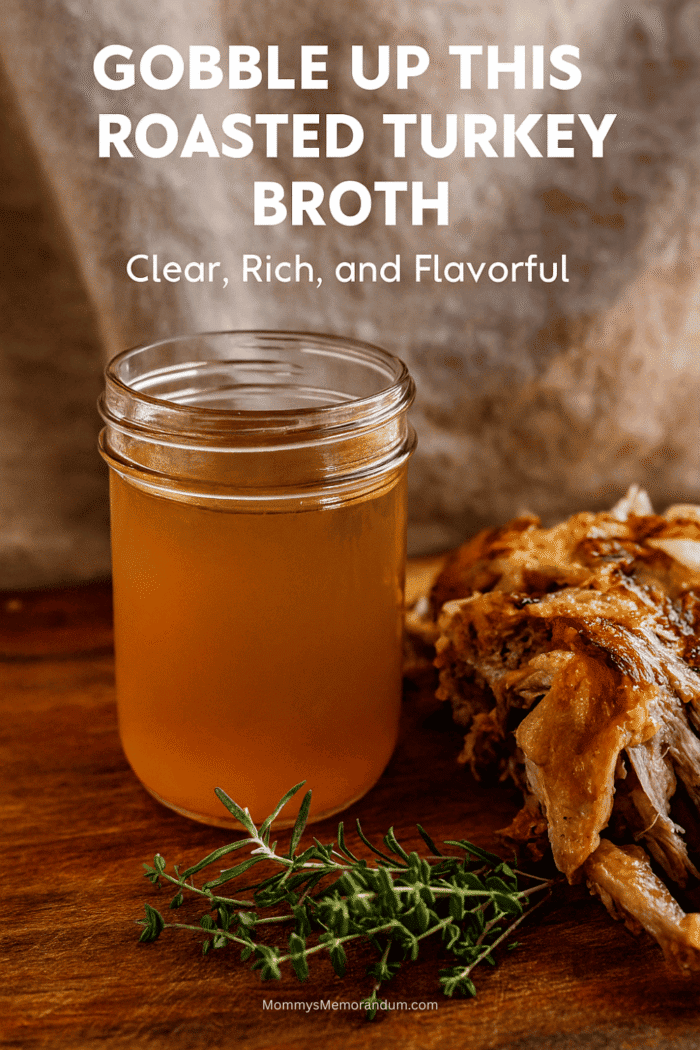
Gobble Up This Roasted Turkey Broth: Clear, Rich, and Flavorful
Gobble Up This Roasted Turkey Broth: Clear, Rich, and Flavorful
“Don’t call it leftovers—it’s a comeback tour in a pot.”
When the holiday feast ends, the real encore begins. That leftover roasted turkey carcass isn’t just scraps—it’s the secret to a broth that sings with flavor. If you’re not making broth right away, refrigerate or freeze the carcass promptly. Unlike the frothy fuss of traditional turkey stock, this roasted turkey broth delivers a crystal-clear, deeply savory taste that elevates soups, risottos, gravies, and cozy sips. Think of it as Thanksgiving’s greatest remix: less waste, more flavor, and a freezer full of golden goodness.
Why You’ll Love This Roasted Turkey Broth Recipe
- Rich, clean flavor: Slow-roasting and simmering unlocks deep savory notes.
- Minimal waste: Every leftover turkey bone gets a starring role.
- Versatile base: Perfect for soups, gravies, risottos, and sipping.
- Freezer-friendly: Portion it out for easy meal prep.
- Simple method: No fancy equipment—just patience and a pot.
Ingredients for Homemade Roasted Turkey Broth
- Roasted turkey carcass
- 1 tablespoon finely chopped fresh thyme (or 1 teaspoon dried thyme)
- 2 teaspoon kosher salt
- ¼ teaspoon freshly ground black pepper
- 4 quarts cold water
- 1 medium yellow onion, unpeeled and cut into chunks
- 3 carrots, chopped into large pieces
- 3 ribs celery, sliced about ½" thick
How to Make Roasted Turkey Broth (Step-by-Step)
Step 1: Prepare the Carcass
Place the roasted turkey carcass in a large stockpot. Cover with cold water, about 2 inches above the bones.
Step 2: Simmer for Depth
Bring to a gentle boil over medium-high heat. Skim off any foam for a clear broth. Reduce heat to low and simmer for 3 hours, or until bones break easily.
Step 3: Add Aromatics
Add onion, carrots, celery, thyme, salt, and pepper. Return to a gentle boil.
Step 4: Slow Simmer for Flavor
Lower heat and simmer for another 3 hours. This long, slow simmer extracts maximum flavor.
Step 5: Strain the Broth
Use a fine mesh strainer to remove solids. Compost or discard bones and vegetables.
Step 6: Cool & Store
Divide the strained broth into small, shallow containers. Refrigerate promptly at 40°F (4°C) or colder, within 2 hours of cooking (within 1 hour if the air temperature is above 90°F/32°C). Use refrigerated broth within 3 to 4 days or freeze it for longer storage.
Yield: About 3 quarts of golden roasted turkey broth.
Expert Tips for the Best Turkey Broth
- Skim frequently for a clear, bright broth.
- Use unpeeled onions for natural color.
- Roast carcass for 30–45 minutes before simmering for deeper flavor.
- Freeze in ice cube trays for small, sauce-ready portions.
Variations & Creative Twists
- Herb swap: Use rosemary, sage, or parsley.
- Spicy kick: Add peppercorns or red pepper flakes.
- Vegetarian option: Simmer roasted root vegetables for a meatless broth.
- Extra richness: Add a splash of white wine at the start.
Serving Suggestions for Roasted Turkey Broth
- Make flavorful risottos or grain bowls.
- Pour over roasted vegetables or mashed potatoes.
- Sip warm with fresh herbs for comfort.
- Use as a base for homemade gravy recipes.
FAQs About Turkey Broth
Q: Can I use raw turkey bones instead of roasted? A: Yes, but roasting enhances flavor. Raw bones yield a paler broth.
Q: How long can I store turkey broth in the freezer? A: For longer storage, freeze it in airtight, freezer-safe containers.
Q: Do I need to peel the vegetables? A: No—onion skins add color and nutrients.
Q: Can I add leftover turkey meat? A: Absolutely! Add chopped meat after straining for a hearty broth.
More Recipe Ideas
- Turkey Stock Recipe – Compare techniques and flavors.
- Homemade Gravy Recipes – Use broth for rich gravies.
- Thanksgiving Side Dish Ideas – Pair your broth with holiday favorites.
- Comfort Food Recipes – Cozy meals that shine with broth.
Final Thoughts: Roasted Turkey Broth is the Gift That Keeps Giving
This roasted turkey broth proves that leftovers aren’t boring—they’re the backbone of comfort cooking. Whether ladled into soups, whisked into gravies, or sipped straight from a mug, it’s a sustainable, flavorful way to stretch your holiday bird. Keep a batch in the freezer, and you’ll always have a taste of Thanksgiving ready to warm your table.
This recipe was originally published on November 28, 2013, and updated on November 14, 2025, with improved instructions, expert tips, for clarity and ease of use, and refreshed images.