Expired Food in School Cafeterias: What Parents Should Know
Expired food in school cafeterias is a parent concern worth taking seriously, especially when children are being served packaged foods with dates that appear months past the printed “best by” or “use by” label.
This post explains what those food dates may mean, why school cafeteria food safety still matters, and how parents can ask clear, respectful questions when something served at lunch does not look fresh, safe, or acceptable.
Readers Also Read
If school food safety is on your mind, these related posts may help you think through family safety, food handling, and how to speak up when something does not feel right.
Expired Food in School Cafeterias: What Parents Should Know First
School lunch has never been a Michelin-star affair, and most parents understand that cafeteria meals are built around budgets, nutrition standards, bulk purchasing, and the practical reality of feeding hundreds of children in a short lunch window.
But there is a difference between a meal that is simple and a meal that makes children wonder whether the food is too old to eat.
When my children began telling me day after day that they were being served expired food in the school cafeteria, I started asking where the line should be. Not because I expect gourmet lunches. I do not. My standards are pretty reasonable: feed children safely, treat them with dignity, and do not make a child feel like the only option available to them is food no one would choose at home.
Food date labels can be confusing. A “best by” date does not always mean the food becomes unsafe the next day. In many cases, it refers to quality, taste, or texture. But in a school cafeteria, parents should not be left guessing. A school meal program should have clear food safety practices, careful storage, rotation, and a process for answering parent concerns.
That is especially important because many children rely on school meals. When lunch is free or low-cost through programs such as the Community Eligibility Provision, children may not have another option tucked in a lunchbox. For some families, school lunch is not a convenience. It is part of how children are fed during the week.
That makes the question bigger than one cup of peaches.
It becomes a question of trust.
Why Parents Worry About Expired Food at School
At home, many of us use common sense with food dates. We smell the milk. We look at the packaging. We decide whether crackers are stale or whether a can is dented. We know how the food was stored because we bought it, brought it home, and put it away ourselves.
School is different.
Parents are not in the cafeteria cooler. We do not see the storage room. We do not know when the food was delivered, how it was stored, whether it was part of a bulk order, or whether the date is a manufacturer’s quality date rather than a hard expiration date.
That is why clear communication matters.
When a child is served food with a date that appears to be months past what is printed on the package, the school should be able to explain what the date means, whether the product is still approved to serve, and what process is used to prevent unsafe food from reaching a lunch tray.
Best By Date vs. Expiration Date in School Lunches
One of the trickiest parts of this issue is that food labels do not all mean the same thing.
- Best by or best if used by: Usually refers to best flavor, texture, or quality.
- Sell by: Usually tells a store how long to display a product for sale.
- Use by: Often refers to peak quality, though parents naturally read it as a stronger warning.
- Expiration date: Can feel more final, especially on foods meant for children.
That does not mean parents should ignore dates. It means the school should be prepared to answer questions clearly instead of brushing concerns away.
There is a practical difference between food that is still safe but may be past peak quality and food that has been mishandled, stored improperly, opened, spoiled, or served despite visible concerns. The date is only one piece of the food safety picture.
Are Schools Serving Food Past the School Food Expiration Date to Save Money?
I cannot say why any particular item ends up on a lunch tray. It may be a misunderstanding of date labels. It may be poor stock rotation. It may be a storage issue. It may be a supplier issue. It may be that the item is considered safe under program guidelines.
But parents are allowed to ask.
Our city school lunches are accessible to all students, and funding for these meals comes through federal nutrition programs. Henry County qualified to participate in the Community Eligibility Provision, which allows eligible schools and districts in high-poverty areas to offer meals at no cost to enrolled students.
That matters because children receiving free school meals should not be made to feel as if they should be grateful for whatever they get, even when the food raises concerns.
I remember the Seinfeld episode where Elaine brought “muffin stumps” to a homeless shelter and was chastised. It was funny because it was uncomfortable. When food is not a choice for a child, what message are we sending if the food appears to be second-best, past-date, or questionable?
Children deserve safe food. Full stop.
The Photo That Made Me Ask Questions
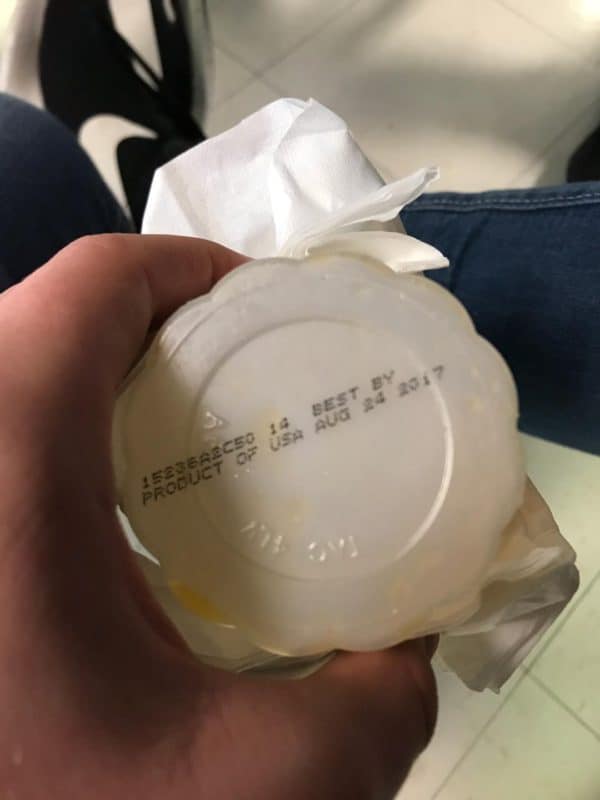
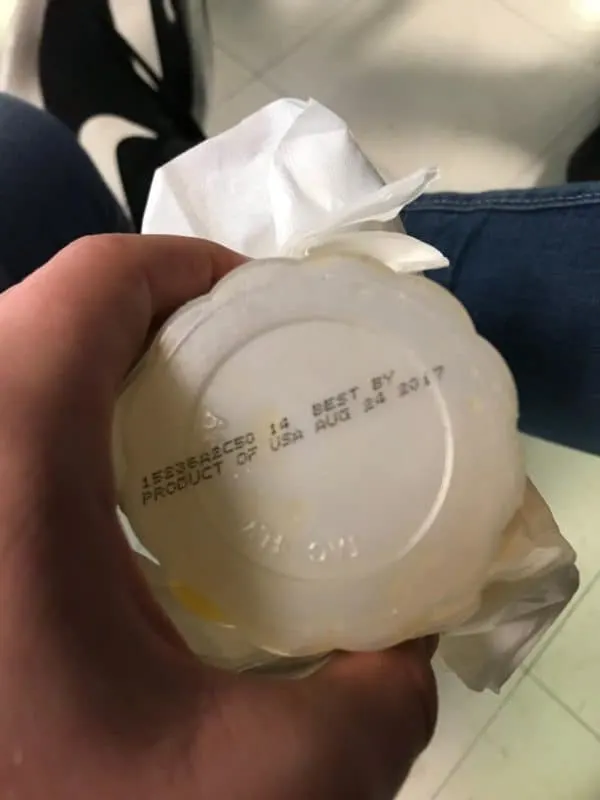
For a few months, my children had been telling us that the food served in the school cafeteria was expired. Then, on April 26, 2018, I received a photo of peaches served at lunch.
The date printed on the package appeared to be eight months old.
Maybe the peaches were still considered safe by the people managing the school food program. Maybe the printed date was a quality date. Maybe there was an explanation.
But from a parent’s side of the lunch tray, it looked like a problem.
And it felt like the kind of problem that should not be dismissed with a shrug.
Food Safety Should Be a Given at School
As parents, we send our children to school to receive an education. We trust the school to supervise them, protect them, and respond when something is wrong.
Food safety should be part of that trust.
That does not mean every past-date label automatically equals danger. It does mean school nutrition teams should have a system for checking dates, rotating stock, storing food properly, and removing questionable items from service.
It also means parents should be able to ask about that system without being treated as difficult.
Perfect With a Back-to-School Safety Check
This is a good conversation to revisit during back-to-school season, parent-teacher conference time, or anytime your child mentions a repeated concern about lunch. Pair this post with a quick family check-in: ask what your child is eating, what they are skipping, and whether anything in the cafeteria looks or smells off.
For older students heading out on their own, you may also like 7 Tips for Campus Safety, because food safety, personal safety, and knowing when to speak up are all part of helping kids advocate for themselves.
What Parents Can Do If a Child Is Served Expired Food at School
If your child comes home saying the school cafeteria served expired food, start by gathering information calmly. The goal is not to create drama. The goal is to get a clear answer and make sure the food being served is safe.
1. Ask for the package or a photo
If possible, ask your child to take a clear photo of the item, the printed date, and any lot number or packaging information. This gives the school something specific to check.
2. Ask what the date means
Use direct language: “Can you tell me whether this date is a best-by date, use-by date, or expiration date, and whether this item is approved to serve after that date?”
3. Ask about storage and stock rotation
The bigger question is not only the printed date. Ask how cafeteria staff rotate inventory, check dates, and decide when food should be discarded.
4. Contact the cafeteria manager first
Start with the person closest to the food service process. A cafeteria manager may be able to explain the item, check the inventory, or remove similar items while they investigate.
5. Escalate if the concern continues
If the issue keeps happening, contact the school principal, district nutrition director, or school board. Keep your message factual and include dates, photos, and what your child reported.
What to Say in an Email to the School
If you are not sure how to start, keep it short and specific.
Hello, I am writing because my child was served a packaged food item at lunch with a printed date that appears to be past the date on the package. I understand some dates refer to quality rather than safety, but I would appreciate clarification on what this date means, whether the item is approved to serve, and what process the cafeteria uses to check dates and rotate inventory. Thank you for looking into this.
That kind of message gives the school a fair opportunity to answer without turning the conversation into a fight.
Troubleshooting Parent Concerns
What if the school says “best by” does not mean unsafe?
That may be true, depending on the food and how it was stored. Ask for the school’s policy on serving foods past printed quality dates and how they determine whether the item is acceptable for students.
What if my child refuses to eat school lunch now?
Take the concern seriously. Ask what they saw, what they smelled, and whether other students noticed it too. If you can pack lunch temporarily, do so, but still follow up with the school so the larger issue is addressed.
What if this happens more than once?
Document each incident. Repeated concerns are stronger than a single complaint, especially if you have photos, dates, and specific food items.
Why This Matters for Food-Insecure Families
This issue becomes even more important in communities where many families depend on school meals.
When children have consistent access to enough food at home, a questionable school lunch may mean they eat something else later. But when a child relies on breakfast and lunch at school, that tray matters. It may be the most reliable meal of the day.
That is why food safety and dignity belong in the same conversation.
Children should not have to choose between being hungry and eating food that makes them nervous.
Related Posts Before You Go
FAQs About Expired Food in School Cafeterias
Is expired food in school cafeterias always unsafe?
No. Some dates, especially “best by” dates, are often about quality rather than safety. However, parents can still ask how the school determines whether past-date food is acceptable to serve.
What does “best by” mean on school lunch food?
A “best by” date usually means the food is expected to have its best flavor or quality before that date. It does not automatically mean the food is unsafe, but storage and handling still matter.
What should I do if my child is served expired food at school?
Take a photo of the item and date, contact the cafeteria manager or school, and ask what the date means, whether the food was approved to serve, and how inventory is checked.
Can schools serve food past the printed date?
It depends on the food, the type of date, storage conditions, and school food service policy. Parents should ask for the district’s written food safety or stock rotation policy if the concern continues.
Who do I contact about school cafeteria food safety?
Start with the cafeteria manager or school principal. If the problem continues, contact the district nutrition director, superintendent’s office, or local school board.
Why does this matter if school lunch is free?
Free school lunch is still a meal served to children, and every child deserves safe, respectful food. Cost should never lower the expectation for basic food safety.
Final Thoughts on School Lunch Food Safety
I understand that school nutrition programs have budgets, regulations, shortages, and hundreds of hungry children to feed. I also understand that cafeteria staff often work hard under pressure and do not get enough credit for the job they do.
But parents are still allowed to ask questions.
When a child brings home a photo of food with a date that looks eight months past its time, that is not a small thing to the parent looking at it. It is a trust thing. It is a safety thing. It is a dignity thing.
Our children deserve food that is safe, fresh enough to eat without worry, and served by systems that are willing to answer questions clearly.