
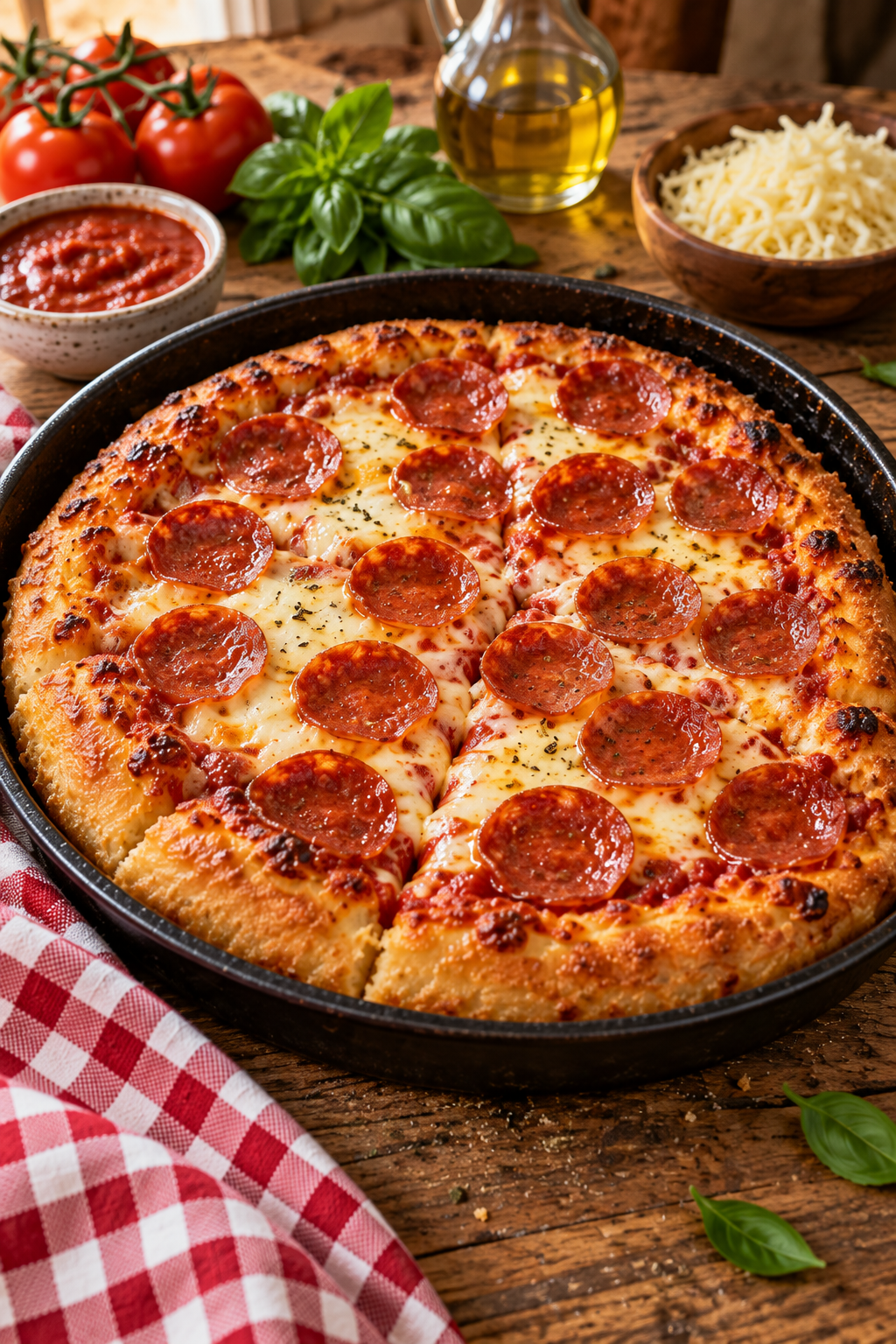
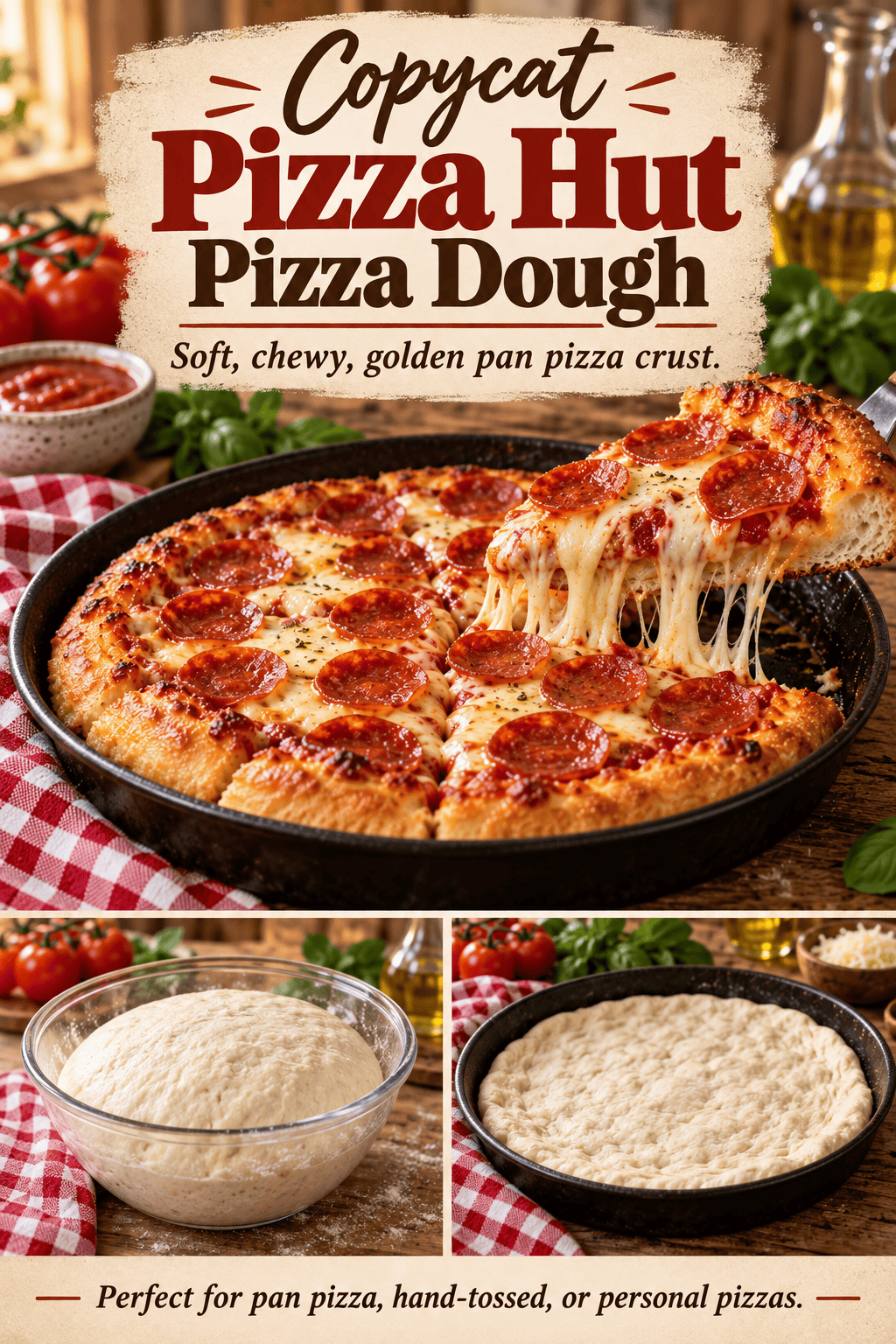
This copycat Pizza Hut pizza dough recipe makes a soft, chewy pizza crust with a tender center and a golden bottom. Shape it in a generously oiled pan for a thicker pan-style pizza, or stretch it into a wider round for a hand-tossed-style crust like the pizza shown in the video. Use the full batch for one large family pizza, divide it between two medium pizzas, or portion it for personal pizzas. The dough is also sturdy enough for a loaded pan pizza or a nostalgic Copycat Pizza Hut Priazzo.
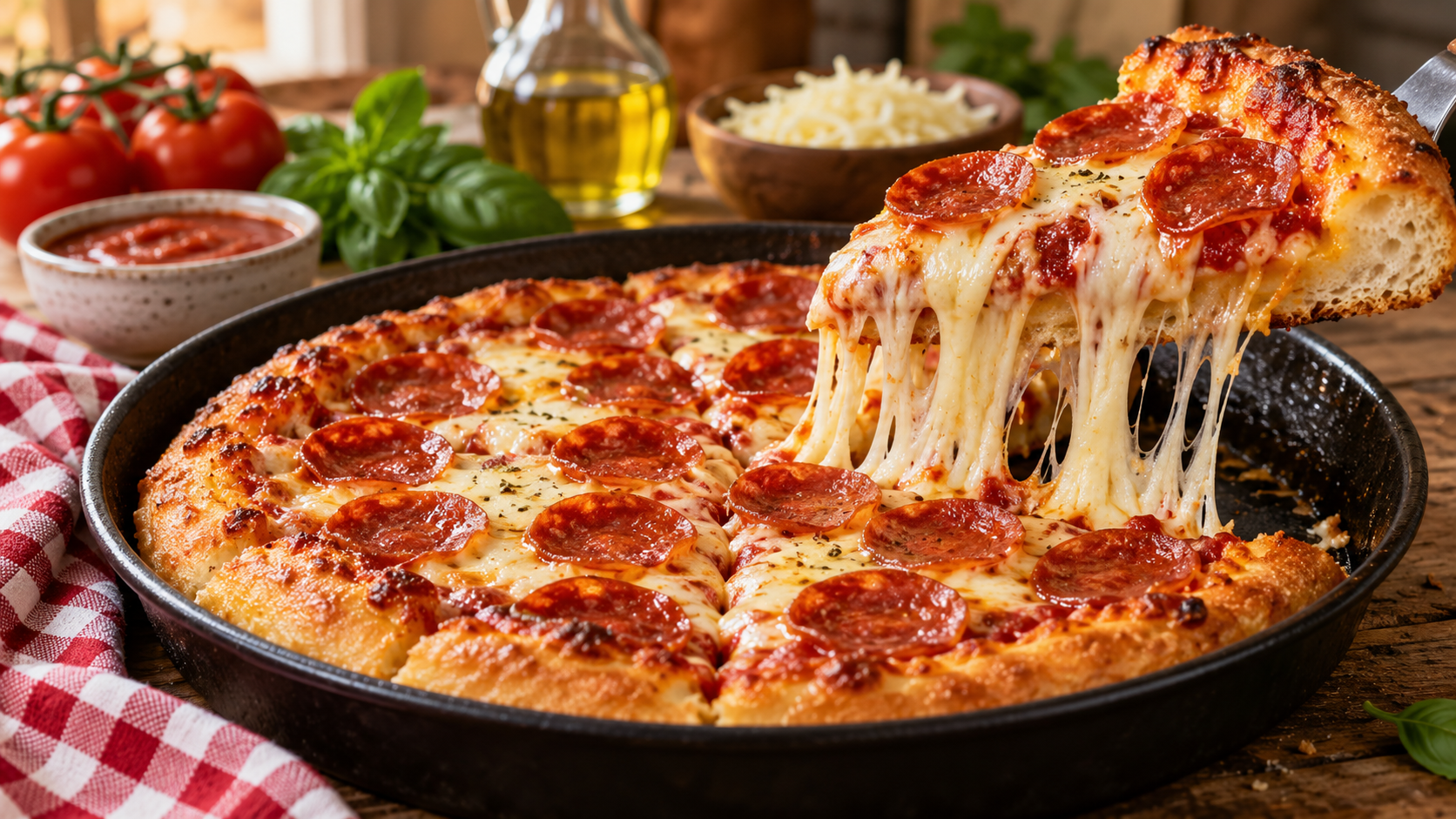
Copycat Pizza Hut Pizza Dough Recipe
If you are searching for a Pizza Hut dough recipe with a soft center and chewy bite, this is the version to make. Two rises give the dough time to develop flavor and structure. How you shape it determines the finished style: press it into a generously oiled pan for a fuller pan crust, or stretch it into a wider round for a thinner hand-tossed-style pizza.
This is a homemade copycat recipe, not Pizza Hut’s proprietary formula. Its appeal is straightforward: active yeast, bread flour, soft dough, and enough rising time. Oil beneath the crust adds the golden finish associated with pan pizza, while lighter oiling and a wider shape produce a hand-tossed-style result.
The recipe makes approximately 24 ounces of dough. That is enough for one large pizza, two medium pizzas, or several personal pizzas. It is dependable for Friday pizza night, movie night, birthday dinners, sleepovers, and evenings when delivery sounds expensive but homemade pizza sounds fun.
Watch How to Make Copycat Pizza Hut Pizza Dough
This short video follows the dough from basic pantry ingredients to a finished pepperoni pizza. You will see it mixed, risen, rolled, sauced, topped, and baked.
Pay particular attention to the dough’s texture as it rises and is shaped. It should feel soft and workable rather than dry or stiff. That softness helps produce a tender, chewy crust.
Why You’ll Love This Pizza Hut Dough Recipe
- Soft and chewy: Bread flour and two rises create a tender center with enough structure for generous toppings.
- Golden underneath: Oil in the pan encourages browning and a lightly crisp bottom.
- Made with pantry ingredients: No sourdough starter, specialty pizza oven, or unusual ingredients are required.
- Easy to shape: Make a thicker pan pizza, a wider hand-tossed-style pizza, or several personal pizzas.
- Easy to customize: Use the dough for cheese, pepperoni, supreme, meat lovers’, or vegetable pizza.
- Useful beyond basic pizza: The dough can also serve as the foundation for Copycat Pizza Hut Priazzo.
Copycat Pizza Hut Pizza Dough Ingredients
These quantities make approximately 24 ounces of pizza dough. You will find the same measurements in the printable recipe card.
- 1 tablespoon granulated sugar: Feeds the yeast and encourages the crust to brown.
- 1 1/2 teaspoons active dry yeast: Makes the dough rise and develops its airy interior.
- 1 1/3 cups warm water, 105°F to 115°F: Activates the yeast and hydrates the flour. The water should feel pleasantly warm, not hot. An instant-read digital thermometer makes it easy to check the temperature.
- 3 cups bread flour, plus a little more if needed: Provides the protein and structure needed for a chewy pan crust.
- 1 1/4 teaspoons salt: Seasons the dough and balances its slight sweetness.
- 2 tablespoons olive oil or vegetable oil, divided: Coats the bowl and baking pan, prevents sticking, and helps create a golden bottom.
- Pizza sauce, cheese, and desired toppings: These are optional additions for turning the prepared dough into pizza.
For the most recognizable copycat flavor, spread the shaped dough with Copycat Pizza Hut Pizza Sauce before adding cheese and toppings.
How to Make Copycat Pizza Hut Pizza Dough
1. Activate the Yeast
Combine the sugar, active dry yeast, and warm water in a large mixing bowl. Let the mixture stand for 5 to 10 minutes, or until it looks creamy and foamy.
The foam tells you that the yeast is active. If nothing happens, the yeast may be expired or the water may have been too hot or too cold. Begin again with fresh yeast rather than risking a flat crust.
2. Mix and Knead the Dough
Add the bread flour and salt. Stir until a shaggy dough forms and no dry pockets of flour remain.
Turn the dough onto a lightly floured surface and knead for 8 to 10 minutes. A bench scraper is useful for lifting and working with slightly tacky dough. Alternatively, knead it in a stand mixer with a dough hook on medium-low speed for 5 to 7 minutes. The finished dough should be smooth, elastic, and slightly tacky. If it is too wet to handle, add flour 1 tablespoon at a time. Avoid adding enough flour to make the dough stiff.
3. Let the Dough Rise
Lightly coat a clean bowl with some of the oil. Place the dough in the bowl and turn it once to coat the surface. Cover and let it rise in a warm, draft-free place for approximately 2 hours, or until visibly doubled.
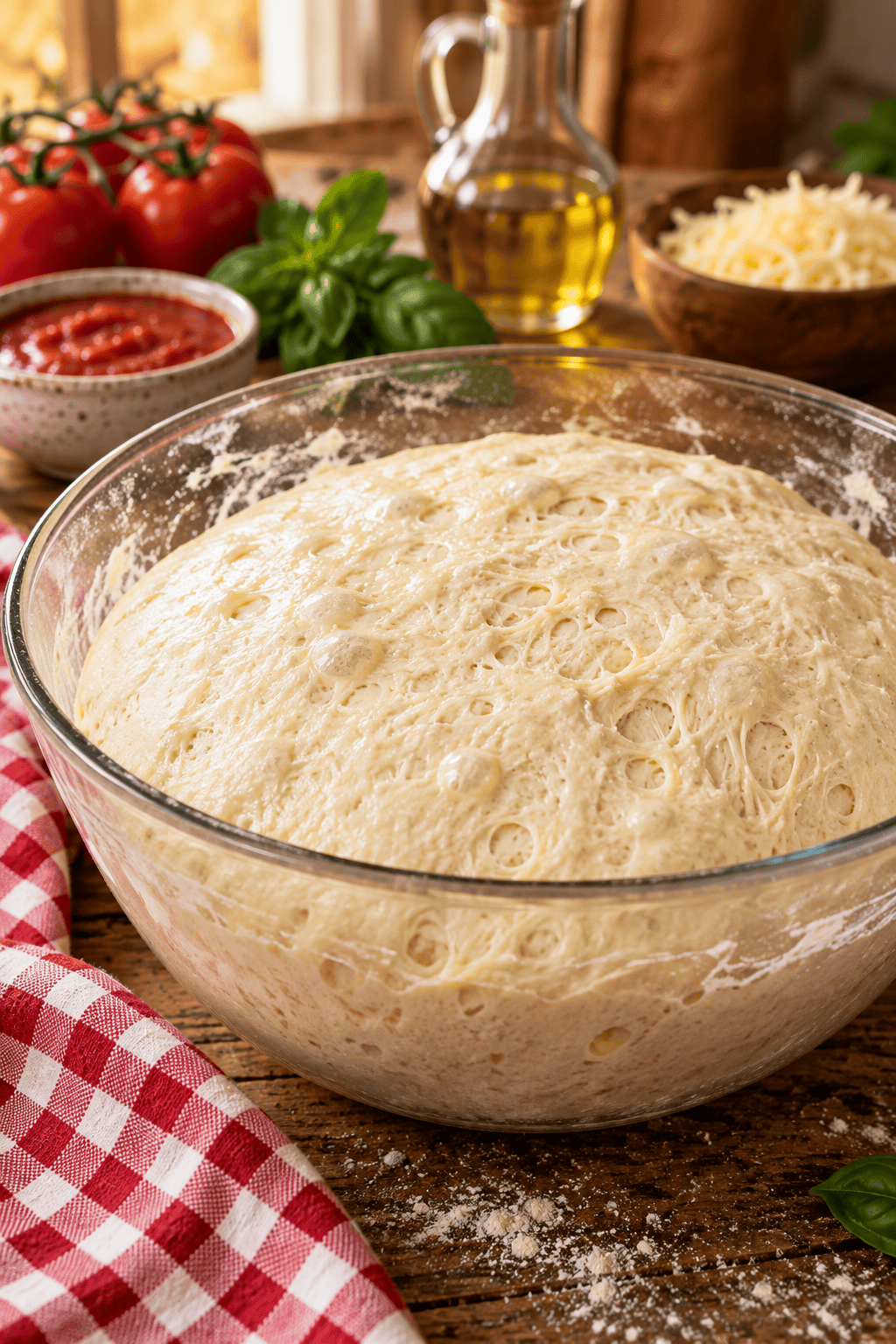
A complete first rise helps the Pizza Hut-style dough develop a soft interior and airy texture.
4. Press the Dough Into an Oiled Pan
Use the remaining oil to generously coat one large pizza pan, two medium round pans, or several personal pizza pans.
Gently deflate the risen dough. Leave it whole for one large pizza or divide it evenly for medium or personal pizzas. A digital kitchen scale helps portion the dough evenly when making multiple pizzas. Place the dough in the prepared pan and gently press it toward the edges. If it springs back, cover it and let it rest for 10 minutes before continuing. The rest gives the gluten time to relax.
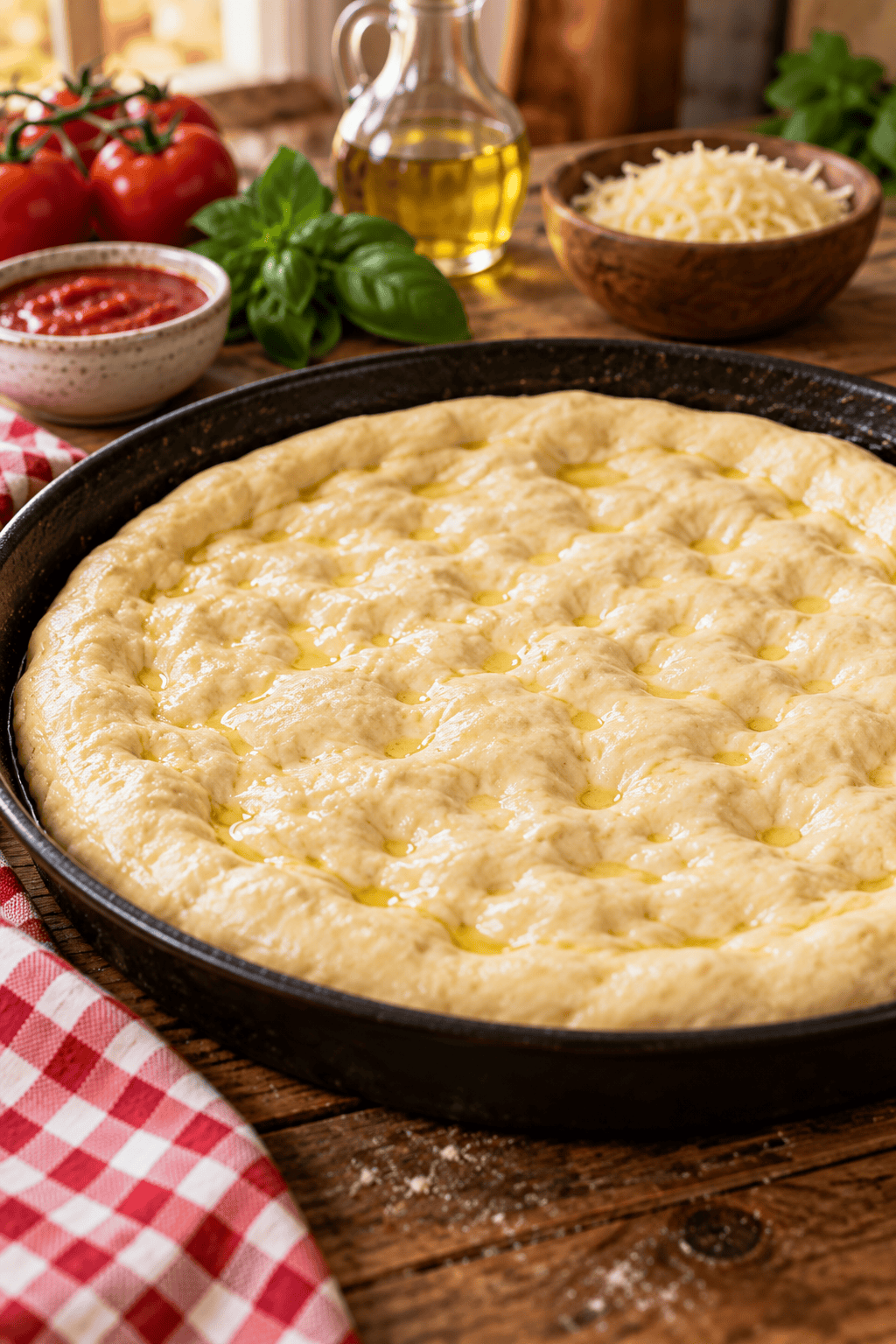
A generously oiled pan creates the golden bottom and edges associated with Pizza Hut-style pan pizza.
Hand-Tossed-Style Option
For a crust closer to the pizza shown in the video, lightly oil a wide pizza pan or heavy-duty rimmed baking sheet instead of using a deeper pool of oil. Stretch the dough by hand or use a rolling pin to form a broad round, leaving the outer edge slightly thicker than the center. If the dough pulls back, let it rest for 10 minutes before continuing.
Let the shaped dough rest for 15 to 20 minutes before adding the sauce and toppings. This produces a flatter, chewier pizza than the full second rise used for pan pizza.
5. Let the Shaped Dough Rise Again
Cover the dough and let it rise in the pan for approximately 1 hour, or until it looks soft and puffy. This second rise gives the crust its fuller edges and tender center.
During the final 30 minutes of rising, preheat the oven to 475°F.
6. Add Sauce, Cheese, and Toppings
Spread a moderate layer of pizza sauce over the dough, leaving a border around the edge. Add cheese and your desired toppings.
Avoid burying the dough beneath too much sauce or a large pile of wet vegetables. Heavy, watery toppings can prevent the center of a thicker crust from baking evenly.
7. Bake Until Golden
Bake for 10 to 12 minutes, or until the crust is puffed and golden, the cheese is melted, and the bottom is lightly crisp. A particularly thick or heavily topped pizza may require a few additional minutes.
Let the pizza rest for 5 minutes before slicing with a pizza cutter or pizza wheel. This gives the cheese and crust time to settle so the toppings remain on the pizza rather than sliding onto the plate.
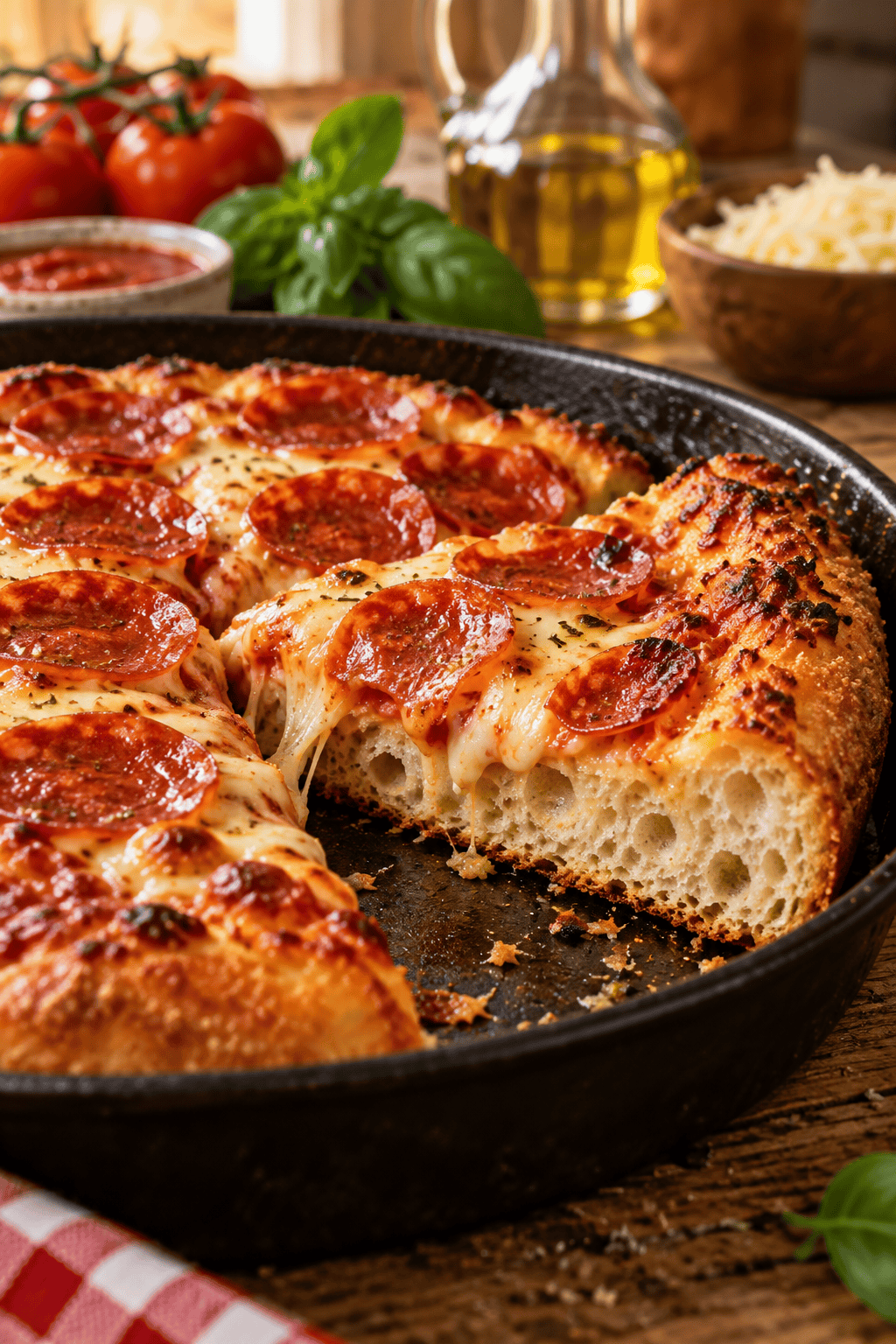
The finished Pizza Hut-style crust should have a golden pan-baked edge and a soft, chewy center.
What Makes This Pizza Hut-Style Dough Different?
This dough is softer and more substantial than a cracker-style thin crust, but it remains elastic enough to stretch into a hand-tossed-style round. Bread flour supplies the chew, while the shaping method and amount of oil determine whether the finished pizza is fuller and pan-baked or flatter and hand-tossed-style.
The oiled pan is one of the most important copycat details. Oil beneath the dough helps the bottom and sides brown while the inside stays tender. The second rise matters, too: it allows the shaped crust to become puffy before the weight of the toppings is added.
Is This Pizza Hut’s Top-Secret Dough Recipe?
No. This is a homemade copycat recipe created to reproduce the soft, chewy texture and golden pan-baked finish associated with Pizza Hut pan pizza. It is not Pizza Hut’s official or proprietary formula.
There is no mysterious ingredient doing all the work. The best results come from active yeast, bread flour, a soft dough, sufficient rising time, and the right amount of oil for the style of crust you want.
Can You Make Pizza Hut-Style Hand-Tossed Crust With This Dough?
Yes. The dough is flexible enough to make a flatter, hand-tossed-style variation as well as a fuller pan pizza.
Stretch or roll the dough into a wider round on a lightly oiled pizza pan. Leave a slightly thicker rim, rest the shaped dough for 15 to 20 minutes, and then add the sauce and toppings. It will be flatter and chewier than the full pan-pizza version but softer than a cracker-style thin crust.
Best Pan for Pizza Hut-Style Pizza Crust
- Dark metal pizza pan: Encourages stronger browning on the bottom and sides.
- Cast-iron skillet: Holds heat well and produces a crisp, deeply golden base.
- Deep-dish pizza pan: Leaves room for a thicker crust and generous toppings.
- Personal pizza pans: Work well for personal pan pizzas and individual topping choices.
Choose a pan with enough depth to contain the second rise. Coat the bottom with oil; this is not the moment for one nervous drop spread across the entire pan.
Expert Tips for the Best Pizza Hut Pizza Dough
- Check the yeast first. If the mixture does not foam, begin again with fresh yeast.
- Use warm—not hot—water. Water above the recommended temperature can damage or kill the yeast.
- Measure flour carefully. Spoon it into the measuring cup and level the top rather than packing it down.
- Keep the dough soft. Slightly tacky dough generally bakes into a softer crust than dry, stiff dough.
- Allow both rises. The second rise in the pan is essential for fuller, fluffier edges.
- Oil the pan generously. The oil prevents sticking and promotes a golden bottom.
- Rest dough that springs back. Ten minutes of rest makes tight dough much easier to shape.
- Preheat the oven completely. A properly heated oven helps the crust rise and set before the toppings weigh it down.
- Limit watery toppings. Drain or pat vegetables dry before adding them.
Troubleshooting Pizza Hut-Style Pizza Dough
Why didn’t my pizza dough rise?
The yeast may have been expired, the water may have been too hot, or the room may have been too cool. Confirm that the yeast becomes foamy before adding the flour, then give the covered dough a comfortably warm place to rise.
Why is my pizza dough too sticky?
A slightly tacky dough is normal. If it is genuinely wet and impossible to handle, add bread flour 1 tablespoon at a time. Stop as soon as the dough becomes manageable.
Why is my crust dense or tough?
Too much flour, inactive yeast, insufficient kneading, or shortened rising time can produce a dense crust. Keep the dough soft and make sure it visibly expands during both rises.
Why does the dough keep shrinking in the pan?
The gluten is tight from mixing or shaping. Cover the dough and leave it alone for 10 minutes, then continue pressing it toward the edges.
Why is the middle soggy?
Too much sauce, watery toppings, an overloaded pizza, or an oven that was not completely preheated can keep the center from baking. Use a moderate sauce layer and drain moist toppings well.
How do I make the bottom crispier?
Use a dark metal pan or cast-iron skillet, coat it generously with oil, and preheat the oven thoroughly.
Pizza Topping Ideas
- Classic pepperoni: Use Copycat Pizza Hut Pizza Sauce, mozzarella, and evenly spaced pepperoni.
- Supreme: Add cooked sausage, pepperoni, mushrooms, onions, green peppers, black olives, and mozzarella.
- Cheese: Keep it simple with pizza sauce and a generous layer of mozzarella.
- Meat lovers’: Combine pepperoni with cooked sausage, bacon, ham, or seasoned ground beef.
- Vegetable: Try well-drained mushrooms, onions, peppers, olives, spinach, or tomatoes.
How to Make Personal Pan Pizzas
Divide the dough into smaller portions and press each portion into a generously oiled individual pan. Let the shaped dough complete its second rise before setting out bowls of sauce, cheese, and toppings.
Personal pan pizzas work especially well for birthday dinners, sleepovers, movie night, or families where one person wants pepperoni, another wants plain cheese, and someone else considers pineapple a defining personality trait.
Perfect With a Complete Pizza Night
Serve the finished pizza with warm Copycat Pizza Hut Pizza Sauce for dipping, grated Parmesan, crushed red pepper, garlic butter, or a crisp green salad.
Add Easy Pull Apart Pizza Bread when you want a shareable appetizer, or use the heat-management tips in How to Grill Pizza when pizza night moves outdoors.
Make-Ahead, Storage, and Freezing Instructions
Make Ahead
Prepare the dough through the first rise, lightly oil it, and refrigerate it in a tightly covered container for up to 48 hours. Let the dough warm and relax before pressing it into the pan and completing the second rise.
Freeze the Dough
Freeze the dough after the first rise. Divide it into the portions you will need, lightly coat each portion with oil, wrap securely, and place it in a freezer-safe bag for up to 3 months.
Thaw frozen dough overnight in the refrigerator. Let it warm and relax at room temperature before shaping and completing its second rise.
Store and Reheat Leftover Pizza
Refrigerate leftover pizza in an airtight container or wrap it securely. Use it within 4 days.
For the best crust texture, reheat slices in a covered skillet, toaster oven, or 375°F conventional oven until the cheese is hot and the bottom is crisp. A microwave is faster but produces a softer crust.
Copycat Pizza Hut Pizza Dough FAQs
What is the best flour for Pizza Hut-style pizza dough?
Bread flour produces the chewiest, most structured result because it contains more protein than all-purpose flour. All-purpose flour can be substituted, but the crust may be slightly softer and less chewy.
Is this a Pizza Hut thin-crust recipe?
No. This dough can make a fuller pan crust or a flatter hand-tossed-style crust, but it will not reproduce Pizza Hut’s thin, crisp, cracker-like crust.
Can I use this dough for a hand-tossed-style pizza?
Yes. Stretch or roll it into a wider round on a lightly oiled pizza pan and let it rest for 15 to 20 minutes before topping. This produces a flatter, chewier crust than the full pan-pizza method.
Can I make personal pan pizzas with this dough?
Yes. Divide the dough into smaller portions, press each portion into an oiled individual pan, let it rise, and add the desired toppings.
Can I use this dough for Pizza Hut Priazzo?
Yes. The dough is sturdy enough to use in this Copycat Pizza Hut Priazzo Recipe.
Can I refrigerate the dough overnight?
Yes. Refrigerate it after the first rise. Let it warm and relax before pressing it into the pan and completing the second rise.
Can I freeze copycat Pizza Hut dough?
Yes. Freeze the dough after its first rise for up to 3 months. Thaw it overnight in the refrigerator and bring it closer to room temperature before shaping.
What sauce works best with Pizza Hut copycat dough?
Use Copycat Pizza Hut Pizza Sauce for a smooth, slightly sweet, herb-forward sauce that complements the golden pan crust.
Final Thoughts
This copycat Pizza Hut pizza dough brings the best parts of old-fashioned pizza night home: a soft center, chewy bite, fuller edges, and a golden pan-baked bottom.
Keep it simple with cheese and pepperoni, divide it into personal pan pizzas, pile it high with supreme toppings, or use it to bring the long-lost Priazzo back to the table.
Please rate the recipe and leave a comment telling me which toppings belong on your perfect pan pizza. Save it to your Pinterest pizza board so you can find it the next time a Friday-night craving arrives.
Related Pizza Night Recipes
Save these recipes before you reach the printable card and build a complete homemade Pizza Hut-style dinner.
- Copycat Pizza Hut Pizza Sauce — the smooth, sweet-tangy sauce that completes this crust.
- Copycat Pizza Hut Priazzo — a deep-dish throwback for anyone who remembers the original.
- Easy Pull Apart Pizza Bread — a cheesy appetizer for family pizza night.
- Easy French Bread Pizza — the faster option for nights when there is no time for dough to rise.
- Pizza Night Recipes — more homemade pizza, sauces, appetizers, and family dinner ideas.
- Copycat Recipes — more restaurant favorites recreated for the family table.
- Best Easy Recipes — dependable dinners, desserts, appetizers, and family favorites.
Copycat Pizza Hut Pizza Dough
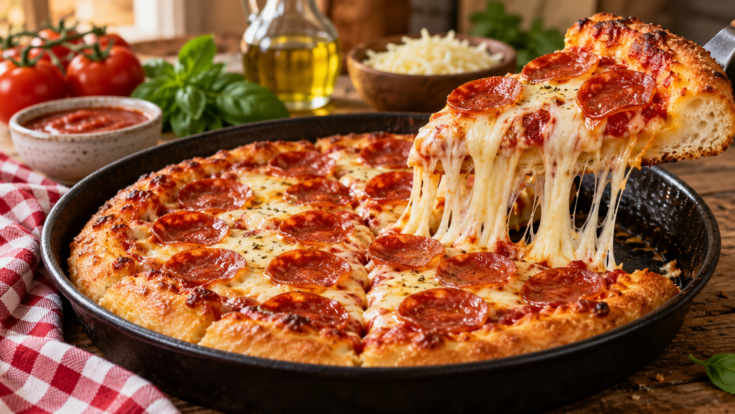
This Copycat Pizza Hut Pizza Dough makes a soft, chewy pizza crust with a tender center and golden bottom. Press it into an oiled pan for a fuller pan-style pizza or stretch it into a wider round for a hand-tossed-style crust.
Ingredients
- 1 tablespoon granulated sugar
- 1 1/2 teaspoons active dry yeast
- 1 1/3 cups warm water, 105°F to 115°F
- 3 cups bread flour, plus a small amount for kneading if needed
- 1 1/4 teaspoons salt
- 2 tablespoons olive oil or vegetable oil, divided, for the bowl and pan
- Pizza sauce, cheese, and desired toppings, for baking
Instructions
1. Combine the sugar, active dry yeast, and warm water in a large mixing bowl. Let the mixture stand for 5 to 10 minutes, or until it looks creamy and foamy. If the yeast does not foam, begin again with fresh yeast.
2. Add the bread flour and salt. Stir until a shaggy dough forms and no dry pockets of flour remain.
3. Turn the dough onto a lightly floured surface and knead for 8 to 10 minutes, or knead with a dough hook on medium-low speed for 5 to 7 minutes. The finished dough should be smooth, elastic, and slightly tacky. Add additional flour only 1 tablespoon at a time if the dough is too wet to handle.
4. Lightly coat a clean bowl with a small amount of the oil. Place the dough in the bowl and turn it once to coat the surface. Cover and let rise in a warm, draft-free place for about 2 hours, or until visibly doubled in size.
5. Use the remaining oil to generously coat one large pizza pan, two medium round pans, or several personal pizza pans.
6. Gently deflate the risen dough. Leave it whole for one large pizza or divide it evenly for medium or personal pizzas. Place the dough in the prepared pan and gently press it toward the edges. If the dough springs back, cover it and let it rest for 10 minutes before continuing.
7. Cover the shaped dough and let it rise in the pan for approximately 1 hour, or until it looks soft and puffy.
8. During the final 30 minutes of rising, preheat the oven to 475°F.
9. Spread the dough with a moderate layer of pizza sauce, leaving a border around the edge. Add cheese and the desired toppings. Avoid overloading the pizza with wet or heavy toppings.
10. Bake for 10 to 12 minutes, or until the crust is puffed and golden, the cheese is melted, and the bottom is lightly crisp. A particularly thick or heavily topped pizza may require a few additional minutes.
11. Let the pizza rest for 5 minutes before slicing and serving.
Notes
Equipment
- Large mixing bowl
- Dry and liquid measuring cups
- Measuring spoons
- Instant-read thermometer for checking the water temperature
- Wooden spoon or sturdy spatula
- Stand mixer with dough hook, optional
- Dough scraper, optional
- One large pizza pan, two medium round pans, or several personal pizza pans
- Clean kitchen towel or plastic wrap
Expert Tips
- Keep the water between 105°F and 115°F. Water that is too hot can kill the yeast, while cooler water will slow the rise.
- Bread flour produces the chewiest, most structured crust. All-purpose flour can be substituted, but the finished crust may be slightly softer.
- Measure the flour by spooning it into the measuring cup and leveling the top. Scooping packed flour directly from the container can make the dough dense.
- The dough should feel soft and slightly tacky. Avoid adding enough flour to make it stiff or dry.
- Allow both rises. The second rise in the pan helps produce the fluffy Pizza Hut-style texture.
- Oil the pan generously to encourage a golden, lightly crisp bottom and edges.
- Drain or pat dry mushrooms, tomatoes, spinach, and other moist toppings before adding them.
Troubleshooting
- Yeast did not foam: The yeast may be expired or the water may have been too hot or cold. Begin again with fresh yeast and properly warmed water.
- Dough is too sticky: Add bread flour 1 tablespoon at a time. Stop as soon as the dough becomes manageable; it should remain slightly tacky.
- Dough is dense: Too much flour, inactive yeast, insufficient kneading, or shortened rising time can prevent a fluffy texture.
- Dough keeps shrinking: Cover it and let it rest for 10 minutes. This allows the gluten to relax before you continue shaping.
- Center is soggy: Use less sauce, drain moist toppings, avoid overloading the pizza, and make sure the oven is completely preheated.
- Bottom is not crisp: Use a dark metal pan or cast-iron skillet and coat the bottom generously with oil.
Variations
- Hand-tossed-style pizza: Lightly oil a wide pizza pan or baking sheet. Stretch or roll the dough into a broad round, leaving the outer edge slightly thicker than the center. Let it rest for 15 to 20 minutes before adding the sauce, cheese, and toppings. This produces a flatter, chewier crust than the full pan-pizza method.
- Personal pan pizzas: Divide the dough into smaller portions and press each portion into an oiled individual pan.
- Cheese pizza: Top the dough with pizza sauce and shredded mozzarella.
- Pepperoni pan pizza: Add mozzarella and evenly spaced pepperoni slices.
- Supreme pizza: Use cooked sausage, pepperoni, mushrooms, onions, green peppers, black olives, and mozzarella.
- Meat lovers’ pizza: Combine pepperoni with cooked sausage, bacon, ham, or seasoned ground beef.
- Vegetable pizza: Add well-drained mushrooms, onions, peppers, olives, spinach, or tomatoes.
Serving Suggestions
Serve the finished pizza with warm Copycat Pizza Hut Pizza Sauce for dipping. Add grated Parmesan, crushed red pepper, garlic butter, a crisp green salad, or a simple vegetable tray to complete pizza night.
Storage
After the first rise, refrigerate the unbaked dough in a lightly oiled, tightly covered container. Use it within 48 hours. Let refrigerated dough warm and relax before shaping it.
Refrigerate leftover baked pizza in an airtight container or wrap it securely. Use within 4 days.
Freezing
Freeze the dough after the first rise. Divide it into the portions you will need, lightly coat each portion with oil, and wrap securely before placing it in a freezer-safe bag. Freeze for up to 3 months.
Thaw the dough overnight in the refrigerator. Let it warm and relax at room temperature before pressing it into the pan and completing the second rise.
Reheating
Reheat baked pizza in a covered skillet over medium-low heat, in a toaster oven, or in a 375°F conventional oven until the cheese is hot and the bottom is crisp. Microwaving works quickly but produces a softer crust.
Make Ahead
Prepare the dough through the first rise, cover it securely, and refrigerate it overnight. When ready to bake, let the dough warm until it is relaxed enough to shape. Press it into the oiled pan and allow it to complete its second rise before topping and baking.
More Recipes to Try
- Copycat Pizza Hut Pizza Sauce
- Copycat Pizza Hut Priazzo
- Easy Pull Apart Pizza Bread
- Easy French Bread Pizza
- How to Grill Pizza
- Pizza Night Recipes
- Copycat Recipes
Nutrition Disclaimer
Nutrition information is an estimate based on the pizza dough divided into 16 portions. Pizza sauce, cheese, meat, vegetables, dipping sauces, and other toppings are not included. Actual values will vary according to the brands, substitutions, portion sizes, and toppings used.
Nutrition Information:
Yield:
16Serving Size:
1/16 of the prepared doughAmount Per Serving: Calories: 190Total Fat: 3gSaturated Fat: 0gUnsaturated Fat: 2gSodium: 173mgCarbohydrates: 36gFiber: 1gSugar: 1gProtein: 6g
The Nutritional Information may not be accurate. This website provides approximate nutrition information for convenience and as a courtesy only. Nutrition data is gathered primarily from the USDA Food Composition Database, whenever available, or otherwise other online calculators.
Next Recipe to Try
If this copycat Pizza Hut pizza dough made your kitchen smell like Friday night, make the sauce next. The dough supplies the soft, chewy pan crust, while the sauce adds the sweet, tangy, herby flavor that completes the copycat meal.
Make Copycat Pizza Hut Pizza Sauce next, then explore the Pizza Night collection for more homemade pizza recipes and cheesy appetizers.
This recipe was originally published June 18, 2019, and updated July 23, 2026, with a new step-by-step video, complete instructions, troubleshooting help, storage guidance, and additional pizza-night ideas.