
Jewish Charms to Remove Negative Energy
Jewish charms to remove negative energy are symbolic objects and spiritual practices, such as amulets, the mezuzah, Shabbat candles, the hamsa, and the tzedakah box, that are associated with protection, blessing, faith, and positive intention.
This guide explains what each Jewish charm means, how it is traditionally used, and why these symbols are often connected with cleansing negative energy, protecting the home, and inviting more peace into everyday life.
Jewish Charms to Remove Negative Energy
When people search for a negative energy cleansing amulet, they are often looking for something tangible: a charm, symbol, ritual object, or household practice that represents protection and peace. In Jewish tradition, these objects are not all used in exactly the same way, and some are better understood as sacred commandments or meaningful rituals rather than simple good-luck charms.
That distinction matters. A hamsa pendant may be worn as an amulet. A decorative charm may be hung in a room as a symbol of protection. A mezuzah, however, holds a deeper religious role because it contains sacred Torah verses and is affixed to the doorpost as a mitzvah. Shabbat candles are not worn or hung, but the ritual of lighting them invites peace, rest, gratitude, and spiritual focus into the home.
In other words, this is not about tossing a magic trinket into the junk drawer and hoping the bad vibes pack a suitcase. These Jewish charms and traditions work through meaning, memory, prayer, belief, and intention. They help turn attention toward light, blessing, generosity, and spiritual grounding.
If you are exploring this topic as part of a larger home or mindset reset, you may also like 5 Ways to Get Rid of Negative Energy, which shares practical everyday ideas for clearing emotional clutter and making room for more peace.
Readers Also Read
If this topic caught your attention, these related reads pair naturally with it:
Why These Jewish Charms Matter
Jewish tradition has long held space for both the practical and the spiritual. Suffering, uncertainty, fear, and hardship are part of the human experience, but so are resilience, free will, faith, and the choice to do good.
That is where these charms and practices become meaningful. They are visible reminders to choose light over darkness, kindness over bitterness, and blessing over fear. They can mark a doorway, brighten a Friday evening table, rest near the heart as jewelry, or collect coins for someone in need.
For families, homes, and individuals, these objects often become part of a rhythm: touch the mezuzah when entering the house, light candles before Shabbat, give tzedakah when life feels heavy, or wear a hamsa as a reminder that protection and positivity can travel with you.
What Is a Negative Energy Cleansing Amulet?
A negative energy cleansing amulet is generally understood as a small object worn, carried, or displayed with the intention of protection, blessing, or warding off harmful influences. In Jewish tradition, amulets may include symbols such as the hamsa, the Star of David, protective inscriptions, or other meaningful designs.
Some amulets are worn as pendants or rings. Others are displayed in a home. The point is not only the object itself, but the belief, intention, and symbolism connected to it.
It is also helpful to know that not every sacred Jewish object is technically an amulet. For example, a mezuzah has protective associations in many homes, but it is also a commandment and a sacred religious object. That gives it a different meaning than a decorative charm or pendant.
Amulets in Jewish Tradition
Amulets are among the most commonly recognized Jewish charms connected with protection and negative energy. Traditionally, they may be made from paper, parchment, metal, or jewelry and may include biblical verses, Hebrew words, protective symbols, or meaningful designs.
People may wear amulets as necklaces or rings, place them in a room, or keep them close as a reminder of faith and spiritual protection. In many families, the comfort comes from the meaning behind the charm: a sense that one is not moving through life’s hard places completely alone.
Common Jewish Amulet Symbols
- Hamsa: A hand-shaped symbol often associated with protection and warding off the evil eye.
- Star of David: A symbol of Jewish identity and spiritual connection.
- Protective inscriptions: Words, blessings, or biblical phrases chosen for spiritual meaning.
- Coins or discs: Small charms sometimes used as wearable or decorative reminders of blessing.
The beauty of an amulet is that it gives something invisible a physical form. Fear, anxiety, hope, prayer, protection, and intention all become easier to hold when they are tied to an object with meaning.
The Mezuzah: Protection at the Doorway
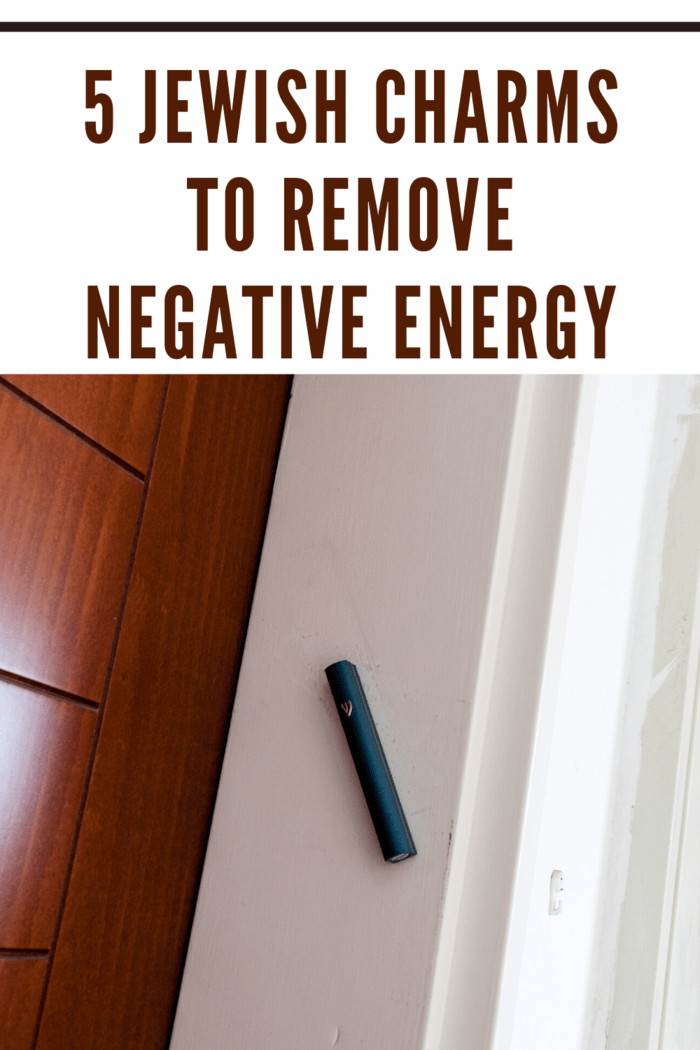
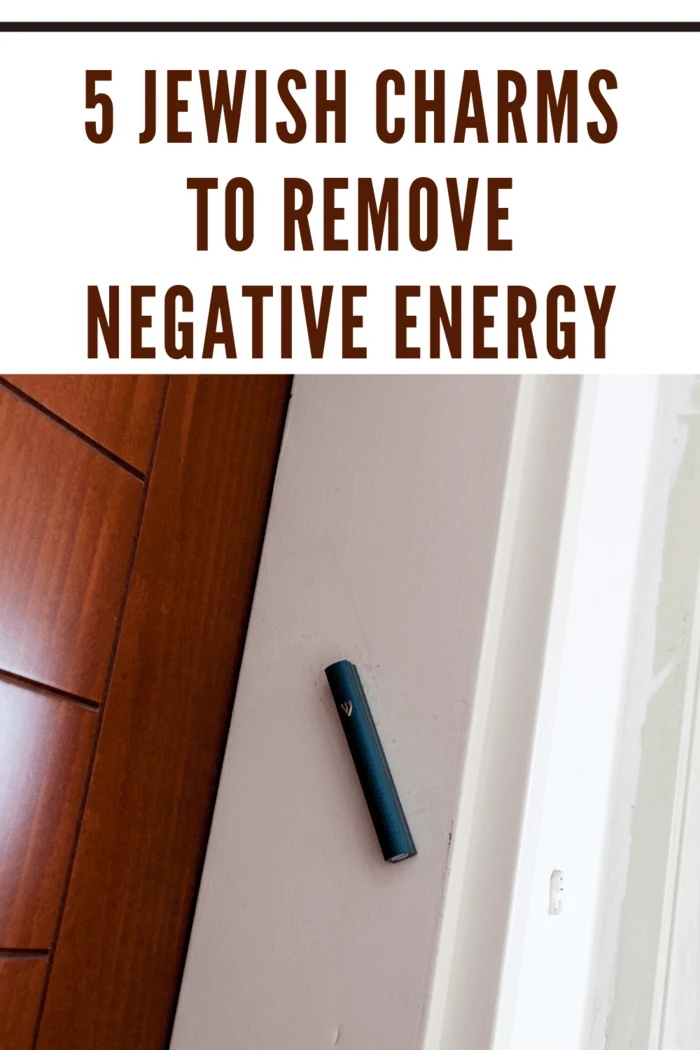
A mezuzah is one of the most recognizable Jewish objects associated with home protection and blessing. It is a small decorative case attached to the doorpost of a Jewish home. Inside the case is a parchment called a klaf, which contains Torah verses, including passages from Deuteronomy.
The mezuzah is traditionally placed on the right side of the doorway as you enter. Many people touch it gently when coming in or going out, using that small moment as a reminder of faith, identity, and God’s commandments.
Although people may casually describe the mezuzah as protective, it is more than a charm. It is a sacred object connected to Jewish practice. Its presence at the threshold makes it a powerful symbol: this home is marked by faith, memory, blessing, and spiritual intention.
Shabbat Candles: Bringing Light Into the Home
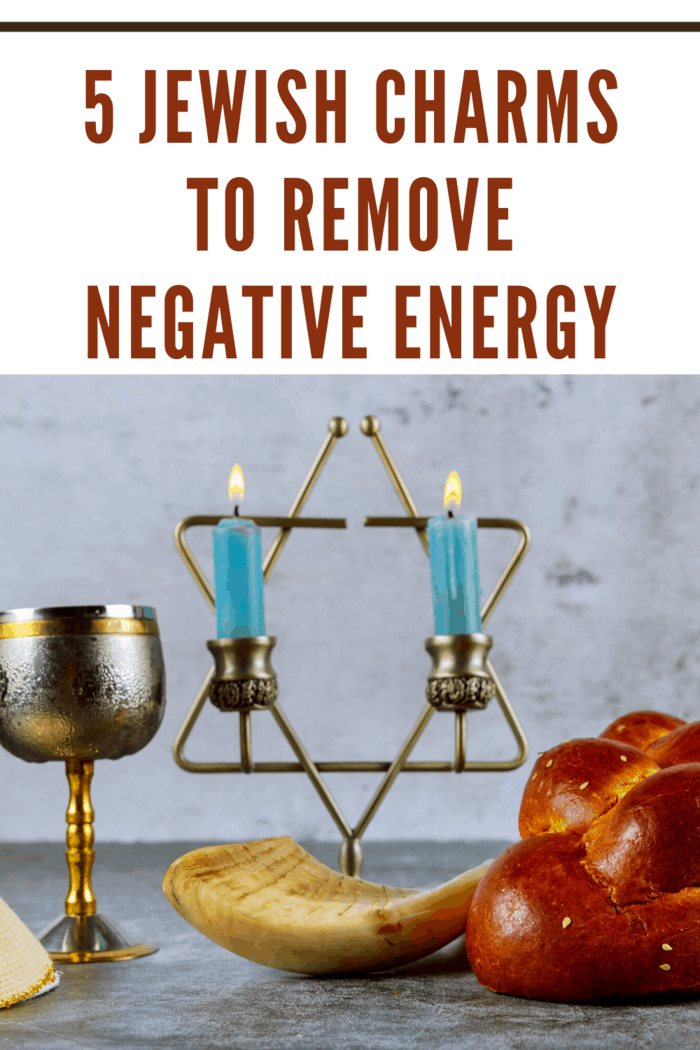
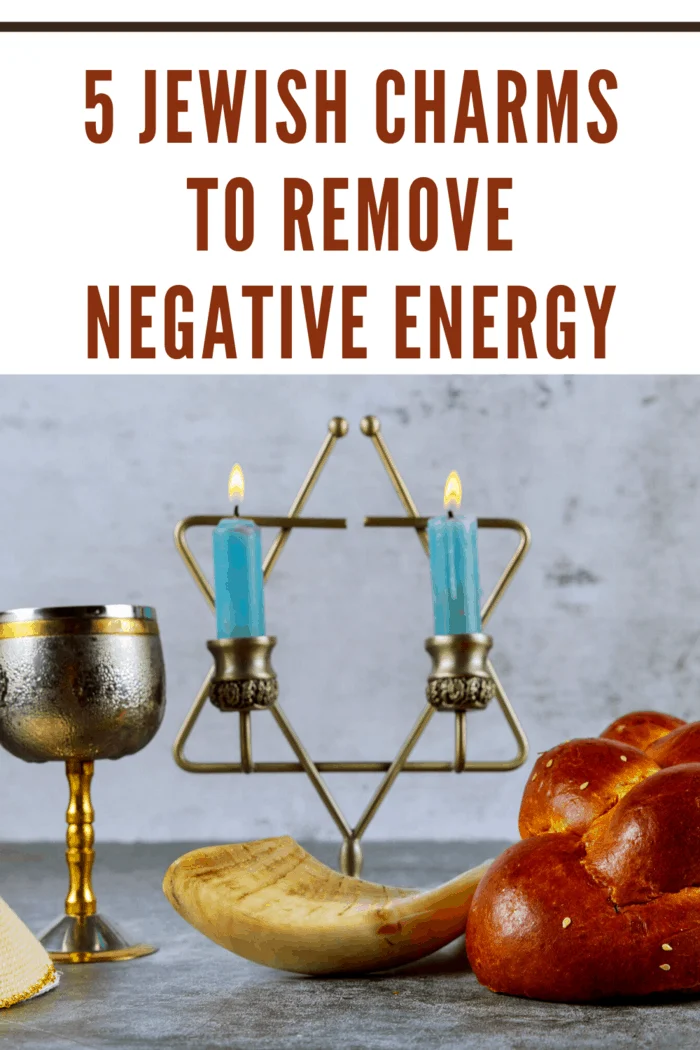
Shabbat candles are lit on Friday evening before sunset to welcome the Sabbath. While candles are not amulets in the jewelry-and-charms sense, they are deeply connected with light, peace, blessing, and the intentional turning away from the noise of the week.
There is something quietly powerful about lighting candles at the edge of the week. The world may still be noisy. The dishes may still be giving you a look from the sink. Someone may still be asking where their shoes are. But for a moment, light becomes the focus.
In Jewish homes, Shabbat candle lighting helps create a sacred pause. It invites peace into the household and marks a shift from ordinary time into holy time. Symbolically, the candles push back darkness and welcome rest, gratitude, and connection.
Why Shabbat Candles Feel Protective
Shabbat candles can feel protective because they change the atmosphere of the home. They encourage stillness. They gather the family. They create a rhythm of blessing and remembrance. Their power is not in pretending life is perfect, but in creating a weekly moment where light gets the final word.
The Hamsa: A Jewish Charm for Protection
The hamsa is one of the most familiar symbols people associate with a Jewish charm for protection. It is usually shaped like a hand and may include an eye in the center. Many people connect the hamsa with protection from the evil eye and negative energy.
The hamsa has a long multicultural history and appears in several traditions, but it has also become meaningful in Jewish homes, jewelry, and decor. It may be worn as a pendant, hung near an entryway, placed in a room, or given as a gift of blessing.
As a symbol, the hamsa is easy to understand: a hand protects, shields, blesses, and steadies. When displayed or worn with intention, it becomes a reminder to move through the world with faith instead of fear.
Is the Hamsa a Negative Energy Cleansing Amulet?
Yes, the hamsa is often used as a negative energy cleansing amulet or protective charm. In Jewish tradition and Jewish-inspired decor, it is commonly connected with warding off the evil eye, inviting blessing, and creating a sense of spiritual protection.
For Pinterest readers, the hamsa also has strong visual appeal. It works beautifully in home blessing boards, entryway inspiration pins, spiritual protection guides, and meaningful gift roundups.
The Tzedakah Box: Turning Heavy Energy Into Good Deeds
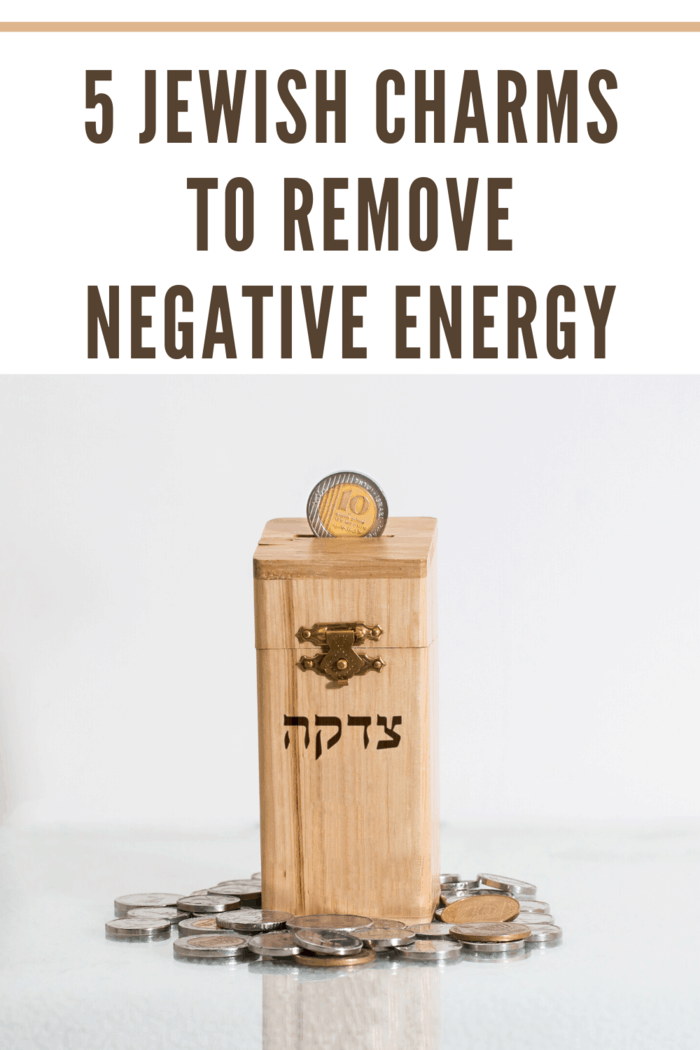
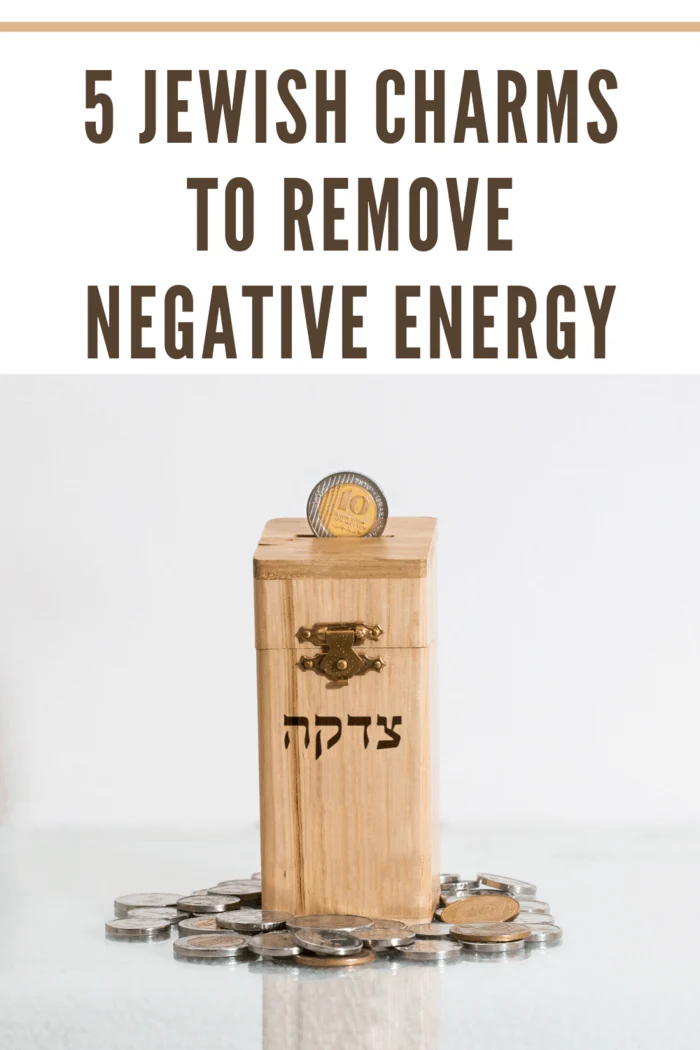
A tzedakah box, sometimes called a pushke in Yiddish, is used to collect money for charity. Tzedakah is often translated as charity, but the meaning is deeper than simply giving what is extra. It is connected to justice, righteousness, and responsibility toward others.
This is one of the most beautiful parts of the topic because it shifts the conversation from “How do I get rid of negative energy?” to “How do I turn that energy into something good?”
When life feels heavy, giving can become a spiritual reset. A coin in a tzedakah box is small, but the intention behind it is not. It says: I can still do good. I can still help. I can still choose generosity. And honestly, that is a powerful way to give negativity its walking papers.
Perfect With a Peaceful Home Reset
This post pairs naturally with a gentle home or mindset reset. After learning about Jewish charms and symbols of protection, you may want to open the windows, clear one small space, light a candle, write down a gratitude note, or choose one act of kindness for the day.
For more real-life wellness ideas, visit the Health & Wellness Tips for Mind, Body & Family Living hub. It is a natural category home for this article because it connects stress relief, emotional balance, spiritual wellness, and simple everyday practices.
How to Use Jewish Charms Respectfully
If you are not Jewish but are curious about Jewish charms, symbols, and traditions, approach them with respect. These objects are not just pretty decor or mystical accessories. Many carry deep religious, cultural, and historical meaning.
Here are a few gentle guidelines:
- Learn the meaning first. Understand what the object represents before wearing or displaying it.
- Do not flatten sacred items into trends. A mezuzah, for example, is not the same thing as a decorative charm.
- Buy thoughtfully. Choose reputable Judaica sources and avoid items that feel gimmicky or disrespectful.
- Use the language carefully. Words like protection, blessing, intention, and remembrance are often more accurate than “magic.”
- Honor the tradition. If an object has ritual use, learn how it is traditionally handled or displayed.
Troubleshooting: What If a Charm Does Not Make You Feel Better?
If you are drawn to a charm because you feel anxious, unsettled, or emotionally heavy, remember that the object is not meant to replace support, reflection, prayer, therapy, community, or practical action.
A charm may comfort you. A ritual may ground you. A symbol may remind you of protection. But if the stress keeps piling up like laundry with ambition, you may also need rest, help, boundaries, medical care, counseling, or a real-life conversation with someone you trust.
Spiritual objects can be meaningful companions, but they should not become pressure to pretend everything is fine. The goal is not to decorate over distress. The goal is to move toward light, peace, and support.
Creative Ways to Reflect on These Symbols
Whether you are learning for cultural interest, spiritual curiosity, family tradition, or home blessing inspiration, these ideas can help you connect with the meaning behind the objects:
- Create a small entryway space focused on peace, gratitude, and welcome.
- Use a hamsa image in a journal page about protection and hope.
- Read about the mezuzah and its role before choosing one for a Jewish home.
- Light candles during a quiet evening routine as a reminder to pause and breathe.
- Keep a giving jar or donation box to turn concern into positive action.
- Talk with children about how symbols help families remember what matters.
For readers who want to turn positive intention into action, 4 Reasons Why You Should Organize Regular Donation Drives is a helpful next read. It connects beautifully with the spirit of tzedakah and the idea that kindness can change the emotional weather in a home or community.
FAQs About Jewish Charms to Remove Negative Energy
What are Jewish charms to remove negative energy?
Jewish charms to remove negative energy are symbolic objects or practices associated with protection, blessing, and spiritual grounding. Common examples include amulets, the hamsa, mezuzah, Shabbat candles, and the tzedakah box.
What is a negative energy cleansing amulet?
A negative energy cleansing amulet is an object worn, carried, or displayed with the intention of protection or clearing harmful energy. In Jewish tradition, a hamsa or inscribed amulet may be used this way, depending on the person, family, or custom.
Is a mezuzah considered an amulet?
A mezuzah is often associated with protection and blessing, but it is more accurately understood as a sacred Jewish object connected to a commandment. It contains Torah verses and is placed on the doorpost of a Jewish home.
What does the hamsa protect against?
The hamsa is commonly associated with protection from the evil eye and negative energy. It is often worn as jewelry, displayed in homes, or given as a meaningful gift of blessing and protection.
How do Shabbat candles remove negative energy?
Shabbat candles are not charms in the usual sense, but the ritual of lighting them brings peace, light, rest, and spiritual focus into the home. Symbolically, the candles push back darkness and help create a calmer atmosphere.
What is the meaning of a tzedakah box?
A tzedakah box is used to collect money for charity. It represents justice, generosity, and care for others. Spiritually, it can help transform heavy or negative feelings into positive action.
Can anyone wear a hamsa?
Many people wear hamsa jewelry, but it is best to understand and respect its cultural and spiritual meaning first. For Jewish readers, it may be tied to protection, blessing, and tradition. For others, it should be worn thoughtfully rather than treated as a trend.
Where should I place a Jewish protection charm in my home?
Placement depends on the object. A mezuzah has specific traditional placement on the doorpost. A hamsa may be displayed near an entryway or in a meaningful room. A tzedakah box is often kept somewhere accessible so giving becomes a regular practice.
Final Thoughts on Jewish Charms and Negative Energy
Jewish charms used to remove negative energy are meaningful because they bring together faith, memory, symbolism, ritual, and action. An amulet can remind someone of protection. A mezuzah can mark the doorway with sacred words. Shabbat candles can bring light into the week. A hamsa can represent blessing and spiritual defense. A tzedakah box can turn concern into generosity.
Each one points toward the same hopeful idea: darkness does not get the last word.
Whether you are learning about these traditions for spiritual reasons, cultural curiosity, family history, or home inspiration, let the heart of the practice stay visible. Protection is not only about keeping negativity out. It is also about choosing what you invite in: light, kindness, blessing, gratitude, and peace.