
5 Celebrities Who Have Spoken About Anorexia and Eating Disorders
Demi Lovato, Billy Bob Thornton, Alanis Morissette, Dennis Quaid, and Lady Gaga have each spoken publicly about anorexia, bulimia, or other eating-disorder struggles.
This sourced list is for readers searching for celebrities with eating disorders, celebrities with anorexia, and famous people with eating disorders. It focuses on what these five public figures have said about their own experiences—not speculation based on photographs, weight, or appearance.
Their stories are different. Some have specifically discussed anorexia, some have spoken about more than one eating disorder, and some have described an eating disorder without publicly identifying it as anorexia nervosa. That distinction matters.
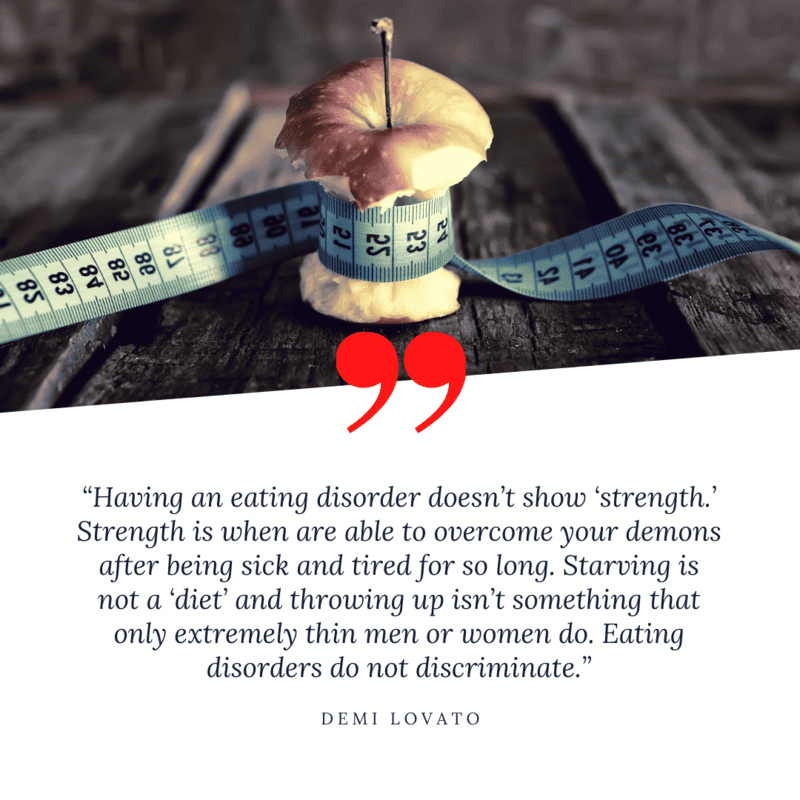
5 Celebrities With Eating Disorders Who Spoke Publicly
For readers looking for a quick answer, these are the five celebrities covered here:
- Demi Lovato has publicly discussed anorexia, bulimia, treatment, and long-term recovery.
- Billy Bob Thornton has described developing an eating disorder amid obsessive thoughts about food and extreme physical changes for acting roles.
- Alanis Morissette has spoken openly about eating-disorder recovery and the complicated question of building a healthier relationship with food.
- Dennis Quaid has described an eating disorder and body dysmorphia following an extreme physical transformation for a movie role.
- Lady Gaga has publicly discussed experiencing anorexia and bulimia from her teenage years.
A note about language: People sometimes search for phrases such as “anorexic celebrities.” This article uses celebrities with anorexia or celebrities with eating disorders instead. A health condition is something a person experiences; it is not the whole of who that person is.
Medical note: This article summarizes public disclosures and reputable reporting. It does not diagnose anyone by appearance. Eating disorders are serious health conditions, and a person does not have to look a certain way to have one. If this topic feels personally difficult, reliable support resources are included below.
Readers Also Read
Before comparing celebrity stories, it helps to have the medical basics. The National Institute of Mental Health eating-disorders overview explains the conditions and treatment options, while ANAD’s support resources provide peer support and help finding care.
What Anorexia Nervosa Is—and What It Is Not
Anorexia nervosa is a serious eating disorder. More broadly, eating disorders are health conditions that can affect a person’s eating behaviors, thoughts, emotions, and physical health.
The National Institute of Mental Health describes eating disorders as serious and potentially life-threatening, while also emphasizing that they can be treated.
They also do not belong to one gender, age group, body type, or background. Current statistics from the National Association of Anorexia Nervosa and Associated Disorders estimate that 9% of the U.S. population—about 28.8 million Americans—will experience an eating disorder during their lifetime.
Most important for a celebrity article: you cannot tell whether someone has an eating disorder simply by looking at them. That is why this list includes only people whose experiences have been publicly discussed and sourced.
Demi Lovato: Anorexia, Bulimia, and Recovery in Public
Demi Lovato is one of the clearest matches for readers searching for both celebrities with anorexia and the broader topic of celebrities with eating disorders.
A 2026 People roundup about celebrities who have discussed eating disorders notes Lovato’s history with anorexia and bulimia and treatment beginning as a young adult.
What makes Lovato’s story particularly valuable is that it has never been presented as one neat, finished chapter. In 2026, Lovato continued speaking publicly about recovery and about how cooking helped change a once-overwhelming relationship with food. That more recent perspective is an important reminder that recovery is personal and does not always follow a tidy before-and-after storyline.
Lovato’s openness has also helped move the conversation away from the old stereotype that an eating disorder can be identified by how thin someone looks.
Billy Bob Thornton: An Eating Disorder After Extreme Role Changes
Billy Bob Thornton is an important addition to a list of famous people with eating disorders because his story challenges another stubborn stereotype: eating disorders do not affect only women.
In an interview reported by ABC News, Thornton discussed becoming obsessive about food, repeatedly changing his body for acting roles, and developing an eating disorder.
The useful lesson is not the details of what he ate or how his body changed. Those details can distract from the real issue. His story shows how intense pressure around appearance and repeated physical transformation can become tangled with disordered thoughts and behaviors.
It also helps answer a common search question: yes, there are male celebrities with eating disorders, and men deserve the same concern, support, and access to care as anyone else.
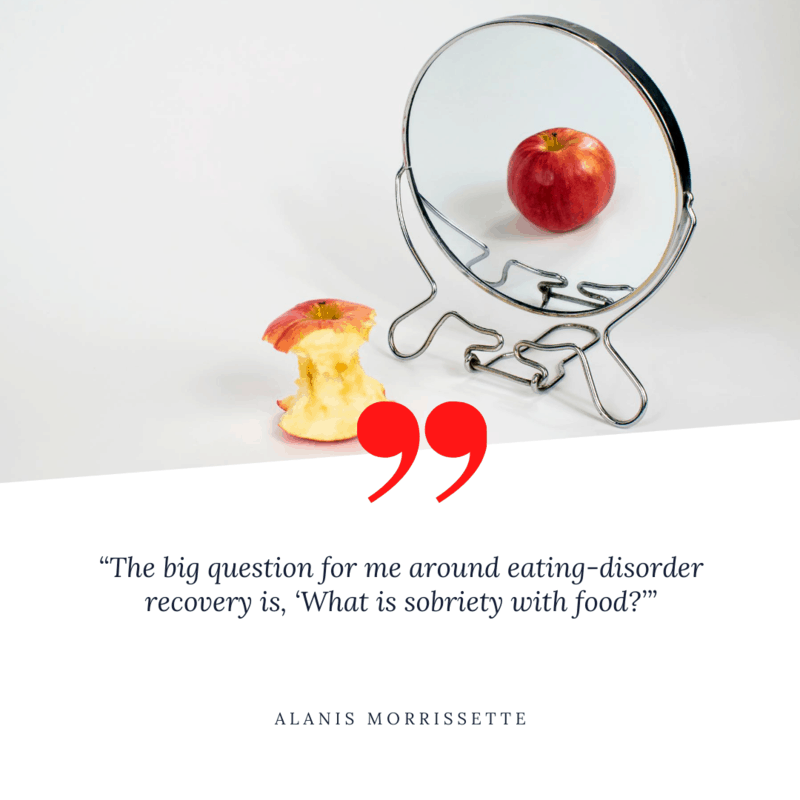
Alanis Morissette: What “Sobriety With Food” Means
Alanis Morissette has spoken candidly about an eating disorder and the unusual challenge of recovery from something a person cannot simply avoid.
In a Women’s Health interview, she asked a question that gets to the heart of that complexity:
“What is sobriety with food?”
Unlike recovery from a substance that can sometimes be completely avoided, food remains part of everyday life. Morissette’s question gave language to a challenge many people with eating disorders understand: recovery involves building a different relationship with something necessary for daily life.
Her story belongs in a list of famous people with eating disorders not because every detail of her experience matches someone else’s, but because she has spoken publicly about the work of recovery without pretending the answer is simple.
Dennis Quaid and Anorexia: When Role Preparation Became an Eating Disorder
The search phrase Dennis Quaid anorexia continues to bring readers to this page, but the most accurate answer needs a little context.
People reported that Quaid once struggled with an eating disorder after an extreme physical transformation for his role in Wyatt Earp. Quaid also described body dysmorphia and historically used the informal term “manorexia.”
This article uses the broader phrase eating disorder rather than creating a separate label for men. The important part of Quaid’s public account is that his perception of his body did not simply change when his body changed.
His story is especially relevant for readers looking for male celebrities with anorexia or eating disorders. Men can experience serious eating disorders, too, and gender does not determine who deserves help.
Lady Gaga: Speaking About Anorexia, Bulimia, and Body Image
Lady Gaga has also publicly connected her own life with both anorexia and bulimia.
In 2012, the Child Mind Institute reported on Gaga’s public statement:
“Bulimia and anorexia since I was 15.”
The context matters. Gaga’s disclosure came during a wider public conversation about body criticism and the way strangers comment on a celebrity’s appearance.
Her story reinforces one of the most important lessons on this page: commentary about someone’s body cannot tell us what is happening with that person’s health.
For readers searching for stars with anorexia or asking whether Lady Gaga has spoken about anorexia, the answer is yes—she publicly identified both anorexia and bulimia as part of her experience.
What These Celebrity Stories Can—and Cannot—Tell Us
Celebrity stories can make people feel less alone. They can help challenge stereotypes and encourage conversations that were once whispered about, if they were discussed at all.
But there are limits to what these stories can tell us.
- A public disclosure does not make one person’s experience the model for everyone else.
- One celebrity’s recovery timeline cannot predict another person’s recovery.
- Body size does not reveal whether someone has an eating disorder.
- Photographs should not be used to diagnose a stranger.
- Eating disorders should never be turned into before-and-after entertainment or body-comparison content.
No one should have to become famous—or look a certain way—to deserve concern, care, and support.
Perfect With: Reliable Context, Not Celebrity Comparison
This article is best paired with trustworthy medical information. Keep the NIMH eating-disorders guide nearby for medical basics and use ANAD’s support resources when you need information about peer support or finding care.
How to Talk About Celebrities With Eating Disorders Respectfully
There is a better way to talk about celebrities with anorexia and other eating disorders—and it starts by remembering there is a person behind every headline.
Use the person’s own public words
When possible, rely on interviews, direct statements, and reputable reporting rather than rumors about someone’s weight or appearance.
Do not diagnose people from photographs
A photograph cannot tell you whether someone has anorexia, bulimia, binge-eating disorder, another health condition, or no health condition at all.
Skip before-and-after body comparisons
Those images can turn a serious health condition into spectacle. They also encourage readers to compare bodies instead of understanding the person or the illness.
Remember that recovery is not a competition
No one needs to be “sick enough,” thin enough, famous enough, or visibly struggling enough to deserve help.
Frequently Asked Questions
Which celebrities have spoken about anorexia?
Among the celebrities covered here, Demi Lovato and Lady Gaga have publicly discussed anorexia as part of their eating-disorder experiences. Dennis Quaid has publicly described an eating disorder and body dysmorphia after an extreme role-related physical transformation. Each person’s public account is different, so this article avoids assigning diagnoses beyond what reliable sources report.
Which famous people have spoken about eating disorders?
Demi Lovato, Billy Bob Thornton, Alanis Morissette, Dennis Quaid, and Lady Gaga have all publicly discussed an eating disorder or eating-disorder recovery. This page focuses on these five people because their experiences can be traced to direct interviews or reputable reporting.
Are there male celebrities with anorexia or eating disorders?
Yes. Billy Bob Thornton has spoken about developing an eating disorder, and Dennis Quaid has described an eating disorder and body dysmorphia after an extreme movie-role transformation. Eating disorders can affect people of any gender.
Did Dennis Quaid have anorexia?
Dennis Quaid has publicly described an eating disorder and body dysmorphia after significant role-related weight loss. He historically used the informal term “manorexia.” Because public reporting does not require this article to make a new medical diagnosis, the most accurate wording is that Quaid has publicly discussed having an eating disorder.
Did Lady Gaga have anorexia?
Lady Gaga publicly wrote that she had experienced both bulimia and anorexia since age 15. The Child Mind Institute reported on that disclosure in 2012.
Can you tell if a celebrity has anorexia by looking at them?
No. Appearance alone cannot diagnose an eating disorder. People with eating disorders may have many different body sizes and appearances, which is one reason this article relies on public disclosures instead of photographs or speculation.
Can people recover from eating disorders?
Eating disorders can be treated, and professional care and support can help people recover. The path is individual and may not be linear. The National Institute of Mental Health recommends early detection and treatment.
Finding Help for an Eating Disorder
If you are worried about yourself or someone you care about, consider speaking with a licensed healthcare or mental-health professional with experience in eating disorders.
You can also explore ANAD’s peer support groups or use the ANAD treatment directory to look for additional resources.
If you are in immediate emotional distress or thinking about suicide, call or text 988 or use the official 988 Lifeline chat. Crisis support is not a substitute for ongoing eating-disorder treatment, but immediate help is available when safety is at risk.
Sources and Further Reading
- National Institute of Mental Health: Eating Disorders
- ANAD: Eating Disorder Statistics
- People: Celebrities Who Have Spoken About Eating Disorders
- ABC News: Billy Bob Thornton Interview
- Women’s Health: Alanis Morissette on Eating-Disorder Recovery
- People: Dennis Quaid on His Past Eating Disorder
- Child Mind Institute: Lady Gaga on Bulimia and Anorexia
Final Thoughts
Fame can make an eating disorder more visible, but it does not make the pain more real—or the person more deserving of help.
The reason these celebrity stories matter is not because famous people struggle differently. It is because sometimes a familiar name opens a door to a conversation someone was afraid to start.
Still, the person quietly reading this at the kitchen table matters every bit as much as the person under the stage lights.
You do not have to look a certain way. You do not have to reach a crisis point. And you certainly do not have to be famous to deserve support.