
Some days you have an hour to exercise. Other days, you have 10 minutes, a rowing machine, and the determination to make those minutes count.
These quick rowing machine workouts are designed for exactly those days. You’ll find six different ways to use an indoor rower, including distance rowing, timed workouts, intervals, rowing sprints, a rowing-and-pushup circuit, and a progressive workout that gradually increases in intensity.
Most can be adjusted to fit approximately 10 to 20 minutes, so you can choose a workout based on your available time and current fitness level rather than skipping exercise because your schedule is packed.
Jump to the rowing machine workouts
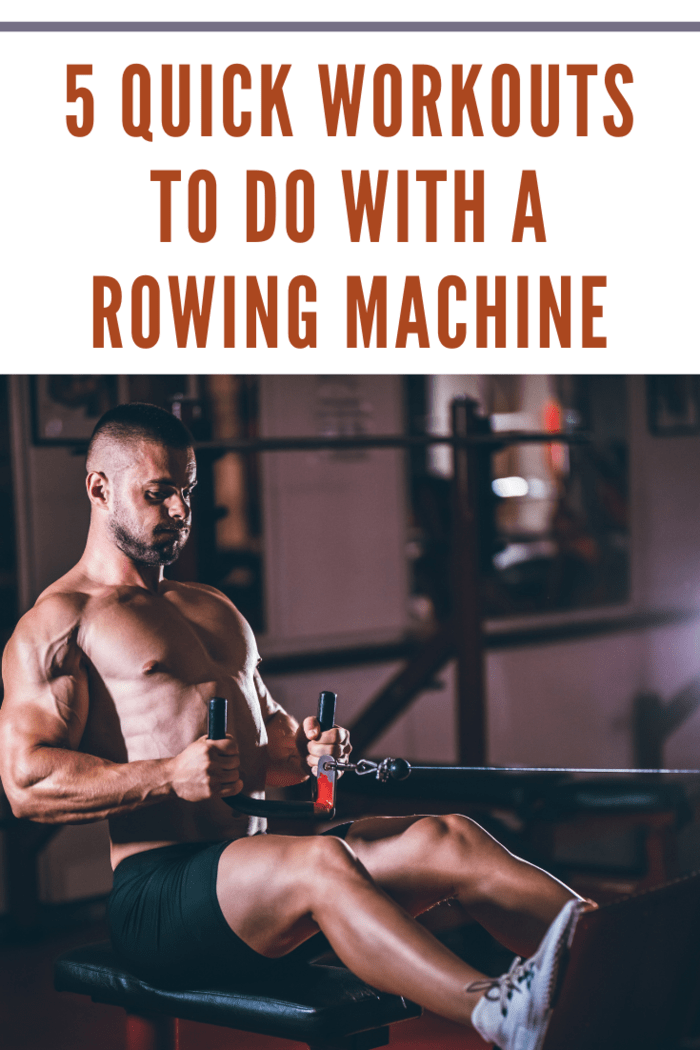
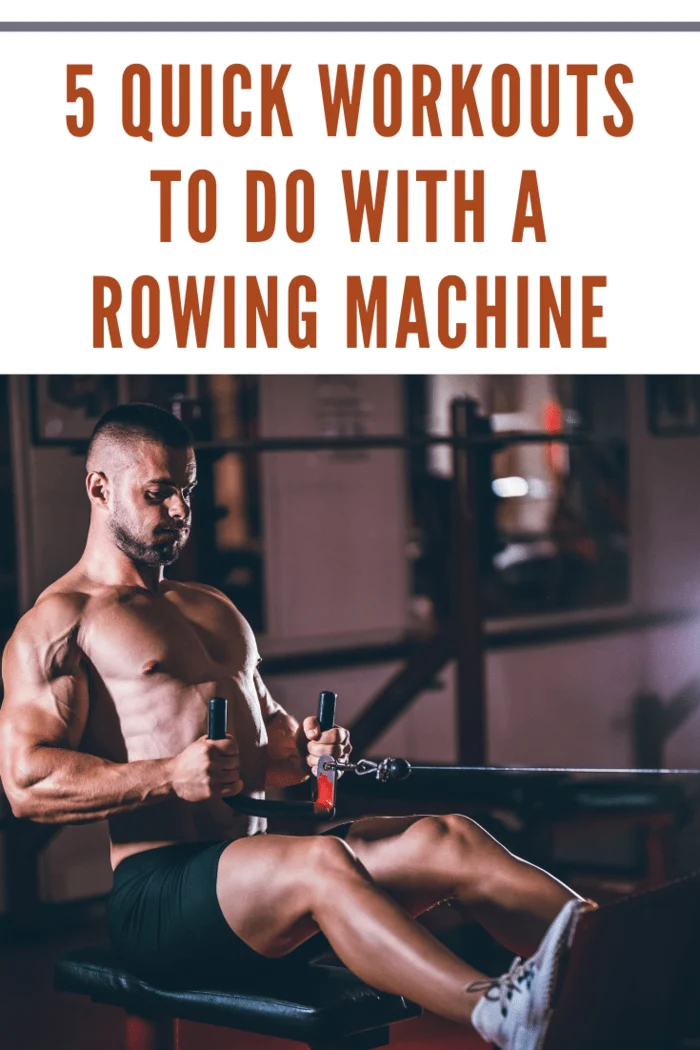
Why Choose a Rowing Machine Workout?
A rowing machine gives you a lot to work with in one piece of equipment. Rather than relying only on your arms, a proper rowing stroke coordinates your legs, torso, and arms through the drive, then reverses that sequence during the recovery.
That makes rowing a practical choice when you want an indoor cardio workout without bouncing between several machines.
According to Concept2’s indoor rowing technique guidance, the drive begins with the legs, continues through the body, and finishes with the arms. On the recovery, the arms extend first, followed by the body moving forward and then the knees bending as the seat slides toward the catch.
The most important part isn’t rowing as fast as humanly possible. It’s learning an efficient stroke and then adjusting your pace, distance, or interval length to match the workout.
How Long Should a Rowing Machine Workout Be?
A rowing workout does not have to be long to be worth doing.
The CDC notes that physical activity can be divided into smaller chunks throughout the week. For adults working toward general physical activity recommendations, those shorter workouts can contribute to the larger weekly goal.
That makes a 10-, 15-, or 20-minute rowing session particularly useful on busy mornings, lunch breaks, or days when a longer workout simply isn’t happening.
If you’re new to rowing, begin with shorter, comfortable sessions. You can increase the duration or intensity as your technique and endurance improve.
Before You Start: Rowing Form Matters
It’s tempting to hop on the machine and immediately see how quickly you can make the numbers on the monitor move. Resist the urge for a few minutes.
Good rowing is more about an efficient sequence than frantic pulling.
- Drive with your legs first. Push through your feet before pulling aggressively with your arms.
- Keep your shoulders relaxed. Avoid hunching them toward your ears.
- Maintain a comfortable grip. You don’t need to squeeze the handle for dear life.
- Keep the movement controlled. The drive is purposeful; the recovery should give you time to prepare for the next stroke.
- Warm up before harder intervals. Begin with easy rowing and gradually increase your effort.
If rowing is new to you, Concept2 recommends learning proper technique before increasing workout intensity. That’s good advice regardless of which brand of rowing machine you own.
What Does SPM Mean on a Rowing Machine?
SPM means strokes per minute. It tells you how frequently you’re taking strokes, but it does not tell the whole story about workout intensity.
A higher stroke rate doesn’t automatically mean you’re producing more power. Concept2 explains that strong rowing can also happen at a lower stroke rate when you generate more power during the drive.
For many steady rowing sessions, approximately 24 to 28 strokes per minute can provide a useful starting range. Shorter intervals may use a higher rate. Treat those numbers as guidance, though—not a rule you need to chase.
Focus first on smooth technique and an effort you can control.
Think of it this way: SPM tells you how often you’re rowing. Your effort tells you how hard you’re working.
Watch: 6 Quick Rowing Machine Workouts for Busy Days
Want to see the workout options at a glance before choosing one? This quick video walks through all six rowing machine workouts, including distance rowing, intervals, rowing with pushups, a 10-minute timed row, rowing sprints, and a slow-build session. Watch the full sequence, then choose the workout that best fits your time, fitness level, and energy for the day.
6 Quick Rowing Machine Workouts
You don’t need to do every workout in this list. Choose one based on how much time you have, your experience level, and how hard you want to work that day.
For harder workouts, add a few minutes of easy rowing beforehand and cool down afterward rather than going directly from sitting at your desk to an all-out sprint.
1. Distance Rowing Workout
Best for: Building consistency and giving yourself a measurable goal
Workout: Row 1,000 to 2,000 meters at a controlled pace.
A distance workout is wonderfully simple: choose a distance and complete it.
If you’re comfortable on the rowing machine, try a 2,000-meter row. If you’re newer to rowing or short on time, start with 500 or 1,000 meters instead.
Don’t turn the first 200 meters into a race you spend the rest of the workout regretting. Begin at a sustainable pace and try to remain consistent.
Watch your monitor and pay attention to your time. The next time you repeat the workout, you can compare your result without feeling that you have to beat it every single session.
Try this:
- Warm up with easy rowing.
- Choose 1,000 or 2,000 meters.
- Settle into a controlled pace.
- Maintain smooth rowing form as you begin to tire.
- Finish with a few minutes of easy movement.
Beginner modification: Row 500 meters, rest or row very easily for 1 to 2 minutes, and repeat if you feel comfortable.
2. 20-Minute Rowing Interval Workout
Best for: Busy days when you want a structured workout from start to finish
If you have exactly 20 minutes, this is the rowing workout I’d choose.
Concept2 has published a similar short-workout format built around a warm-up, alternating harder and easier rowing, and a cool-down. It keeps the session moving without requiring an uninterrupted all-out effort.
Your 20-minute workout:
- Minutes 0–5: Easy rowing warm-up.
- Minutes 5–15: Alternate 40 seconds of harder rowing with 20 seconds of easy rowing.
- Minutes 15–20: Easy rowing cool-down.
During the harder portions, increase your effort while keeping your stroke controlled. During the easy 20 seconds, keep moving but deliberately back off your pace.
You should finish knowing you worked—not wondering whether your soul is still somewhere around minute seven.
Beginner modification: Alternate 30 seconds at a moderate effort with 30 seconds of very easy rowing.
3. Rowing and Pushups Circuit
Best for: Adding variety and bodyweight strength work
If straight rowing gets monotonous, get off the machine.
Yes, intentionally.
Alternating short rowing distances with a bodyweight movement gives you a simple circuit without requiring a room full of gym equipment.
Try 3 to 5 rounds:
- Row 250 meters.
- Complete 5 to 10 pushups.
- Rest briefly if needed.
- Repeat.
Choose a number of pushups you can perform with good form. Five controlled repetitions are more useful than 20 that turn into an argument between you and the floor.
If standard pushups aren’t appropriate for you, use an incline pushup against a sturdy elevated surface or substitute another bodyweight movement you already know you can perform comfortably.
Want a longer version? Increase the rowing portion to 500 meters per round rather than dramatically increasing the number of pushups.
4. 10-Minute Timed Row
Best for: The days when “I don’t have time” is becoming dangerously convincing
This may be the easiest rowing machine workout to remember.
Set a timer for 10 minutes and row.
Your goal is not to sprint for 10 straight minutes. Instead, choose a pace you believe you can maintain from beginning to end.
Record the distance you cover if you enjoy tracking progress. The next time you do the workout, try to row with smoother technique, maintain a more consistent pace, or cover slightly more distance.
Try this pacing strategy:
- Minutes 0–2: Easy and controlled.
- Minutes 2–7: Settle into a moderate working pace.
- Minutes 7–9: Gradually increase your effort if you feel good.
- Minute 9–10: Finish strong while maintaining your form.
If you’re a beginner, there’s nothing wrong with making the entire 10 minutes easy rowing. Technique comes before speed.
5. Rowing Sprint Workout
Best for: Short intervals and changing pace
Rowing sprints don’t need to last a full minute to feel challenging.
Try shorter bursts that give you enough recovery time to make each hard interval purposeful.
Quick sprint workout:
- Warm up with 3 to 5 minutes of easy rowing.
- Row hard for 30 seconds.
- Row very easily for 60 seconds.
- Repeat the hard/easy pattern 6 times.
- Cool down with easy rowing.
During your sprint, think about producing a stronger drive rather than simply moving the seat back and forth as quickly as possible.
As your conditioning improves, you can experiment with the length or number of intervals instead of trying to make every workout harder at once.
Track your progress: Watch the distance covered during each hard interval. A goal over time can be maintaining more consistent distances across the entire set rather than starting incredibly fast and fading with every round.
6. Slow-Build Rowing Workout
Best for: Days when you want to work hard but don’t want to start hard
Not every workout needs to begin at maximum effort.
This progressive rowing workout starts comfortably and gradually becomes more challenging, giving your body time to settle into the movement.
Try this progression:
- 3 minutes: Easy warm-up.
- 2 minutes: Easy-to-moderate rowing.
- 1 minute: Very easy rowing.
- 2 minutes: Moderate rowing.
- 1 minute: Very easy rowing.
- 2 minutes: Moderately hard rowing.
- 1 minute: Very easy rowing.
- 2 minutes: Hard but controlled rowing.
- 2 to 3 minutes: Easy cool-down.
The key is making each working interval feel a little more challenging than the one before it.
If your form starts falling apart as intensity increases, back off. There’s no prize for reaching the final interval at the expense of good technique.
Which Rowing Machine Workout Should You Choose?
Still staring at the list trying to decide? Here’s the shortcut.
- If you’re a beginner: Try the 10-minute timed row at an easy pace.
- If you like measurable goals: Choose the distance rowing workout.
- If you only have 20 minutes: Try the 40-second/20-second interval workout.
- If you get bored easily: Choose the rowing and pushups circuit.
- If you enjoy intervals: Try the rowing sprint workout.
- If you prefer easing into a workout: Choose the slow-build row.
You can also rotate the workouts instead of repeating the same routine every time you use your rowing machine.
Common Rowing Machine Mistakes
A short workout still deserves good technique. Watch for these common habits, particularly when you start getting tired.
Pulling With Your Arms Too Early
The rowing stroke shouldn’t begin as an aggressive arm pull. Concept2 recommends initiating the drive with the legs before bringing the body and arms into the movement.
Rushing the Recovery
You don’t have to fly back toward the front of the machine after every stroke. Allow the recovery to actually be a recovery.
Chasing a High Stroke Rate
A bigger SPM number is not automatically a better workout. Focus on producing a strong, efficient drive rather than taking fast, weak strokes.
Starting Too Hard
If you’re doing a 10- or 20-minute workout, you shouldn’t feel completely spent after the first minute. Starting slightly easier can help you maintain a more consistent session.
Skipping the Warm-Up Before Sprints
If the workout includes harder intervals, give yourself time to ease into rowing first. Even a few easy minutes can help you transition into the session rather than going from zero to full effort immediately.
How to Make a Quick Rowing Workout Easier or Harder
One of the best things about these workouts is that you can scale them without inventing an entirely new routine.
To make a workout easier:
- Shorten the rowing distance.
- Reduce the number of intervals.
- Increase easy recovery time.
- Use a slower stroke rate.
- Keep the entire workout at a conversational, comfortable effort.
To make a workout more challenging:
- Add another interval or round.
- Increase the distance slightly.
- Increase power during the drive.
- Shorten recovery periods modestly.
- Try maintaining the same pace more consistently from beginning to end.
Change one variable at a time. You don’t need to increase the distance, stroke rate, resistance, and number of intervals on the same day.
Frequently Asked Questions About Rowing Machine Workouts
Is 10 minutes on a rowing machine worth it?
Yes. A short rowing workout can still contribute to your overall physical activity. The CDC specifically notes that activity can be divided into smaller chunks throughout the week. A 10-minute session is also far more realistic on some busy days than waiting for the mythical free hour that never arrives.
Is 20 minutes of rowing a good workout?
Twenty minutes gives you enough time for a short warm-up, a focused rowing workout, and a cool-down. How challenging those 20 minutes feel will depend on your pace, experience, interval structure, and fitness level.
What is a good rowing machine workout for beginners?
Start with 5 to 10 minutes of easy rowing while learning the proper stroke sequence. Once the movement feels more natural, gradually add time or short moderate-effort intervals. There’s no need to start with sprint training.
What stroke rate should I use on a rowing machine?
There isn’t one perfect stroke rate for every workout. Concept2 notes that approximately 24 to 28 SPM is commonly used for steady-state rowing, while shorter interval workouts may use higher stroke rates. Your technique and power per stroke matter, too, so don’t treat SPM as a score you have to maximize.
Can you do HIIT on a rowing machine?
Yes. A rowing machine works well for interval formats that alternate harder efforts with easier recovery periods. If you’re new to vigorous exercise, build a base with easier rowing first and increase intensity gradually.
Should I row every day?
Your ideal exercise schedule depends on your overall activity level, workout intensity, recovery, health, and other training. You don’t need to make every rowing session intense. Mixing harder workouts with easier activity can make a routine more manageable.
Is rowing only a cardio workout?
Rowing is commonly used for cardiovascular exercise, but the rowing stroke also requires coordinated work from several muscle groups as you drive with the legs, stabilize through the torso, and finish the stroke with the arms. It isn’t, however, a replacement for every type of strength training.
Looking for a Rowing Machine for Home?
If these workouts sound much more appealing when they don’t require driving to the gym, a rowing machine can be a useful addition to a home workout space.
Before buying one, compare the machine’s dimensions, weight capacity, resistance system, monitor features, storage options, and the amount of floor space you’ll need while actually rowing—not just while the machine is folded away.
You can browse rowing machines available on Amazon to compare different styles, features, and price points.
Readers Also Read
If you’re working on creating a more realistic approach to fitness rather than an all-or-nothing routine, these articles may also help:
Final Thoughts
You don’t need a marathon workout to make good use of a rowing machine.
A 10-minute timed row, a handful of intervals, a quick 2,000-meter challenge, or a rowing-and-pushups circuit can give your workout structure on days when time is limited.
Pick the workout that fits the day you’re actually having—not the perfectly organized day you imagined when you bought the exercise equipment.
Learn the rowing stroke, warm up before harder efforts, adjust the workout to your fitness level, and build from there.
Fitness information on Mommy’s Memorandum is provided for general educational purposes and is not individualized medical or exercise advice. If you have an injury, medical condition, are pregnant, or have concerns about beginning or changing an exercise program, consult an appropriate healthcare professional.